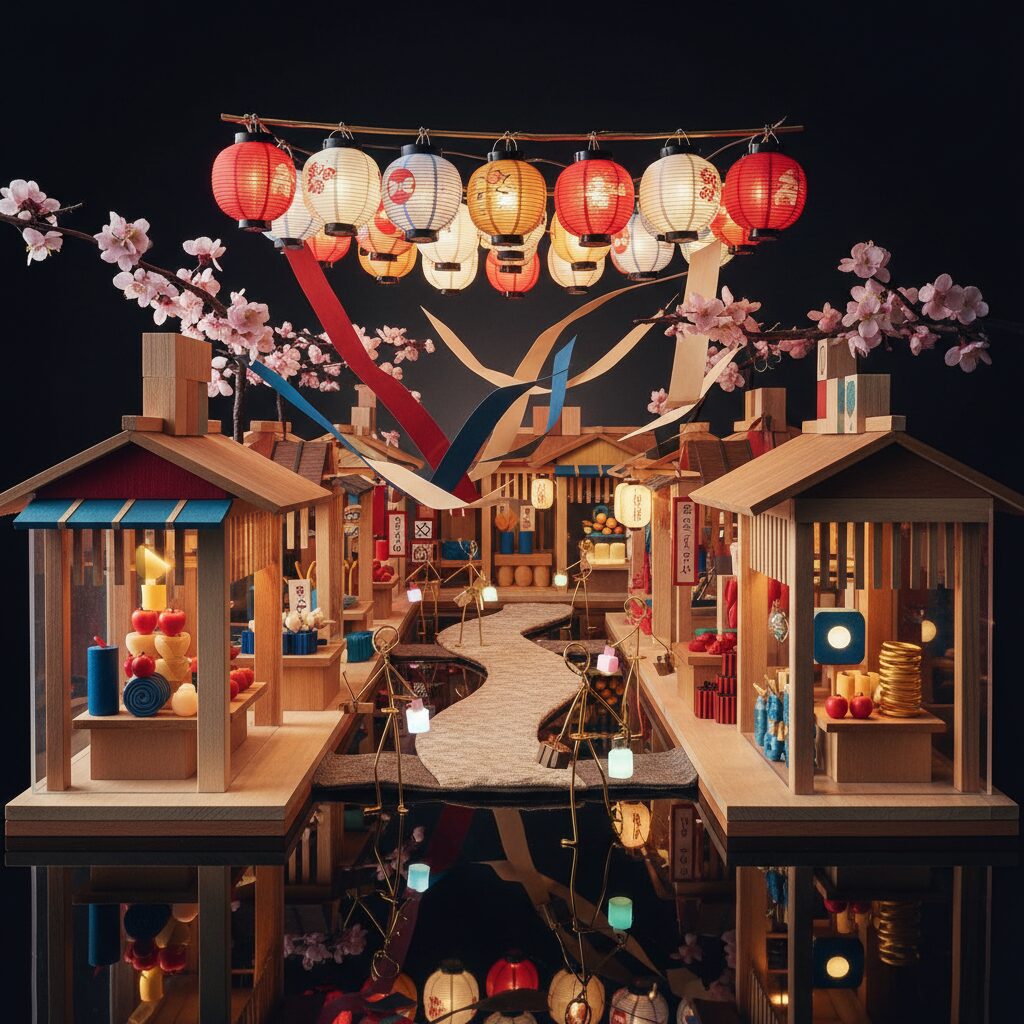
You’ve probably seen them, even if you didn’t know their name. They appear in films, anime, and travel photos as quintessential scenes of Japanese daily life: long, covered streets lined with a dense patchwork of small shops, glowing lanterns, and colorful banners swaying gently overhead. This is the shotengai, the Japanese shopping arcade. It’s easy to dismiss them as just old-school markets, charmingly retro relics from a bygone era. But that would be like calling a town square just a patch of pavement. The shotengai is so much more than a place to buy groceries. It is the connective tissue of a neighborhood, the stage for its daily drama, and a living archive of its memories. In an age of sterile, air-conditioned mega-malls and the cold anonymity of online shopping, the shotengai offers something increasingly rare and vital: a palpable sense of community.
To understand the shotengai is to understand a fundamental aspect of Japanese urban life, one that prioritizes human-scale interaction and the quiet rhythm of the everyday. These are not grand commercial thoroughfares designed to overwhelm you. They are pedestrian-first spaces, built for strolling, for chance encounters, for the simple pleasure of exchanging a few words with the person who sells you your fish or your tea. They are semi-enclosed worlds, protected from the rain and the harsh summer sun by their distinctive arched roofs, creating a unique acoustic environment where the chatter of shoppers, the calls of vendors, and the jingle of a shop’s doorbell all blend into a comforting, familiar soundtrack. Walking into a shotengai is like stepping off the main road and into a neighborhood’s living room. It’s where the pace slows, the air changes, and the true character of a place reveals itself, one small, family-run business at a time.
This vibrant neighborhood scene not only celebrates community but also mirrors Japan’s broader cultural transformation, as seen in the evolution of the Japanese salaryman during the transformative 1960s.
The Architecture of Connection
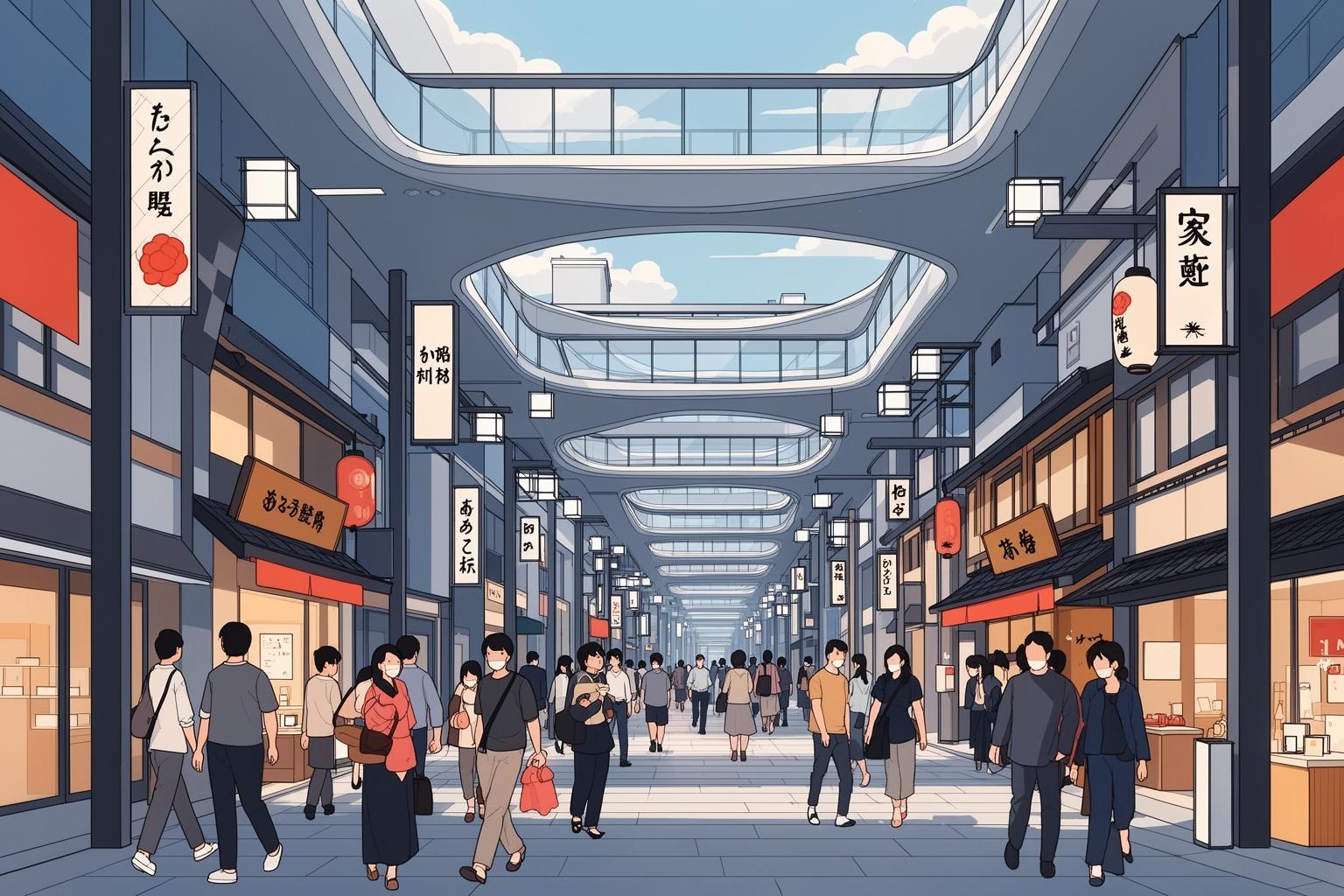
Before discussing the shops, it’s important to first understand how the physical design of the shotengai is crafted to nurture community. Most were constructed during Japan’s post-war economic boom, spanning the 1950s to the 1970s, as a modern adaptation of the traditional open-air market street. The introduction of the roof, the ākēdo (borrowed from the word “arcade”), was transformative. It established a dependable, all-weather commercial and social center. This simple architectural element does more than protect from rain; it defines the shotengai as a distinct area, separate from the car-packed streets around it. It creates a psychological boundary, signaling a transition to a more intimate, pedestrian-friendly environment.
The layout almost always features a long, relatively narrow corridor. This is intentional. The limited width enforces close proximity. You walk near the storefronts, close to other people. There’s no vast, empty space to disappear into. The shops themselves tend to be small, with facades that open almost fully to the arcade. There are no imposing glass doors or formal entrances. Often, displays of produce, pickled vegetables, or freshly fried snacks spill out onto the walkway, blurring the line between public and private areas. This design is an open invitation. It encourages you to stop, observe, and interact. The shopkeeper is not hidden behind a counter deep inside; they are right there, just a few feet away, arranging radishes or wrapping a piece of fish. This closeness makes conversation nearly unavoidable. A simple purchase of a bag of rice crackers can easily evolve into a chat about the weather, local news, or the well-being of an elderly neighbor.
This stands in stark contrast to the modern supermarket, which is designed for efficiency and anonymity. In a supermarket, you navigate wide aisles with a cart, avoiding eye contact, and the only guaranteed human interaction is a quick, transactional exchange with a cashier at the end. The shotengai, by its very design, aims for the opposite. It is built for fureai—a profound Japanese concept roughly meaning ‘human contact’ or ‘connectedness’. The space itself acts as a social catalyst.
A Living Cast of Characters
If architecture sets the stage, shopkeepers are the very heart of the performance. A shotengai is an ecosystem composed of small, specialized, and often multi-generational businesses. Strolling through one feels like navigating a living directory of traditional Japanese commerce. Each shop boasts its own unique identity, distinct aromas, characteristic sounds, and a master dedicated to a particular craft. These are far from interchangeable retail units; they are institutions, each carrying its own story.
The Tofu-ya: The Neighborhood’s Foundation
Often among the first to open, the tofu-ya (tofu maker) stands as a cornerstone of the shotengai. You’ll catch its scent before you see it—the fresh, beany aroma of soybeans. Inside, blocks of silken (kinu) and firm (momen) tofu rest in spotless, water-filled trays. But that’s not all. You’ll also find abura-age (deep-fried tofu pouches), atsu-age (thick fried tofu), and ganmodoki (savory tofu fritters with vegetables). The owner, typically an early riser who begins work long before dawn, can advise you on which tofu suits miso soup best and which is ideal for a chilled hiyayakko salad. Buying tofu here goes beyond a simple transaction; it’s an act of trust in a craft perfected over generations. This is food at its core—a staple of the Japanese diet made with care by a familiar hand.
The Sakana-ya: The Pulse of the Seasons
The sakana-ya (fishmonger) is the sensory centerpiece of the shotengai. The bright shimmer of silver scales under fluorescent lights, the sharp, fresh scent of the sea, the rhythmic chop of a cleaver on a wooden block. The owner is a true specialist, a master of their trade. They don’t just sell fish; they understand the seasons. They can confidently tell you that sanma (Pacific saury) peaks in autumn, buri (yellowtail) is at its richest in winter, and the first katsuo (bonito) of spring has just arrived. They will skillfully fillet fish for you, offer tips on grilling, and may even share a secret recipe for a simmered dish. This bond between customer and vendor is built on a foundation of expert knowledge, a connection to nature’s rhythms often missing in the frozen-food aisle.
The Yaoya: The Colors of the Earth
The yaoya (greengrocer) provides a vivid visual feast. Heaps of shiny eggplants, pyramids of bright tangerines, and neatly tied bundles of spinach create a burst of color. Prices are often handwritten on cardboard, with notes like “sweet!” or “local!” alongside them. Unlike supermarkets where produce is standardized and wrapped in plastic, the yaoya offers a more direct link to the farm. The owner knows every item intimately. They can select the sweetest melon just by tapping it, advise which daikon radish suits pickling versus stewing, and might even slip an extra onion into your bag with a smile. This is a place of earthy abundance and grounded wisdom.
The Kissaten: The Community’s Living Room
No shotengai is complete without at least one kissaten, the classic old-school Japanese coffee shop. Featuring dark wood paneling, well-worn velvet seats, and the gentle clinking of porcelain, the kissaten serves as the neighborhood’s social hub. It’s where elderly locals gather for their “morning set”—a thick slice of toast, a boiled egg, and a small salad with coffee. It’s where business owners pause for a break, where friends meet for quiet conversation, and where you can sit for hours with a book, undisturbed. The kissaten is a time capsule, a refuge from the hectic pace of modern life. The coffee, often dark-roasted and siphon-brewed, is a ritual in itself. This is no place for a quick caffeine fix; it is a destination, a third space between work and home where community life unfolds at a leisurely rhythm.
The Rhythm of Daily Life
The shotengai pulses with the rhythm of the day, its atmosphere shifting from morning to night. Mornings are dedicated to essentials, as the elderly and housewives wheel their shopping trolleys, making their daily rounds. The air is alive with cheerful greetings of “Ohayo gozaimasu!” (Good morning!). This is the moment for focused shopping and exchanging neighborhood gossip. Conversations flow effortlessly between the fishmonger, the greengrocer, and others. There is a relaxed yet purposeful energy.
By midday, a calmer phase settles in. The main rush has passed. Shopkeepers might be seen sweeping their storefronts or chatting with neighbors. The kissaten fills with visitors for lunch, offering classics like Napolitan spaghetti or curry rice. In the mid-afternoon, the atmosphere changes again as children return from school. They often stop at the dagashi-ya, a penny candy shop bursting with nostalgic, brightly wrapped snacks, spending their pocket money on treats. For them, the shotengai becomes a playground, a safe and familiar route home.
As evening draws near, the final act unfolds. The savory, tempting aroma of freshly fried korokke (croquettes), tempura, and grilled chicken skewers from the sozai-ya (delicatessen) drifts throughout the arcade. This is when commuters from the nearby train station pause to pick up side dishes for dinner. Paper lanterns flicker on, casting a warm, welcoming glow. The shotengai winds down gently, not with a sudden close, having served its community from morning until night.
This daily rhythm is highlighted by seasonal events that transform the entire arcade. In summer, colorful tanabata streamers hang from the ceiling, creating a magical canopy. During local matsuri (festivals), the shotengai hosts parades, food stalls, and games. As New Year’s approaches, it becomes a bustling center for buying festive decorations and special foods. The shotengai is more than a commercial space; it is a ceremonial one, marking the passage of time for the whole community.
Challenges and Reinvention
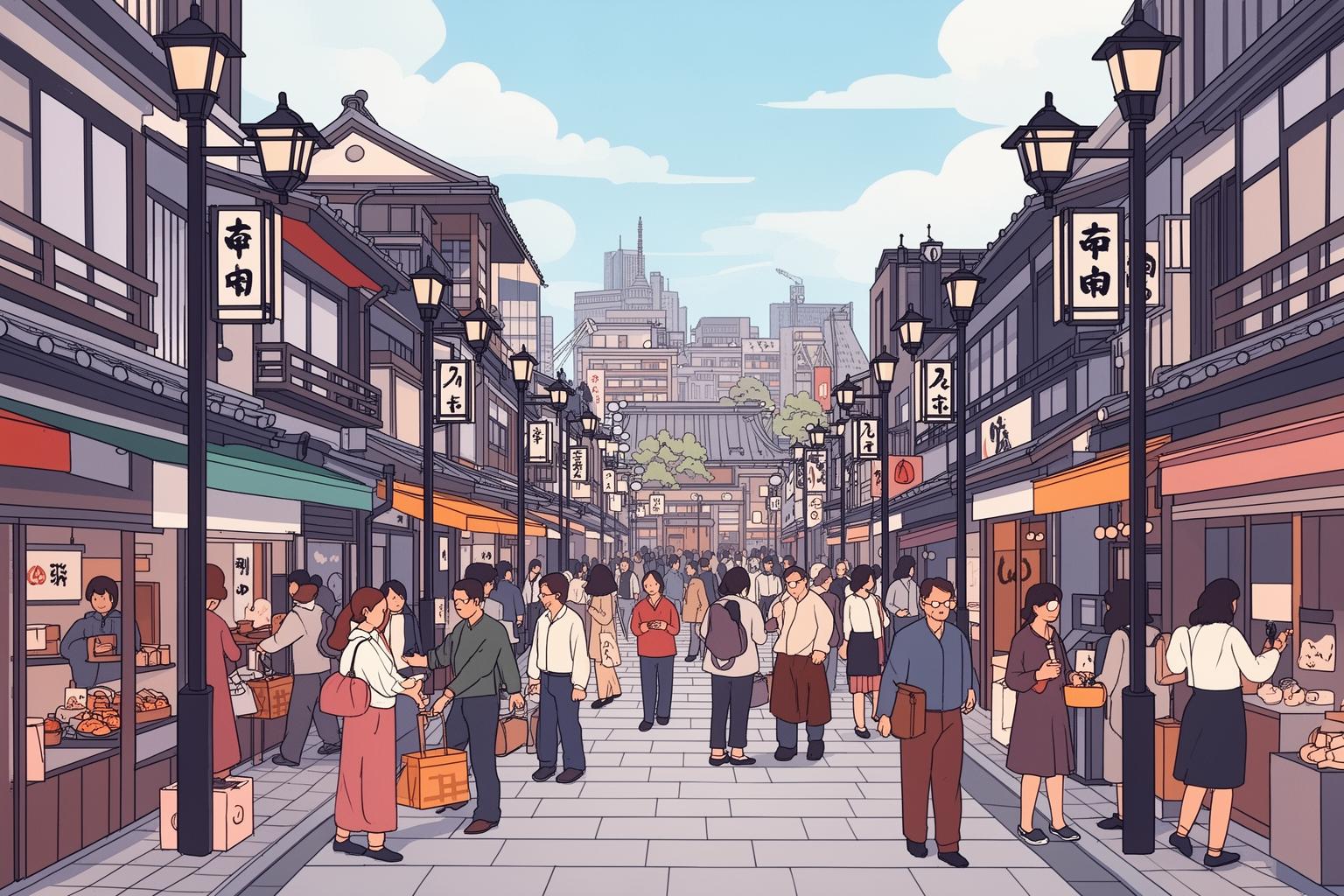
It would be misleading to depict the shotengai as universally thriving paradises. Many are encountering significant challenges. The very forces they oppose—large supermarkets, suburban shopping malls, and the convenience of e-commerce—have dealt a heavy blow. Adding to this is Japan’s demographic shift. Shopkeepers are aging, and often their children opt for different career paths instead of inheriting the family business. This has given rise to the unfortunate phenomenon of “shutter-dori” or “shutter streets,” where most storefronts are permanently closed, their metal shutters gathering dust.
However, this is not the end of the story. The shotengai are proving remarkably resilient, with a new generation recognizing their value. In many areas, a quiet revival is beginning. Young entrepreneurs, attracted by low rent and an authentic atmosphere, are opening innovative businesses in these old spaces. A shuttered butcher shop might be transformed into an artisanal bakery. An old kimono store could become a third-wave coffee shop or a small, independent art gallery. These new ventures do not erase the original character but add a fresh layer, blending tradition with modernity. This infusion of new energy helps the shotengai continue evolving rather than stagnating.
Some shotengai have survived by embracing a specific identity. Yanaka Ginza in Tokyo, for example, has leaned into its nostalgic, Showa-era charm, becoming a popular destination for visitors seeking a taste of old Tokyo. Sugamo Jizo-dori is affectionately known as “Grandma’s Harajuku,” catering specifically to an elderly clientele with shops offering comfortable clothing, traditional sweets, and health products. Nakano Broadway, on the other hand, has transformed from a typical shopping arcade into a global hub for anime, manga, and otaku culture. These examples illustrate that the shotengai model is not monolithic; it is adaptable and capable of reinventing itself to meet the needs of a new era.
Why the Shotengai Still Matters
Ultimately, the survival of the shotengai hinges on its ability to meet a basic human need that modern retail often overlooks: the need for connection. It is built on relationships rather than mere transactions. You don’t simply buy a daikon radish; you buy it from Tanaka-san, who knows you prefer the milder kind and will choose one accordingly. You don’t just buy fish; you buy it from Suzuki-san, who remembers that your son loves mackerel.
This network of small, repeated, and meaningful interactions generates social capital. It fosters a sense of belonging and mutual recognition, which form the foundation of any thriving community. In the shotengai, you are not an anonymous consumer or just a data point in an algorithm. You are a neighbor, a familiar face, a part of the local narrative. Walking through a shotengai means witnessing this story unfold in real time. It serves as a tangible reminder that commerce can be more than efficiency and profit; it can be a vessel for culture, tradition, and human warmth. It’s not merely a place to shop—it’s the soul of the neighborhood, resonating with the quiet, persistent, and beautiful rhythm of daily life.