Walk into almost any significant temple or shrine in Japan, and you’ll eventually find a small, quiet office, often tucked to the side of the main hall. Inside, you might see a priest, a monk, or a dedicated attendant sitting behind a wooden counter. But instead of selling keychains or fortunes, they are often hunched over a book, their hand moving with a practiced, deliberate grace. With a series of fluid motions, they dip a brush in lustrous black ink, paint bold characters onto a page, and then press a series of vermilion seals with a satisfying thud. This isn’t just administrative work. It’s an act of devotion, a moment of artistic creation, and a tradition that offers one of the most rewarding ways to experience Japan. They are creating a goshuin, and the book it goes into, the goshuin-chō, is far more than a simple souvenir. It’s a passport to the spiritual heart of the country.
For the uninitiated, the concept can seem like a glorified stamp rally. You buy a special book and travel around collecting stamps. It’s an easy mistake to make, but it misses the point entirely. A goshuin is not a stamp you press yourself. It is a unique piece of calligraphy, brushed by hand, specifically for you, on the day of your visit. It serves as proof of pilgrimage, a tangible connection to the sacred ground you’ve just walked. Collecting them isn’t a frantic dash to fill a book; it’s a meditative practice that encourages slower, more intentional travel. It transforms a sightseeing trip into a personal journey, weaving together place, time, and spirit onto folded pages of paper. This practice is a beautiful window into the Japanese mindset, where reverence, artistry, and personal experience converge in a single, quiet act.
This intimate interplay between art and daily life finds a modern echo in the surprising charm of vending machines, which quietly encapsulate Japan’s blend of tradition and innovation.
More Than a Souvenir: The Anatomy of a Goshuin
At first glance, a page covered with a goshuin may appear as an indecipherable array of elegant scribbles and red stamps. However, each element serves a specific purpose and meaning, turning the page from a simple keepsake into a rich, layered record of your visit. Understanding these parts is the first step to truly appreciating the depth of this tradition.
The Calligraphy (Shodō)
The heart of the goshuin is the calligraphy. This is almost always created with Sumi ink, a deep, lasting black made from soot and animal glue. The largest characters in the center usually represent the name of the temple or shrine, or occasionally the main deity or Buddha enshrined there. For instance, at Sensō-ji in Tokyo, you will find the characters for Kannon Bosatsu, the bodhisattva of compassion. At a Shinto shrine such as Fushimi Inari Taisha in Kyoto, the calligraphy denotes Inari Ōkami, the god of rice and sake.
This is not just writing; it is an art known as shodō, or “the way of the brush.” The calligrapher, whether a chief priest or a trained layperson, does more than write the words—they infuse them with energy and beauty. The style can differ greatly from one location to another—some are bold and assertive, others delicate and flowing. This artistic variation means that even the same goshuin from a single temple will vary slightly depending on who created it and when. You receive a unique piece of art, a direct expression from someone connected to that sacred place.
The Red Seals (Inkan)
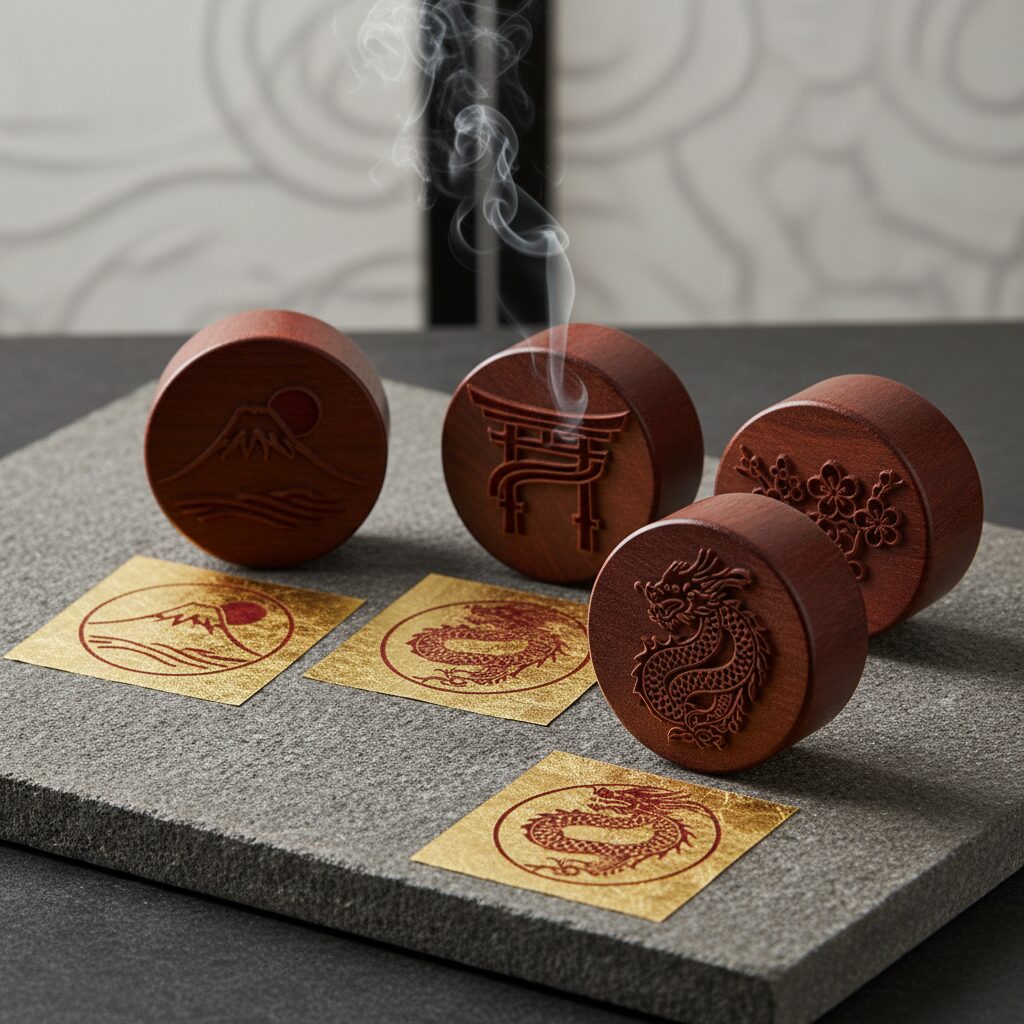
Alongside the black ink are vivid vermilion seals, or inkan. These are far from mere decorations. They are official seals authenticating both the calligraphy and the visit. Their intricate, often ancient designs are carved from wood or stone. Typically, there are two or three seals on a single goshuin. One usually bears the full name of the shrine or temple, while others may display a symbolic crest, a sacred motif (such as the three-leafed tomoe common at shrines dedicated to Hachiman), or characters representing specific Buddhist or Shinto concepts. The vermilion ink, derived from cinnabar or its synthetic equivalent, symbolizes life, protection, and the sacred. These seals anchor the fluid, artistic calligraphy with an official, institutional mark of authenticity, much like the seal on a royal decree or formal document.
The Date of Visit
Perhaps the most personal aspect on the page is the date. Written in smaller characters, usually along one side, it records the date of your pilgrimage (sanpai no hi). This simple detail transforms the goshuin from a generic work of art into a personal memento. It ties the spiritual and artistic elements to a specific moment in your own life. It declares, “On this day, you were here. You stood in this place, breathed this air, and offered a prayer.” Looking back at your goshuin-chō years later, the dates become powerful memory triggers, instantly transporting you to a crisp autumn afternoon in the mountains of Koyasan or a bustling New Year’s visit to Meiji Jingu. It becomes a diary written not in your own words, but in the sacred script of the places you have visited.
The Goshuin-chō: A Pilgrim’s Passport
The vessel for this journey is the goshuin-chō itself. These are not ordinary notebooks; they are beautifully crafted, purpose-built books created to honor the art they hold. The covers are often wrapped in rich brocade silks adorned with traditional patterns such as cranes, cherry blossoms, or dragons, or made from fragrant woods like cedar or cypress. They feel substantial and special in your hands.
Inside, the pages are typically made from thick, high-quality Japanese paper (washi) that prevents Sumi ink from bleeding through. Most feature an accordion-style fold, known as an orihon, allowing you to either flip through it like a normal book or spread it out to view the entire pilgrimage laid out before you. This design is both practical and symbolic, representing a journey that is sequential yet interconnected.
Having a dedicated book is an essential part of the etiquette. It signals respect and serious intent. You cannot simply present a random piece of paper or a travel journal. Some places might offer a pre-written sheet if you’ve forgotten your book, but the true experience is seeing the calligraphy brushed directly onto your own page. The book grows with you, becoming a physical manifestation of your travels. It starts light and empty, but with each visit, it grows heavier, denser, and more saturated with meaning, ink, and memory.
The Ritual of Receiving: A Moment of Connection
Obtaining a goshuin is a ritual in itself—a quiet performance that demands patience and respect. It is by no means a simple transaction. While the process is straightforward, each step carries an unspoken cultural significance that emphasizes the spiritual essence of the act.
First, You Pray
This is the most crucial and often overlooked rule. Before even considering approaching the office (shamusho at a shrine or nōkyōsho at a temple), you must first offer your respects at the main hall. Simply walking up, getting the stamp, and leaving is viewed as deeply disrespectful. It’s akin to visiting someone’s home and ignoring the host to go straight to the guestbook. The goshuin serves as proof of your visit and prayer. Without the prayer, the proof holds no meaning. This simple requirement transforms the whole activity from mere collecting into a form of participation. You are there to engage with the place, not just to obtain an item from it.
The Offering and the Wait
After praying, you approach the office and present your goshuin-chō, opened to the next blank page. You then make a small offering, known as hatsuhoryō. The amount is generally set, typically between 300 and 500 yen. Note the wording: this is an offering, a donation to the temple or shrine, not a “price” or a “fee.” This distinction is essential. You are not purchasing a product; rather, you are giving thanks through a contribution for receiving this piece of sacred art.
Then, you wait. This is the meditative heart of the experience. You step back and observe the calligrapher at work. There is no idle conversation. The atmosphere is one of quiet focus. You watch as the ink is ground, the brush carefully chosen, and confident, practiced strokes flow seemingly effortlessly. You see the seals carefully aligned and pressed firmly onto the page. In these few minutes, you share a moment of concentrated creation with another person—a silent communion centered around an ancient art form. It offers a powerful contrast to the hurried, distracted rhythm of modern life.
The Roots of the Practice: From Proof to Pilgrimage
While goshuin collecting has surged in popularity in recent years, its origins date back centuries and are deeply rooted in devout Buddhist practice. Originally, goshuin served as a receipt, a proof of devotion for pilgrims who had copied and donated a Buddhist sutra (shakyō) to a temple. The temple would provide a stamp and its name as confirmation that the sutra had been received. The book used to collect these stamps was called a nōkyō-chō, or “sutra-offering book.”
As pilgrimages became more frequent and accessible to people beyond the monastic class, the requirement to hand-copy an entire sutra was eased. Simply visiting and praying became enough to receive the temple’s seal. This practice also spread to Shinto shrines, evolving into the form familiar today. Understanding this history is essential to appreciating its cultural significance and why it is treated with such reverence. Modern collectors are engaging in a tradition directly linked to the arduous, faith-driven pilgrimages of medieval Japan, connecting a tourist on a two-week vacation to a legacy of wandering monks and devoted pilgrims who traveled the same routes centuries ago.
Why It Resonates: Mindfulness in a Modern World

The resurgence of goshuin-chō in an overwhelmingly secular, hyper-digital Japan is significant. It reveals a deep-rooted desire for tangible connection, mindful engagement, and personal storytelling in an ever-more ephemeral world.
A Tangible Counterbalance to Digital Life
In an era where our memories are stored in the cloud and travel photos are quickly scrolled past, the goshuin-chō remains defiantly and beautifully physical. It can’t be downloaded or accessed online; you must be there in person to receive it. The book has weight, the paper texture, and the ink a subtle earthy scent. It stimulates the senses in ways a digital image cannot. It is a real-world artifact earned through real travel—a solid contrast to the transient nature of digital life.
The Joy of a Slower Journey
More importantly, the practice of collecting goshuin transforms how you travel. It offers a gentle, organizing principle for exploration. Rather than just ticking off the top five sights from a guidebook, you may find yourself drawn to a smaller, lesser-known temple in a quiet neighborhood, attracted by its history or the reputed beauty of its goshuin. It invites you to wander, explore, and appreciate the distinct character of each location. It’s a quest without an endpoint; the aim isn’t to “complete” Japan, but to savor the journey, one sacred stop at a time.
A Personal, Evolving Narrative
In the end, a completed goshuin-chō is among the most personal and profound records of a journey through Japan you could create. It tells the story of where you traveled, what you encountered, and the moments of quiet reflection you experienced. Each page represents a collaboration between you, the pilgrim, and the calligrapher, the guardian of that sacred place. The book becomes a mosaic of artistic styles, a tapestry of locations, and a testament to your own curiosity. It’s a silent, beautiful chronicle of your personal pilgrimage, ready to be revisited for years to come.