Push open a heavy wooden door, and a small brass bell chimes, announcing your arrival. The air inside is thick with the ghosts of a million cigarettes and the rich, dark aroma of siphon-brewed coffee. Your eyes adjust to the gloom, revealing a world of worn velvet booths, dark wood paneling, and the soft glow of ornate, slightly dusty chandeliers. This isn’t just a coffee shop. You’ve just stepped into a kissaten, a portal to a different Japan, a living relic of the Showa Era.
To the uninitiated, the distinction between a modern café and a traditional kissaten might seem blurry. Both serve coffee, after all. But that’s like saying a cathedral and a community hall are the same because they both have roofs. A café is a place of transaction and transience, designed for efficiency. A kissaten is a destination, a third space imbued with the personality of its owner, the lingering conversations of its patrons, and the weight of history. It’s a salon, a refuge, a study, and sometimes, a time machine.
These establishments are inextricably linked to the Showa Era (1926-1989), a tumultuous and transformative period that saw Japan navigate militarism, war, devastating defeat, and a subsequent economic rebirth so miraculous it stunned the world. As the nation rebuilt and urbanized, the kissaten flourished. They became the unofficial living rooms for a society living in smaller and smaller homes, offering an affordable taste of luxury and a quiet place to simply be. They were the backdrop for first dates, business deals, intellectual debates, and solitary moments of reflection. Today, many of these places remain, unchanged by the decades, offering a tangible connection to a past that feels both impossibly distant and strangely familiar. They are not historical theme parks; they are functioning businesses, stubborn holdouts against the relentless tide of modernity, and every single one has a story to tell.
Embodying a delicate balance of heritage and modernity, these traditional kissaten exude a timeless charm similar to Japan’s morning calisthenics ritual that continues to energize everyday life.
The Anatomy of a Kissaten
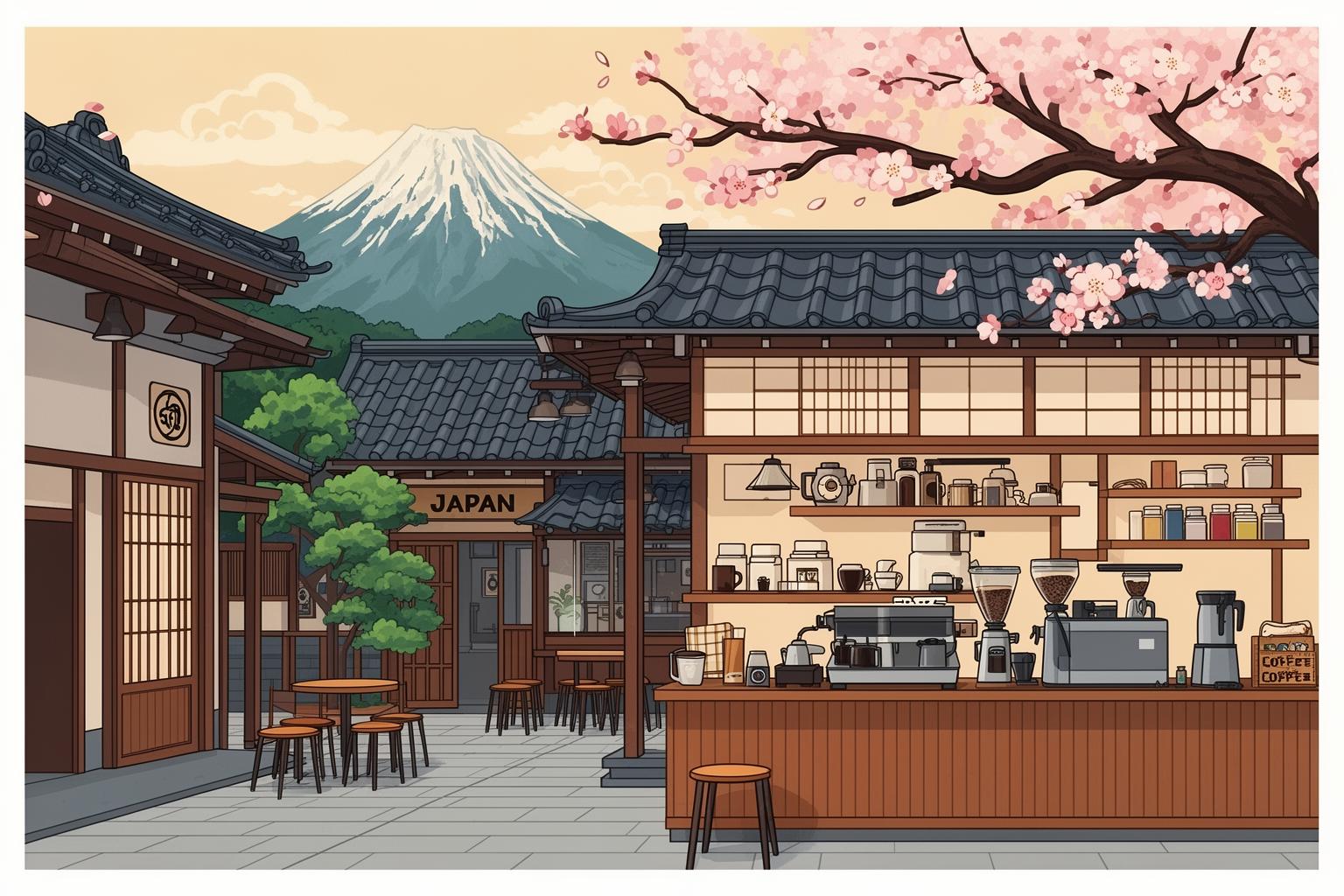
Before you can truly grasp the essence of a kissaten, you must first appreciate its individual components. These are not franchises churned out by a corporate factory. They are self-contained ecosystems, where each element is either carefully selected—or left untouched for fifty years—to craft a very particular atmosphere. It’s a formula, but one with endless, deeply personal variations.
The Master
At the center of every authentic kissaten is the “Master” (masutā). This is not merely a manager or head barista; the Master is the curator, the conductor, and the quiet soul of the establishment. Often an older gentleman, he moves with practiced, deliberate economy behind a long wooden counter. He might not be talkative—in fact, he may hardly acknowledge you—but his presence anchors the entire space.
He is the one who chose the coffee beans, honed the brewing method over decades, selected the music (or silence), and polished the same brass fixtures since the 1970s. He has witnessed generations of students cramming for exams in the corner booth, seen salarymen negotiating deals, and listened to the confessions of regulars who treat the counter like a secular confessional. The relationship between the Master and his patrons is one of quiet, mutual respect. He provides the space, the consistency, the perfectly brewed cup. They provide the life, the conversation, and the reason for him to open the door each morning. When a kissaten’s Master retires, the place often closes permanently. He is, in many ways, irreplaceable.
The Interior: A Stage for Daily Life
The aesthetic of a Showa-era kissaten is a study in comfortable, time-worn elegance, often featuring a strong European influence as imagined from afar. The goal was to create a space that felt apart from the mundane world outside, a luxurious escape.
Dark wood is fundamental. It lines the walls, forms the counter, and frames the booths. It absorbs sound and light, creating a hushed, intimate atmosphere. Seating rarely consists of mere chairs and tables. The classic choice is the high-backed booth, upholstered in vinyl or velvet in rich jewel tones: burgundy, forest green, deep ochre. These booths are more than places to sit; they are private little worlds, designed to give patrons a sense of seclusion for reading, having a quiet conversation, or simply watching the world go by without being observed.
Lighting is equally essential. Forget bright, sterile overhead lights. Kissaten lighting is warm and low, coming from stained-glass lamps, multi-armed chandeliers reminiscent of Viennese coffee houses, or small, shaded table lamps that cast a gentle glow on your table. This isn’t just about mood; it’s a design choice that encourages you to slow down, lean in, and focus on your immediate surroundings.
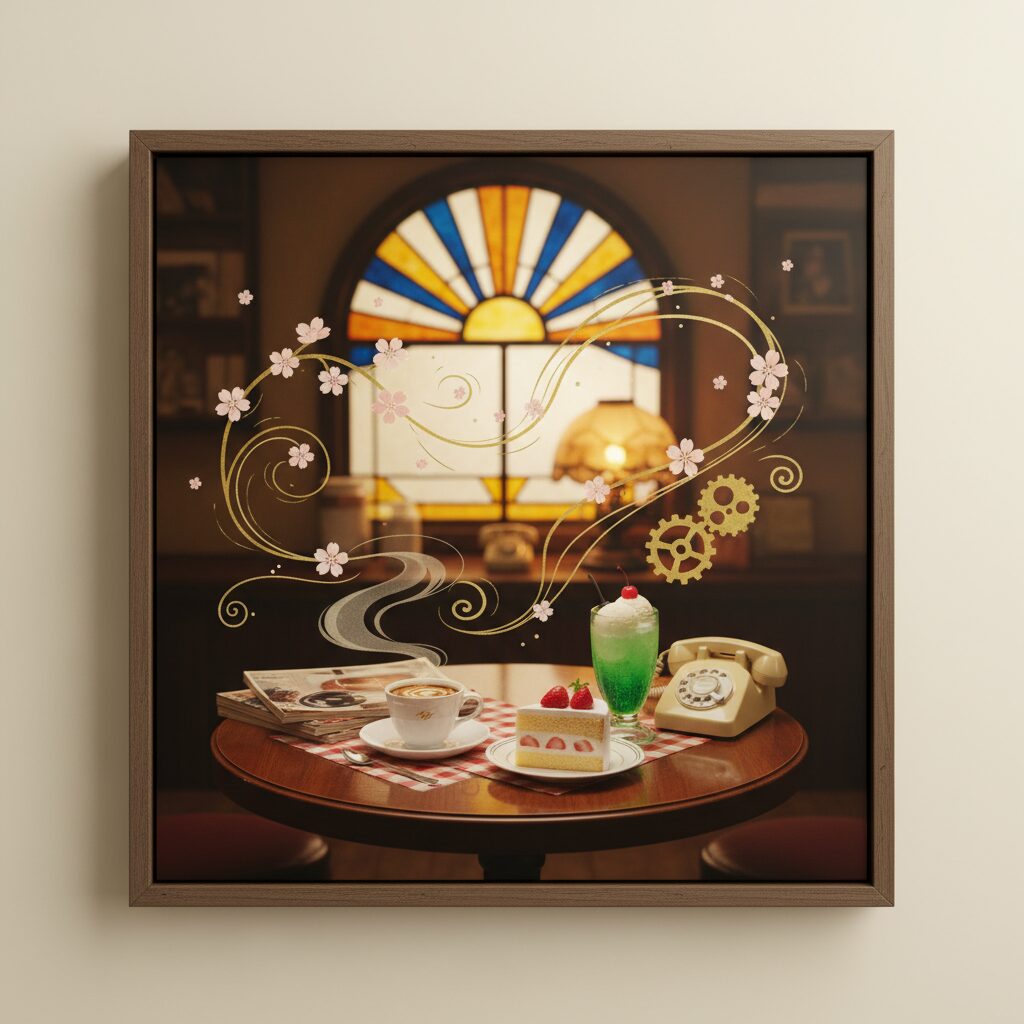
Then there are the details—the accumulated patina of time. A large, pendulum clock ticking softly on the wall. A rotary dial telephone that may or may not still work. Shelves packed with aging manga or weekly magazines for patrons to browse. And until very recently, the ever-present glass ashtray. For decades, the kissaten was a smoker’s refuge, and the faint, sweet scent of old tobacco is woven into its very fabric.
The Menu: Nostalgia on a Plate
No one visits a classic kissaten expecting a single-origin pour-over with bergamot notes. The coffee culture here hails from a different era, centered on a different kind of perfection. The menu is a standardized collection of classics, comfort foods served exactly the same way for half a century.
The Drinks
The coffee is often brewed using a siphon, a theatrical, scientific-looking apparatus of glass globes and open flames that produces a clean, strong, and characteristically dark brew. Another traditional method is the flannel-filter “nel drip,” a painstaking process that yields smooth, rich, low-acidity coffee. The beans are usually a dark roast, popular during the Showa era. It’s a bold, straightforward, deeply satisfying cup.
Yet the most iconic drink isn’t coffee at all. It’s the Melon Soda. A vividly artificial green soda, served over ice and topped with a perfect scoop of vanilla ice cream and a single bright red maraschino cherry. It’s pure, unadulterated childhood nostalgia in a glass—a sweet and fizzy concoction as integral to the kissaten experience as the coffee itself.
The Food
Kissaten food is not gourmet. It is yōshoku, or Western-style Japanese food, offering hearty, simple comfort. The undisputed star of the menu is Napolitan Spaghetti: thick, soft noodles stir-fried with sausage, green peppers, and onions in a sweet tomato ketchup-based sauce. This dish, born of post-war ingenuity, has become a beloved national comfort food.
Other staples include the Mixed Sandwich (mikkusu sando), typically layers of egg salad, ham, and cucumber between slices of fluffy, crustless white bread, cut into neat triangles. And there’s Toast. Not just a thin slice of bread, but a thick, pillowy piece of Japanese shokupan, toasted golden brown and served with a pat of butter and a small container of jam or red bean paste. This often forms the centerpiece of the famed “Morning Service,” a cultural tradition where, for the price of a single coffee, you receive complimentary breakfast of toast and a hard-boiled egg. It’s a ritual that keeps regulars returning day after day.
A Social History: The Many Lives of the Kissaten
To view a kissaten merely as a retro cafe completely misses the essence. These were vital social institutions, adaptable spaces that evolved alongside the needs of Japanese society throughout the 20th century. Their development reflects the story of modern Japan itself.
From Intellectual Salons to Post-War Sanctuaries
The earliest coffee houses emerged in the late Meiji and Taisho periods, inspired by the grand cafes of Paris. They served as gathering spots for artists, writers, and intellectuals—the bunjin—to exchange and debate new ideas from the West, shaping cultural trends. These were exclusive, slightly scandalous venues, far removed from the everyday lives of common people.
World War II brought this era to a sudden end, making coffee an unattainable luxury. However, in the post-war era, as Japan embarked on its remarkable economic recovery, the kissaten experienced a revival. In rapidly expanding cities, where living quarters were tight and privacy limited, the kissaten became a crucial “third space” for the growing urban middle class. It was an affordable indulgence, a place to feel refined, a quiet spot to call one’s own for a brief respite.
For the ubiquitous “salaryman,” it functioned as an unofficial office and refuge. It was where one held a quiet meeting with a client, slipped in to pass the time between appointments, or went to saboru—a verb literally meaning “to sabotage” but colloquially referring to slacking off at work. You could linger for hours over a single cup of coffee, reading the newspaper or magazines, undisturbed.
For students, it served as a study hall away from noisy homes or crowded libraries. Many university students crammed for finals in a kissaten booth, sustained by inexpensive coffee refills and the room’s calm, focused energy.
The Specialized Kissaten: Music, Manga, and Video Games
As the kissaten boom peaked in the 1960s and 1970s, they began to specialize, catering to niche interests and fostering unique subcultures.
The most renowned were the Ongaku Kissa, or music kissaten. At a time when imported records were prohibitively costly and high-fidelity audio equipment a luxury for most, these venues provided a solution. For the price of a coffee, you could enjoy the latest American jazz or a symphony by a great European composer on a cutting-edge sound system.
Two main types existed. Jazz Kissa were sanctuaries for jazz enthusiasts—often dim, smoky, and highly serious places where conversation was forbidden during listening sessions. The Master was a connoisseur, curating an extensive vinyl collection and playing sets for an attentive audience. Similarly, Meikyoku Kissa (classical music cafes) offered a concert hall atmosphere. Patrons sat in rows facing giant speakers, sometimes following scores, fully immersed in the music.
Another variation was the Manga Kissa. Before the advent of modern manga cafe chains with private booths and internet access, these were simply kissaten housing massive manga libraries. Visitors could spend hours reading entire series, making them extremely popular with students and young people.
Then, in the late 1970s and early 1980s, a new trend emerged: tabletop video games. Kissaten nationwide began installing tables built with games like Space Invaders or Donkey Kong. The screen formed the tabletop, with controls on either side. This was a brilliant innovation, merging the social ambiance of a kissaten with the addictive excitement of the burgeoning arcade culture. You could sip coffee while defending the earth from pixelated invaders, the sounds of lasers and explosions blending with the clinking of cups and saucers.
Why They’re Fading (And Why They Persist)
The golden age of the kissaten couldn’t last indefinitely. Starting in the 1990s, a combination of factors began to threaten their survival, transforming these once-ubiquitous establishments into an endangered breed.
The Challenges of a New Era
The collapse of Japan’s bubble economy in the early 90s dealt a significant blow. The generous expense accounts that had supported countless salaryman coffee meetings disappeared, and consumer spending became more cautious. Suddenly, the unhurried atmosphere of the kissaten felt like a luxury many could no longer afford.
Meanwhile, a new style of coffee shop emerged: the chain café. Starbucks opened in Ginza in 1996, and alongside domestic chains like Doutor, introduced an entirely different coffee culture. It was quick, bright, and efficient. Customers ordered at a counter, their names were called, and they could be in and out within minutes. These spaces were non-smoking, offered a broad range of espresso-based drinks, and provided a sense of anonymous comfort that appealed to a younger generation. The slow, personal, and smoke-filled world of the kissaten began to seem outdated.
Another, more personal issue is demographics. The original Masters who founded their shops in the 60s and 70s are now in their 70s or 80s, or have passed away. Their children often show little interest in taking over the demanding, low-margin business, so when the Master retires, the kissaten often closes for good.
Lastly, recent nationwide indoor smoking bans have stripped away one of the kissaten’s defining features. For better or worse, they were sanctuaries for smokers. The ban has forced many to undertake costly renovations or risk alienating their core clientele, becoming another blow to smaller, struggling shops.
The Retro Revival
Despite this, the kissaten persists. In fact, it is currently experiencing a quiet revival, driven by an unexpected group: young people. A wave of nostalgia for the Showa period, known as Shōwa retoro, has swept through Japanese youth culture. In a world dominated by sterile minimalism, constant digital noise, and transient trends, the tangible, analog, and unapologetically stylized world of the Showa era feels genuine and cool.
This resurgence is partly fueled by social media. The vibrant green of a melon soda, the perfect swirl of Napolitan spaghetti, and the moody, cinematic interiors of a classic kissaten are incredibly photogenic. Young Japanese now seek out these spots not just for the food and drink, but for the aesthetic—the feeling of stepping into a movie set.
But there’s more to it than that. There’s a sincere appreciation for the slower pace and personal touch these places offer. It represents a rejection of modern life’s hyper-efficiency. It’s the pleasure of sitting in a cozy booth, disconnected from Wi-Fi, simply talking to a friend or reading a book. Reflecting this, a new wave of neo-kissa have opened, run by younger owners who carefully recreate the Showa aesthetic with a contemporary sensibility, proving the timeless appeal of the concept.
A Curated List: Where to Find a Portal to the Past
While thousands of kissaten have shut their doors, many of the greats still endure, proudly serving the same coffee and Napolitan dishes they did fifty years ago. Here are a few essential spots that embody the diverse spirit of the kissaten.
Saboru (Jimbocho, Tokyo)
Nestled in Tokyo’s book district of Jimbocho, Saboru feels less like a cafe and more like an underground mountain cabin. It’s a legend. The entrance is nearly hidden, leading down a short stairway into a cave-like space. The walls, made of rough-hewn logs, are covered with decades of handwritten notes and business cards left by patrons. The air is thick with history. It’s cramped, chaotic, and utterly enchanting. Next door, its sister venue, Saboru 2, serves the classic menu, including a mountain of Napolitan spaghetti that has fueled generations of nearby university students. Saboru is the quintessential student kissaten—beloved, lived-in, and something of a communal secret.
Coffee Shop Galant (Ueno, Tokyo)
If Saboru is a rustic retreat, Galant is a Showa-era palace. Located in the bustling Ameyoko market area of Ueno, stepping into Galant feels like traveling back to the peak of the bubble economy. The interior is a magnificent display of polished dark wood, deep red velvet chairs, ornate chandeliers, and gleaming gold accents. It’s grand, opulent, and beautifully over the top. This is the kind of upscale kissaten where businessmen celebrated successful deals. The uniformed waitstaff are consummate professionals, and the ambiance embodies refined, old-world service. It’s an ideal place to appreciate the luxurious aspirations of post-war Japan.
Rokuyousha (Kawaramachi, Kyoto)
Kyoto’s kissaten scene rivals Tokyo’s, often with a more understated and refined atmosphere. Rokuyousha, a small two-story shop just off the city’s main shopping street, is a perfect example. Open since 1950, it is a serious coffee institution. The vibe is warm and inviting, with a well-worn wooden counter and a loyal local clientele. Rokuyousha is renowned for two specialties: its expertly crafted nel drip coffee and its homemade doughnuts. The pairing of a rich, smooth cup of coffee with a freshly made warm doughnut is one of Kyoto’s simple, profound pleasures. It epitomizes the kissaten as a craftsman’s haven—a place quietly perfecting its offerings for over seventy years.
Lion (Shibuya, Tokyo)
Amid the chaotic, trend-driven heart of Shibuya lies an oasis of calm and order: the Meikyoku Kissa Lion. Founded in 1926, this classical music cafe is a sanctuary for serious listening. The interior is stunning, resembling the nave of a Gothic church. Every seat—a mix of old theatre chairs and velvet benches—faces forward toward a pair of enormous, custom-built wooden speakers dominating the front wall. Talking is strictly prohibited. Orders are placed via notes on the table. Patrons sit in silence, fully absorbed in Beethoven or Mozart symphonies pouring from the speakers. It’s an intense, meditative experience—a poignant reminder of the kissaten’s role as a cultural provider in an era before instant music access.
Tajimaya Coffee House (Shinjuku, Tokyo)
Tucked in the maze of Shinjuku’s west side, Tajimaya feels like a secret library for coffee enthusiasts. It’s a classic example of the high-end, serious coffee kissaten. The space is long and narrow, filled with dark wood, antique clocks, and elegant porcelain coffee cups from brands like Royal Copenhagen and Wedgwood lining shelves behind the counter. You can even request your coffee served in a particular cup. The focus here is entirely on the brew. The Master and staff are meticulous, and the menu offers a wide selection of single-origin beans. It’s a quiet, refined refuge perfect for escaping the chaos of Shinjuku station, embodying the kissaten as a place of quiet contemplation and connoisseurship.
The Enduring Soul of the Kissaten
The Showa-era kissaten is far more than just a place to enjoy a cup of coffee. It serves as a living museum of Japanese social history, reflecting an era when community was nurtured in quiet, shared spaces. Each kissaten holds countless stories, acting as a tangible archive of a unique form of Japanese modernity that valued craftsmanship, patience, and ambiance.
Their continued existence, thriving against all odds, reveals something deeply meaningful about contemporary Japan. It expresses a collective longing for the tangible in a world that is increasingly virtual. It uncovers a craving for spaces infused with soul, shaped by human touch rather than corporate algorithms. Stepping inside a kissaten invites you to slow down, disconnect, and take part in a ritual that has been unfolding daily for over fifty years. It’s the simple, beautiful act of sitting quietly and watching the world go by, all for the price of a single cup of coffee.