So, you’ve done Japan. You’ve navigated the Shibuya Scramble, found tranquility in Kyoto’s bamboo groves, and eaten yourself into a stupor in Osaka. You’ve got the basics down. But you’ve got this nagging feeling, don’t you? The sense that there’s another layer, something stranger and more specific, hiding just out of sight. You’re ready to trade the highlight reel for the deep cuts.
Well, you’re right. And I have two words for you: retro skiing. Forget the ultra-modern, international powder hubs of Niseko for a moment. I want you to picture something else. Imagine vast, pastel-colored hotels rising like monoliths from snowy valleys. Imagine cavernous lobbies with marble floors and sweeping staircases that lead nowhere in particular. Imagine the distant echo of a synthesizer melody drifting through a hallway as you head to a dimly lit cocktail bar on the 20th floor. This is the world of Japan’s Bubble Era ski resorts, and it might just be the most fascinatingly surreal trip you can take in the country today.
In the late 1980s, Japan was riding an unprecedented wave of economic euphoria known as the `baburu jidai`, or Bubble Era. Money felt infinite, confidence was sky-high, and corporations poured astronomical sums of cash into creating leisure destinations of staggering ambition. The crown jewels of this spending spree were the ski resorts. They weren’t just places to ski; they were self-contained utopian fantasies built for a new generation of sophisticated, cash-flush urbanites. Today, with the economic fever long broken, many of these resorts remain—perfectly preserved, slightly faded time capsules of a wildly optimistic past. Visiting them isn’t just a ski trip. It’s a journey into the DNA of modern Japanese culture, a stylish and slightly melancholic experience that tells you more about the country’s dreams and anxieties than any museum.
Mirroring the allure of these nostalgic ski resorts, the enduring charm of vintage radio calisthenics offers another intriguing glimpse into Japan’s quirky cultural legacy.
A Quick Refresher on the ‘Bubble’
To grasp why these resorts evoke such feelings, you need to appreciate the sheer delirium of the era that created them. From around 1986 to 1991, Japan’s economy was an unstoppable force. The stock market and urban land prices skyrocketed to unimaginable levels. Tales from that period sound like legends: corporate expense accounts that funded thousand-dollar dinners, bonuses large enough to buy a car, and Tokyo’s Imperial Palace grounds holding a theoretical value exceeding all the real estate in California.
This was more than just an economic event; it was a cultural shift. A new mindset emerged, focused on conspicuous consumption and displaying a sophisticated lifestyle. Suddenly, everyone felt the need to own the right brand of French handbag, the right German car, and participate in the right leisure activities. The ultimate leisure activity, blending sport, status, romance, and consumerism seamlessly, was skiing.
Skiing during the Bubble Era wasn’t about connecting with nature. It was a social spectacle. It was about couples driving up to the mountains in their Toyota Celica GT-Fours, dressed in vibrant, shoulder-padded ski suits, to live out a romantic weekend fantasy. The sport itself was almost secondary to the `aprés-ski` scene: elaborate multi-course dinners, cocktails in a panoramic lounge, a long soak in the onsen, and maybe some karaoke. This was the dream being marketed, with corporations investing billions to build the stages for its performance.
The Birth of the Mega-Resort: Skiing as Spectacle
Before the Bubble era, Japanese ski areas were often simple and utilitarian. They typically featured a handful of lifts, a basic lodge, and perhaps a nearby village with some family-run inns. In stark contrast, the Bubble resorts were a whole different breed. They were meticulously master-planned, all-in-one destinations crafted with almost sci-fi levels of ambition.
Architecture of Optimism
The architecture is the first thing that grabs your attention. These resorts were not intended to blend into their environment; they were built to dominate it. The common design was a massive hotel complex—or several—positioned right at the base of the mountain, enabling a seamless ski-in, ski-out experience. Their style uniquely combines late modernism with 80s futurism, showcased in a palette of bright pastels such as salmon pink, mint green, and pale yellow.
Inside, the scale is meant to awe. The lobbies are vast atrium spaces soaring several stories high, often featuring grand pianos, enormous chandeliers, and geometric water installations. The aim was to create a fully self-contained world. Once you arrived, there was no reason to leave. The resort complex included everything: a dozen restaurants serving cuisine from sushi to formal French dishes, multiple bars, souvenir shops, game arcades, swimming pools with wave machines, and, of course, extensive onsen facilities. These were sealed-off bubbles of leisure, designed to keep the outside world away and your wallet close at hand.
The Soundtrack to the Scene
Discussing the Bubble ski vibe wouldn’t be complete without mentioning Yumi Matsutoya. Affectionately known as Yuming, she was the unrivaled musical queen of the era, and her breezy, sophisticated style of “city pop” became the ski season’s official soundtrack. Her annual “Surf & Snow” concert series, held at the Naeba Prince Hotel, was a cultural landmark. Her songs played through speakers on the slopes and in hotel lobbies, their melodies weaving seamlessly into the experience’s fabric.
This cultural mood was further cemented by the hit 1987 film `Watashi o Ski ni Tsuretette` (“Take Me Skiing”). The movie is a light-hearted romantic comedy that perfectly captures the Bubble-era ski fantasy. It centers on attractive young Tokyo office workers finding love on the slopes, complete with dramatic ski chases, tearful reunions in the lodge, and heartfelt chairlift confessions. The film was a huge sensation, single-handedly defining the aspirations of a generation. A ski trip was no longer just a vacation; it was an opportunity to star in your own personal movie, with the resorts serving as meticulously designed film sets.
Where to Find These Time Capsules Today
Though the neon glow of the Bubble has long since dimmed, many of its grandest creations still stand, waiting to be discovered. They certainly provide excellent skiing, but their true value lies in the impeccably preserved atmosphere.
Naeba Prince Hotel (Niigata): The Epicenter
If there is a heart of the Bubble ski experience, it is Naeba. This vast complex embodies the era perfectly. It’s not just a single building but a series of interconnected towers stretching along the mountain’s base, exemplifying the developers’ “build it and they will come” credo. The sheer scale is hard to grasp until you find yourself wandering its long, carpeted corridors.
Naeba was the venue for Yuming’s legendary concerts, and that history is still palpable. The interior design is a showcase of late-80s luxury: abundant brass, reflective surfaces, and soft, rounded furniture. The complex is so immense it links to the neighboring Kagura ski area via the Dragondola, one of the world’s longest gondolas. Riding it feels like soaring over a forgotten kingdom. Staying at Naeba is like checking into a living museum of Japanese pop culture.
Appi Kogen (Iwate): The Pastel Palace
While Naeba is a sprawling giant, Appi Kogen stands as a monument to careful master planning. The main hotel, Hotel Appi Grand, is instantly identifiable by its distinctive, uniform palette—a creamy yellow and salmon pink painting its terraced towers. It looks like a Wes Anderson-designed city dropped into the heart of the Tohoku mountains.
Appi was conceived and built as a unified, harmonious vision. Everything from the hotel to gondola stations to signage shares the same design DNA. This cohesive quality makes it feel truly immersive. It has the aura of a private, somewhat exclusive club. The slopes are wide and immaculately groomed, ideal for long, flowing runs. The resort’s old slogan was “Appi, the European elegance,” and there’s undeniably that aspirational, international vibe central to the Bubble era mindset.
Zao Onsen (Yamagata): A Blend of Eras
Zao offers a different take on the experience. At its core, it’s an ancient, atmospheric onsen town, with steamy rivers meandering through narrow streets and a history spanning centuries. Yet its ski infrastructure was turbocharged during the Bubble. The resort is famous for its `Juhyo`, the “Snow Monsters”—trees on the upper slopes so coated in windblown ice and snow they form bizarre, gigantic shapes.
To see these, you take a series of ropeways and gondolas that themselves are charming artifacts of 80s engineering. Standing in line for the Zao Ropeway, with its large, somewhat clunky cabins, you sense the legacy of mass tourism arriving in this ancient place. The experience is a fascinating fusion of timeless natural wonder and Bubble-era development. You can spend your day skiing among surreal ice sculptures, then unwind at the hotel with a 1980s-style French dinner, all within a town that’s been a hot spring destination for over a millennium. It’s an intriguing layering of Japanese history.
Rusutsu Resort (Hokkaido): The Amusement Park on Ice
For Bubble Era ambition taken to its most gloriously unrestrained, head to Rusutsu. Situated a short drive from Niseko’s international hub, it feels like a different world in spirit. Rusutsu’s developers clearly embraced the “more is always more” philosophy. A ski resort is excellent, but what if it also featured a two-story-tall Roman-style carousel in the hotel lobby? An animatronic singing tree? A summer amusement park with roller coasters looming like sleeping giants beneath the winter snow?
Rusutsu is a delightful fever dream. Its architecture is an eclectic mix of European pastiche and 80s opulence. The resort is divided into two areas linked by a monorail gliding silently over the snow. Staying here feels less like a ski trip and more like stepping into a forgotten theme park. The dedication to this maximalist entertainment vision is what makes it so unique. It’s fun, it’s quirky, and it’s the Bubble mindset pushed to its wonderfully absurd, logical extreme.
How to Experience the Vibe, Not Just the Slopes
Simply arriving at one of these resorts is only part of the experience. To fully appreciate them, you need to engage with the unique culture they were intended to cultivate. It’s about embracing the entire ecosystem.
Dress the Part (Subtly)
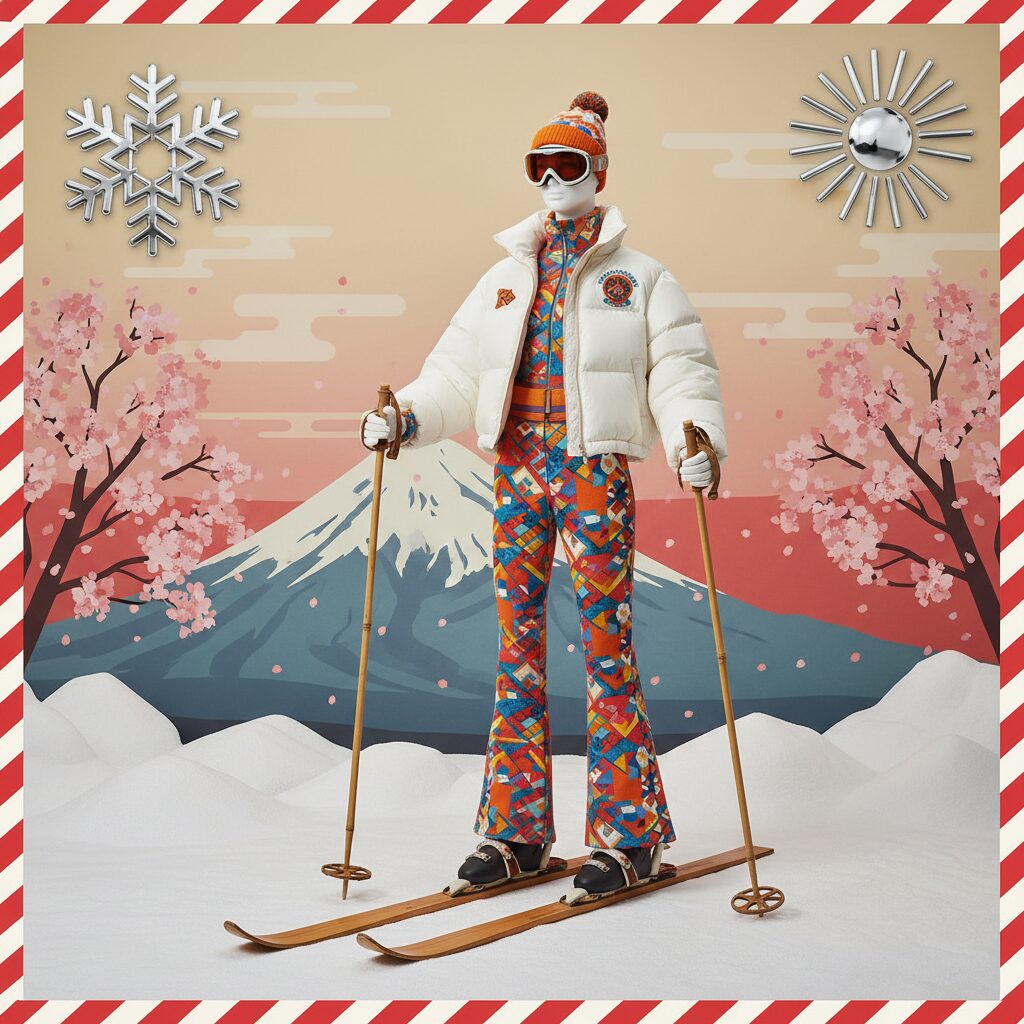
No one is suggesting you show up in a vintage neon one-piece ski suit with oversized shoulder pads. However, you can give a subtle nod to the aesthetic. Consider color: while modern ski wear tends toward muted, earthy tones, the Bubble was characterized by bright, optimistic hues. A vibrant jacket or a pair of retro-style sunglasses can help put you in the right mindset. It’s less about dressing up in costume and more about appreciating the bold, graphic style of the era. With 80s and 90s fashions making a comeback, it’s easier than ever to find pieces that feel fresh while capturing the spirit of the past.
Embrace the Resort Ecosystem
Your hotel is more than just a place to sleep; it’s the main attraction. Take some time to explore it. Stroll down the long, quiet hallways and soak in the ambiance. Discover the slightly dated yet charming top-floor cocktail lounge and order a drink while gazing out over the illuminated slopes. Head to the basement and spend an hour in the game arcade, playing classic racing games.
And you must dine within the resort. Resist the temptation to seek out a small, rustic restaurant in a nearby town. Instead, commit to the resort’s dining options. Make a reservation at the formal French or Italian restaurant with white tablecloths and attentive service. Experience the grand breakfast buffet in the cavernous dining hall. This is the ritual these places were designed to support. It’s a performance, and you’re part of the cast.
The Aprés-Ski Ritual Perfected
The classic Bubble ski day followed a deliberate and enjoyable rhythm. You’d ski until late afternoon, just as your legs began to tire. Then, you’d head straight for the onsen. A long, restorative soak in the hot spring bath, ideally one with an outdoor section overlooking the snow, was essential. After that, you’d change for dinner, a leisurely and often elaborate affair.
The evening would conclude in one of two ways: either with drinks at a quiet bar or with a few hours of karaoke. Most of these hotels have dedicated karaoke rooms, and joining in is the perfect way to complete the immersion. This entire sequence—from the slopes to the soak, to the supper, to the song—is the holistic experience the resort was designed to offer.
The Melancholy of the Bubble: A Faded Glamour
It’s important to be clear: these resorts are not pristine, gleaming examples of 80s design frozen in time. They are active businesses that have endured thirty years of economic stagnation. And that is exactly what makes them so fascinating.
You will notice the signs of wear. The carpet may be a bit worn in spots. The elevator’s control panel might appear amusingly outdated. There’s a certain emptiness to the expansive spaces, especially on a Tuesday night. You can sense the ghost of the crowds that were meant to fill these halls forever. There’s a tangible feeling of `mono no aware`, the traditional Japanese notion of a gentle melancholy for the fleeting nature of things.
Yet, this experience is not sorrowful. It’s poignant. You are witnessing the physical remains of a national dream. The boundless optimism of the Bubble Era is embedded in the very walls of these buildings. Standing in a vast, half-empty lobby at Appi Kogen, you can almost hear echoes from the past—the laughter, the clinking glasses, the Yuming songs. It’s a powerful, almost haunting sensation you simply won’t find in a modern, efficiently designed hotel. You are skiing through the beautiful ruins of a near-forgotten future.
Why You Should Go Now
There is a certain urgency to this journey. The world is starting to catch on, but more importantly, time keeps moving forward. Each year, one of these resorts undergoes a contemporary renovation. A classic 80s lobby receives a minimalist makeover. A beloved, quirky restaurant is swapped out for a sleek, international brand. The original aesthetic, this unique and irreplaceable piece of cultural history, is gradually being erased.
To travel now is to witness the Bubble Era in its final moments. It’s an opportunity to experience a distinctive chapter of modern Japanese history firsthand, before it is updated beyond recognition. For the traveler who is genuinely curious and eager to understand the forces that shaped the Japan of today, a visit to these mountain palaces offers profound insight.
It’s a journey that’s stylish, comfortable, and deeply engaging. You’ll ski on excellent snow, dine well, and soak in magnificent hot springs. But more than that, you’ll be visiting a dream. You’ll be stepping off the beaten path and into a parallel Japan, one built on a heady mix of confidence, cash, and creamy pastel-colored concrete. And that is a travel story few others will be able to share.