
Walk away from the gleaming, hyper-modern boulevards of any major Japanese city. Duck under a low-hanging curtain, past a faded red lantern, and step into a different century. The air changes instantly. It becomes thick with the scent of grilled meat, charcoal smoke, and stale beer. The soundscape shifts from the polite hum of the metropolis to a boisterous chorus of clinking glasses, sizzling grills, and unrestrained laughter. You’ve found a yokocho, one of the tight, atmospheric alleyways crammed with tiny bars and eateries that feel like a secret wrinkle in the urban fabric. It’s easy to see these places as just retro drinking dens, a quaint escape for a cheap skewer and a cold beer. But that’s like looking at an ancient tree and only seeing firewood. These alleys are not products of a nostalgic design trend; they are living history. They are the direct, tangible descendants of the desperate, illicit black markets—the yami ichi—that rose from the ashes of World War II, and they carry the DNA of that chaotic era in their very bones. To understand the yokocho is to understand how modern Japan survived, rebuilt, and found its spirit in the rubble.
These hidden histories invite us to explore modern Japan through enduring traditions, as evidenced by the Japanese 6:30 AM ritual that still resonates with echoes of the past.
From a Nation in Ruins to Markets of Necessity
To understand why these cramped, smoky alleys exist, you first need to imagine Japan in late 1945. The war had ended, but the country lay in ruins. Major cities like Tokyo, Osaka, and Nagoya were vast stretches of scorched earth and debris, their industrial capabilities destroyed by air raids. The government and its infrastructure were in chaos. For the average person, the immediate and harsh reality was hunger. The official food rationing system, managed by a crippled bureaucracy, was a catastrophic failure. Daily rations were often insufficient for basic survival, and even those meager supplies were not always available. Starvation was not a distant danger; it was an everyday reality.
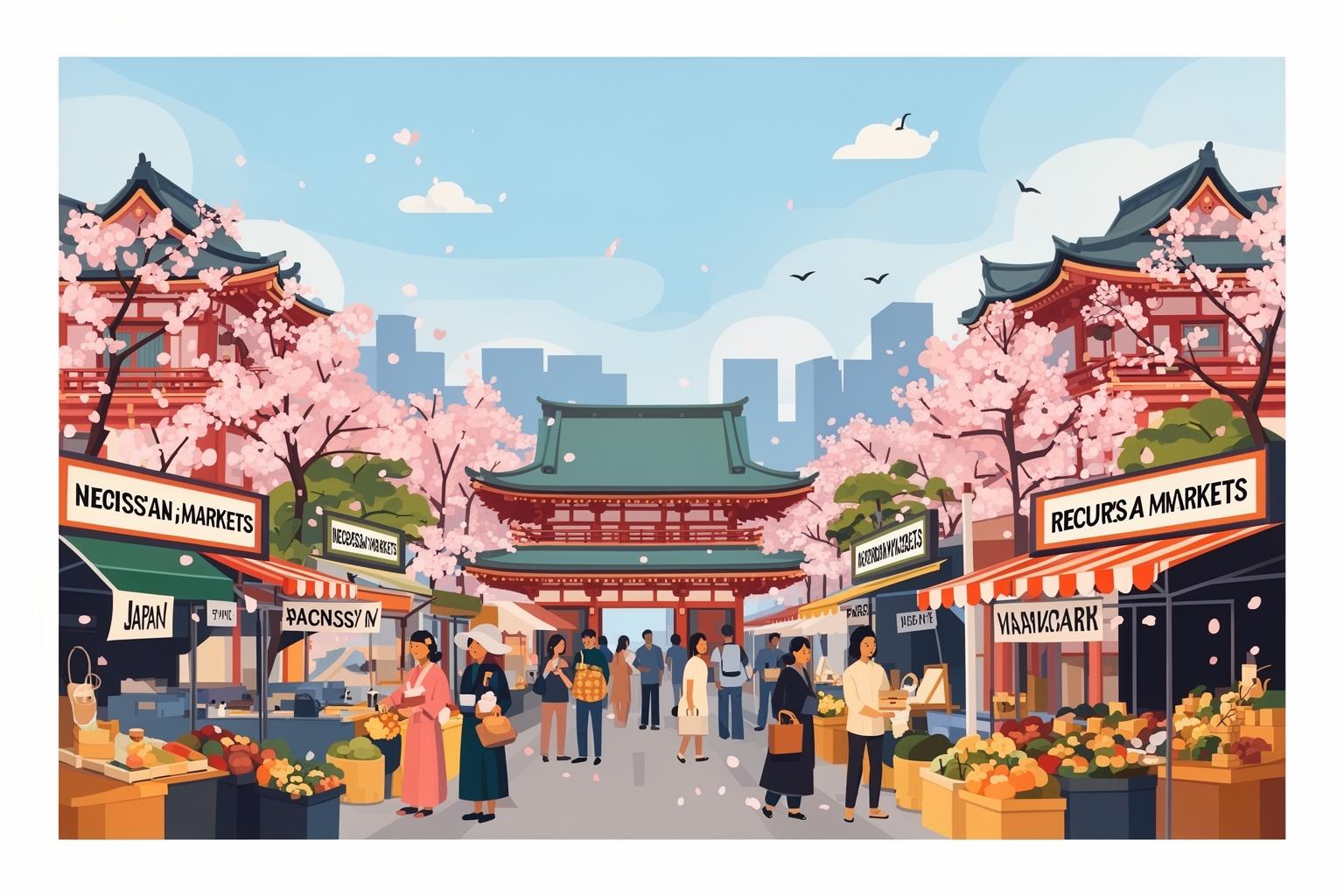
Filling this void of order and supply were the yami ichi—the black markets. Illegal, chaotic, yet absolutely essential, these were not centralized markets but spontaneous, sprawling clusters of vendors that appeared organically in the most logical locations: the burned-out shells of buildings and public squares, particularly near major train stations. Stations were the lifeblood of a fractured nation. They were where demobilized soldiers arrived with little more than the clothes on their backs, where refugees from rural areas sought opportunities, and where scarce goods could be transported. Setting up near a station meant access to a steady flow of desperate customers and potential suppliers.
These were far from quaint farmers’ markets. They were raw, gritty exchanges of survival. A farmer might slip in from the countryside with a sack of rice to trade for a pair of shoes. A family could sell a treasured kimono for a few sweet potatoes. Former soldiers leveraged their connections to obtain stockpiled military goods—boots, blankets, canned food—that became valuable currency. The vendors were a mix of ordinary people trying to feed their families, opportunistic hustlers, and increasingly, organized crime groups who sought to impose their own order and profit. The air hummed with frantic bargaining. Goods were spread out on straw mats or makeshift wooden tables amid the rubble. This was the primordial soup from which the yokocho would emerge.
The Unofficial Becomes Permanent
The shift from a temporary, illegal black market to a permanent alleyway of small bars was a gradual, makeshift process fueled by human resilience and the gradual return of normal life. Initially, these markets faced periodic, often violent, police crackdowns. However, the authorities were waging a losing battle. The yami ichi were simply too essential. They fed the population when the government could not. Completely shutting them down would have meant widespread starvation and even greater social unrest. A tacit understanding developed: as long as the markets remained relatively discreet, they would mostly be left alone.
This fragile balance enabled vendors to invest in their futures, one wooden plank at a time. What began as a simple stall on a mat could transform into a wooden shack with a basic roof to shield against the rain. A vendor selling grilled chicken innards on a stick—the origin of modern yakitori—might add a small counter and a couple of stools. This marked a crucial turning point. The open-air market began to solidify into semi-permanent structures. Because these were built on damaged, unclaimed, or legally ambiguous land, space was the ultimate luxury. Structures were packed tightly together, sharing walls and leaning on one another for support. The alleys between them were just wide enough for people to squeeze through. From this architectural improvisation, what we now call a yokocho—literally, an “alley off to the side”—was physically born.
As Japan’s economy slowly revived in the 1950s and 60s, these alleys evolved once more. They shifted focus from mere survival to offering simple pleasures to a growing working class. The men rebuilding the cities needed a place to unwind after long days of labor. The alleys provided exactly that: affordable, hearty food, strong drinks, and the easy camaraderie of shared experience. The menus settled on dishes born out of post-war scarcity but now comfort food: grilled offal (motsuyaki), savory stews (nikomi), and an array of skewers. These were spots of loud conversation and little pretense, escapes from the formalities of home and work. The illegal black market had woven itself into the city’s social fabric, becoming a vital, if still somewhat gritty, part of its essence.
The Architecture of Memory and Scarcity
Nothing captures the story of the yokocho’s origins better than its physical form. The way these alleys appear and feel today is not merely a stylistic choice; it serves as a direct architectural fossil record of the post-war turmoil. Every cramped seat, low doorway, and tangled electrical wire stands as a testament to a time of doing with almost nothing.
First, consider the scale. The shops are tiny, often accommodating no more than six or eight people squeezed shoulder-to-shoulder along a single counter. This intimacy wasn’t intended for creating a cozy atmosphere; it arose out of necessity. Each vendor occupied the smallest patch of land they could manage, constructing just enough of a structure to serve customers. The counter became the heart of the establishment, the stage where the owner worked and the boundary between the public alley and the private business. Customers don’t sit at separate tables; they share a single plank of wood, fostering interaction and closeness that modern restaurants lack. For the duration of your meal, you become part of a temporary, fleeting community.
Look at the materials. Yokocho are a mosaic of corrugated tin, weathered wood, and peeling paint. Electrical wiring often forms a chaotic web overhead, a visible circulatory system that developed alongside the alley rather than through careful planning. These structures weren’t designed by architects with blueprints. Instead, they were assembled, repaired, and expanded over decades by the shop owners themselves, using whatever was cheap and available. This organic, almost chaotic aesthetic directly rejects the planned, sterile perfection of the modern city that surrounds them. It serves as a physical reminder that the city wasn’t built solely by corporations and governments, but by individuals with hammers and nails.
Finally, there’s the layout. The alleys are narrow, winding, and often bewildering. They don’t follow any logical grid. Instead, they trace the paths people naturally carved through rubble, the leftover spaces between larger, more official developments. This maze-like quality evokes a sense of discovery and enclosure. Entering a yokocho is like stepping off the map. You find yourself in a semi-hidden world, shielded from the main thoroughfares. This feeling of being in a secret refuge is a fundamental part of the allure—a psychological echo of the alley’s origin as a space operating outside official rules.
Reading the Living Relics Today
When you visit a classic yokocho today, you are stepping into a living museum. The key is knowing what to notice. The history isn’t on a plaque; it’s found in the smoke, the sounds, and the very design of the place.
Take note of their locations. Some of the most famous yokocho in Tokyo—Omoide Yokocho in Shinjuku, Ameya Yokocho in Ueno, and the alleys beneath the tracks at Yurakucho—are all nestled right alongside major railway lines and stations. This is no accident. It’s the geographic echo of the yami ichi that thrived on the flow of commuters and travelers. These spots remain exactly where they began, serving a new generation of workers emerging from the same stations.
Focus on the food. The abundance of yakitori and motsuyaki directly connects to the post-war diet. During a time of severe food shortages, no part of an animal could be wasted. Offal and other less desirable cuts of meat were cheap, plentiful, and rich in nutrients. Grilling them over charcoal was a simple, effective cooking method. What started as survival food has been refined over generations into a treasured culinary tradition. When you enjoy a skewer of grilled chicken heart, you are tasting a piece of culinary history—a dish that helped a city recover.
Observe the social dynamics. The tight spaces encourage a unique social practice called hadaka no tsukiai, or “naked communication.” Without the room and formality of a proper restaurant, social hierarchies tend to fade. A corporate executive might sit elbow-to-elbow with a construction worker, both venting about their bosses over a beer. This kind of relaxed, unpretentious interaction is increasingly rare in a society that values order and social distance. The yokocho is one of the few remaining places where strangers can connect, if only briefly, on equal terms.
The Precarious Future of the Past
Despite their historical importance and cultural appeal, the future of authentic yokocho remains uncertain. These analog remnants persist in an increasingly digital world, occupying highly valuable real estate in some of the most densely populated cities on the planet. The pressure from developers is enormous. A small block of two-story wooden shacks could easily be replaced by a shining skyscraper generating millions in revenue. Many historic alleys have already been demolished, scattering their communities and erasing their history. Shinjuku’s Golden Gai, perhaps one of the best-known examples, has withstood numerous redevelopment threats, largely due to the staunch loyalty of its patrons and owners.
This threat has sparked a new trend: the “neo-yokocho.” These are modern, planned commercial spaces designed to mimic the look and feel of the traditional alleys. They feature red lanterns, cramped stalls, and the smell of yakitori smoke, yet they are located within shopping malls or new office buildings. While they can be enjoyable, they function more as curated nostalgia theme parks, lacking the soul and grit of the originals. They capture the vibe of a yokocho but miss the history, chaos, and authentic sense of community developed over decades. Their existence underscores the lasting appeal of the yokocho aesthetic but also reveals what is lost when the organic gives way to the manufactured.
Still, the originals persist. They survive because they provide something essential and increasingly rare in our polished, efficient, and often isolating modern world. They serve as sanctuaries of human-scale interaction and tangible links to a city’s past, reminders of a tougher, more resilient era. In a yokocho, you are more than a customer; you become a temporary resident of a small, chaotic village nestled within the megacity. You can feel the weight of decades in the polished wood of the counter and glimpse the ghosts of countless conversations in the smoke-stained walls. These alleys are more than places to drink; they are places to remember. They represent the city’s memory, etched not in books, but in charcoal smoke, narrow lanes, and the enduring spirit of survival.