It’s past midnight in a Japanese city. The neon signs have started to blur, the energy of the main thoroughfares has retreated into the side streets, and the last trains have long since departed, leaving a quiet hum in their wake. For many, the night is over. But for those still navigating the warm, boozy aftermath of a long evening with colleagues or friends, the night is not yet complete. There is one final, essential act to perform. It isn’t another drink or a stumbling search for a taxi. It’s a pilgrimage. A short, determined walk toward a beacon of steam and savory aromas, toward the glowing red lantern of a ramen shop. This is the ritual of shime no ramen—the “closing bowl of ramen”—and it’s as much a part of Japanese drinking culture as the first raised glass of beer.
To an outsider, it might seem utterly counterintuitive. After a night spent consuming countless calories in the form of alcohol and izakaya snacks, why on earth would anyone cap it off with a heavy, salt-laden bowl of noodle soup? It feels like a deliberate act of self-sabotage, a surefire recipe for a food coma followed by a miserable morning. But to see it merely as a late-night snack is to miss the point entirely. Shime no ramen is not just about satisfying a craving. It is a deeply ingrained social and physiological ritual. It’s the punctuation mark at the end of a long, rambling sentence of a night out, a transitional moment that guides you from the boisterous world of revelry back to the quiet reality of the journey home. It is, in its own way, a perfect and necessary ceremony. To understand why, you have to understand the structure of the night it’s meant to conclude.
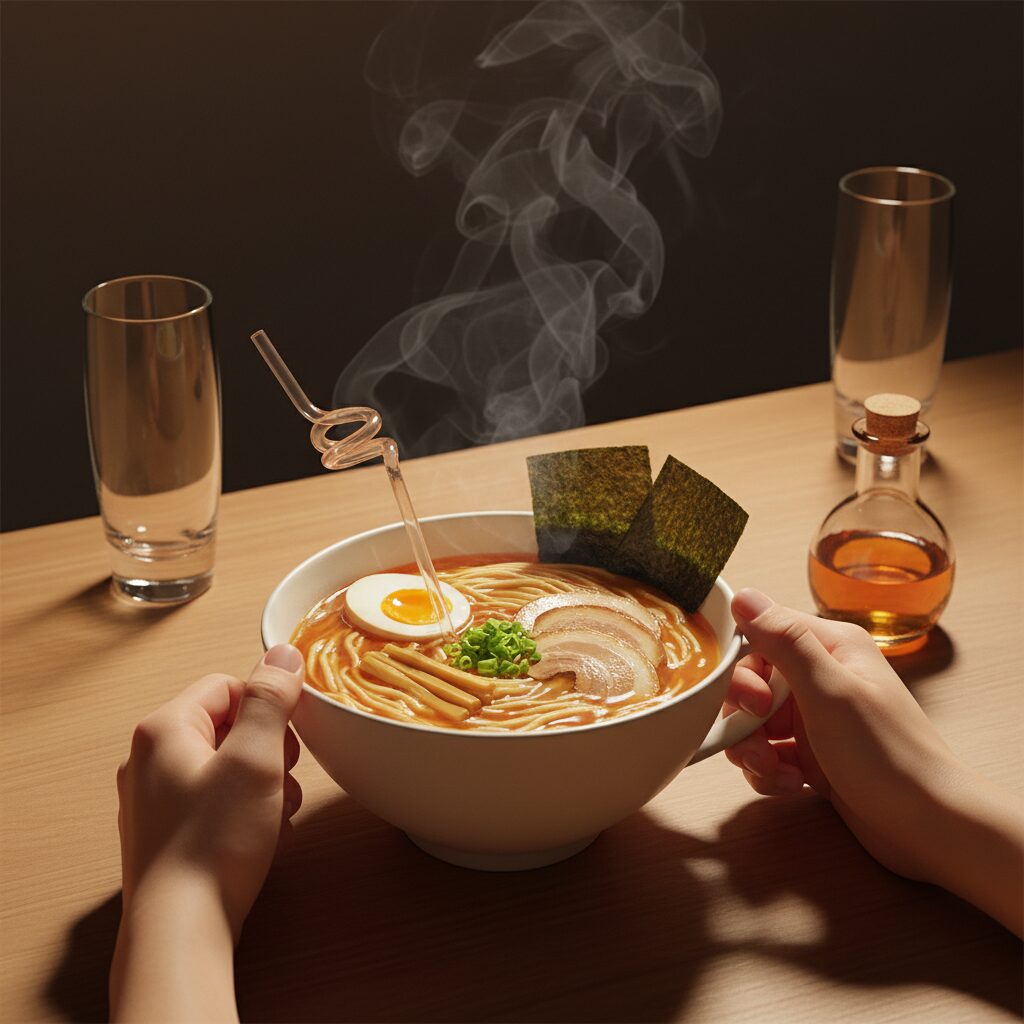
This final bowl not only marks the quiet end of a spirited night but also offers a perfect moment for enthusiasts to celebrate insta-worthy food culture before the journey home.
The Anatomy of a Japanese Drinking Night

Before you can truly appreciate the shime, you first need to understand the structure of the event it brings to a close. A drinking night in Japan, especially within a corporate or formal social setting, is rarely a straightforward, single-stop occasion. Instead, it unfolds like a multi-act play—a journey with distinct phases, each carrying its own mood and purpose. The evening typically begins with the ichijikai, or “first party.” This main gathering is often held at an izakaya, a traditional Japanese gastropub. The ichijikai is usually the most formal part of the night, even if the atmosphere is relaxed. It’s where the entire group assembles, toasts are raised, and conversation flows alongside a steady parade of shared dishes—edamame, karaage fried chicken, sashimi, grilled skewers. There’s a clear rhythm to it, a pattern of ordering drinks and food that sustains the collective energy and camaraderie.
However, the night rarely ends there. As time at the izakaya comes to a close, the inevitable question arises: “What’s next?” This leads to the nijikai, or “second party.” Here, the group dynamics often shift. Some participants may opt to leave, but the core group continues onward. The nijikai usually takes place at a different venue—perhaps a smaller, more specialized bar, a karaoke box, or a quiet cocktail lounge. The mood becomes more relaxed, and conversations grow more intimate. The strict social hierarchies seen during the ichijikai begin to ease, loosened further by alcohol and the shared desire to extend the evening.
For the truly devoted, a sanjikai (third party) or even a yonjikai (fourth party) might follow. With each subsequent stage, the group shrinks and the venues grow more intimate—a tiny whiskey bar with just six seats, a late-night café, or a smoky snack bar run by a charismatic “mama-san.” This marathon-like sequence is fundamental to the experience. By the time the last stragglers decide to call it a night, they have been on a long, winding social journey. They are tired, intoxicated, and floating in a space that lies somewhere between the structured realm of work and the private comfort of home. This journey generates a particular psychological need—a need for a clear, definitive conclusion. The night cannot simply fade away; it must be formally ended. This is where the concept of shime comes into play.
The Ritual of “Shime”: More Than Just Food
In Japanese, the word shime (締め) conveys a sense of finality and closure. It means “to close,” “to tighten,” or “to conclude.” This cultural concept appears in many contexts. For instance, at the end of a business deal or festive gathering, a group might perform a ceremonial hand-clapping ritual called tejime to signal a successful conclusion. The idea offers a clear break, a punctuation mark that separates what came before from what follows. A Japanese meal traditionally begins with the prayer of gratitude, itadakimasu, and ends with its counterpart, gochisousama deshita. There is a deep appreciation for clear beginnings and endings, and a long night of drinking is no exception.
Shime no ramen acts as the culinary equivalent of that final hand clap. It is a deliberate gesture that draws a definitive line under the evening’s festivities. It signals to everyone involved that this is, without question, the end. No more bars, no more karaoke, no more wandering the streets. After this bowl, it’s time to head home. This act of closure is highly significant. It offers a soft landing, a gentle transition from the evening’s heightened social energy back to the solitary journey home. It’s a moment to ground oneself, gather thoughts, and prepare for re-entry into normal life.
While ramen is the undisputed king of shime, it isn’t the only option. Depending on the region, season, or personal preference, other dishes may fulfill the same role. In some circles, a bowl of ochazuke—a simple dish of rice topped with green tea or dashi, often accompanied by salted salmon or pickles—is a favored choice. It’s lighter, subtler, and regarded as a more traditional or refined way to end the night. In summer, some might even choose a parfait or a bowl of ice cream, seeking a sweet, cooling conclusion. Yet despite these alternatives, ramen remains the champion. Its blend of physiological appeal and sensory impact makes it uniquely suited to this role.
The Ramen Itself: A Symphony of Salt, Fat, and Umami
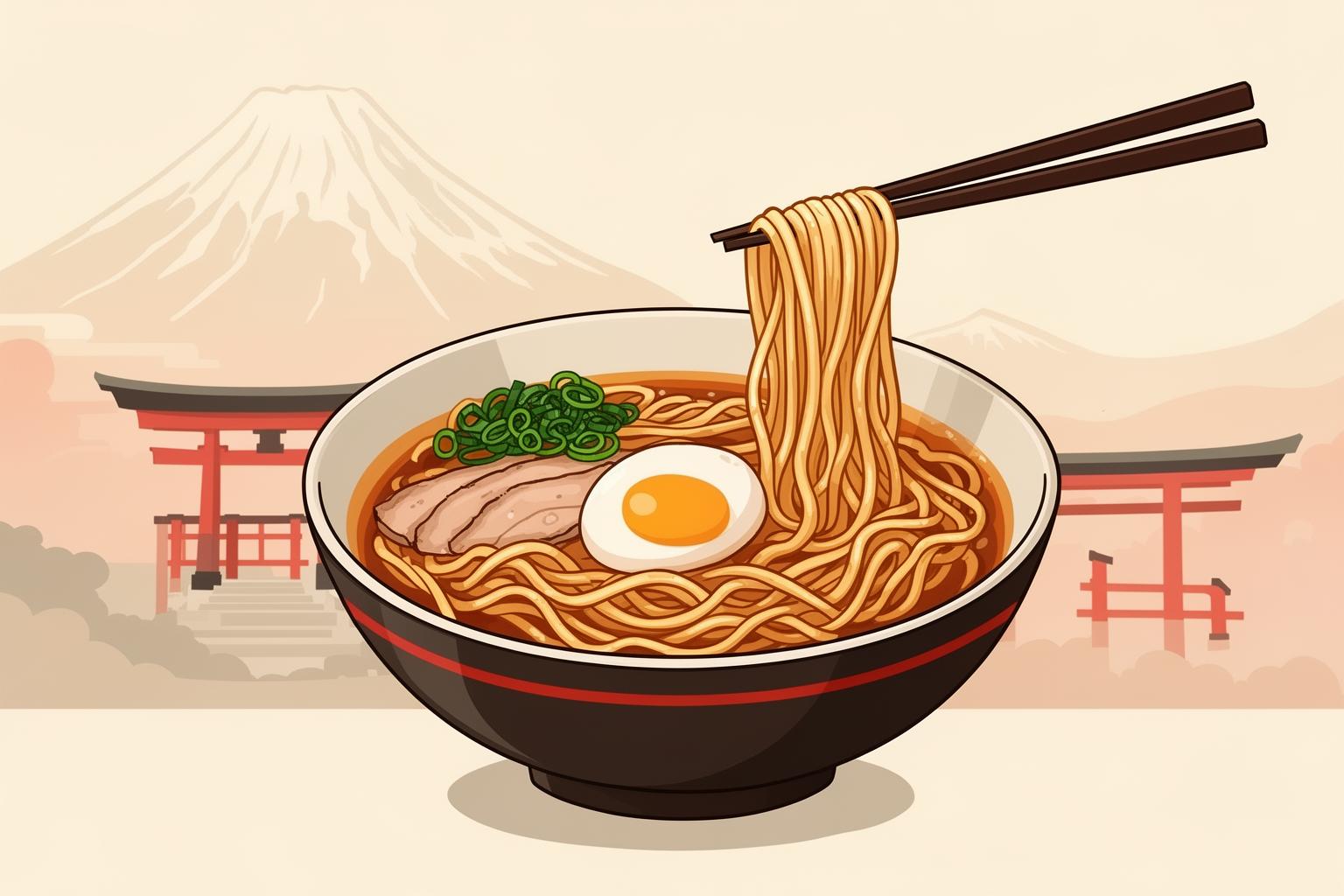
So, why ramen? What is it about this particular dish that has made it the go-to choice for millions of drinkers across Japan? The answer lies in its masterful ability to satisfy both the body’s primal cravings and the mind’s need for a strong sensory reset. It’s a perfect blend of flavor, texture, and folk wisdom.
The Physiological Argument: A Pseudoscience We Choose to Believe
Ask any Japanese person why they eat ramen after drinking, and you’ll likely hear a range of health-related, if not entirely scientific, explanations. There’s a common belief that it helps ease hangover symptoms. The reasoning, as often described, goes like this: the high salt content of the broth replenishes electrolytes lost due to alcohol’s diuretic effect. The large amount of warm liquid aids rehydration. The carbohydrates from the noodles and fats from the pork and oil are thought to “absorb” leftover alcohol in the stomach, slowing its entry into the bloodstream.
Whether this holds up medically is debatable. In fact, consuming loads of sodium and fat before bed is probably not what a doctor would advise. But that’s beside the point. The psychological effect is incredibly strong. The act feels restorative. It’s a form of self-care, a comforting ritual you believe benefits you. Beyond the hangover folk science, there’s a more immediate craving at work. After hours of drinking beer, sake, or highballs and nibbling on relatively small izakaya dishes, the body often yearns for something intensely savory, substantial, and warm. Ramen delivers on all counts with near-aggressive precision. The rich, fatty broth, the salty punch of the tare seasoning, the chewy noodles, the tender slices of chashu pork—it’s a combination that activates every pleasure receptor in a brain clouded by alcohol.
The Sensory Experience: A Reset Button for the Palate
Beyond the physiological, eating shime no ramen is a full sensory experience that effectively reboots your system. Walking into a late-night ramen shop is like entering another world. You leave the quiet, dark street and are instantly wrapped in a cloud of steam, the thick, primal aroma of simmering pork bones, garlic, and soy sauce. The bright, almost clinical lighting of the shop cuts through the alcoholic haze in your head, and the rhythmic sounds of chefs shaking water from noodles and customers slurping enthusiastically create a lively, focused atmosphere.
The flavor profile of a classic bowl of ramen—whether the deeply porky tonkotsu, the savory shoyu, the funky miso, or the clean shio—is overwhelming in the best way possible. It’s a flavor explosion that wipes away the lingering taste of stale beer or sweet cocktails from your palate. It’s so intense and all-encompassing that it demands your full attention. You can’t eat ramen passively; you have to engage with it. The physical act of eating itself grounds you. You have to lean over the bowl to avoid splashing, coordinate your chopsticks and spoon, and focus on slurping the hot, slippery noodles. This simple, visceral action pulls you out of your head and into the present moment, offering a brief, meditative focus that is both calming and clarifying.
The Social Stage: The Final Confessional
The ramen shop is more than just a place to eat; it serves as a distinctive social space and the final stage for the night’s interactions. Its physical layout and atmosphere create an environment fundamentally different from the bars and restaurants that precede it.
A Space of Equal Footing
Many ramen shops, especially traditional ones that thrive late into the night, revolve around a single counter. Patrons sit side-by-side on stools, facing the open kitchen where the master crafts his dishes. This setup acts as a great equalizer. Unlike at an izakaya, where seating can reflect social hierarchy, at a ramen counter, everyone is equal. The company president sits hunched over his bowl next to a student, who is beside a construction worker. All social pretenses vanish, leaving only the shared, primal act of eating.
This side-by-side seating also alters the nature of conversation. You’re not facing your companions directly, which removes the pressure of constant eye contact and engagement. This permits comfortable silences, broken only by the sound of slurping. You can be together yet alone in your own world with your bowl of noodles. This creates a low-pressure atmosphere, ideal for the end of a long night.
The Last Conversation of the Night
Often, it is in this distinctive, equalizing space that the most honest and unguarded conversations of the night occur. Multiple rounds of drinking have lowered inhibitions, and the formal part of the evening is clearly behind. The ramen shop’s structure encourages a final moment of connection before everyone goes their separate ways.
Over a bowl of steaming tonkotsu, a junior employee might find the courage to express a genuine thought to their manager. Friends may share a brief but meaningful heart-to-heart about something they couldn’t raise in the louder, more crowded setting of the nijikai. It’s a place for quiet confessions, final words of encouragement, and a shared moment of simple human connection. It’s the last act of bonding, a shared experience that cements the camaraderie built over the course of the evening before everyone fades into the anonymity of the city night.
The Modern Ramen-ya: An Ecosystem for the Night Owl
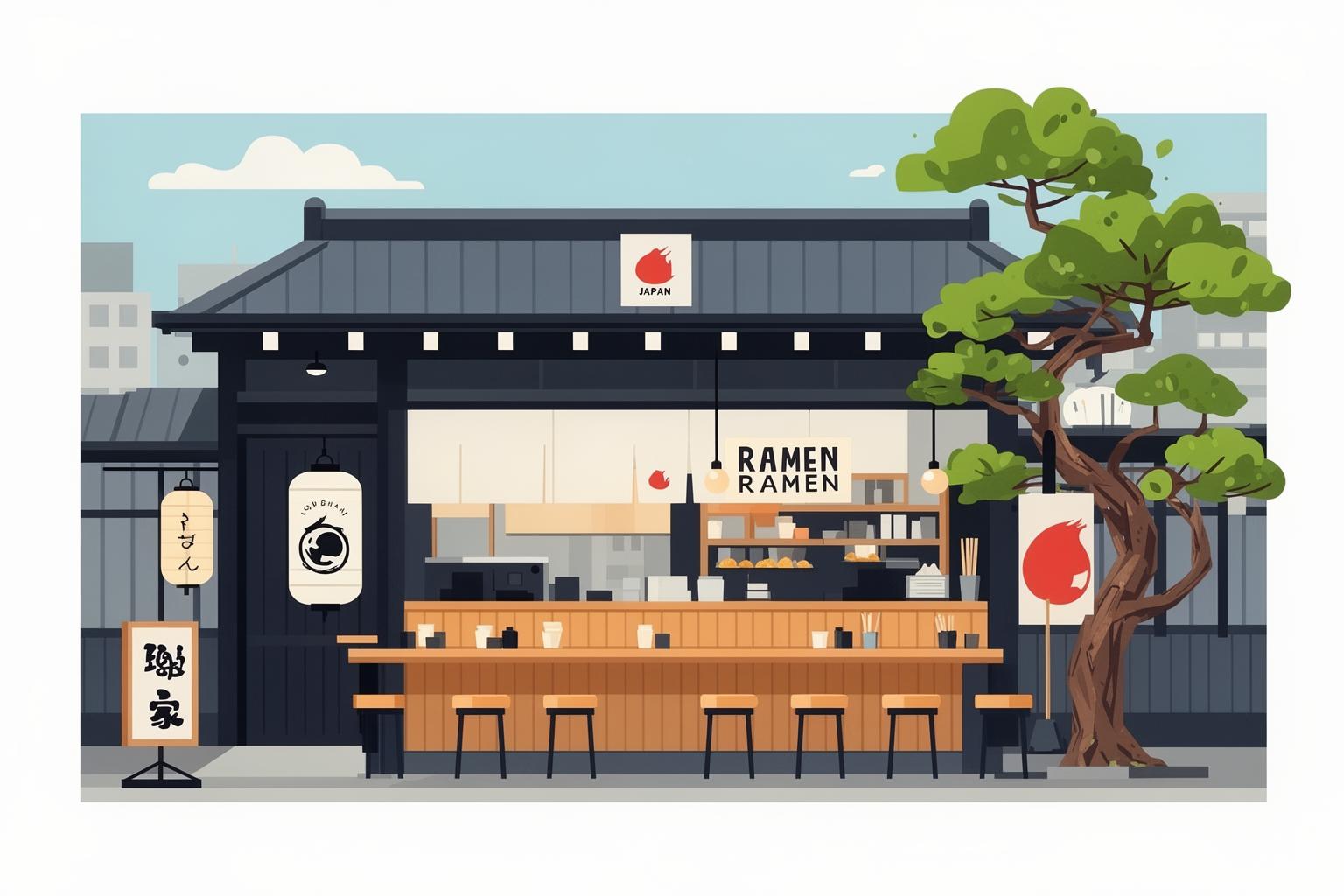
The late-night ramen shop, or ramen-ya, is a perfectly evolved ecosystem designed to fulfill its purpose. Every aspect of it is crafted for efficiency and to serve a weary, tipsy clientele. The entrance is often dominated by a kenbaiki, a ticket vending machine. You insert your cash, press a button for your preferred ramen and toppings, and then give the ticket to the chef. This system is brilliant—it reduces the need for conversation, prevents ordering mistakes, and streamlines payment—all ideal when your cognitive abilities are diminished.
The decor tends to be functional and straightforward. Think bright fluorescent lights, simple wooden counters, and walls decorated with little more than menus or the autographs of pleased celebrity visitors. Comfort and style take a backseat to the main goal: delivering delicious, hot ramen as swiftly as possible. The master, or taishō, behind the counter often embodies stoic concentration. He moves with precise efficiency honed over years, a silent, impartial observer of the nightly flow of people passing through his shop.
This whole setting is tailored for the shime ritual. It’s not a place to linger, but to enter, receive your revitalizing bowl, enjoy it heartily, and leave, ready to face the journey home. It serves as the perfect, functional conclusion to a night of social indulgence.
So, the next time you’re in a Japanese city late at night and spot the warm glow of a ramen shop’s lantern piercing the darkness, know that it’s more than just a noodle soup vendor. It’s the essential last stop for the city’s nocturnal travelers—a confessional, a makeshift sanctuary for the spirit, and a communal table for one final communion. It’s the delicious, steamy, and profoundly satisfying curtain call that brings a Japanese night out to its ideal and fitting close.