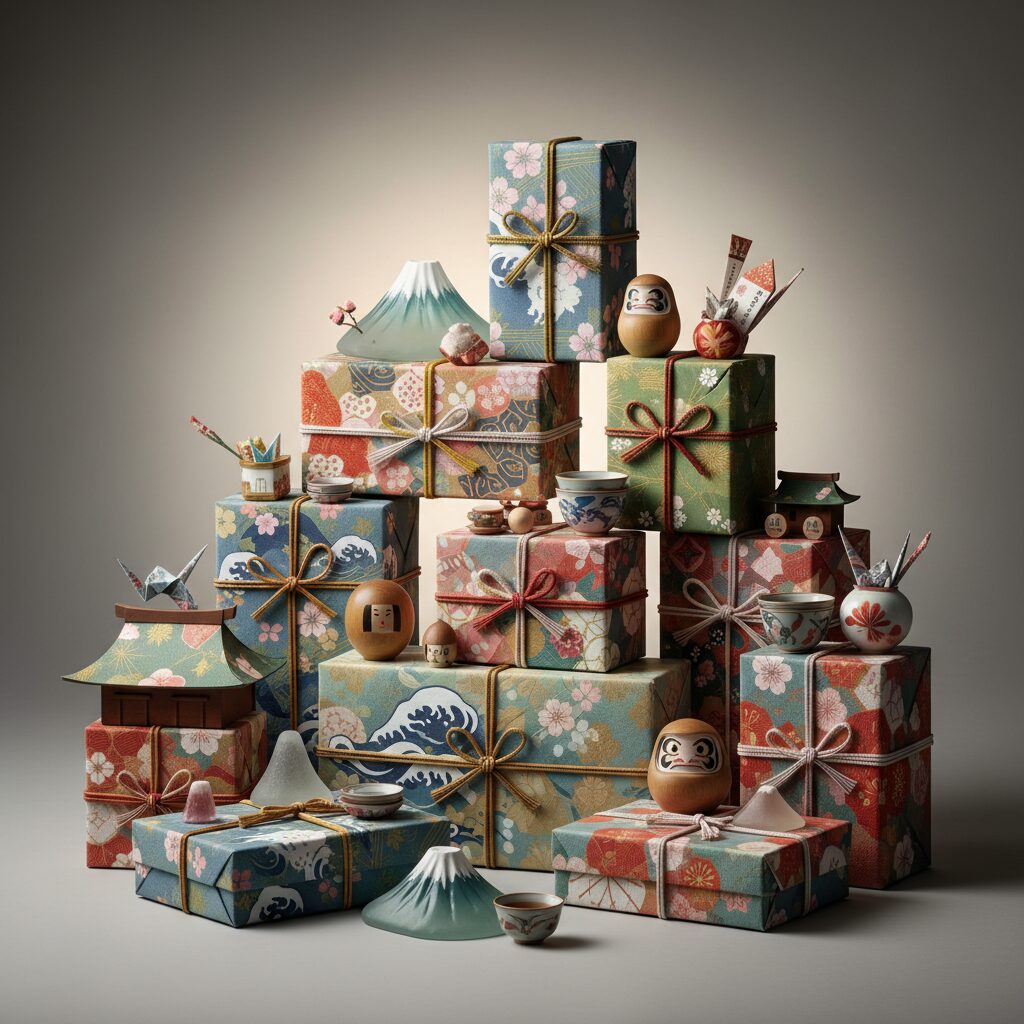
Walk into any major train station in Japan—Tokyo Station, Shin-Osaka, Hakata—and you will be confronted by a wall of color. Not from advertisements or digital signboards, but from boxes. Thousands upon thousands of them, stacked in neat, gleaming towers. They are decorated with elegant calligraphy, cute mascots, and picturesque landscapes. Inside, you’ll find everything from delicate rice crackers and sweet bean-paste cakes to langue de chat cookies and miniature cheesecakes. This is the world of omiyage, and it is one of the first and most baffling cultural landscapes a visitor to Japan must navigate.
You might mistake these for simple souvenirs, the kind of thing you pick up on a whim. But spend a little time watching the people who shop here, and you’ll notice something different. There’s a seriousness, a sense of purpose to their browsing. Businessmen in sharp suits carefully select multiple boxes. Young women on their way home from a weekend trip consult their phones, seemingly checking a list. This isn’t casual shopping; it’s the fulfillment of a mission. The sheer scale of these operations, occupying prime retail space in the country’s busiest transport hubs, hints at a demand that goes far beyond a tourist’s desire for a keepsake.
So, what’s really going on here? Why this nationwide obsession with beautifully packaged, regionally specific snacks? The answer is that these boxes are not really souvenirs at all. A souvenir is something you buy for yourself to remember a trip. An omiyage is a gift you are obligated to bring back for others. It is a tangible piece of social grammar, a physical manifestation of Japan’s intricate web of social obligation, group harmony, and reciprocal kindness. That simple box of cookies is a cultural artifact, and understanding its purpose is to understand a fundamental aspect of the Japanese mindset.
The meticulous artistry seen in omiyage boxes also mirrors the carefully curated displays found at Japan’s depachika, as detailed in this depachika guide.
The Unspoken Rules of Omiyage
To those unfamiliar, the world of Japanese gift-giving can seem like a labyrinth of unspoken rules and possible missteps. Omiyage serves as a prime example. It is governed by deeply rooted cultural expectations that everyone seems to understand instinctively, without formal instruction. It’s not about spontaneous generosity; rather, it’s about fulfilling a social obligation.
It’s Not the Thought That Counts (It’s the Gesture)
In many Western cultures, a gift brought back from a trip is a kind, often unexpected, surprise. The saying “it’s the thought that counts” excuses a wide range of faults, from forgetting entirely to grabbing something generic at the airport. In Japan, this mindset is reversed. With omiyage, the gesture itself is crucial. It is an anticipated, almost obligatory, part of returning from any journey, whether it’s a week-long vacation to Okinawa or a brief business trip to Nagoya.
The key idea is that when you travel, you momentarily step outside your social circle. Your absence, however short, may have caused a small inconvenience for your coworkers who covered for you, or disrupted the group dynamic temporarily. The omiyage acts as a gesture of reintegration. It says, “I’m back,” “Thank you for your efforts while I was away,” and “Please accept this small token to smooth things over and reaffirm my place in the group.”
Failing to bring back omiyage for the office isn’t just a minor slip—it’s a social faux pas. It can be seen as thoughtlessness, a lack of regard for the group, or even an unspoken message that you don’t value your relationships with your colleagues. The pressure is genuine. So much so that a common source of stress for Japanese travelers is not missing their flight, but forgetting to purchase the required boxes of gifts before heading home.
Who Receives a Box? Managing Social Priorities
Since omiyage is a means of maintaining social bonds, the key question is: which relationships require upkeep? This demands a quick, almost automatic, assessment of one’s social circles.
The most important and non-negotiable recipients are coworkers. The office is the main stage where group harmony, or wa, is practiced every day. A box of omiyage is placed in a shared area—the break room, the kitchen—for everyone to enjoy. This isn’t about seeking favor with the boss or singling out friends at work. It is a collective gesture acknowledging the entire department or team, reinforcing your role within it.
Next are family and close friends. Although there’s still a strong obligation, these gifts are often more personal and informal than those at work. You might pick up a certain sweet your mother loves or a local craft beer for a friend. Then there are neighbors. In many communities, especially outside large anonymous cities, maintaining good relationships with neighbors is important, and sharing some omiyage from a trip can go a long way.
This ongoing calculation of who “deserves” omiyage is a constant, low-level social balancing act. The system is designed to avoid friction and make sure no one feels excluded. The anxiety about forgetting someone important is what prompts travelers to buy one last “insurance box” at the station shop, just in case.
A Gift for the Group, Not the Individual
The physical form of omiyage holds as much significance as the act of giving itself. The design of these items is a masterclass in cultural ergonomics, meticulously crafted to fulfill their social role. They are almost invariably designed for groups, which greatly influences their contents and packaging.
The Magic of Individually Wrapped Items
When you open a typical box of omiyage, you rarely find a single cake or a loose assortment of cookies. Instead, you encounter a precise count—eight, twelve, sixteen, twenty-four—of identically and individually wrapped pieces. This is no accident, nor is it solely for freshness. It is a design choice born out of social necessity.
Individual wrapping addresses the logistical challenge of distributing among a group. Imagine the awkwardness of placing a whole cake in an office breakroom. Who cuts the first slice? How do you ensure everyone gets a piece? What if someone is absent? It causes mess, waste, and social tension. Individually wrapped cookies, mochi, or crackers eliminate these problems. They are hygienic, portable, and enable perfectly fair distribution. Each person can simply take one without any hassle.
This feature also subtly emphasizes the collective nature of the gift. The gift is not about catering to the specific tastes of one person. It’s about offering a shared, uniform experience for everyone. Everyone receives the same item, in the same portion, at the same time. It is a ritual of communion, a small gesture that reinforces group unity. The emphasis is on the act of sharing itself, not on the gift being shared.
The ‘Meibutsu’ and ‘Tokusanhin’ Economy
Another essential rule of omiyage is that the gift must represent the place you visited. You cannot travel to Hokkaido and bring back a snack famous in Kyoto. The gift acts as proof of travel, a tasty postcard declaring, “I was here.”
This principle revolves around the concepts of meibutsu (famous local products) and tokusanhin (regional specialties). Every prefecture, city, and sometimes even small towns in Japan have developed their own signature item. This has fostered a vast, hyper-regionalized economy centered entirely on the culture of omiyage. Hokkaido is renowned for its dairy, making Shiroi Koibito, a white chocolate cookie sandwich, its iconic omiyage. Hiroshima’s specialty is momiji manju, a maple-leaf-shaped cake filled with red bean paste. Tokyo, the sprawling metropolis, offers Tokyo Banana, a banana-shaped sponge cake filled with cream.
This regional specificity is a vital part of the conversation surrounding the gift. When presenting the box to your colleagues, you say, “I went to Fukuoka, please enjoy some mentaiko (spicy cod roe) crackers.” The gift is more than just a gift; it’s a story. It tells people where you traveled and invites them to ask about your trip. It’s a way of sharing your experience not only through words but through taste. The box serves as a proxy for your journey, allowing recipients to vicariously share in your travels.
The Psychology Behind the Box
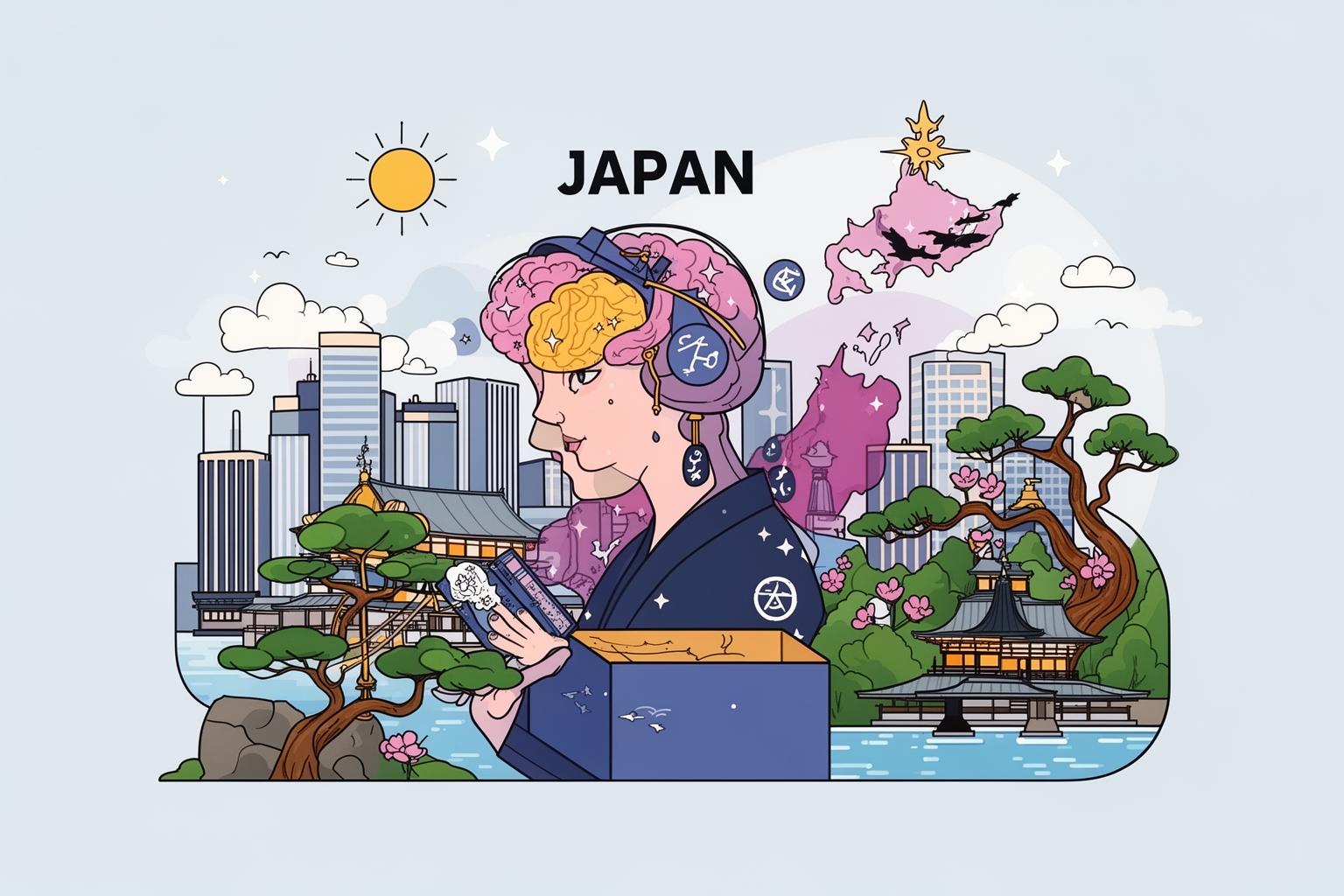
To truly understand the importance of omiyage, we must look beyond the basic etiquette and explore some key concepts that shape Japanese social interactions. These boxes carry a psychological and emotional significance that far surpasses their physical contents. They symbolize duty, gratitude, and the delicate balance of maintaining social harmony.
Giri and On: The Burden of Obligation
Two concepts are fundamental to grasping the motivation behind omiyage: giri and on. Although they lack direct English equivalents, giri can be seen as a sense of social duty or obligation based on one’s relationships, while on refers to a debt of gratitude felt toward someone for a favor or kindness received.
Japanese society functions through a complex web of these reciprocal obligations. Omiyage fits neatly within this system. Bringing a gift back to your workplace represents giri—your duty as part of the group, a way to fulfill your social responsibilities and nurture positive relations. It serves as a small repayment (on) for the group’s support, whether explicit or implied. Your colleagues covered for you during your absence; this gift is a tangible way to acknowledge that.
To outsiders, this may seem cold or transactional, but within the culture, it is not perceived that way. This system of mutual obligation is what helps society function smoothly. It establishes a shared understanding that fosters predictability and harmony. Honoring your giri marks you as a mature, socially conscious individual. The omiyage is one of the most common and visible expressions of this principle in everyday life.
‘Tsumaranai mono desu ga…’ (It’s a Trivial Thing, But…)
The ceremony of giving and receiving omiyage is as significant as the gift itself. It is a carefully staged display of humility and gratitude.
When presenting the box, the giver almost always uses a modest phrase like, “Tsumaranai mono desu ga, douzo,” which means “This is a trivial thing, but please accept it.” This does not reflect the actual value of the gift. Even if handing over a box of luxurious, pricey sweets, the phrase remains the same. It acts as vital social lubrication, softening the impact of the gift to prevent the recipient from feeling burdened by the gesture. By downplaying the gift’s importance, the giver alleviates the receiver from feeling an immediate or heavy sense of on—the obligation to reciprocate equally.
The recipient typically responds with a brief polite refusal (“Oh, you shouldn’t have!”) before accepting with thanks. The gift is taken with both hands as a sign of respect. This brief exchange reinforces the social bond between the two parties. It is a ritual of humility and appreciation that reaffirms relationships and ensures the act of giving does not cause discomfort or pressure.
The Modern Omiyage Landscape
While the traditions surrounding omiyage run deep, the practice is far from static. It has evolved to keep pace with modern life, growing into a highly efficient, multi-billion-yen industry that remains a constant presence in the daily lives of most Japanese people.
From Train Stations to Airports
The infrastructure supporting omiyage culture is remarkable. Prime, high-traffic real estate in train stations, airports, and highway rest stops is dominated by expansive omiyage shops. These are not dusty souvenir stalls; rather, they are bright, modern, and impeccably organized department stores filled with regional snacks.
Their location is crucial, reflecting that omiyage shopping is often a last-minute task, done just before boarding a train or plane home. This convenience is invaluable for busy travelers, who don’t need to waste vacation time hunting for the perfect gift or carrying bulky boxes. One efficient stop covers all social obligations. The entire system showcases how deeply embedded and systematized the practice of omiyage is within Japanese travel culture.
The Evolution of the Gift
In a rapidly changing society, it’s natural to wonder if these traditions are waning among younger generations. The answer is nuanced. The sense of obligation, especially in corporate settings, remains strong. However, the nature of omiyage itself is evolving.
A growing market exists for more modern, stylish, and photogenic omiyage. Companies continuously innovate by creating snacks with novel flavor combinations, artistic designs, and elegant, minimalist packaging that appeals to younger, aesthetics-conscious consumers. The wish to bring back something unique or impressive adds a new layer to the traditional sense of duty.
Additionally, a compelling new trend has emerged: purchasing omiyage for oneself, known as jibun-yō. After buying the obligatory gifts for the office and family, many people also treat themselves to a smaller, more luxurious version of a regional specialty. This reflects a shift—while fulfilling group obligations, people increasingly seek individual enjoyment and a personal connection to regional foods.
So, the next time you find yourself in a Japanese train station, take a moment to look closely at those walls of colorful boxes. They represent far more than just tourist-friendly snacks. They are a library of social contracts, a reflection of a culture that deeply values group harmony and quietly fulfilling one’s responsibilities. Each box of cookies, cakes, or crackers acts as a node in a vast social network—a sweet burden linking travelers to the communities they leave and return to. It’s a silent, delicious language understood by everyone in Japan, a reminder that every journey concludes with the obligation to share a small piece of it with others.