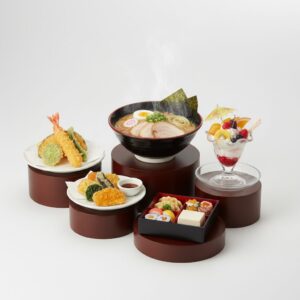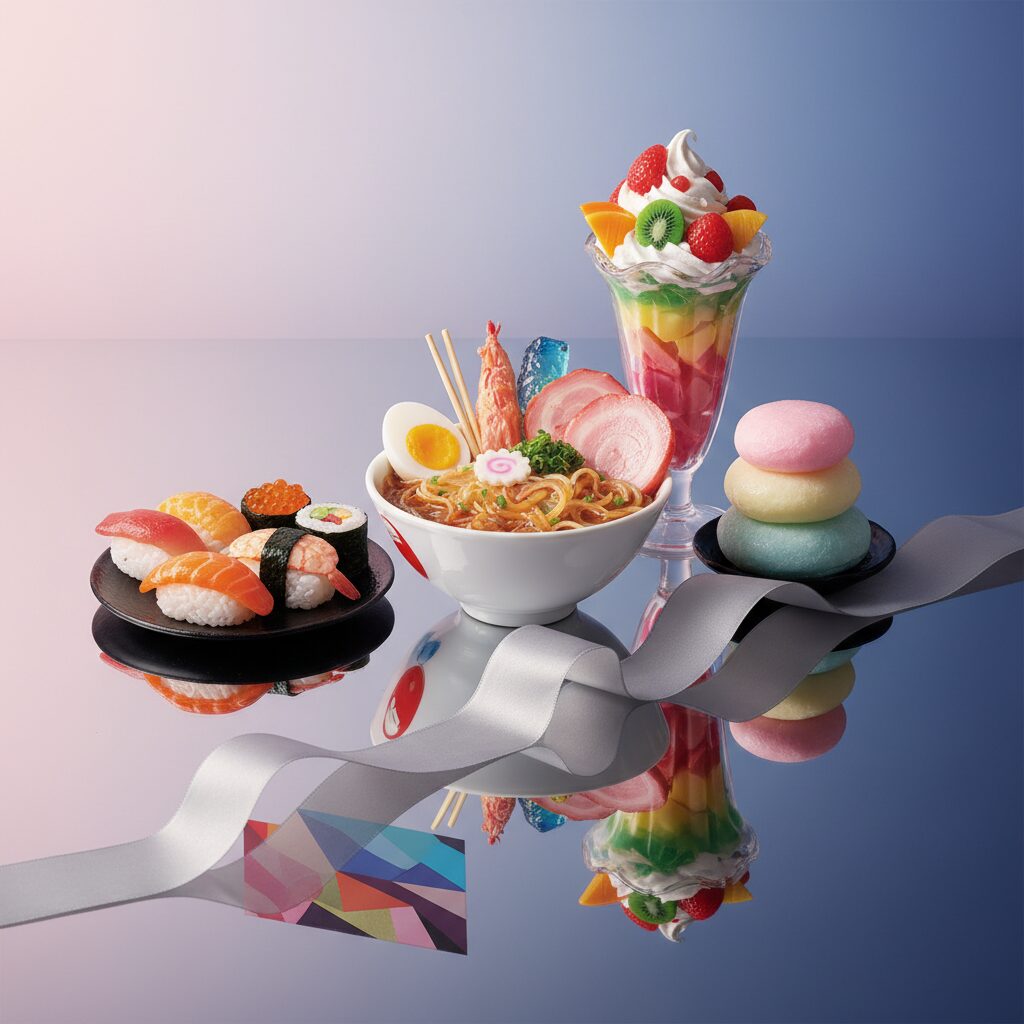
Walk down almost any commercial street in Japan, from a bustling Tokyo shotengai to a quiet suburban station front, and you’ll encounter it. Rows of glistening ramen, with impossibly perfect soft-boiled eggs suspended in a faux-pork broth. Plates of spaghetti, a forkful frozen mid-air, impossibly twirled. Lacquered bento boxes filled with a vibrant mosaic of jewel-like morsels. It’s a feast for the eyes, but one you can’t eat. This is the world of shokuhin sampuru, Japan’s hyper-realistic fake food displays, and they are one of the most brilliant, misunderstood, and deeply Japanese cultural phenomena you’ll ever encounter.
To the uninitiated outsider, it can seem a bit strange, maybe even a little tacky. Why invest so much artistry and expense into creating plastic replicas of every single item on the menu? It’s a fair question. But to dismiss these displays as mere decoration or a quaint marketing gimmick is to miss the point entirely. These plastic meals are not just advertisements; they are a sophisticated system of communication. They are a visual contract, a cultural buffer, and the ultimate tool for managing expectations in a society that prizes clarity and harmony above almost all else. The shokuhin sampuru is a silent salesman, yes, but it’s also a cultural ambassador, a problem-solver, and a quiet purveyor of peace of mind. It’s a solution so elegant and so effective that once you understand the logic behind it, you’ll wonder why the rest of the world hasn’t caught on.
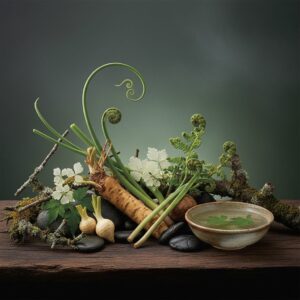
This intricate system of visual storytelling finds a fascinating parallel in Japan’s celebration of culinary evolution through its 72 food seasons, which further illuminates the cultural finesse at play.
The Art of Absolute Fidelity
Before exploring the cultural why, we must first appreciate the technical how. These are not the worn, faded plastic toys you might find in a child’s play kitchen. Japanese shokuhin sampuru are masterpieces of meticulous, often breathtaking craftsmanship. The industry, which began with fragile wax models in the 1920s, now primarily uses durable polyvinyl chloride (PVC) and other resins to achieve stunning realism. The aim is not suggestion or approximation; it is perfect, 1:1 replication. What you see in that glass case is, to the highest degree of humanly possible detail, exactly what you will receive on your plate.
Artisans in specialized workshops, many located in the Gujo Hachiman area of Gifu Prefecture or Tokyo’s Kappabashi Kitchen Town, are the masters of this craft. The process often begins by creating a silicone mold from an actual, perfectly cooked dish sent by the restaurant. Every grain of rice, every glistening droplet of fat on a slice of char siu pork is captured. From there, liquid plastic is poured, set, and then painstakingly hand-painted. This is where true artistry emerges. The subtle char on a piece of grilled eel, the translucent sheen of a slice of raw squid, the delicate, lacy web of tempura batter—it’s all rendered with an artist’s keen eye for color and texture. They have techniques to create the fizz in a glass of beer, the condensation on the mug’s surface, and the precise shade of melting cheese on a pizza.
This dedication to realism forms the foundation of the entire system. If the replica were a mere cartoonish representation, trust would be lost. Its power lies in its absolute fidelity. The sampuru is a promise, cast in plastic. It conveys the portion size, the exact ingredients used, and the presentation style. There is no ambiguity, no room for interpretation. This is not an “artist’s rendering.” This is the dish.
The Cultural Logic: Eliminating the Anxiety of the Unknown
So, why this fascination with a flawless plastic preview? The explanation lies deep within Japan’s cultural operating system, where the primary aim of many social interactions is to make them as smooth, predictable, and frictionless as possible. Ambiguity generates stress and can lead to misunderstandings or, worse, disappointment and conflict. The shokuhin sampuru is a powerful tool created to eliminate that ambiguity from the dining experience before the customer even enters the restaurant.
The Ultimate Universal Language
Above all, the sampuru is a clever solution to the language barrier. Despite Japan’s international popularity, it can be intimidating for those who cannot speak or read Japanese. A menu composed entirely of kanji appears as an indecipherable block of text. However, a picture—or better yet, a life-sized, three-dimensional model—is universally understood. A tourist from anywhere globally, a young child who cannot yet read, or even a local diner in a rush can simply look, point, and say, “Kore, kudasai” (This one, please).
This represents a form of omotenashi, the renowned Japanese ethos of hospitality, in its most practical expression. Genuine omotenashi involves anticipating a guest’s needs and meeting them proactively. A restaurant owner investing in a full set of sampuru prepares for the confusion of foreign visitors or the hesitation of unfamiliar customers. They offer a solution before any problem arises, making the ordering experience effortless and stress-free for everyone. It is an act of commercial empathy that removes a substantial obstacle.
“What You See Is What You Get”: A Visual Contract
Beyond language, the sampuru fulfills an even more vital role in the domestic market: precisely managing expectations. In Western countries, menus often resemble creative writing exercises. Terms like “a generous helping of our signature pasta” or “served with seasonal vegetables” are common. But what exactly does “generous” mean? Which vegetables qualify as seasonal? This vagueness leaves the final dish subject to the restaurant’s interpretation and potentially the customer’s disappointment.
Such uncertainty is culturally uncomfortable in Japan. The shokuhin sampuru replaces verbal ambiguity with visual clarity. It acts as a clear, unspoken agreement between the restaurant and the customer. You see that the tonkatsu set includes exactly five slices of pork, a small pile of shredded cabbage, a lemon wedge, a dollop of mustard, a bowl of rice, a side of pickles, and a bowl of miso soup. When the tray arrives, its appearance will match the model exactly. The portion size is no longer a mystery, nor are the side dishes a surprise.
This approach prevents potential complaints or dissatisfaction. The customer knows precisely what they are ordering, and the restaurant knows it has effectively communicated its offering. This perfectly aligns with the cultural preference to avoid confrontation and preserve social harmony (wa). A disappointed customer creates an uncomfortable situation for both parties. The sampuru acts as a preventive measure, ensuring transparency and satisfaction from the start. It’s a system designed for a world without surprises.
A Window into the Japanese Mindset

Grasping the role of sampuru also provides a richer understanding of wider Japanese cultural values. Its presence and widespread use reveal much about how information is processed and what is prioritized in everyday life.
The Primacy of the Visual
Japanese culture has a long, rich tradition of emphasizing visual information and aesthetic presentation. The arrangement of food in a bento box is just as significant as its flavor. The art of ikebana (flower arranging) focuses on space and form. Packaging design is a huge industry. Aesthetics are not viewed as mere decoration; they are fundamental to the essence of the object itself. The shokuhin sampuru naturally extends this philosophy. It acknowledges that, for many, the choice to eat something starts with its appearance.
The meal should be visually attractive, so its representation must be as well. It serves as a preview of the care and precision that can be expected from the kitchen. A restaurant with beautiful, clean, and accurate sampuru signals pride in its craft. In contrast, a dusty, faded, or inaccurate display conveys a strong negative impression.
The Comfort of a Tangible Preview
There is a real comfort in being able to see and evaluate a product before buying it, and Japanese commerce abounds with examples of this idea. Consider the depachika, the extensive food halls in department store basements, where countless delicacies can be sampled before purchase. Or think about fully furnished model homes (moderu hausu) that let you walk through and experience a living space prior to committing to a buy.
The sampuru follows the same reasoning. It offers a concrete, physical representation of an abstract menu item. It allows customers to visually explore the entire menu, comparing portion sizes and ingredients in ways words and photos alone cannot fully convey. As a parent, I’ve found it to be an indispensable aid. Trying to explain what “oyakodon” is to a seven-year-old is a losing battle. Pointing to an exact, steaming replica of chicken and egg over rice? Instant comprehension. It gives customers a feeling of control and assurance in their choice.
From Department Store Gimmick to Cultural Icon
The story of shokuhin sampuru is not ancient but rather a clever invention from the 20th century born out of necessity. Its roots are typically traced back to the early Showa Period, during the late 1920s and early 1930s. As Japan modernized, Western-style department stores featuring large public cafeterias became popular. These restaurants offered a menu of dishes—such as curry rice, omelets, and croquettes—that were still novel and unfamiliar to many Japanese people.
A man named Takizo Iwasaki, often called the “father of fake food,” famously created a wax model of an omelet so realistic that it fooled even his own wife. He recognized he had a brilliant business idea. These models could demonstrate, rather than just describe, to city dwellers what these new, foreign-sounding foods were. It was a marketing stroke of genius, addressing consumer unfamiliarity and boosting sales.
After World War II, the material shifted from easily meltable wax to more stable and durable plastics, enabling even greater realism and longevity. As Japan’s economy flourished and the restaurant industry grew, the demand for sampuru increased as well. It became a standard feature in family restaurants, ramen shops, kissaten (coffee shops), and nearly any eatery wanting to present its menu quickly and effectively to a wide audience. It was the ideal tool for a fast-paced, urbanizing society.
The Sampuru Economy Today
What started as a purely functional business tool has transformed into a cultural phenomenon and a significant industry in its own right. The workshops that create these models are often small, family-owned businesses that have passed down their techniques through generations. A single, intricate dish can cost hundreds of dollars to produce, and an entire restaurant display represents a substantial investment.
In recent decades, the shokuhin sampuru has also gained a new role as a pop culture item and tourist attraction. The novelty and craftsmanship that once served solely commercial purposes are now appreciated for their own sake. Tourists and locals alike flock to places like Kappabashi to admire the shops and even participate in workshops where they can try making their own tempura or lettuce from wax and plastic.
This has given rise to a booming merchandise market. You can now purchase keychains shaped like hyper-realistic gyoza, phone cases resembling bowls of ramen, USB sticks disguised as sushi, and magnets of all kinds. The fake food has gone beyond its origins, becoming a quirky and cherished symbol of Japan. It has shifted from the restaurant window to the souvenir shop, reflecting its lasting visual charm.
The Final Analysis: It’s Not Tacky, It’s Genius
To a Western eye, unaccustomed to this practice, shokuhin sampuru can easily be dismissed as kitsch. In a culture that often values minimalism, a window filled with plastic food might appear unsophisticated. But this viewpoint overlooks the bigger picture, failing to interpret the display within its own cultural context.
In Japan, shokuhin sampuru is anything but tacky. It embodies a deep-rooted cultural commitment to clarity, efficiency, and mutual respect between business and customer. It arises from a profound understanding of human psychology, recognizing that clarity is a form of kindness. It honors craftsmanship, celebrates the visual, and serves as a practical tool that makes everyday life a bit easier for everyone.
So next time you find yourself gazing at a Japanese restaurant’s display of plastic food, take a moment to truly appreciate what you’re seeing. It’s not just a menu. It’s a philosophy. It’s a visual agreement grounded in trust, a silent gesture of hospitality, and a perfectly crafted answer to the universal human anxiety about the unknown. It’s a quiet, brilliant dialogue—and all you have to do is point.