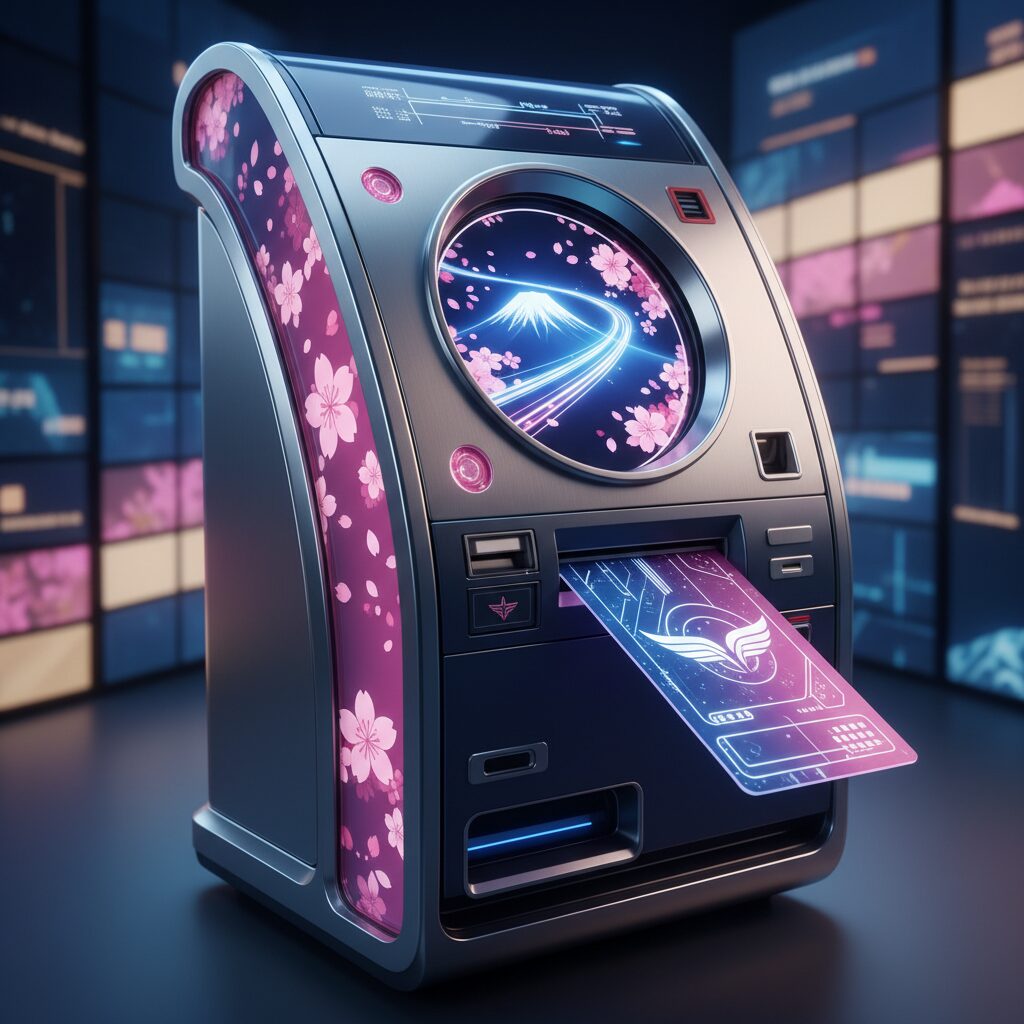
You see it the moment you walk in. Before the welcoming chorus of “Irasshaimase!” fully registers, before the savory steam of broth and noodles hits you, your eyes land on the machine. It stands near the entrance, a stoic, glowing sentinel, covered in a grid of buttons with pictures of food and inscrutable Japanese script. This is the shokkenki, the meal ticket vending machine, and it’s your first hurdle—and your first lesson—in the unwritten rules of Japanese casual dining. For many travelers, the encounter is baffling. Is this a fast-food joint? Why can’t I just talk to a person? The experience can feel cold, impersonal, a strange robotic interruption in a country otherwise lauded for its impeccable human-centric service, its omotenashi.
But to dismiss the shokkenki as a mere convenience or a cost-cutting gimmick is to miss the point entirely. This machine is not an afterthought; it’s a deeply integrated piece of cultural hardware. It’s the quiet orchestrator of a specific kind of urban ballet, a guardian of hygiene, and a facilitator of social harmony. It’s the answer to a question you didn’t even know you should be asking: How does a tiny, ten-seat ramen shop in Shinjuku serve a hundred people during a frantic lunch hour with flawless speed and zero drama? The machine is how. It’s a physical manifestation of the Japanese obsession with efficiency, clarity, and process. Getting to know the shokkenki is getting to know the quiet logic that underpins so much of daily life here. It’s the key that unlocks that “oh, now I get it” moment, transforming what seems like a barrier into a window onto the Japanese mindset.
Delving deeper into Japan’s seamless blend of modern innovation and cherished traditions, exploring the omiyage obligation offers a fresh perspective on how technological touches mirror longstanding cultural practices.
The Cult of Efficiency

At its core, the meal ticket machine is a prime example of optimization. In Japan’s densely populated cities, time and space are precious commodities, and wasting either is considered a serious offense. The shokkenki was created in direct response to this, designed to remove every possible obstacle in the simple act of getting a meal.
Streamlining the Urban Rush
Imagine the Tokyo lunch hour. It’s not a relaxed break; it’s a mission. Office workers, students, and shoppers have a limited time to eat and return to their day. In this setting, the traditional restaurant routine—waiting for a menu, signaling a server, ordering, eating, then waiting again for the bill, and finally handling payment—is painfully slow and full of inefficiencies.
The shokkenki eliminates this entire process. The transaction is completed upfront. You arrive, make your selection, pay, and receive a small paper ticket. When you hand the ticket to the staff, your order is confirmed, and the payment is settled. All that remains is to sit, receive your food, eat, and leave. There’s no confusion, no waiting. By the time a seat becomes available, the kitchen already knows exactly what to prepare. This system allows a tiny ramen bar, often run by just one or two people, to maintain a throughput impossible to achieve with a traditional ordering method. The entire restaurant operates like a finely tuned machine, where each element—customer, cook, and counter—works with minimal wasted effort.
The Economics of a Small Restaurant
Put yourself in the shoes of the owner of a small gyudon (beef bowl) or soba shop. Your space is likely no larger than a large walk-in closet. Your profit margins are slim, and labor cost is your biggest expense. The shokkenki isn’t merely a convenience; it’s a strategic business investment. It’s a one-time capital outlay that effectively replaces the need for a dedicated cashier. It never takes breaks, never calls in sick, and most importantly, never makes cash-handling errors.
In a cash-based society like Japan, closing out the till at the end of the day can be time-consuming and prone to mistakes. The machine automates this entirely. It provides a flawless, computerized record of every transaction, simplifying accounting and reducing the risk of loss. For a small, family-run business, this reliability is priceless. It allows the owner-chef to focus on what truly matters: the food. They can pour their energy into perfecting the broth or slicing chashu pork, confident that the transactional side is managed with mechanical accuracy. The machine doesn’t replace a person’s job; it enables that person to perform their actual job more effectively.
The Unspoken Etiquette of Eating
Beyond mere efficiency, the shokkenki serves a far more nuanced and significant social function. It shapes interactions within the restaurant, creating an environment governed by a distinct set of social norms—ones that emphasize focus and reduce unnecessary communication.
A Buffer for Social Friction
The machine functions as a social buffer. For many diners, especially those eating alone (ohitorisama, a common and celebrated practice in Japan), the aim is not a conversational, interactive experience. Instead, it’s about enjoying a delicious, satisfying meal in relative tranquility. The shokkenki facilitates this seamlessly. It eliminates the need for small talk, the awkwardness of trying to catch a server’s attention, or the back-and-forth involved in ordering. You communicate your order to the machine, which then relays it to the kitchen. The interaction is straightforward, efficient, and delightfully low-pressure.
This approach is not about being unfriendly or antisocial. It’s about conserving energy and respecting personal space. In a bustling city of millions, constantly navigating crowded trains and busy streets, having a place where social demands are minimized offers a welcome relief. The ticket machine helps create a sanctuary where, for the next twenty minutes, the only connection that matters is between you and your bowl of noodles. It provides a moment of quiet reflection, a retreat from the social pressures of the outside world.
The Chef’s Sanctuary
From the chef’s point of view, the ticket system acts as a protective barrier. It preserves their focus and defines their workspace. In many small shops, the counter is the only separation between the customer and the kitchen. Handing over a ticket becomes a simple, non-verbal gesture that respects this boundary. It sends a clear, unmistakable message: “One large ramen with extra egg, please.”
There is no room for confusion or modification. The menu is displayed on the machine, and the ticket represents the final order. This enables the chef to enter a flow state, moving with practiced precision from boiling noodles to pouring broth to arranging toppings. They are not a salesperson or cashier; they are an artisan. The shokkenki manages the commercial side, allowing the chef to focus purely on their craft. This separation of roles reflects a core aspect of Japanese professionalism, where individuals have defined tasks that they perform to the highest standard. The machine supports this ethos by ensuring the chef’s space remains dedicated to the art of cooking.
More Than a Machine: A Guardian of Purity
Perhaps the most compelling and culturally significant reason behind the shokkenki’s widespread use is one that many outsiders might never consider: hygiene. The machine acts as a gatekeeper, maintaining a strict separation between the world of money and the world of food.
The Clean and the Unclean
In Japanese culture, there is a deeply ingrained concept of purity and cleanliness that appears in numerous daily rituals. Money, having passed through countless hands, is regarded as inherently unclean. The thought of someone handling dirty bills and coins and then immediately preparing your meal is, from this viewpoint, profoundly unsettling. The shokkenki addresses this issue with elegant simplicity. The customer deals with the money and interacts with the machine, while the chef only ever touches the clean paper ticket.
This division of labor is a modern adaptation of a very old principle. Consider the ritual purification fountains (temizuya) at the entrance to Shinto shrines, where visitors cleanse their hands and mouths before entering the sacred area. The shokkenki serves a similar, though secular, purpose. It purifies the transaction, ensuring that the perceived impurity of money does not contaminate the cleanliness of the food. It’s a small detail, but it speaks volumes about the cultural emphasis on cleanliness (seiketsu) that pervades Japanese society.
Where Cash is Still King
This focus on hygiene is particularly important because, despite its advanced technology, Japan remains a society heavily reliant on cash. Although credit cards and mobile payments are becoming more common, cash continues to be the preferred method for small, everyday purchases, such as a bowl of ramen. The average person’s wallet is filled with 1,000-yen notes and a variety of coins. In this context, a system that can efficiently handle cash without compromising food safety is not merely a convenience; it is a necessity. The shokkenki perfectly bridges Japan’s affinity for cash and its steadfast commitment to cleanliness.
A Ritual in Itself
Over time, using the ticket machine has become a kind of ritual, a familiar initial step in the process of enjoying a casual meal. Far from feeling cold or mechanical, it has its own distinct tactile and psychological rhythm.
Decoding the Wall of Choices
Approaching the machine for the first time can be intimidating. You encounter a large panel, sometimes a bright, backlit display of plastic buttons, each featuring a photo and a description in Japanese. It resembles the control panel of a spaceship. Yet, you quickly learn to read its language. The biggest, most prominent buttons usually highlight the shop’s signature dishes. Color-coding may indicate different broth types—red for spicy, black for garlic oil. Smaller buttons along the side are for toppings: a seasoned egg (ajitama), extra pork (chashu), or sheets of seaweed (nori).
You insert your bills and coins, and the machine springs to life, illuminating the buttons for the items you can afford. Pressing a button feels satisfyingly final. The choice is made. A solid clunk confirms your selection, followed by the soft whir of gears and rollers as the machine dispenses your ticket and change with precise, metallic clicks. This tangible process—the feeding of cash, the button press, the retrieval of the ticket—grounds the experience. It serves as a physical prelude to the meal, confirming your active participation in the process.
The Language of the Ticket
That small slip of paper you receive is more than a mere receipt; it’s your passport to the meal. It holds all the necessary information, conveyed instantly and without error. You find a seat at the counter and place the ticket on the ledge. The staff might take it immediately, sometimes tearing off a stub and leaving the rest. They may call out a confirmation or ask a simple question not handled by the machine, such as your preference for noodle firmness (“Men no katasa wa?”). But the core communication is complete.
From that moment on, you can simply relax and watch the kitchen’s theater. The ticket has done its job. It has translated your hunger into a clear, actionable command, bridging the gap between customer and cook with quiet efficiency. It’s a system of perfect clarity—a small piece of paper carrying the full weight of the transaction, leaving you free to look forward to the meal ahead.
The True Meaning of Service
So, the next time you see a shokkenki standing guard at the entrance of a restaurant, don’t view it as a barrier or a sign of impersonal service. Instead, recognize it for what it truly is: a cultural artifact, ingeniously designed to enhance your dining experience in ways you may not immediately notice.
It represents a different style of hospitality, one that defines service not through conversation but through smooth, efficient execution. It’s a system that values your time, guarantees the accuracy of your order, maintains the hygiene of your food, and honors the chef’s craft by allowing them to focus entirely on their art. The machine isn’t there to keep you away from people; it’s there to eliminate the mundane transactional tasks, clearing the way so nothing comes between you and the perfect bowl of noodles.
The “oh, now I get it” moment comes when you realize the shokkenki isn’t replacing service; it is the service. Its quiet, seamless operation is the first act of omotenashi, setting the ideal, frictionless environment for you to enjoy your meal. It’s the ultimate facilitator, the invisible hand that makes the simple, profound pleasure of a quick, delicious, and peaceful meal possible in the heart of the world’s busiest cities.