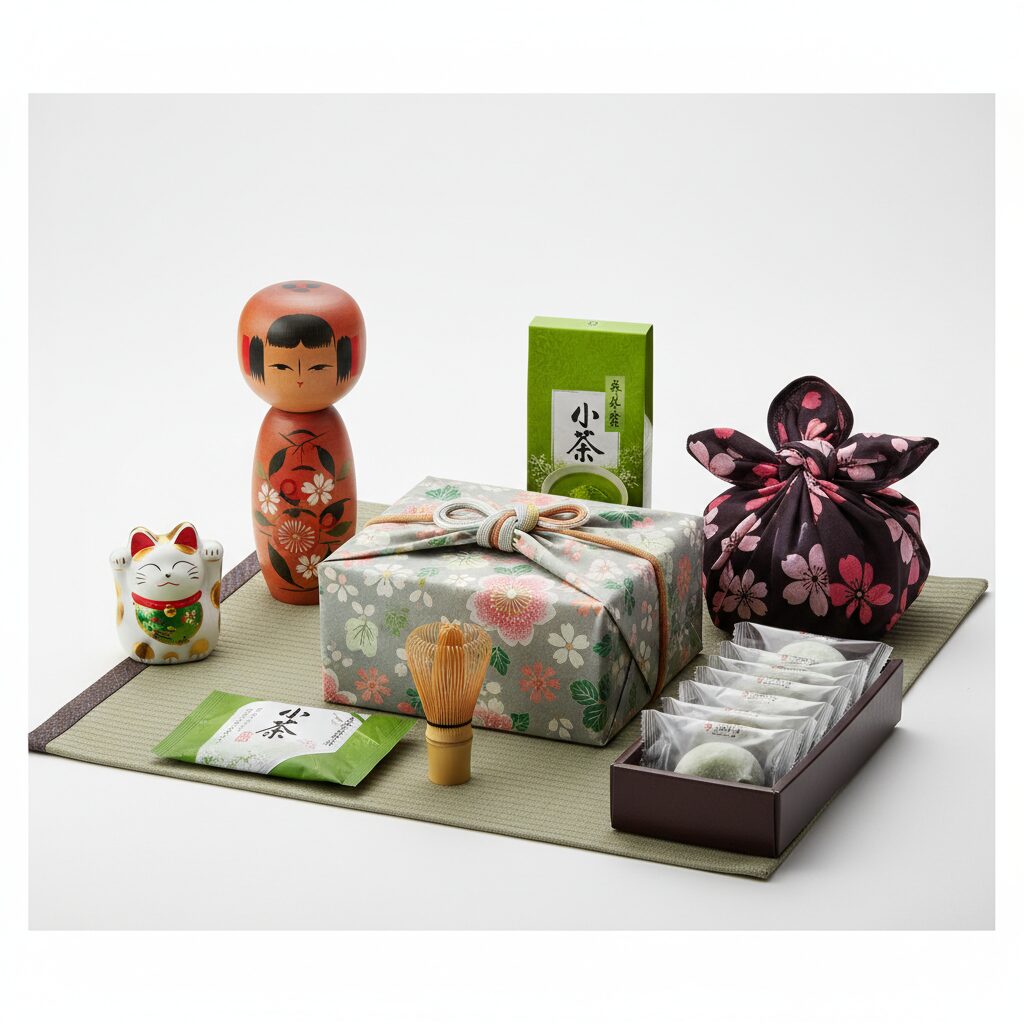
Walk into any Japanese office on a Monday morning, and you’ll likely witness a quiet, unassuming ritual. A colleague who was away on a trip—be it for a weekend in Kyoto or a business conference in Osaka—will place a brightly colored, beautifully wrapped box on a communal table. With a slight bow and a murmur of “For everyone,” they’ll step back, and the day will proceed. Soon, people will drift over, take a single, individually wrapped cookie or cracker, and return to their desks. No grand announcements, no effusive thanks. The gesture is as normal and expected as the morning greetings.
For an outsider, this might look like simple thoughtfulness, a nice but optional gesture. But it’s not. This is omiyage culture, and it is one of the most ingrained and non-negotiable social rules in Japan. Forgetting to bring back these gifts, or omiyage, from a trip isn’t just a minor slip-up; it’s a social foul. It signals a lack of consideration for the group, a tear in the delicate fabric of workplace and social harmony. This isn’t about bringing back a fun little souvenir for yourself. An omiyage is never for you. It’s for them. It’s proof that even when you were away, the group you belong to—your colleagues, your family, your friends—was on your mind. This simple box of sweets is a powerful cultural artifact, a tangible expression of gratitude, apology, and social belonging all rolled into one. Understanding omiyage is understanding a core pillar of the Japanese mindset: the constant, quiet work of maintaining the group.
This subtle social exchange, emphasizing unspoken gratitude and group harmony, mirrors the nuanced meaning behind itadakimasu in Japanese culture.
It’s Not a Souvenir, It’s a Social Contract
First, we must clearly distinguish between the Western concept of a “souvenir” and the Japanese idea of omiyage. A souvenir, derived from the French word for memory, is a personal memento. It’s the Eiffel Tower keychain you buy for yourself or the “I ❤️ NY” t-shirt you pick up as a keepsake. It’s a self-centered purchase, neutral in tone, meant to remind you of your travels.
Omiyage stands in direct contrast. It is inherently an outward-reaching gesture. The word itself is written with characters that suggest “local product” (土産), and it is intended solely for others. Its primary role is to sustain and smooth social relationships. It serves as a tangible symbol fulfilling an unspoken social obligation.
This obligation is straightforward: if you leave the group, you owe the group. When you take a vacation, your coworkers shoulder your responsibilities. When you travel for work, you represent the company. In either case, your absence causes a minor disruption. The omiyage acts as a balancing gesture. It’s an apology for your absence and a thank you for their support, communicated through a box of local specialty rice crackers. It conveys, “Thank you for covering for me. I’m back now and ready to fully participate once again.”
This explains why the sense of omiyage wo kawanakya—“I have to buy omiyage”—is such a strong pressure for Japanese travelers. It is not an afterthought. It is a vital part of the trip’s agenda, carefully planned and budgeted. The last hour before departure at the airport or train station becomes a hectic, purposeful scramble as people hurry between gleaming stores, choosing the perfect gifts to bring home. This is not casual, last-minute shopping—it is the fulfillment of a duty.
The Three Pillars: Harmony, Obligation, and Shared Experience
To truly understand why a box of cookies holds such significance, you need to consider the cultural values it embodies. Omiyage is not just a single concept; it’s a practice rooted in several essential Japanese social principles. It serves as a ritual that gracefully strengthens group harmony, fulfills a sense of social obligation, and enables a shared experience from afar.
Maintaining Wa (和): The Harmony of the Group
The central concept here is wa (和), roughly translating to group harmony. In Japan, the collective is often placed above the individual. The smooth operation of the group—whether a company, family, or club—is crucial. Anything that disrupts this harmony is avoided, and anything that enhances it is embraced.
Travel, by its very nature, is an individual pursuit. You temporarily leave the group behind. Although taking paid time off is within your rights, it creates a gap that others must fill. This causes a subtle imbalance. The omiyage acts as a tool to restore that balance. It’s a gesture that acknowledges the burden and expresses gratitude to the group for their collective effort during your absence.
Presenting the omiyage is a ritual of reintegration. You are formally rejoining the group and easing any tension your absence might have caused. It’s a way of saying, “I recognize that my individual actions affected the group, and I am making amends.” This is why the giving is often modest and discreet. It’s not designed to spotlight the giver but to quietly strengthen the group’s bonds. The emphasis is on the collective act of sharing rather than the individual act of giving.
The Unwritten Law of Giri (義理): Social Obligation and Reciprocity
While wa is the aim, giri (義理) is one of the means to achieve it. Giri is a complex term without a direct translation, describing a network of social duties, obligations, and unwritten rules of reciprocity in relationships. It’s the sense of duty toward your boss, an obligation to repay favors, and the expectation of appropriate conduct within social ranks.
Omiyage perfectly exemplifies giri in practice. When a colleague returns from Hokkaido with omiyage, a social obligation is established. When you travel to Okinawa, you are expected to reciprocate. This isn’t a transaction, and no one keeps a literal score, but rather an ongoing, cyclical exchange of gestures that sustains the social ecosystem. Receiving without reciprocating would disrupt the balance of giri, making one appear unaware or disrespectful of social norms.
This cycle of giving and receiving fortifies relationships at every level—among coworkers, neighbors, and family members alike. It operates as a constant, low-key social maintenance. Neglecting this cycle is akin to failing to say “good morning” or “thank you,” a small oversight that signals a much larger social disconnect.
Sharing the Journey: A Taste of Where I’ve Been
Beyond social obligation, omiyage carries a warmer, more personal meaning. It provides a way to share your travel experience with those who couldn’t accompany you. This is why the gift itself matters. A proper omiyage is not just any item but a famous local specialty—a meibutsu (名物) or tokusanhin (特産品).
Each region in Japan has its signature treat, cherished by all. Hokkaido is known for its Shiroi Koibito cookies, buttery white chocolate sandwiched between delicate langues de chat. Tokyo is famous for Tokyo Banana, a banana-shaped sponge cake filled with creamy custard. Kyoto is renowned for yatsuhashi, a cinnamon-flavored sweet made from rice flour. Bringing back one of these treats is like bringing back a part of the place itself.
You’re not merely giving a gift; you’re offering a taste of your journey. This allows the recipients to vicariously share in your travels. As they enjoy the cookie, they might ask, “How was Hokkaido? Was it cold?” The omiyage becomes a conversation starter, connecting your experience with their everyday lives. It’s a gesture that says, “Even while I was away, I thought of you and wanted to bring something back for us to share.” It transforms a personal trip into a communal event.
The Anatomy of a Perfect Omiyage
Given its social significance, it’s understandable that there are unwritten guidelines for what makes a good omiyage. Selecting the right gift is an art that involves understanding convenience, local culture, and presentation. It’s not about the amount spent; it’s about the thoughtfulness conveyed.
Individually Wrapped is King
This is the unquestioned golden rule, especially in office environments. The ideal omiyage is a box containing multiple individually wrapped items. The reason is purely practical. It enables easy, clean, and fair distribution. No one has to find a knife to cut a cake, nor worry about touching pieces with their bare hands. Each person can simply take one neatly wrapped portion back to their desk without hassle.
This detail highlights the Japanese focus on consideration for others (omoiyari). An unwrapped cake burdens recipients—it’s messy and requires someone to manage cutting and serving. In contrast, a box of individually wrapped senbei eliminates all inconveniences. It is the most thoughtful—and therefore the most fitting—form the gift can take. This practical characteristic is, in fact, deeply rooted in culture.
Local and Famous (But Not Too Weird)
A proper omiyage must clearly reflect its place of origin. It should be a product known for coming from the region you visited. This distinguishes it from a generic gift. Giving a box of Godiva chocolates after visiting a rural area makes little sense. The gift’s value lies in its origin, emphasizing that you are sharing a part of your journey.
At the same time, the selected item should be widely acceptable. While you might have enjoyed the local specialty of fermented squid guts, it wouldn’t be an appropriate omiyage for the office. The goal is a pleasant, shared experience. You want something that is famous but also safe—cookies, crackers, small cakes, or chocolates are common choices. The perfect omiyage is distinctly regional yet enjoyable for everyone.
Presentation Matters More Than You Think
In Japan, packaging often holds as much importance as the contents. An omiyage must be beautifully presented. The box design, wrapping paper (hōsō), and even the branded paper bag are all integral to the gift. This flawless presentation conveys care, respect, and formality. It shows that you didn’t simply pick something up at a convenience store on your way to work.
This focus on aesthetics elevates the gift from just food to a formal gesture. The deliberate layers of packaging to be unwrapped are part of the receiving ritual. A wrinkled box or a crumpled bag would imply disrespect, suggesting the gift was an afterthought and thereby undermining its entire purpose as a sincere gesture of consideration.
The Omiyage Industrial Complex

The cultural importance of omiyage has given rise to a vast and highly efficient industry. Any major train station, airport, or tourist service area in Japan highlights this fact. You will encounter expansive, gleaming halls filled with numerous shops focused solely on selling one thing: beautifully boxed regional specialties. These are known as omiyage-ya-san.
At first glance, a foreign tourist might think these shops cater primarily to them. While tourists are certainly welcomed, the main customers are Japanese people themselves. These shops are strategically placed at travel hubs precisely to serve those heading home who need to fulfill their omiyage obligation. They function as a one-stop shop for social duty.
The scale and specialization are truly impressive. Shops are often arranged by prefecture, offering a carefully selected range of the most well-known products from each area. You can explore sections dedicated entirely to green tea-flavored sweets from Kyoto or find numerous variations of mochi from Nara. This industry operates like a well-oiled machine, delivering exactly what the culture requires: convenient, beautifully packaged, and location-specific gifts that satisfy an essential social role.
Navigating Omiyage as a Foreigner
For a non-Japanese person living or working in Japan, navigating omiyage culture can seem overwhelming. However, it is an essential part of integration and showing cultural respect. The guidelines are actually quite straightforward once you grasp the reasoning.
Your immediate work team is the most important group to buy for, as they are the ones who covered for you. There’s no need to purchase gifts for the entire company. A single box, placed in a shared area within your department, is standard practice. Present it on your first day back, without making a big deal. Simply give it to your manager or leave it on the breakroom table saying, “Minna-san de douzo” (“Please, everyone have some”).
For close friends or family you will see soon after your trip, a small omiyage is also a thoughtful gesture. Unlike the office gift, this one can be more personalized to suit their preferences. The main thing is to show you were thinking of them.
What if you forget? It’s not disastrous, but it will be noticed. It might mark you as somewhat unaware of the culture or lacking in consideration. It’s a missed chance to strengthen your social ties. Although no one will likely bring it up directly, the missing box on the table speaks volumes.
Ultimately, participating in omiyage culture is a sign of respect. It demonstrates that you recognize, understand, and value your host country’s social customs. You don’t have to spend much. A modest 1,500 yen box of cookies is perfectly fine. It’s the gesture and the act of taking part in the ritual that carry the true significance.
That simple box of treats on the office table is, in reality, a powerful symbol. It represents gratitude for the group’s support, acknowledges social obligation, and serves as a tangible piece of a shared experience. It reflects Japanese society itself—a culture founded on numerous small, thoughtful acts that collectively help maintain harmony. The omiyage is more than just a gift; it is social glue, elegantly wrapped and sweetly satisfying.