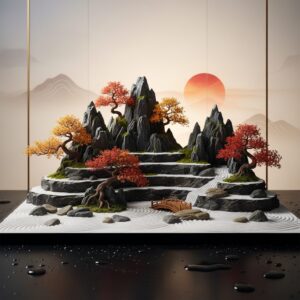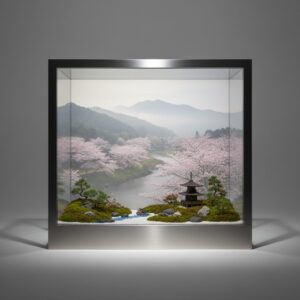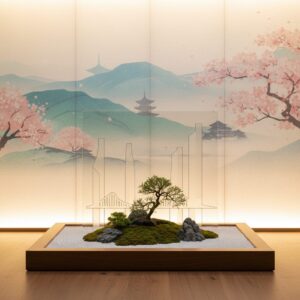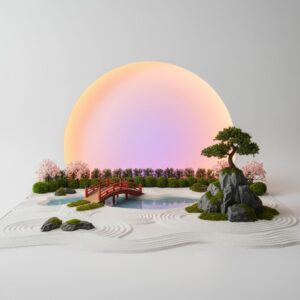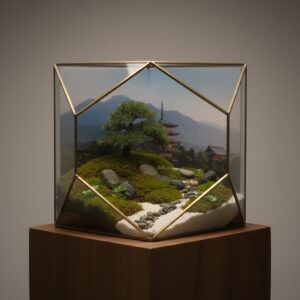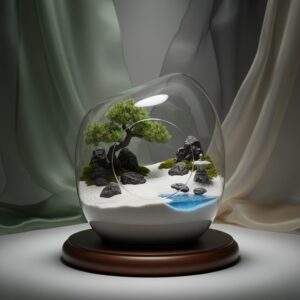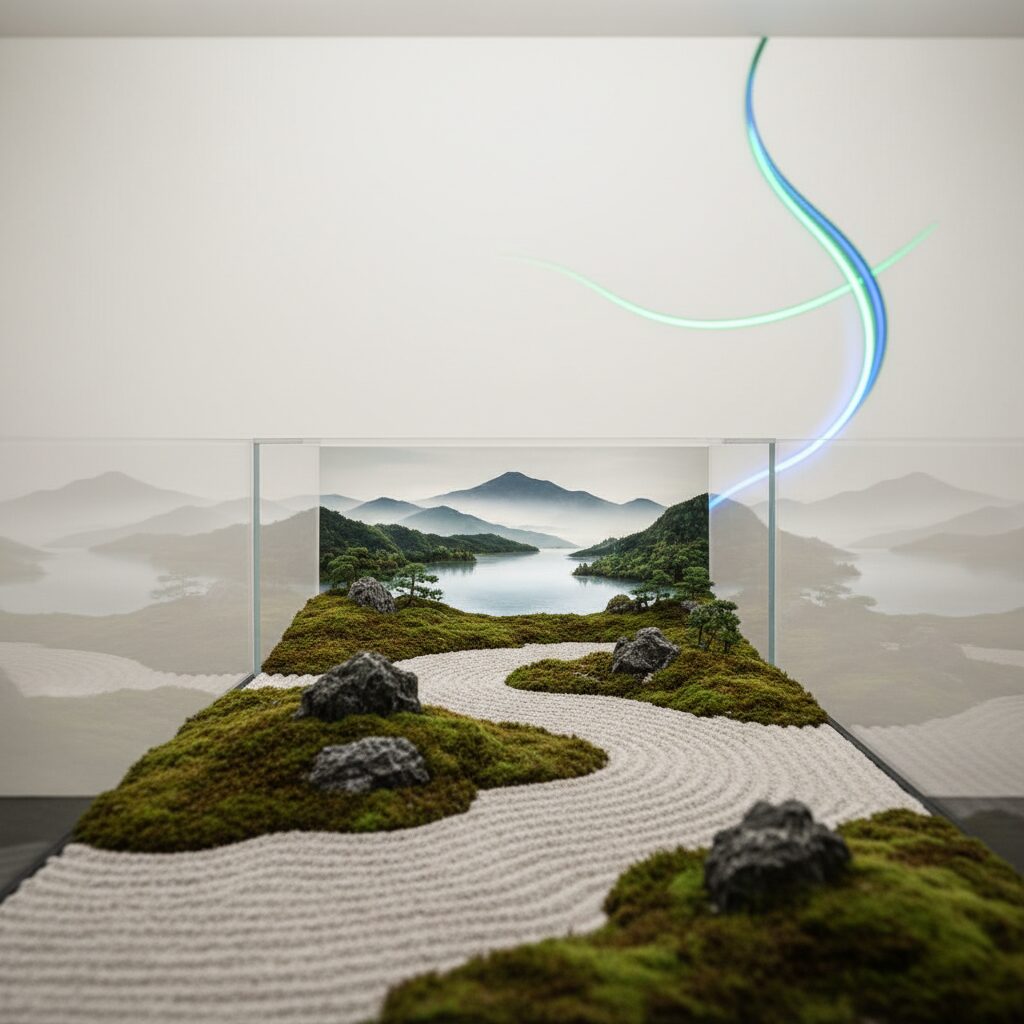
You’ve probably felt it before. You step into a Japanese garden, perhaps a small courtyard attached to a temple in Kyoto, and the world seems to expand. It’s not just peaceful; it feels impossibly vast. You’re standing in a space that you could cross in thirty seconds, yet it seems to contain the entire countryside. Your eyes are drawn past the meticulously raked gravel and the perfectly placed stones, beyond the pruned pine, all the way to a distant mountain peak that seems, impossibly, to be part of the composition. It’s not an accident. This profound sense of scale and connection is the result of a design philosophy known as shakkei.
Translated as “borrowed scenery,” shakkei is one of the most essential and subtle principles in Japanese landscape design. It’s the art of capturing the landscape outside a garden’s formal boundaries and incorporating it into the garden’s own view, making it feel like an integral part of the design. That distant mountain, a neighboring forest, or even the roof of a nearby pagoda isn’t just a backdrop; it becomes a final, masterful brushstroke in a living painting. It’s a technique that dissolves the very idea of a border, suggesting that the garden doesn’t truly end at the wall, but extends to the horizon. This isn’t just a clever optical illusion; it’s a deep reflection of the Japanese relationship with nature, space, and the world beyond one’s own small plot.
This seamless fusion of design and nature invites us to explore how Japanese gardens artfully incorporate a borrowed mountain to expand their spatial narrative.
More Than Just a Pretty View: The Philosophy of Borrowing
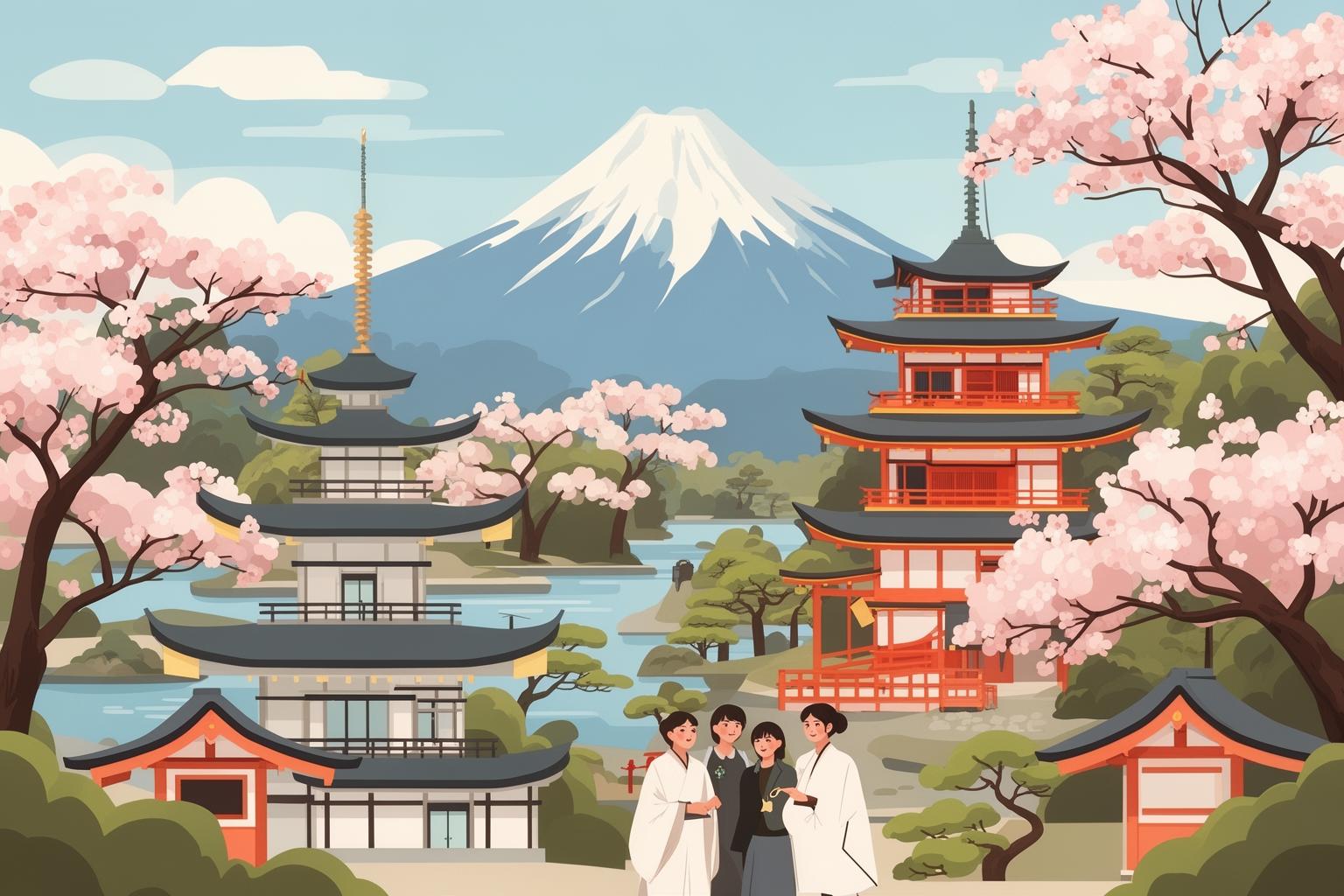
To truly grasp shakkei, you need to look beyond its aesthetics and understand the mindset behind it. In the West, especially in the grand tradition of formal gardens like those at Versailles, the aim was often to assert human dominance over nature. Symmetrical lines, geometric patterns, and meticulously trimmed topiary all convey a message of control. The garden stands as a self-contained universe, a testament to its creator’s power, isolated from the wild, untamed world beyond.
Shakkei offers the complete opposite. It’s an act of collaboration rather than domination. A garden designer using shakkei shows a kind of humility. They recognize that the most beautiful feature they can incorporate is one they didn’t create and can never own: a mountain, a forest, the sea. Rather than building higher walls to shut out the world, they design a deliberate opening to welcome it in. The wall serves as a frame, not a barrier.
This philosophy is deeply intertwined with Shinto and Buddhist beliefs. Shintoism, Japan’s native faith, finds divinity in natural elements—mountains, ancient trees, waterfalls. Nature is not to be conquered but revered. Shakkei is a physical expression of this respect. Buddhism, on the other hand, stresses interconnectedness and the illusion of the self as separate. By visually blurring the boundary between the “man-made” garden and the “natural” world, shakkei embodies this concept. The garden becomes a microcosm explicitly connected to the macrocosm. It quietly reminds us that human efforts are fleeting and small, existing within a much larger, more powerful natural order.
The Four Types of Borrowed Scenery
The concept of shakkei is gracefully simple, yet its application is complex, having been classified over centuries into four primary types. Understanding these reveals the various ways a garden can extend beyond its boundaries.
Enshaku (Distant Borrowing)
This is the most iconic and striking form of shakkei. Enshaku involves borrowing a prominent, distant natural feature, most famously a mountain. The garden of the Entsu-ji Temple in northern Kyoto serves as a masterful example. The garden itself is a tranquil, understated arrangement of moss and stones, framed by the temple hall’s cedar pillars. Yet its true brilliance lies in how it flawlessly frames the view of Mount Hiei in the distance. The garden’s low, clipped hedge acts as an essential middle ground, blocking the visual clutter of the city below and creating a seamless, uninterrupted line of sight from the mossy temple ground to the mountain’s peak. It appears as if the mountain is resting directly atop the hedge, placed there just for you. This technique produces a breathtaking sense of depth and makes the small temple garden feel as expansive as the entire Higashiyama mountain range.
Rinshaku (Adjacent Borrowing)
Borrowing doesn’t always have to be grandiose. Rinshaku is the art of incorporating elements from the immediate surroundings, such as from a neighboring property, into your garden’s design. This might be a striking cherry tree in the adjacent yard, the elegant roofline of a nearby temple, or a dense bamboo grove just beyond the fence. It fosters a sense of shared landscape and community. Rather than competing by planting a taller hedge, the designer embraces the neighboring beauty. This reflects social harmony and an understanding that beauty is a communal resource. In the dense urban fabric of a city like Kyoto, where gardens are often small and closely packed, rinshaku offers a practical and poetic way to enhance the sense of space and visual interest.
Gyōshaku (Upward Borrowing)
At times, the most captivating scenery lies not on the horizon but directly above. Gyōshaku refers to borrowing from the sky. This might include framing passing clouds through carefully pruned pine branches or designing a water basin (tsukubai) specifically to capture and reflect the moon. The sky introduces a dynamic, ever-changing element that a static garden cannot offer. A garden using upward borrowing is never the same from moment to moment; it transforms with the weather, time of day, and seasons. This form of shakkei adds a sense of movement and life to the composition, linking the earthly garden with the celestial realm and reminding the viewer of the continuous flow of time.
Fushaku (Downward Borrowing)
Perhaps the most subtle form, fushaku is the art of borrowing scenery from below the main line of sight. This is not only visual but often experiential. It could be the perfect reflection of autumn maple leaves on the still surface of a pond, effectively creating a second, inverted garden beneath the original. It can also be auditory—the unseen but ever-present sound of a nearby river or a hidden stream gently bubbling among rocks. This technique broadens the garden not only spatially but also sensorially. It invites visitors to look more closely, listen carefully, and appreciate details hidden beneath the surface. It adds a layer of quiet complexity, rewarding the attentive observer with subtle beauty.
The Art of Concealment and Framing
It is a misconception to view shakkei as a passive act of merely leaving a gap in a wall. Rather, it is a deliberate, almost directorial, art form. The success of borrowed scenery relies as much on what is concealed as on what is revealed. This is where the true skill of the Japanese gardener comes to light.
Framing is essential. The view is rarely offered as a broad, open panorama. Instead, it is carefully crafted through a window (mado), a gate, or a strategic opening between trees. This act of framing serves two purposes: it guides the viewer’s gaze precisely where the designer intends and elevates the view from simple scenery to a living landscape painting. By controlling the frame, the designer can emphasize the most beautiful part of the distant mountain while excluding a less attractive slope.
Another important technique is miegakure, or “hide and reveal.” Rather than showing the borrowed view immediately upon entering the garden, the designer may lead you along a winding path. The view of the distant mountain might be completely hidden by a bamboo grove, only to be unveiled suddenly and dramatically at a particular turning point or from the vantage of a specific stone lantern. This creates a feeling of journey, discovery, and surprise, making the final reveal much more powerful.
Importantly, the gardener must manage the middle ground. To create a seamless transition from the foreground to the distant scenery, the visual distractions in between—neighboring houses, power lines, roads—must be masked. This is often accomplished with a simple, uniform element like a meticulously trimmed hedge or a plain earthen wall. This visual “bridge” tricks the eye into overlooking the intervening distance, merging the garden and the borrowed view into a single, harmonious whole.
Shakkei in the Modern World: A Fading Art?
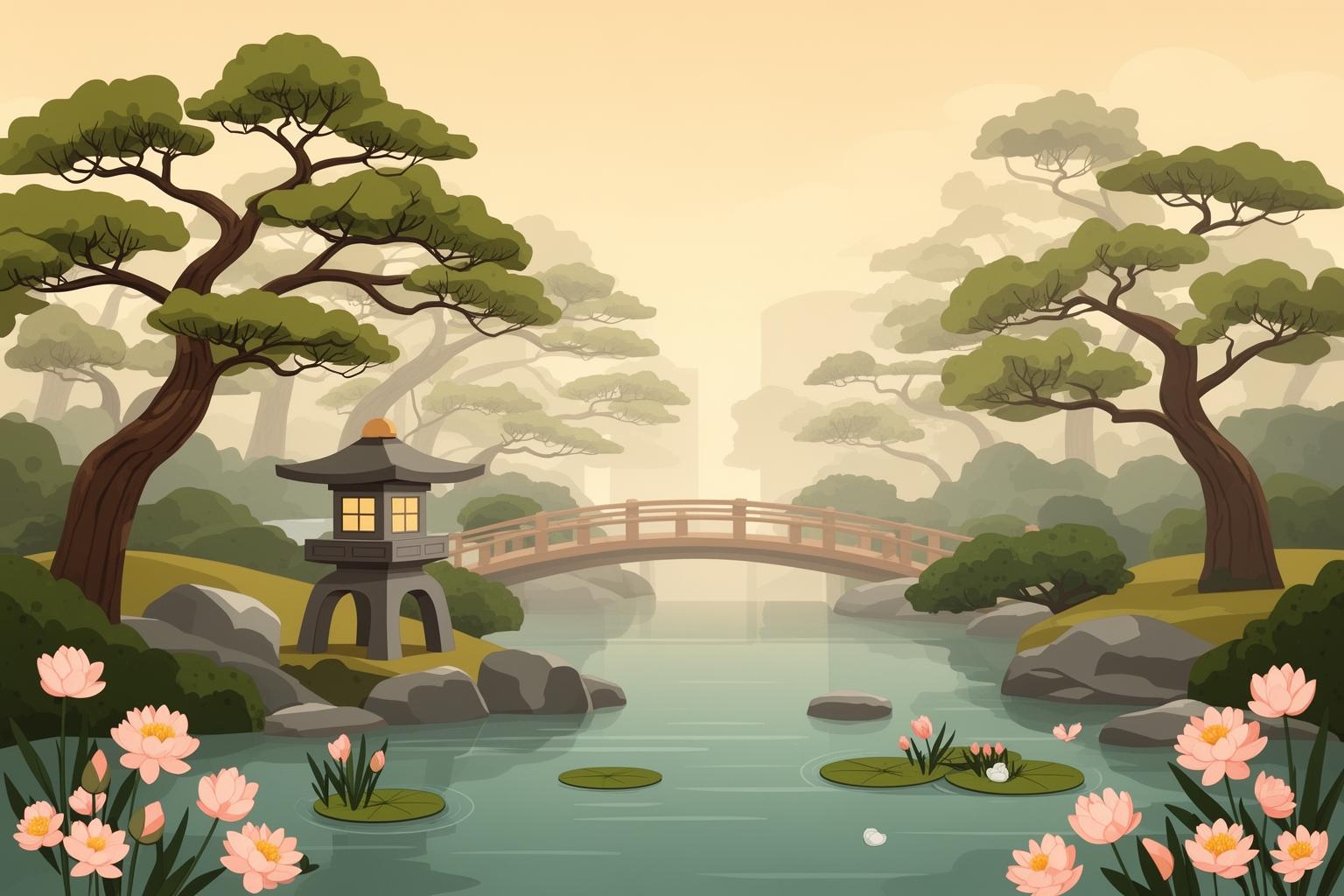
For all its timeless beauty, shakkei is a delicate art form that relies entirely on the presence of something worth borrowing. In feudal Japan, a lord could ensure the view of the mountain from his castle garden remained unspoiled. Today, that assurance no longer exists.
The relentless march of urbanization directly threatens many of Japan’s most famous gardens. A skyscraper can rise within months, permanently breaking a centuries-old connection between a garden and its borrowed mountain. Numerous historic gardens have already lost their shakkei to concrete and steel, their carefully crafted vistas abruptly ending at an apartment building. This has sparked intense debates about preservation, scenic easements, and the cultural costs of development.
Yet, the principle of shakkei endures. Contemporary architects and designers are discovering new ways to reinterpret it in urban settings. Perhaps the “borrowed scenery” is no longer a mountain, but the gleaming glass facade of a nearby skyscraper, the abstract interplay of light and shadow in a concrete courtyard, or the dynamic movement of traffic on a distant expressway. The core idea—dissolving boundaries and recognizing the world beyond one’s own space—remains a powerful source of inspiration.
So, the next time you find yourself in a Japanese garden, sensing that feeling of boundless space, look for the trick. Look for the frame, the carefully curated middle ground, and the distant element that has been invited in. You’re witnessing more than mere gardening skill. You’re seeing a worldview brought to life in moss, stone, and water—a quiet yet profound statement that the most beautiful spaces are not those that shut the world out, but those that find a way to welcome it in.