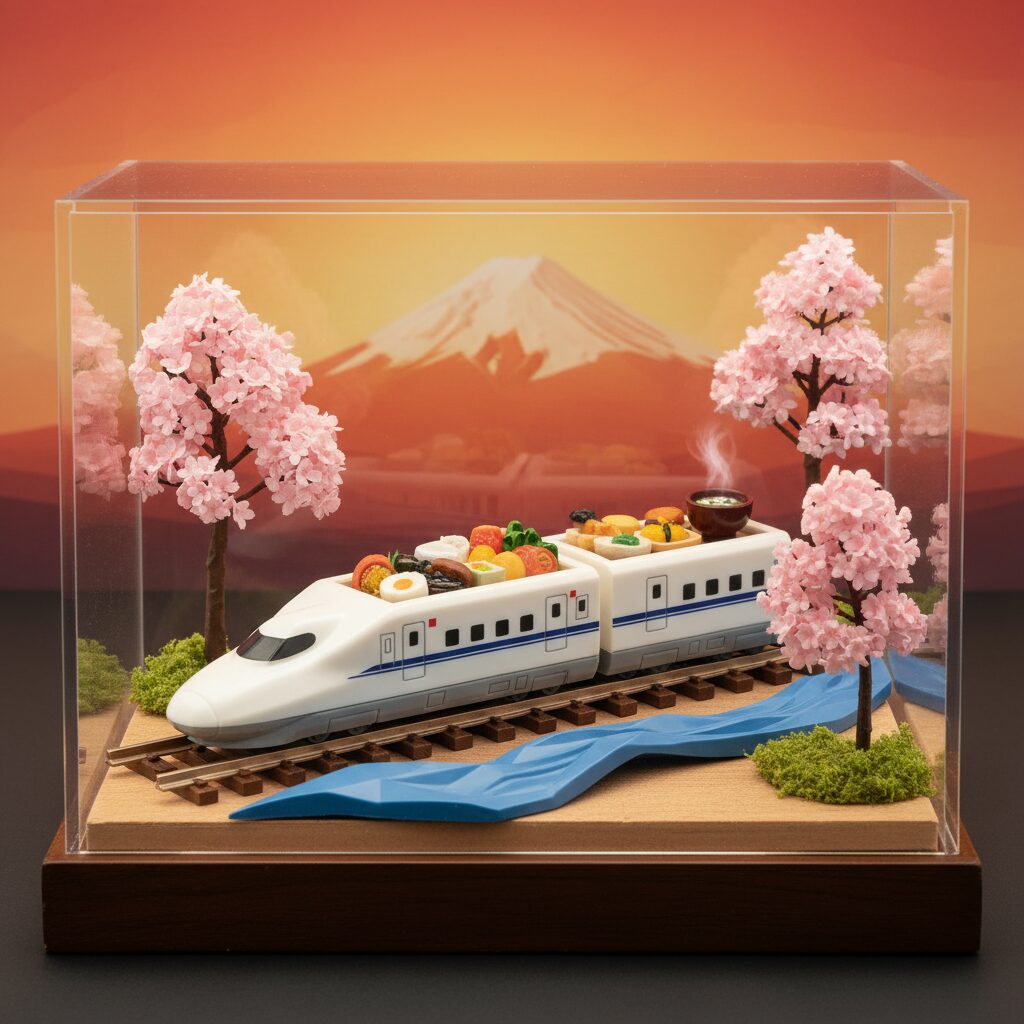
Ask anyone who’s spent time traveling through Japan about their most memorable food experiences, and you’ll hear the expected answers: the life-altering sushi, the soul-warming ramen, the impossibly delicate kaiseki dinner. But press a little further, and another, more surprising answer often emerges, one tied not to a famed restaurant but to the journey itself. They’ll talk about a box. A simple, often beautifully wrapped box bought on a train platform and eaten to the rhythmic clatter of the tracks. This is the world of ekiben—a compound of eki (station) and bento (boxed lunch)—and it’s one of the most ingenious, delicious, and deeply cultural aspects of Japanese travel. To dismiss it as mere “train food” is like calling a vineyard just a farm. It misses the entire point.
An ekiben is not just a convenience; it’s a destination in a box. It’s a hyper-local, edible postcard from the place you’re passing through. While fast food chains have spent a century trying to make a burger in Osaka taste identical to one in Sapporo, the philosophy of ekiben runs in the complete opposite direction. It champions radical locality. The box you buy at Hakodate Station is a celebration of Hokkaido’s squid and scallops. The one you grab in Sendai is a testament to the region’s mastery of grilled beef tongue. This is not standardized fare. It’s a rolling, nationwide food festival where every major station is a different booth, offering a taste of its unique identity. Understanding ekiben is to understand how Japan packages its history, agriculture, and regional pride into a portable, perfect meal.
The culinary journey woven through ekiben’s local flavors naturally extends to other unique facets of Japanese dining, such as exploring the department store basement culture that enriches the nation’s food scene.
The Birth of a Tradition: Forged by Steam and Rice
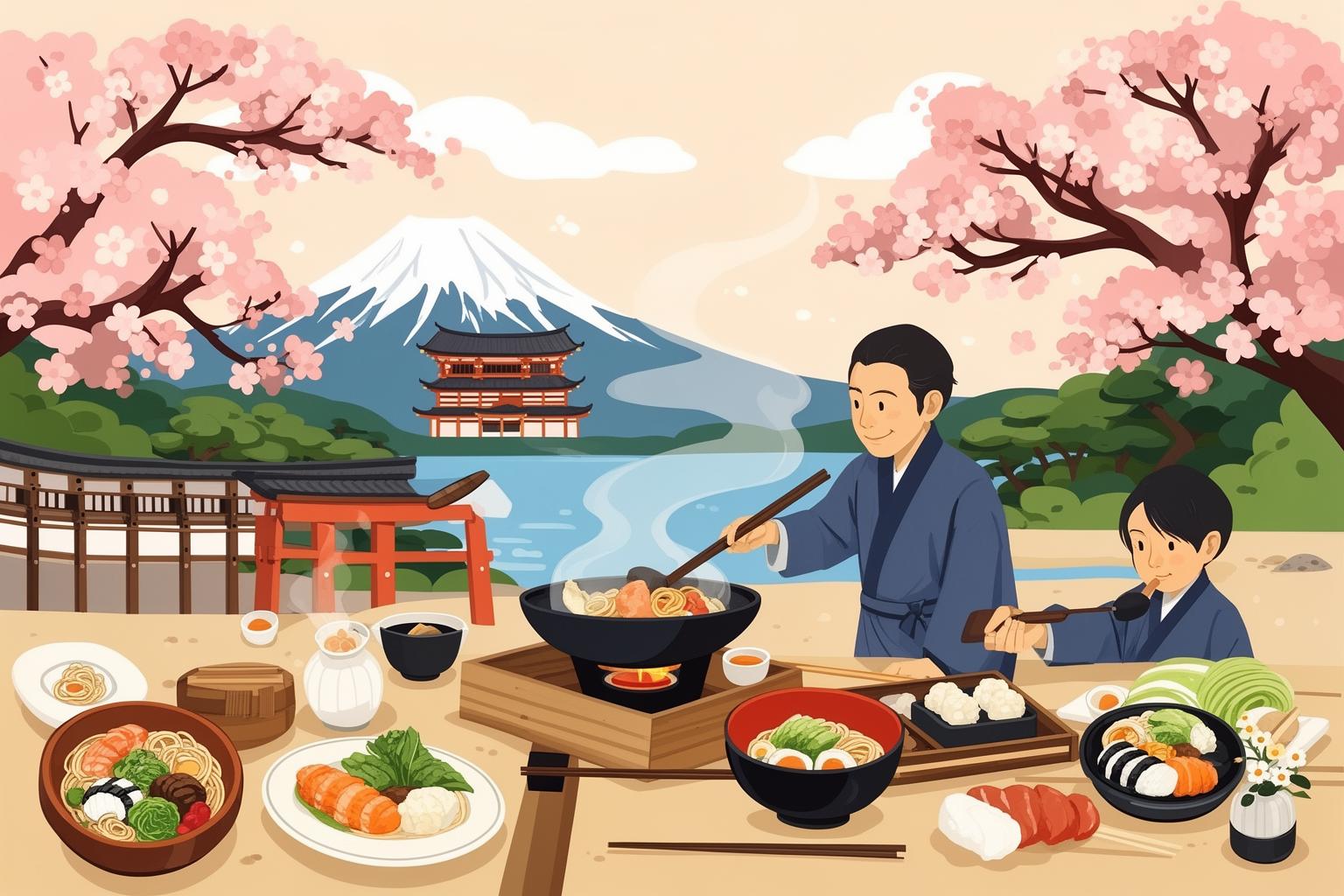
The story of ekiben is closely tied to Japan’s modernization. In the late 19th century, during the Meiji Restoration, Japan rapidly built railway lines, connecting a nation previously divided into isolated feudal domains. Travel times that once took weeks on foot were suddenly reduced to days or hours. However, these early trains were slow and cumbersome, and they lacked a crucial feature: dining cars. A trip from Tokyo to Kyoto was a long and hungry journey.
Spotting an opportunity, an innkeeper in Utsunomiya, a station north of Tokyo, came up with a simple idea in 1885. He wrapped two onigiri (rice balls) and a few slices of pickled daikon radish in bamboo sheath and sold them on the platform. It was modest, practical, and an immediate success. This is widely regarded as the first ekiben. It wasn’t elaborate, but it set an essential precedent: food for the journey, bought at the station.
As the railway network grew, so did the ekiben concept. What started as simple rice balls evolved into more elaborate offerings. Local vendors and inns at each station began competing, not by price, but by quality and regional uniqueness. They incorporated local specialties—the fish from nearby coasts, vegetables from the surrounding mountains, beef from their pastures. Ekiben became a source of pride, a way for a small town to showcase its culinary heritage to the thousands of travelers passing daily. Though a passenger might not have time to get off and explore Yonezawa, they could purchase a Gyuniku Domannaka bento, filled with tender slices of Yamagata beef over perfectly cooked local rice, and briefly savor the finest flavors the region had to offer.
A Culinary Map of Japan
The true brilliance of the ekiben system lies in its function as a gastronomic atlas. Traveling by Shinkansen across Japan transforms into a journey through evolving flavors, textures, and ingredients. The contents of the bento in your hands mirror the landscape passing by your window.
The Bounty of the North: Hokkaido and Tohoku
Begin your journey in Hokkaido, Japan’s northern frontier, where the ekiben reflect the cold, abundant waters surrounding the island. At Sapporo or Hakodate, the boxes overflow with seafood. You’ll encounter glistening salmon roe (ikura) arranged like jewels on rice, sweet, plump scallops (hotate), and rich, fatty crab meat. Among the most iconic is Hakodate’s Ikameshi, a whole squid simmered in a sweet soy glaze and stuffed with glutinous rice. This simple, rustic dish captures the essence of the sea and the ingenuity of a fishing town. It’s more than just a meal; it’s an expression of Hokkaido’s identity.
Heading south into the Tohoku region, the flavors shift from sea to land. Sendai, the largest city in the area, is renowned for gyutan, or grilled beef tongue. Its ekiben features thinly sliced, expertly grilled tongue served over barley rice—a hearty and savory meal that reflects the region’s agricultural strength. Further west, in Akita, you might encounter an ekiben with kiritanpo—pounded rice skewers toasted over a hearth, served alongside seasonal vegetables and chicken from the famed local Hinai-dori breed.
The Heart of Honshu: Kanto, Chubu, and Kansai
Approaching Tokyo, the variety expands dramatically. Tokyo Station is a hub, a grand stage showcasing ekiben from across the country, but it also boasts its own classics like Fukagawa-meshi, a bento of clams simmered with miso and leeks over rice, paying homage to the capital’s origins as a fishing village on Edo Bay.
Travel west into the mountainous Chubu region, and the ekiben evolve once more. At Yokokawa Station in Gunma, you’ll find one of the most beloved and visually striking ekiben: Toge no Kamameshi. Instead of a plastic or wooden box, it comes in a miniature, reusable ceramic kama pot. Inside is a comforting blend of seasoned rice cooked with chicken, shiitake mushrooms, bamboo shoots, and an apricot. Eating it feels like uncovering a small treasure. The earthenware pot, often kept by travelers, becomes a lasting souvenir—a tangible reminder of the region’s craftsmanship.
In Toyama, facing the Sea of Japan, the specialty is Masuzushi. This pressed sushi features vibrant pink slices of trout cured in vinegar, layered over rice, and tightly wrapped in bamboo leaves. Unwrapping it feels ceremonial, and the flavor is clean, elegant, and uniquely tied to the region’s pristine waters. This isn’t just sushi in a box; it’s a distinct, historical preparation you won’t find elsewhere.
The Flavors of the West: Chugoku and Kyushu
Continuing into Western Japan, the culinary narrative unfolds further. In Hiroshima, famous for its oysters and conger eel, you’ll find Anago-meshi, featuring grilled saltwater eel brushed with a sweet soy glaze over rice. It’s a more delicate, refined counterpart to the more common freshwater eel (unagi), reflecting the bounty of the Seto Inland Sea.
Finally, in Kyushu, the southernmost main island, the flavors grow bolder. In Fukuoka, you might discover an ekiben with mentaiko (spicy cod roe), a local specialty influenced by Korean cuisine. In Kagoshima, the focus is on the prefecture’s famed kurobuta (black pork), served as tonkatsu or simmered in a rich sauce. Each box narrates a different story, offering a unique glimpse into the island’s distinct history and food culture.
The Ritual of the Ride
An ekiben is more than just the sum of its ingredients; it’s an experience, a ritual that enhances the act of travel. The process starts on the station platform. At larger stations, dedicated ekiben shops display dozens of varieties, their colorful sample boxes arranged like edible jewels. Choosing one is part of the enjoyment, a moment of delicious indecision. Are you craving the local specialty, or will you opt for something from a distant region brought in for a special fair?
Once aboard the train, the ritual continues. There is a quiet satisfaction in waiting for the Shinkansen to smoothly depart the station and gain speed before placing your box on the tray table. Unwrapping it is a moment filled with anticipation. Many ekiben are beautifully packaged, wrapped in elegant paper, tied with string, or housed in custom-designed boxes that are miniature works of art. The famous Daruma Bento from Takasaki comes in a container shaped like a red Daruma doll, its eyes waiting to be filled in for good luck.
Inside, the food is arranged with classic Japanese precision and aesthetic care. It forms a miniature landscape of colors and shapes, where every element has its rightful place. This isn’t food carelessly tossed into a container; it’s thoughtfully composed. As you eat, watching the countryside blur by, the meal connects you to the physical place you are traveling through. You are not just a passenger in a sealed capsule; you are tasting the land itself. It transforms the journey from a mere transit between two points into a culinary and cultural experience.
An Enduring Symbol of Local Pride

In an era of relentless globalization and homogenization, the ekiben serves as a strong counterbalance. It celebrates the small, the local, and the distinctive. Each box embodies deep regional pride and plays a crucial role in supporting local economies, benefiting farmers, fishermen, and small-scale food producers.
Although its heyday may have been in the mid-20th century, before air travel and faster trains shortened travel times, ekiben culture remains very much alive. It has evolved. Ekiben “fairs” held at department stores in major cities attract huge crowds, offering people a virtual culinary journey across Japan without leaving their city. Special “character” ekiben featuring Hello Kitty or Pokémon attract a new generation, and new varieties continue to emerge, keeping the tradition vibrant and dynamic.
Ultimately, the modest ekiben imparts an important lesson. It demonstrates that travel food doesn’t need to be a dull, generic afterthought. It can be an adventure in its own right. It reminds us that even in a fast-paced, interconnected world, there is great value and joy in the unique character of a place, carefully packed and ready for the journey.