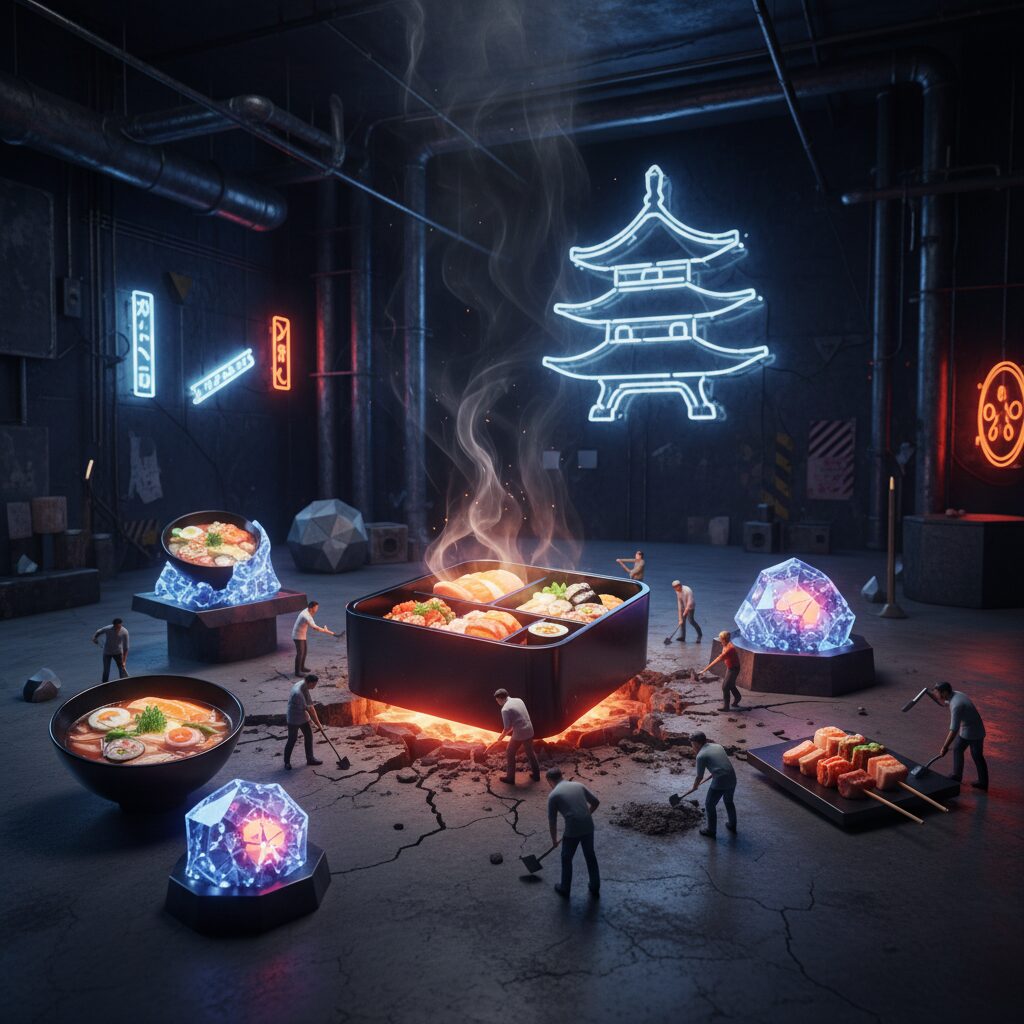
You asked me why the basements of Japanese department stores are, without exaggeration, some of the most dazzling food destinations on the planet. It’s a fair question. For most of us, a department store basement conjures images of dusty storage rooms, maybe a forgotten bargain bin, or the lingering smell of industrial cleaning products. It is, by definition, the least glamorous part of a building. A place you pass through, not a place you seek out.
In Japan, you have to completely invert that logic. Here, the descent into the basement is a descent into a kind of culinary wonderland. They call it the depachika—a portmanteau of depāto (department store) and chika (basement). And it is anything but an afterthought. It is the anchor, the main event, the thrumming, beating heart of the entire establishment. Forget the designer handbags on the first floor or the bespoke suits on the fifth; the real theatre, the true expression of Japanese culture, is happening right below street level. This isn’t a food court for weary shoppers to refuel on greasy pizza. It’s a meticulously curated gallery of edible art, a high-stakes arena for social gifting, and a daily ritual for millions. To understand the depachika is to understand a core part of the modern Japanese psyche: the reverence for food, the obsession with presentation, and the intricate dance of social obligation.
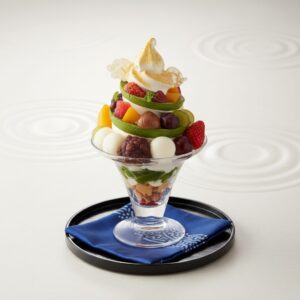
Exploring these hidden culinary realms reveals how innovations such as Shime Parfait are not only redefining traditional flavors but also reshaping Japan’s nocturnal dining rituals.
The Sensory Welcome

Stepping into a depachika for the first time is a refined, beautiful, and overpowering experience for the senses. The air itself feels different—cool, clean, and layered with countless distinct yet harmonious aromas. There’s the sweet, earthy fragrance of freshly steamed red bean paste from the wagashi (traditional Japanese sweets) counter, the savory scent of grilled eel from a bento stall, the sharp, fresh brine from a pickle vendor, and the delicate, buttery aroma of a French-style patisserie. It’s a complex medley, but one handled with remarkable precision. No scent intrudes upon another. Each occupies its own unique space.
Then there are the sights. Under lighting more typical of a jewelry store, everything shines. Perfectly uniform strawberries rest in soft foam like precious gems. Intricate cakes are displayed with the reverence of museum art. Rows of sōzai (prepared side dishes) create stunning mosaics of color and texture. Even the simplest block of tofu is presented as a small masterpiece. The visual language of the depachika conveys abundance, but it’s a carefully controlled, curated abundance. There’s no chaos, no clutter. Every item, from a single croquette to a thousand-dollar melon, is showcased with an almost obsessive attention to detail.
And lastly, the sound. It’s a constant, lively hum, never overwhelming. You’ll hear the rhythmic, high-pitched calls of vendors—“Irasshaimase! Oishii korokke ikaga desu ka?” (“Welcome! How about a delicious croquette?”)—their voices crafted to be welcoming yet not pushy. It’s a performance, a cheerful and steady invitation to look, taste, and engage. This carefully staged atmosphere is your first indication that you’ve stepped into more than just a marketplace. You have entered a theatre devoted to the art of food.
The Logic of the Labyrinth
Depachika layouts may appear chaotic at first, resembling a sprawling maze of stalls and counters. However, there is a deliberate and sophisticated logic behind them, a design that mirrors the structure of a Japanese meal and the rhythm of daily life. These spaces are typically divided into distinct zones, each a world unto itself.
Wagashi and Yōgashi: The Sweet Divide
One of the most prominent areas is always dedicated to sweets, which are divided into two categories. Wagashi are traditional Japanese confections: delicate creations made from mochi, red bean paste, agar, and seasonal ingredients. Their flavors are subtle, and their shapes often reflect the season—a maple leaf in autumn, a cherry blossom in spring. Across the aisle, you’ll find the yōgashi (Western sweets). This section showcases Japan’s passion for French pastries, featuring perfect Mont Blancs, jewel-like fruit tarts, and airy roll cakes, all crafted with technical precision that could bring a Parisian pâtissier to tears.
This division is not only about ingredients; it’s also about the occasion. Wagashi are often purchased for formal visits or to accompany green tea, while yōgashi might be chosen for birthdays, celebrations, or casual indulgences. The depachika caters to every conceivable sweet-related social setting.
Sōzai and Bento: The Heart of the Home Meal
The largest and usually the busiest section is dedicated to sōzai—the vast array of prepared side dishes. Here, the depachika shifts from a place of indulgence to an essential part of everyday life for busy city dwellers. Instead of preparing an entire meal from scratch, someone might stop by on their way home from work to pick up a main dish like grilled fish, simmered vegetables, a potato salad, and a variety of pickles. It’s a way to assemble a varied, high-quality, home-style meal without spending hours cooking.
Close by, you’ll find the bento boxes, which are far from the sad, plastic-wrapped sandwiches of Western convenience stores. Depachika bento are complete, balanced, and often beautifully presented meals in a box. Options range from luxurious assortments of seasonal delicacies to hearty fried chicken sets, offering a world of Japanese cuisine perfectly packaged and ready to go.
The Culture of Gifting
To truly grasp the why behind the existence of depachika, you need to understand its role in Japan’s deeply rooted gift-giving culture. Much of what is sold here is not meant for personal use; it is intended as a gift.
This is where the meticulous packaging comes into play. When you purchase a small box of cookies, you don’t simply receive a paper bag. The box is first wrapped in branded paper with precise care, the corners folded flawlessly. It is then placed inside a crisp paper bag, often with the handles neatly held together by a small branded sticker. Sometimes, a ribbon is added. This process can take several minutes and is carried out with a seriousness that implies you’re handling state secrets. The packaging is not merely a container; it forms an essential part of the gift, a silent message of respect and consideration to the recipient.
There are particular terms for these gifts. Temiyage refers to a small gift brought when visiting someone’s home. A beautifully boxed fruit jelly or a set of seasonal mochi from a renowned depachika stall makes the perfect temiyage. Then there are more formal, seasonal gifts like oseibo (year-end) and ochūgen (mid-summer), where people exchange presents with colleagues, clients, and family members as expressions of gratitude. Depachika serve as the epicenter for this tradition, offering everything from premium cooking oils and gourmet hams to crates of astonishingly expensive fruit, all elegantly packaged.
This social role transforms the depachika from a simple food hall into a vital pillar of Japanese social etiquette. The quality of the products and the prestige of the department store’s brand directly reflect on the gift-giver. Purchasing your temiyage from a celebrated depachika is a mark of good taste and genuine sincerity.
A Stage for the Seasons
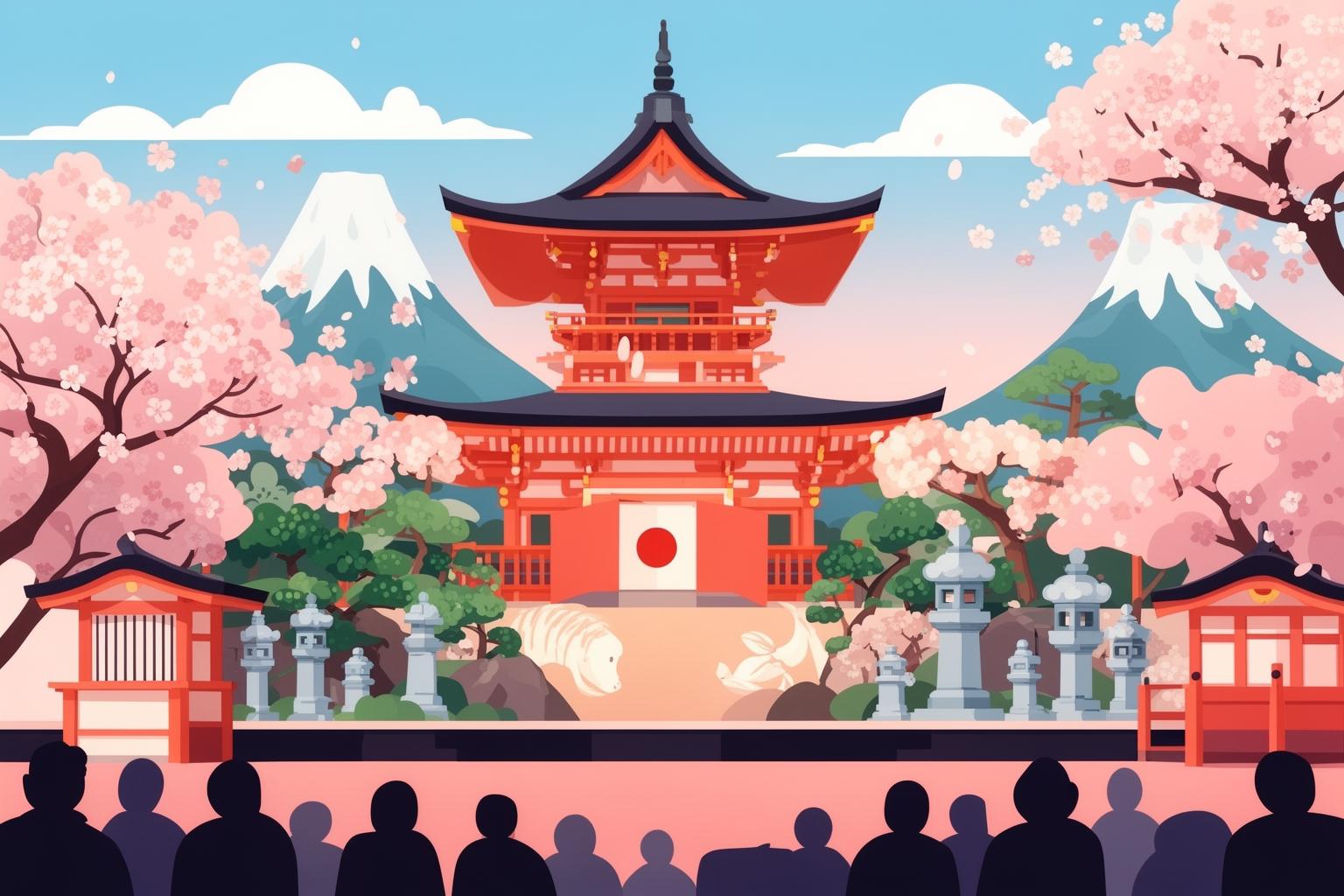
Japanese cuisine is renowned for its seasonality, guided by the concept of shun (旬), the peak period when an ingredient is at its most flavorful and plentiful. The depachika offers perhaps the most vivid, real-time expression of this philosophy. The selections don’t just change slightly; they completely transform with the changing seasons.
In spring, the entire floor takes on a pink hue. You’ll find sakura-flavored mochi, strawberry trifles, cakes adorned with edible cherry blossoms, and bento boxes featuring bamboo shoots and spring greens. Summer brings refreshing jellies made with citrus fruits like yuzu and sudachi, chilled noodles, and green tea-flavored sweets. Autumn bursts with earthy, comforting flavors: chestnut-filled pastries (mont blanc), persimmon sweets, dishes made with freshly harvested rice, and a variety of mushrooms. Winter means hearty stews, nabe hot pot kits, and special preparations for the New Year, culminating in the sale of elaborate, multi-tiered osechi-ryōri boxes filled with symbolic foods meant to bring good fortune.
This continual rotation does more than just offer variety. It links the urban experience of the depachika to the natural rhythms of the agricultural year. It’s a delicious, tangible reminder of the passage of time and the fleeting beauty of each season, a central value in Japanese aesthetics.
More Than a Food Court, Less Than a Restaurant
It’s important to differentiate the depachika from the Western idea of a food court. A food court is intended for immediate eating: you purchase your food, locate a plastic table in a noisy shared space, and consume it on-site. The depachika, however, is quite the opposite. It is primarily focused on takeaway.
There are very few, if any, seating areas available. The entire concept is based on the notion that you are buying these items to enjoy later, whether at home, at work, or perhaps as a picnic in a park. This fundamentally alters the nature of the environment. It’s not a loud, chaotic cafeteria; rather, it’s a pristine, elegant marketplace. The emphasis lies on the careful selection and transport of food. The elaborate packaging serves not only for gifts but also to ensure your perfectly crafted slice of cake or delicately arranged bento remains intact on the way home.
This “takeaway” approach makes the depachika a key part of the home dining experience. It doesn’t replace home cooking but complements it. It offers a variety and quality level that would be almost impossible for a home cook to achieve on a busy weeknight, bridging the gap between a fully home-cooked meal and a formal restaurant dinner. It represents a third way of dining and is deeply embedded in contemporary Japanese life.
Ultimately, the depachika is far more than just a basement filled with food. It’s a living museum of Japanese culinary artistry, a vital driver of social tradition, and a daily showcase of a culture that treats food with the reverence usually reserved for fine art. It’s a place where the simple act of buying dinner becomes a ritual of beauty, precision, and respect. And the best part is that this underground temple of taste awaits discovery, right beneath your feet.