Walk into a typical Western restaurant, and you’re handed a leather-bound document the size of a small-town phone book. It’s a catalog of ambitions: appetizers, soups, salads, seafood, steaks, pasta, a dozen side dishes, and a separate, equally sprawling dessert menu. The sheer volume is meant to signal abundance and cater to every possible whim. We call it “having options.” In Japan, you might walk into a tiny establishment, slide onto one of eight wooden stools, and find that the menu offers exactly one thing. Not one category of thing, but one singular dish. It might be ramen. Or tonkatsu. Or unagi. And that’s it. There is no Plan B.
For an outsider, the initial reaction can be a mix of confusion and mild panic. What if I don’t feel like tempura? What if I wanted chicken instead of pork? But this isn’t about limitation. It’s about devotion. This is the culinary endpoint of a deeply ingrained cultural philosophy known as shokunin kishitsu, the craftsman’s spirit. These single-dish specialists are not restaurants in the Western sense; they are temples dedicated to the relentless, lifelong pursuit of perfecting a single craft. The chef isn’t just a cook; they are a custodian of a tradition, and the meal isn’t just sustenance; it’s the culmination of a life’s work presented in a bowl. To understand these places is to understand a core pillar of the Japanese mindset: the belief that true mastery is found not in doing many things well, but in doing one thing flawlessly, day after day, until the self disappears into the act.
The same meticulous devotion found in these single-dish temples resonates in Japan’s convenience store food system, offering insight into another uniquely focused facet of Japan’s culinary landscape.
The Soul of the Shokunin
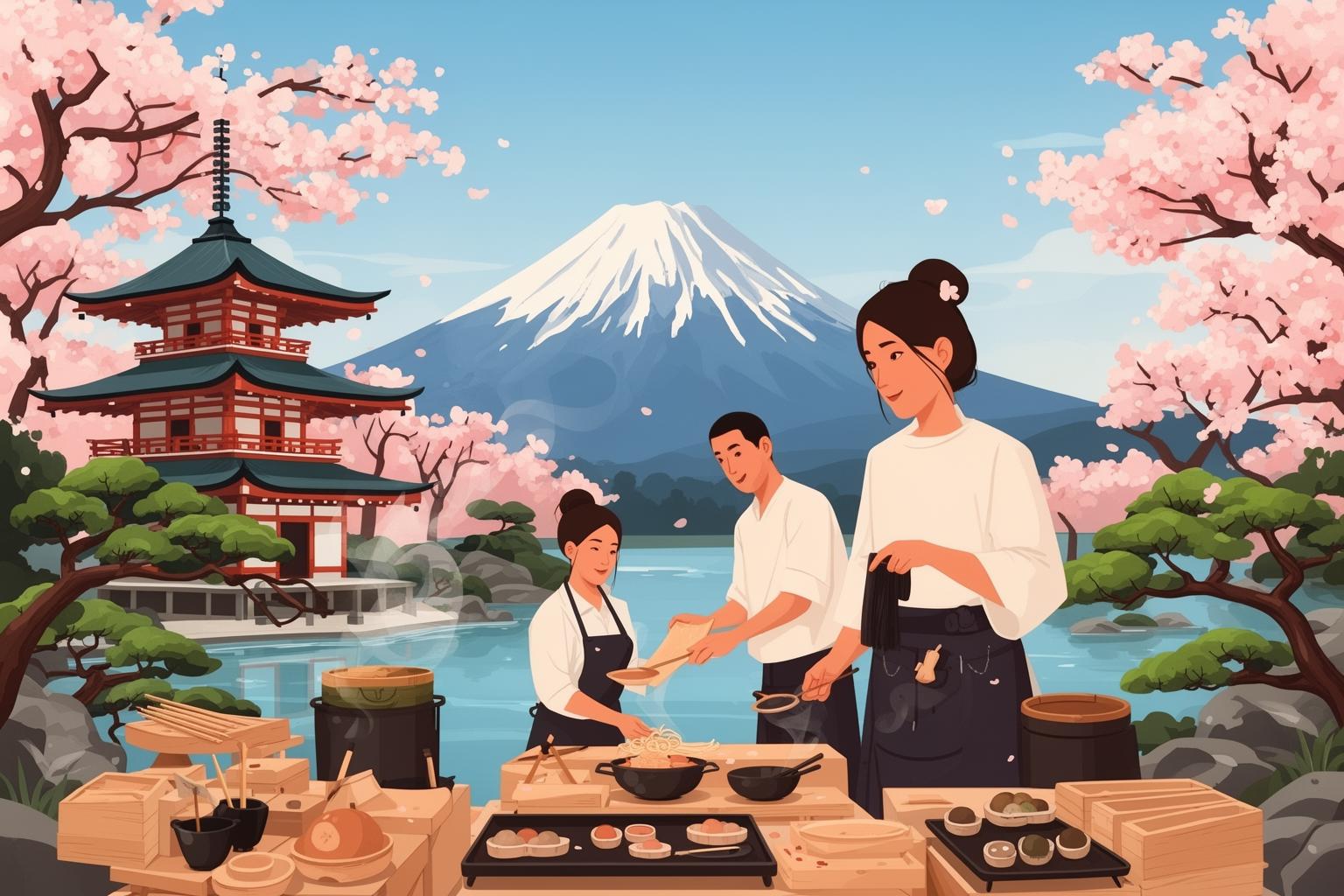
Before discussing the food, we must first address the spirit behind it. The term shokunin is often translated as “artisan” or “craftsman,” but these English words fall short. They reflect technical skill but fail to capture the soul entirely. A shokunin is not merely someone skilled with their hands; they carry a social and moral responsibility to give their best for the well-being of the community. Their work is a spiritual pursuit, a path (michi) that fully consumes their being.
This is no exaggeration. The shokunin mindset rests on several core principles. The first is a deep respect for raw materials. The tempura master doesn’t simply fry shrimp; he understands the prawn’s life cycle, the season when its flavor peaks, and the exact water temperature of its habitat. He maintains a connection with the fisherman who caught it. The soba maker knows the farmer who grew his buckwheat, the soil composition of that region, and how the day’s humidity affects his dough. This goes beyond sourcing; it is a form of communion.
Next is an unwavering dedication to the tools of the craft. A sushi chef’s knives (hocho) are viewed as an extension of their soul, sharpened daily through a meditative ritual. A tempura chef’s copper pots or a ramen master’s noodle boiler are treated with reverence bordering on sacredness. These are not disposable tools but creative partners, often lasting a lifetime and passed down through generations.
Most importantly, the concept of repetition as a path to transcendence defines the process. A young apprentice in a high-end sushi restaurant might spend three years learning only to cook the rice — not making sushi, just preparing the rice — every single day. The aim is not merely consistency but to internalize the process until it feels as natural as breathing. Through thousands of repetitions, the ego gradually erodes, leaving only pure, intuitive action. The master no longer contemplates how to slice the fish; their hands simply know. Mastery, then, is not a destination but a continuous, never-ending journey of refinement.
The Counter as a Stage
The physical space of these single-dish restaurants plays a crucial role in the overall experience. They are typically small, intimate, and centered around a counter. This design is not a matter of convenience; it is a deliberate piece of stagecraft. The counter acts as the proscenium arch, while the kitchen serves as the stage where the shokunin performs.
When you sit at the counter of a tempura-ya, you are not simply waiting for your meal. You are invited to observe the art in motion. You watch the chef’s incredibly fluid movements: the light dusting of flour on a piece of fish, the flick of the wrist that forms the delicate, lace-like batter, and the careful placement into the shimmering oil. You hear the gentle sizzle, a sound the chef reads like a language, signaling the exact moment of perfection. Each piece is placed on a small paper mat in front of you, served one by one at its peak. Letting it sit is a sign of disrespect to the craft.
This interaction transforms eating from a passive act into an active, ritualized engagement. The chef watches you as you eat, gauging your reaction and adjusting the timing of the next piece according to your pace. The diner, in turn, has an unspoken role: to appreciate. This means eating promptly and attentively. It’s why you’ll often find a quiet, almost reverent atmosphere in these places. Patrons aren’t there for loud, lingering conversation; they come to connect with the food and honor the skill of its creator.
This approach is the opposite of anonymous service. It creates a direct, personal bond between maker and eater. The shokunin’s pride is at stake with every plate served. There are no other dishes to conceal behind. Their entire reputation, often established over decades or even generations, depends on the quality of that single piece of fried pork cutlet or that one bowl of eel over rice.
Trusting the Master: Freedom From Choice
Western dining culture is fixated on choice and customization. We want the sauce on the side, the dressing swapped, the protein replaced. The mantra “the customer is always right” empowers diners to set the terms of their meal. In the world of the shokunin, this logic is reversed. The chef is right. Always.
When a restaurant dedicates itself to perfecting a single dish for fifty years, a short menu is not a limitation but a bold statement of ultimate confidence. The chef has agonized over every possible variable. The tonkatsu master has spent decades sourcing the perfect breed of pig, experimenting with the ideal thickness of the cut, and refining the blend of panko breadcrumbs for the perfect crunch. The sauce served alongside it is not one of several options; it is the sauce, a recipe perfected over generations to achieve the ideal balance of sweet, savory, and tangy notes complementing that specific piece of pork.
Requesting a modification is not simply an inconvenience; it’s an insult to their life’s work. It suggests that you, a transient guest, know better than the master who has devoted their existence to this singular pursuit. By entering their restaurant, you enter a pact of trust. Your role is not to choose, but to receive.
This can feel jarring at first, but it is also deeply liberating. Freed from the burden of decision-making—the paralysis caused by an oversized menu—you can focus entirely on the sensory experience. You give your full attention to the texture of hand-cut soba noodles, the deep, smoky flavor of charcoal-grilled unagi, the complex and layered broth of a bowl of ramen that took 18 hours to prepare. You taste not just ingredients, but dedication, history, and an unwavering pursuit of perfection. The best version has already been chosen for you.
The Ecosystem of Specialization

This model of extreme specialization could not exist without an economic and social ecosystem that supports it. It’s a system founded on deep, long-standing relationships and a shared cultural respect for mastery.
Economically, focusing on a single dish is brutally efficient. It reduces waste, streamlines inventory management, and simplifies kitchen operations. The shokunin forms incredibly strong, multi-generational bonds with a small group of suppliers. The unagi chef does not source his eels from a general wholesaler; instead, he gets them from a particular eel purveyor known by his father and grandfather, who understands the exact size and fat content he needs. This creates a hyper-specialized supply chain where everyone is an expert in their narrow domain, from the seaweed harvester to the tofu maker to the pickle fermenter.
Socially, the system is maintained through the traditional master-apprentice model. Skills are not acquired from books or culinary school classrooms. They are absorbed over years, even decades, of silent observation and repetitive, menial tasks. The apprentice watches the master’s every move, learning not just the techniques but also the philosophy, rhythm, and spirit. It’s a demanding, all-encompassing commitment that is increasingly rare in today’s world.
This profound specialization enables a level of quality that’s hard to match in a multi-product setting. A restaurant attempting to excel at pizza, pasta, and steak will inevitably face compromises. The shokunin never compromises. Their entire identity is intertwined with the quality of their singular product. This creates immense pressure but also a remarkable source of pride and purpose that you can feel the moment you step through their door.
The Future of a Singular Focus
Naturally, this tradition encounters challenges in the 21st century. Japan’s population is aging, and many shokunin lack successors. Their children, who are educated and exposed to a broader range of professional opportunities, often hesitate to take on the 16-hour days and decades of thankless repetition required to inherit the family trade. Economic factors are also shifting, with rising ingredient costs and competition from convenient, mass-market chains that offer variety and low prices.
Yet, the spirit of the shokunin remains alive. It is evolving. You can observe it in the third-wave coffee shop where a barista meticulously controls the water temperature to a tenth of a degree for a single-origin pour-over. You can find it in the quiet cocktail bar where a bartender devotes a lifetime to perfecting the precise dilution of an Old Fashioned. While the craft may evolve, the foundational mindset—the deep immersion into a narrow subject in pursuit of perfection—endures.
For now, the old masters are still present. They can still be found in the quiet backstreets of Tokyo, Kyoto, and Fukuoka, diligently working in their small kitchens, performing their daily ritual. Dining at their counter is more than just a meal; it is a cultural experience. It serves as a reminder that in a world constantly urging us toward more, more, more, there is profound power and beauty in dedicating one’s life to less. When you next find yourself in Japan, faced with a restaurant that offers no choice, don’t view it as a lack of options. See it for what it truly is: a promise. A promise of a lifetime’s dedication, of unwavering commitment, all presented to you in a single, perfect bowl.