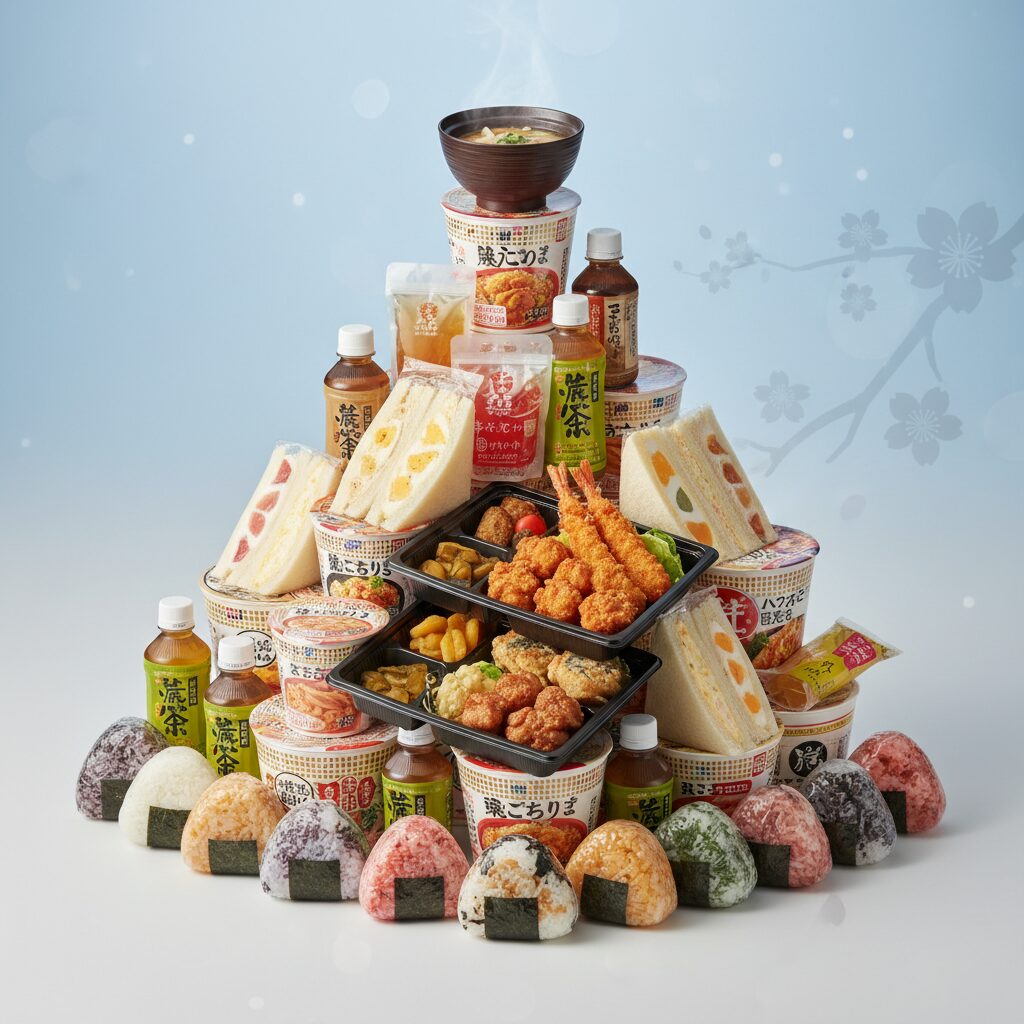
Every newcomer to Japan has the same moment of revelation. It usually happens within the first 24 hours, often in a state of jet-lagged delirium. You stumble out of your hotel or apartment, blinking in the unfamiliar light, searching for something—anything—to eat. You’re not ready for a full restaurant experience; you just need sustenance. You see the familiar, glowing sign of a 7-Eleven, a FamilyMart, or a Lawson, and you walk in expecting the worst. In most parts of the world, convenience store food is a last resort, a category of cuisine defined by dusty bags of chips, questionable hot dogs sweating under a heat lamp, and coffee that tastes vaguely of plastic.
You wander past the aisles of perfectly organized drinks and snacks, and then you see it: the refrigerated section. It’s a wall of quiet, dignified beauty. There are pristine bento boxes with glistening rice and perfectly portioned vegetables. There are shimmering bowls of cold soba noodles, their toppings neatly separated. There are rows upon rows of triangular rice balls, onigiri, each a small, perfect package. And the sandwiches—pillowy, crustless white bread filled with a rich, creamy egg salad or a crisp pork cutlet. Nothing is wilted. Nothing looks sad. It all looks… delicious.
This is the moment the spell is cast. You pick up a ¥300 bowl of pasta, have it expertly heated by the clerk, and discover it’s genuinely good. Not just “good for a convenience store.” Just good. You realize you’re not in Kansas anymore. This isn’t an accident. That perfect onigiri didn’t just appear. Its existence is the result of a system so complex, so ruthlessly efficient, and so deeply intertwined with Japanese culture that it borders on a national obsession. The miracle of the Japanese convenience store, or konbini, isn’t just about the food itself. It’s about the invisible, high-stakes ballet of logistics, data, and cultural expectation that gets it onto the shelf, fresh, multiple times a day. To understand the konbini is to understand a key part of the machinery that makes modern Japan tick.
The same meticulous innovation in convenience store fare echoes the vibrant stand-up meal culture that defines Japan’s dynamic culinary landscape.
The Culinary Battleground
First, you need to recognize that Japan’s convenience store market is a battleground. The three major competitors—7-Eleven, FamilyMart, and Lawson—are engaged in an ongoing fight for supremacy. With over 55,000 locations nationwide, practically on every corner in major cities, they aren’t just rivaling each other; they are also competing against fast-food chains, supermarkets, and even full-service restaurants. Winning this battle requires more than just stale donuts.
This intense rivalry drives quality and innovation. Each of the “big three” has developed a unique identity in their pursuit of your yen.
The Contenders
7-Eleven stands as the undisputed leader. Being the first convenience store to launch in Japan, it boasts an extensive presence and a reputation for exceptional product development. Its private label, Seven Premium, is a powerhouse, offering everything from single-serving simmered mackerel packs to premium ramen crafted in collaboration with renowned noodle shops. Their onigiri are often seen as the industry standard, and their egg salad sandwich has earned a genuine cult following among food enthusiasts worldwide. They are the giants, constantly raising the bar on quality.
FamilyMart, the second-largest chain, emphasizes a friendlier, community-oriented image. Its secret weapon is the Famichiki, a boneless fried chicken so beloved it even has its own merchandise. FamilyMart shines with hot foods available right at the counter, including crispy corn dogs and savory steamed buns (nikuman). They present themselves as the warm, inviting neighborhood spot—the place to go for a comforting hot snack on a chilly day.
Lawson, the third major contender, often takes on the role of the sophisticated innovator. They were quick to introduce healthier choices, launching the “Natural Lawson” sub-brand dedicated to organic ingredients, low-sugar snacks, and nutritious bento boxes. Lawson is also renowned for its upscale dessert collaborations, frequently teaming up with famous pastry chefs to create limited-edition sweets that sell out within hours. If 7-Eleven is the dependable powerhouse and FamilyMart is the cozy friend, Lawson is the chic, health-conscious trendsetter.
This ongoing rivalry means that if one chain debuts a hugely popular new noodle dish, the other two are sure to follow with their own enhanced versions within weeks. The consumer ultimately benefits from this fierce competition in taste and freshness.
The Invisible Machine: Logistics as an Art Form
The true secret behind konbini quality isn’t a hidden recipe; it’s an incredibly precise logistics network. The entire system is centered on one fundamental principle: freshness. To accomplish this, Japanese convenience stores moved away from the Western approach of a single large daily delivery. Instead, they employ a system of multiple, specialized deliveries throughout the day.
A Symphony of Deliveries
A single store might receive three, four, or even more deliveries within a 24-hour span. These aren’t random drop-offs. Each truck is assigned to a specific category of product and arrives at the ideal time. A pre-dawn delivery might bring onigiri, sandwiches, and bento boxes for the morning rush. A mid-day truck might restock beverages and chilled desserts. Another arriving in the evening could deliver ingredients for the late-night oden hot pot. This ensures that the food on the shelves at any time is, at most, just a few hours old.
These delivery trucks are also marvels of engineering. One vehicle often contains multiple temperature-controlled compartments. Frozen goods like ice cream can be transported at -20°C, chilled items such as salads and milk at 5°C, and room-temperature products like chips and magazines—all in the same truck. This setup maximizes efficiency by combining deliveries without compromising the quality of the food.
The All-Seeing Eye of POS Data
This logistical dance is orchestrated by data. Each time you purchase something at a konbini, the barcode is scanned into a Point-of-Sale (POS) system. But this system does much more than just process your payment—it’s the command center of the entire operation.
The POS terminal records what was sold, when it was sold, and even gathers demographic data about the buyer (such as age and gender, estimated by the clerk with a button press). This information is transmitted in real time to regional distribution centers and corporate headquarters. The company knows down to the minute which products are selling at which locations.
This data is then analyzed by advanced predictive algorithms. These systems examine sales trends, correlating them with external factors like the weather (ice cream sales jump on hot days, hot coffee on cold ones), local events (more snacks are needed near a stadium on game day), and national holidays. The outcome is an incredibly accurate forecast of what each individual store will require, and when. This is how the system prevents both stockouts and excess waste. The store near a high school is restocked with fried chicken right before classes end. The store in a business district gets flooded with bento boxes just before the lunch rush.
This data-driven method also enables the strict removal of products. Food in a Japanese konbini isn’t taken off shelves only after it expires; it’s pulled hours before to ensure exceptional freshness. Staff frequently patrol the aisles, removing items approaching their “sell-by” time, which is far more stringent than the Western “best-by” date. While this practice is a key factor in konbini quality, it also fuels Japan’s significant food waste issue—an uncomfortable reality behind the pursuit of perfection.
A Ritual of Daily Life
The konbini’s success stems from its deep integration into the everyday rituals of Japanese life. It is more than just a store; it functions as a public utility, a dependable companion in the relentless pace of urban living. The food offerings reflect this, perfectly suited to the flow of the day.
There’s the morning routine: the office worker, dressed in a crisp suit, rushing in for a salmon onigiri and a can of hot Boss coffee from the heated cabinet. It provides a quick, efficient, and surprisingly wholesome start to the day. The onigiri itself is a marvel of design. Its clever three-step plastic wrapper keeps the crisp sheet of seaweed (nori) separate from the moist rice, preventing sogginess. When you pull the tabs and bring the two together, it becomes a small, satisfying ritual of freshness.
Then comes the midday rush for the bento. For a few hundred yen, you can enjoy a complete, balanced meal that outshines most Western office lunches. Choices range from classics like breaded pork cutlet over rice (katsudon), grilled fish with pickles and vegetables, to a surprisingly tasty spaghetti bolognese. The clerk will ask if you want it heated and, with practiced efficiency, they’ll microwave it to just the right temperature. Your meal is handed over with a set of chopsticks and a wet nap (oshibori), a subtle gesture of hospitality that enhances the entire experience.
The konbini is also a late-night lifesaver. After long hours at work or a night out with colleagues, it offers a warm, well-lit refuge. It’s a place to grab a bowl of instant noodles from a wide selection and use the in-store kettle to prepare them on the spot. In winter, many stores serve oden, a simmering pot filled with fish cakes, daikon radish, and tofu, which customers can select from. It’s the ultimate comfort food—a warm, savory conclusion to a long day.
These small rituals, repeated by millions every day, form the foundation of the konbini’s existence. The food must be good, because it’s not merely an occasional snack; it’s an essential part of the national diet.
The Never-Ending Quest for Novelty

A system this vast and competitive cannot afford to remain stagnant. The product development cycle at Japanese convenience stores is relentless, fueled by a cultural obsession with seasonality and novelty.
The Flavor of the Season
Step into a konbini at any time of year, and the shelves will reflect the season. In spring, the aisles blush with pink, stocked with sakura-flavored mochi, cherry blossom lattes, and strawberry sandwiches. Summer ushers in a wave of refreshing products: chilled ramen (hiyashi chuka), salt-flavored snacks to beat the heat, and a dazzling variety of ice creams and frozen treats. Autumn brings chestnuts (kuri) and sweet potatoes (satsumaimo), appearing in everything from pastries to rice balls. Winter signals rich chocolate desserts and special steamed buns for the holidays. This constant turnover keeps customers engaged, always eager to discover the latest seasonal delight.
The Hype of Collaboration
Konbini chains excel at collaboration to generate excitement. They team up with renowned brands and culinary experts to produce limited-time offerings that create significant buzz. 7-Eleven might join forces with a Michelin-starred ramen shop to launch an instant noodle version of their signature dish. Lawson partners with the famous chocolate brand GODIVA for a line of indulgent desserts. FamilyMart may release products tied to a popular anime series. These collaborations are treated as major events, increasing foot traffic and reinforcing the idea that konbini food is not only convenient but also culturally relevant and thrilling.
This philosophy of continuous improvement, or kaizen, is perhaps best illustrated by a single, humble item: the egg salad sandwich, or tamago sando. It appears simple, but the pursuit of its perfection is anything but. The bread must be shokupan, a fluffy, slightly sweet milk bread, with the crusts carefully removed. The egg filling is a subject of intense debate and refinement—a precise balance of creamy Kewpie mayonnaise, perfectly boiled eggs (not too chunky, not too smooth), and a touch of sugar. Every chain is constantly fine-tuning its recipe, bread supplier, and packaging in a quest to create the ultimate version of this deceptively simple sandwich. It’s a testament to a culture that believes anything, even a cheap sandwich from a 24-hour store, deserves to be perfected.
Ultimately, the Japanese convenience store is a paradox. It’s a place of incredible speed and efficiency that also offers unexpected moments of comfort and care. Its food results from cold, hard data and ruthless logistics, yet it feels personal and satisfying. It reflects the society it serves: pragmatic, fast-paced, and innovative, yet deeply committed to quality, detail, and the small rituals that make daily life more enjoyable.
The next time you find yourself in Japan, standing beneath those fluorescent lights, don’t just grab a snack. Take a moment to appreciate the ecosystem that brought it to you. That perfect, triangular onigiri in your hand isn’t just rice and seaweed. It’s the culmination of a silent, around-the-clock battle for your taste buds. It’s a marvel of distribution, a feat of data analysis, and a small, edible symbol of a culture that believes convenience should never be an excuse for mediocrity.