One of my first truly disorienting moments in Tokyo wasn’t in the middle of the Shibuya Scramble or trying to navigate the labyrinthine corridors of Shinjuku Station. It happened on a quiet train platform. There, tucked into a small alcove, was a tiny shop with a warm light spilling out. Inside, a handful of men in suits stood shoulder-to-shoulder at a high counter, heads bowed over steaming bowls, slurping noodles with a focused intensity that felt almost meditative. There were no chairs, no tables, no chatter. Just the rhythmic sound of slurping and the gentle hiss of broth. In a world where a meal is often framed as a social event, an opportunity to sit down and connect, this was the opposite. It was fast, solitary, and seemingly utilitarian. Yet, nobody looked unhappy. In fact, they looked deeply content. This was my introduction to the world of tachigui, or “stand-eating,” a practice that looks like a simple convenience but is actually a deeply ingrained cultural ritual with its own history, etiquette, and unique form of satisfaction. To understand tachigui is to understand something fundamental about the rhythm of urban Japan: how the country finds grace in efficiency, community in solitude, and profound pleasure in the simple, fleeting moments of daily life.
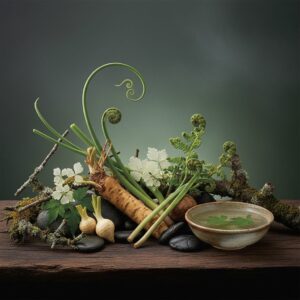
Moreover, Japan’s culinary landscape embraces an intricate balance of speed and savor, as exemplified by its celebration of mountain vegetable flavors that echo the transient joy found in every fleeting bite.
More Than Just Fast Food: The Origins of Tachigui
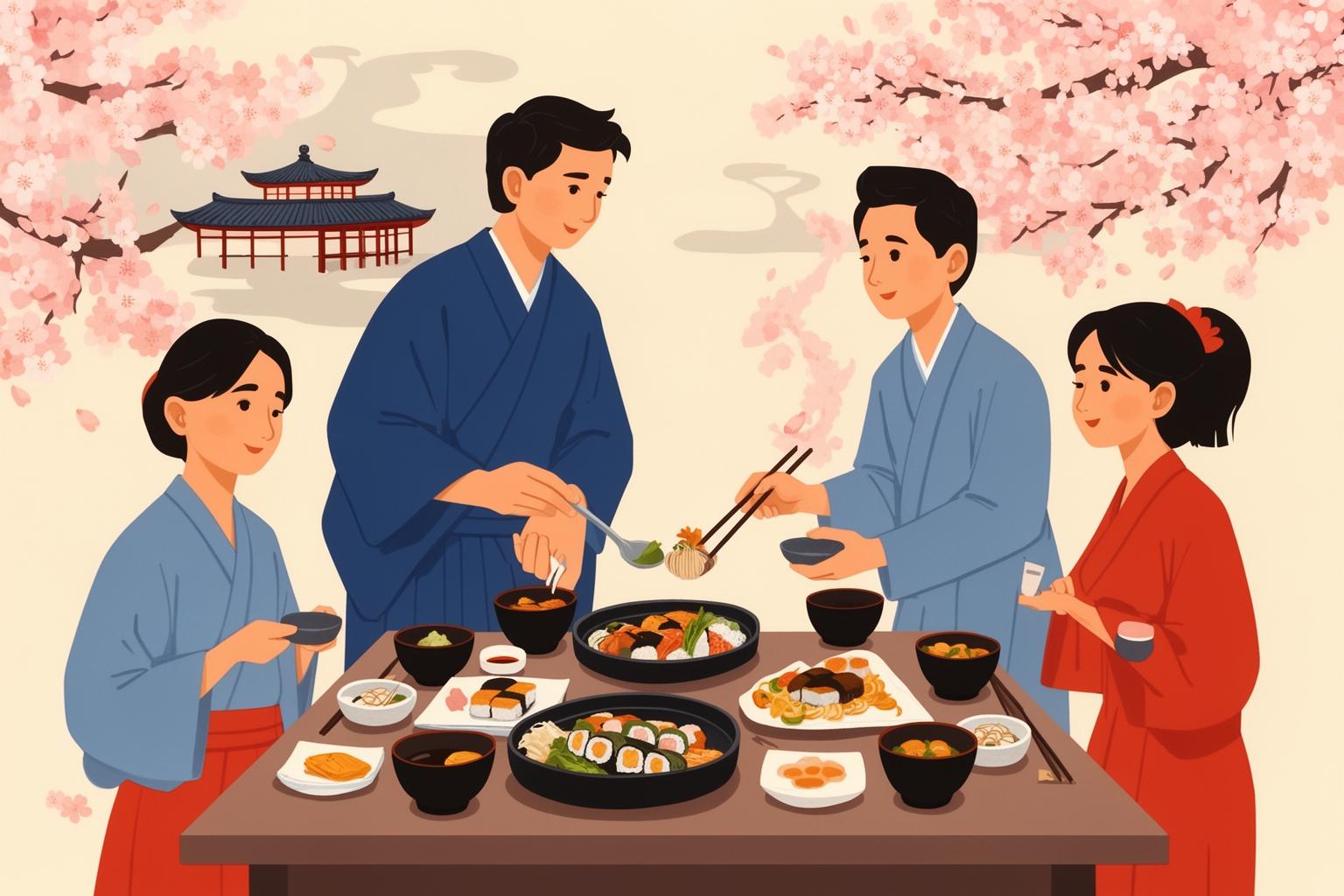
To truly understand why standing up to eat is so commonplace here, you need to look back in time. This practice is not a modern innovation born out of a shortage of time. Rather, it is a tradition deeply rooted in the very fabric of urban Japanese life, directly shaped by the energy and demands of the city.
A Taste of Edo’s Hustle
The story starts in the Edo period (1603-1868), when Tokyo was known as Edo and was rapidly growing into one of the world’s largest cities. It was a bustling metropolis filled with commerce, vigor, and notably, a large population of single men. Lords were required by the shogun to spend alternating years in the capital, accompanied by sizable retinues of samurai and servants, many of whom left their families behind in their home regions. On top of that came a steady stream of merchants, artisans, and laborers all seeking fortune, creating a city population that needed food quickly, cheaply, and conveniently. Most of these men lived in cramped quarters with limited or no cooking facilities. The solution? The yatai.
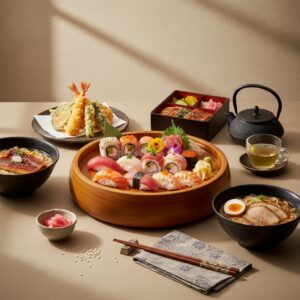
These small, mobile food stalls powered Edo’s culinary culture. They lined busy streets, serving what was essentially the original Japanese fast food: a piece of nigiri sushi, skewered tempura, or a steaming bowl of soba noodles. Customers would approach, order, and eat right at the stall before moving on. There was no time or room for the ritual of a sit-down meal. This was about nourishment tailored for a life on the go. Eating while standing wasn’t a compromise; it was the whole concept. The system was perfectly tailored to a city that never stopped, creating a cultural precedent that food could be both delicious and incredibly efficient.
The Post-War Boom and the Salaryman
Jump ahead to the mid-20th century. Following World War II, Japan experienced extraordinary economic growth. During this period, one of the country’s most iconic figures emerged: the salaryman. Dressed in a dark suit and tie, he became the emblem of corporate Japan, known for dedication, long hours, and rigorous daily commutes from suburban homes into the city center. This new urban warrior required a new type of fueling station, and the spirit of Edo’s yatai was revived in a new setting: the train station.
Platforms and station concourses became the modern home of tachigui. Small noodle shops, called tachigui soba/udon, sprang up to serve the endless stream of commuters. For salarymen hurrying to morning meetings or worn out after a long day at the office, these spots were a lifesaver. They offered a hot, satisfying, and incredibly quick meal that could be eaten within the ten minutes between train connections. The price was low, turnover was high, and the quality surprisingly good. This cemented the link between tachigui and the rhythms of work and transit, making it an essential—almost indispensable—part of daily life for millions.
The Unwritten Rules: The Etiquette of Eating on Your Feet
What truly distinguishes tachigui from merely a convenience to a ritual is its unspoken code of conduct. Entering a stand-up noodle shop feels like stepping into a small theater of efficiency. While it may appear chaotic from the outside, inside, everyone knows their role and executes it with quiet, practiced grace. It’s a dance of mutual respect founded on a shared understanding of the purpose of the space.
The Solo Performance
Above all, tachigui is an individual experience. Even when packed closely with a dozen others, the moment remains deeply personal. This isn’t a place for lingering conversations with friends. Interaction is minimal or absent. Each person exists in their own world, focused solely on the bowl before them. This solitude isn’t perceived as lonely or sad; it’s intentional. It’s a brief pause carved out of a busy day specifically for eating and recharging. The collective silence creates a unique communal atmosphere—a feeling of being alone, yet together. You honor your neighbor’s space and concentration, and they respect yours. The aim is to enter, enjoy your meal, and leave promptly, making room for the next person in line.
Speed, Not Haste
There is an important distinction between being quick and being rushed. Tachigui captures this distinction perfectly. The entire process runs with streamlined efficiency, yet never feels frantic or careless. Usually, you buy a ticket for your selected dish from a vending machine near the entrance. You hand the ticket to the staff, who prepare your bowl in a minute or two. You find a spot at the counter, place your bowl down, and eat. And while eating, you fully engage. Slurping noodles—which might be seen as rude in some Western cultures—is not only acceptable but expected. It cools the hot noodles and is said to enhance the broth’s flavor. When finished, you set your bowl back on the counter, quietly say “gochisousama-deshita” (thank you for the meal) to the staff, and leave. The entire interaction may last under ten minutes but forms a complete, self-contained experience. It’s a ritual of speed, not a chaotic rush.
The Transactional Grace
The interaction with the staff exemplifies this refined efficiency. It’s brief and direct but always courteous. There’s no small talk or inquiries about how your day was. Communication is purely functional: exchanging the ticket, receiving the food, and offering a final word of thanks. Yet, within this simplicity, there’s a palpable mutual respect. The staff works with remarkable speed and precision, and customers, by following the unspoken rules, enable it. This seamless flow results from a social contract everyone implicitly understands and honors.
A Modern Renaissance: Tachigui Beyond the Train Station
If you think tachigui is merely for rushed commuters eating inexpensive noodles, you’d be mistaken. In recent years, the concept has undergone an intriguing transformation, breaking free from its traditional boundaries and being adapted for a broad array of culinary experiences. It’s a testament to the model’s versatility and its appeal to a new generation of diners who appreciate quality and experience just as much as efficiency.
Standing Sushi and Steak
One of the most exciting developments has been the application of the tachigui model to upscale cuisine. Stand-up sushi bars have grown in popularity, offering top-quality fish that would be costly at a conventional restaurant. By eliminating the expenses of seating, extensive service, and lengthy table occupation, these establishments can focus their resources on procuring premium ingredients. The experience is swift—you enjoy a few exquisite pieces of nigiri prepared fresh before you by the chef, then you’re on your way. This makes high-end sushi accessible for a quick lunch or a pre-dinner snack.
Even more surprising was the phenomenal success of chains like Ikinari Steak, which applied the stand-up concept to the steakhouse. Here, customers order a specific cut of steak by weight, which is then grilled to order and served sizzling on a cast-iron plate at a high counter. The idea of eating a 300-gram ribeye while standing might seem unusual, but it became wildly popular. It stripped away the steakhouse experience’s expensive, time-consuming formalities and distilled it to its delicious core: a great piece of meat, cooked perfectly, and enjoyed without fuss.
The Stand-Up Izakaya (Tachinomi)
The stand-up concept extends beyond food into Japan’s lively drinking culture. Tachinomi, or stand-up bars, are a staple of urban nightlife. These are usually small, bustling, and full of character, often hidden in station underpasses or down narrow side streets. They’re the perfect spot for a quick drink and a few small plates (otsumami) after work. Unlike the quiet focus of a noodle shop, tachinomi are more social. The close quarters and casual vibe make it easy to strike up a conversation with the person next to you. Yet, they maintain the transient spirit of tachigui. It’s a low-commitment social space. You can drop in for a single beer on your way home or stay for a few rounds with colleagues. There’s no pressure, no need to book—just a simple, lively place to unwind.
The Soul of Tachigui: Why It Endures
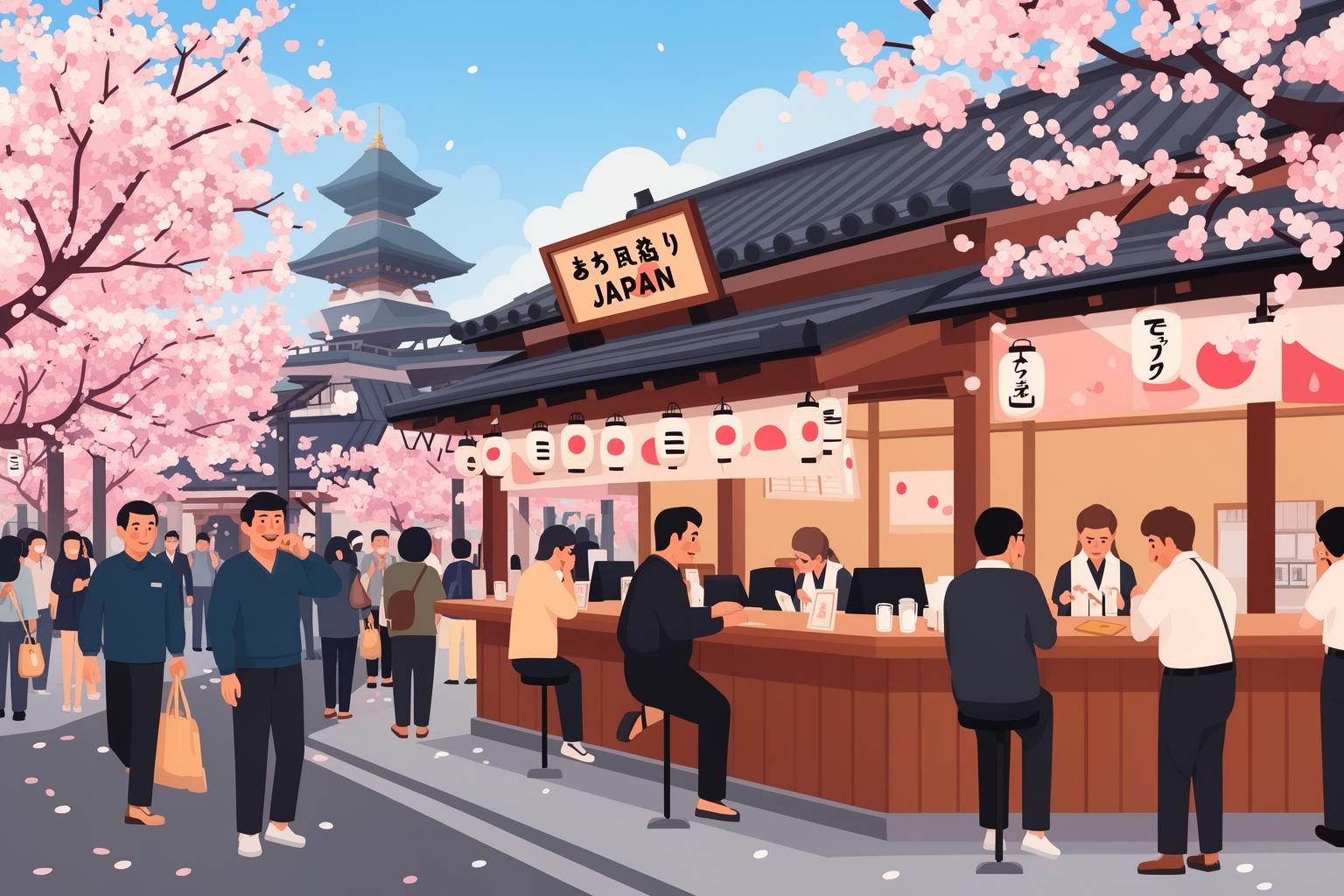
So why does this custom of eating while standing continue to flourish in a country celebrated for its meticulous attention to detail and formal traditions? The answer is that tachigui is not contrary to those values; it is an expression of them. It persists because it aligns with fundamental aspects of the Japanese mindset, providing a unique kind of comfort and satisfaction that a sit-down meal cannot offer.
An Embrace of Transience
Japanese culture holds a deep, enduring appreciation for the beauty of fleeting moments, a concept often conveyed through ideas like mono no aware. A tachigui meal represents the culinary counterpart to this. It is a brief, punctuated moment of enjoyment amid a day full of responsibilities. It is not intended to last. Its very shortness is part of its charm. For those ten minutes at the counter, you are fully present, focused solely on the warmth of the broth and the texture of the noodles. It is a small act of mindfulness, a temporary pause allowing you to reset before plunging back into the pace of the city. It acknowledges that not all good things must be savored slowly; some are perfect precisely because they are fleeting.
The Beauty of Functionalism
There is an aesthetic principle in Japan that values functional beauty and the removal of the unnecessary. Tachigui exemplifies this. Every element is crafted for maximum efficiency and purpose. The ticket machine, the high counter, the limited menu—all contribute to a smooth system. There is no wasted space, wasted motion, or wasted time. Yet this functionalism is neither cold nor sterile. It carries its own distinct grace and warmth. It is a clever and elegant response to the challenges of urban life, born from a culture that masters refining processes into their most beautiful and logical form. It is not an inferior type of dining; it is a different, highly developed one. It demonstrates that a meal does not have to be elaborate to be deeply satisfying. Sometimes, all that is needed is a good bowl of noodles, a quiet moment alone, and a place to stand.