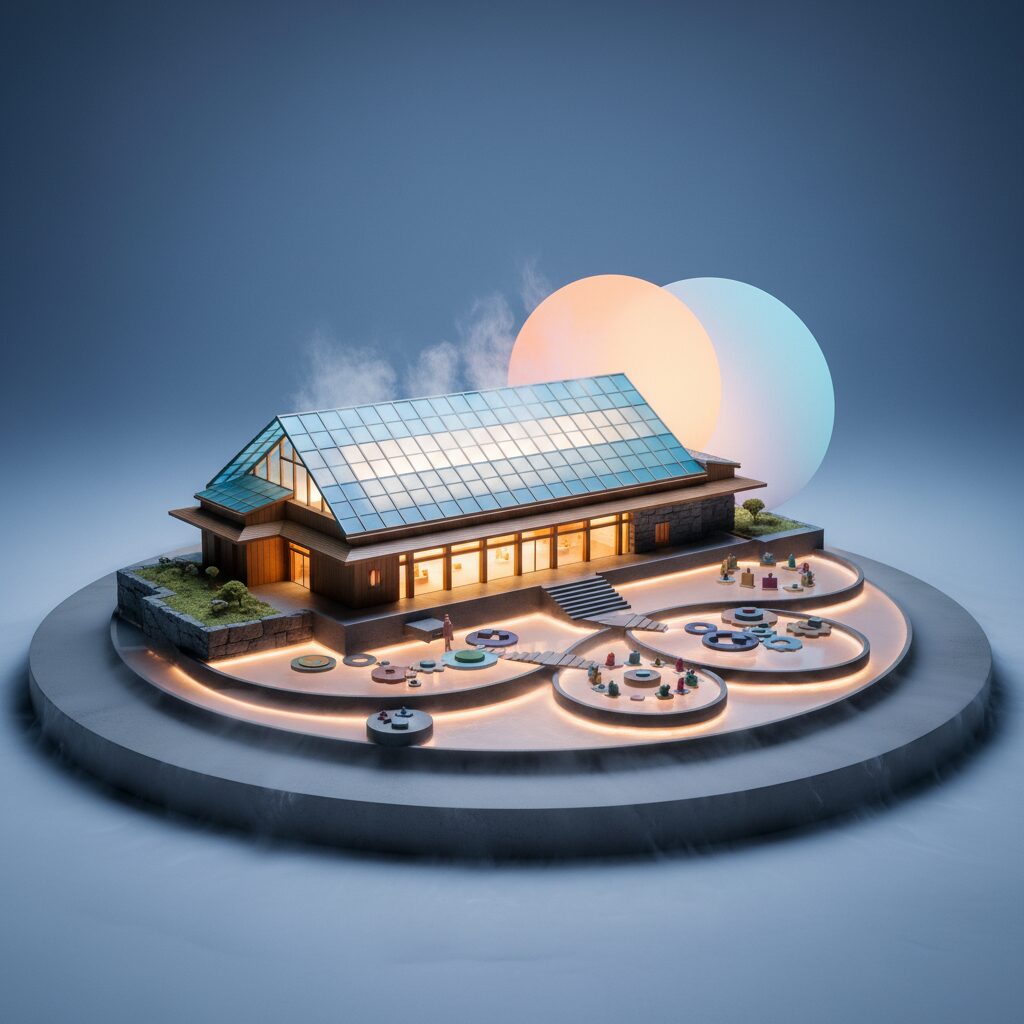
Picture this: you’re walking down a quiet residential street in Tokyo, a mosaic of low-rise apartment buildings, meticulously pruned bonsai, and a tangle of overhead electrical wires. Then, you see it. Tucked between a modern concrete home and a tiny noodle shop is a building that looks completely out of place. It has a grand, sweeping roofline with ornate gables, more reminiscent of a Buddhist temple or a historic shrine than anything else. A soft light glows from behind latticed windows, and a simple cloth curtain, a noren, flutters in the entrance, bearing the character for hot water, ゆ (yu). This is a sento, a public bathhouse. And that temple-like grandeur is your first clue that what happens inside is far more significant than just getting clean.
Most people think of sento as a practical solution from a time when not every home had a proper bathroom. While true, that’s like saying a classic Italian piazza is just a place to park your Vespa. It misses the entire point. The sento has always been the neighborhood’s living room, its social anchor, and its secular sanctuary. It’s a place where social hierarchies dissolve in the steam, and community bonds are forged in the shared ritual of bathing. But this doesn’t happen by accident. It happens by design. The very architecture of the sento—from its commanding facade to the placement of a single mirror—is a masterclass in social engineering, Japanese style. It’s a physical space meticulously crafted to foster intimacy, equality, and connection. To understand the sento, you have to look past the water and read the architectural blueprint of the community it serves.
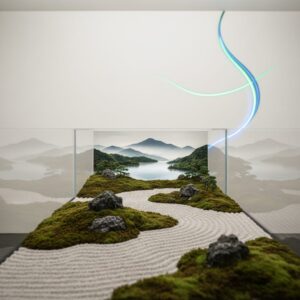
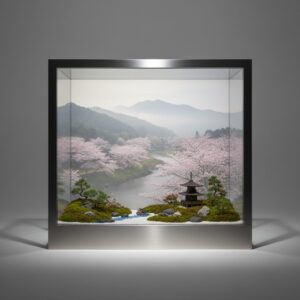
The sento’s intentional design in forging community mirrors the innovative use of space found in Japanese gardens, where the subtle technique of shakkei design redefines the surrounding landscape.
The Grand Welcome: From the Street to the Sacred
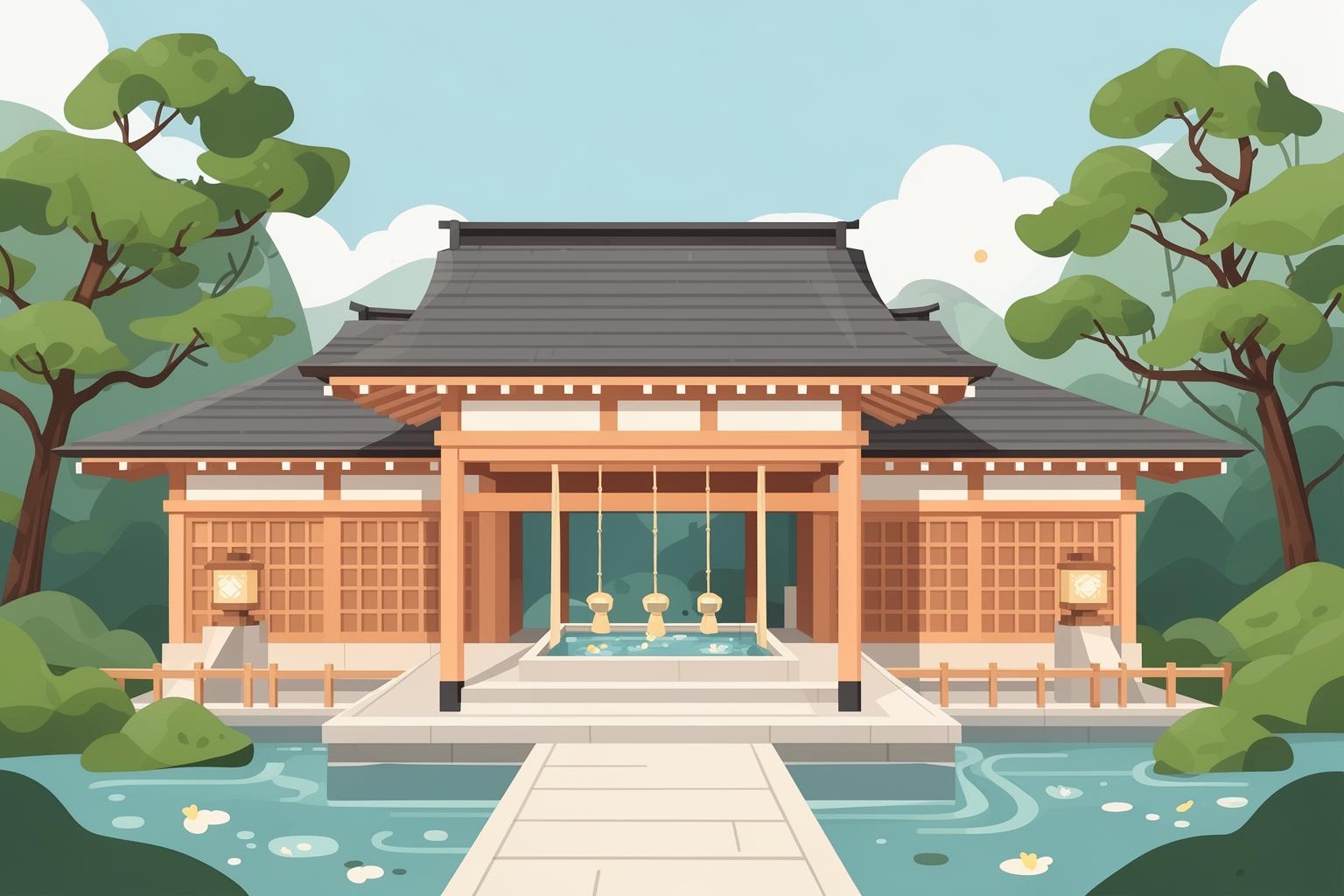
The experience of a sento begins well before you feel the warmth of the water. It starts on the street, with an architectural statement intended to lift you out of the ordinary and into a distinct realm. The most traditional and visually striking sento are constructed in a style known as miyazukuri, which means “shrine-style construction.” This is no accident.
The Façade: A Temple of Cleanliness
The defining characteristic of a miyazukuri sento is its roof. Typically, you’ll notice two unique elements: a dramatic, undulating gable over the entrance called a karahafu, and smaller, triangular gables on the main roof known as chidorihafu, or “plover gables.” These architectural details are directly inspired by the design of castles, temples, and shrines. Applying them to a modest bathhouse was a bold statement. It transformed the everyday act of bathing into something culturally significant, even sacred.
This architectural choice communicated a clear message to the local community: this is more than just a facility. It’s a public palace, a symbol of the neighborhood’s shared well-being. In the often cramped and modest urban environments of post-war Japan, where many sento were newly built or rebuilt, this grand facade provided a touch of affordable luxury and civic pride. It was a beautiful, meaningful structure that belonged to everyone. It conveyed that inside, you could find not only cleanliness but a moment of grace and respite.
Noren and the Genkan: Crossing the Threshold
Passing beneath that impressive roof, you part a noren, the iconic split curtain that marks the entrance to many Japanese establishments. A noren serves as a soft barrier, a symbolic boundary. It separates the public world of the street from the semi-private space within. Drawing it aside is a small but deliberate act of entry.
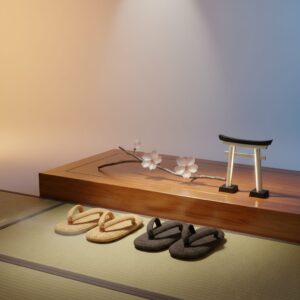
Inside, you step into the genkan, or entrance hall. Here, you are immediately met with rows of getabako—shoe lockers. Removing your shoes is perhaps the most fundamental ritual when entering a Japanese space. It’s both a gesture of respect and a practical effort to keep the space clean. But in the context of the sento, it holds greater meaning. It is the first step in leaving behind the outside world, along with its dirt and worries. Your street shoes, which connect you to your personal journey through the day, are exchanged for the anonymity of a locker. Everyone, regardless of their profession or status, takes part in this simple ritual. It acts as the great equalizer, the first of many architectural elements intended to bring everyone onto common ground even before they remove their clothes.
The Heart of the Hub: The Bandai and the Datsuijo
After the genkan, you step into the changing room, or datsuijo. This is the true social core of the sento, with a design cleverly aimed at encouraging interaction. It functions as a blend of a locker room’s practicality and a lounge’s comfort, all under the watchful yet reassuring presence of an attendant.
The Panopticon of Community: The Bandai
The space is dominated by the bandai, a tall, raised platform where the attendant sits. From this vantage point, they collect fees, sell soap, shampoo, and cold drinks, and importantly, maintain a clear view into both the men’s and women’s changing rooms (separated by a tall wall that stops short of the ceiling). To a Western perspective, this might seem like an unusual invasion of privacy. However, its purpose is not surveillance but stewardship.
The person on the bandai—usually an older man or woman who has managed the sento for many years—is the hub of the neighborhood. They serve as gatekeeper, cashier, and concierge all at once. They greet regular visitors by name, inquire about their children, listen to their concerns, and hold the community’s collective memory. The central, elevated position of the bandai creates an effective command post, yet the open layout ensures the attendant remains approachable. This transforms a simple payment into a moment of human connection. You’re not just paying a fee; you’re checking in with a familiar face who anchors the entire social experience.
The Datsuijo: The Social “Living Room”
The changing room itself is designed for lingering. Unlike a sterile gym locker room, the datsuijo feels warm and welcoming. Floors may be made of dark, polished wood or even include sections of tatami matting. There are wicker baskets for clothes, long wooden benches for sitting, and almost always a large wall clock, an old-fashioned weight scale, and sometimes a television quietly playing in the corner.
This is where the true community life of the sento unfolds. Neighbors who might only exchange a nod on the street sit here, wrapped only in towels, and engage in genuine conversation. Stripped of uniforms, business suits, and brand labels that mark status in the outside world, people are simply people. A company CEO might chat with a construction worker about a local baseball game. The shared vulnerability of nakedness acts as a powerful social equalizer, breaking down the rigid formalities of Japanese society. The space is deliberately designed to be comfortable and inviting. In effect, it serves as a living room where the price of admission is a few hundred yen and a willingness to be yourself.
Water and Spectacle: The Bathroom Interior
Pushing open the sliding glass door of the changing room, you are immediately met with a wave of warm, humid air. The bathroom, or yokujo, is a vast space of tile and steam, filled with the sounds of splashing water and quiet conversation. Here as well, the design is highly ritualized, enhancing the communal experience.
The Fuji-san Mural: A Window to an Idealized Japan
The most distinctive feature of any sento interior is the enormous mural painted on the highest wall directly above the baths. The classic motif, of course, is Mount Fuji, its flawless snow-capped peak rising above a landscape of blue lakes and green pine trees. Occasionally, it might depict another famous scene, such as the coast of Matsushima or a vibrant school of carp (koi).
This painting fulfills a crucial psychological role. In a windowless, tiled space, the mural offers a magnificent “borrowed landscape” (shakkei), a concept drawn from Japanese garden design. It creates a strong illusion of depth and openness, preventing the room from feeling cramped. More importantly, it provides everyone with a shared, beautiful view to admire. As you soak in the hot water, your eyes are naturally drawn to this idealized vision of Japan. It serves as a collective focal point, a work of public art connecting bathers to a grand national identity and a romantic appreciation of nature. It quietly declares, “We are all here, together, under the watch of Fuji-san.”
The Layout of Water: From Washing to Soaking
The spatial arrangement of the bathroom supports the essential etiquette of Japanese bathing. Around the perimeter is the arai-ba, the washing area. Here, rows of low plastic stools, faucets, and handheld shower heads are found. This is where you must thoroughly wash and rinse your body before entering the main baths. The design makes this sequence inescapable.
The communal tubs, the yubune, sit in the center or along the back wall, distinctly separated from the washing stations. They hold pristine, clean hot water meant solely for soaking, relaxing, and healing. The water is shared, and the architectural design upholds the social contract that it must not be contaminated. This ritual of pre-washing ensures everyone can enjoy the bath together comfortably. The physical division of spaces—one for the individual task of cleaning, and one for the communal act of soaking—perfectly mirrors how Japanese society often balances individual responsibility with group harmony.
Beyond the Bath: The Engawa and the Garden
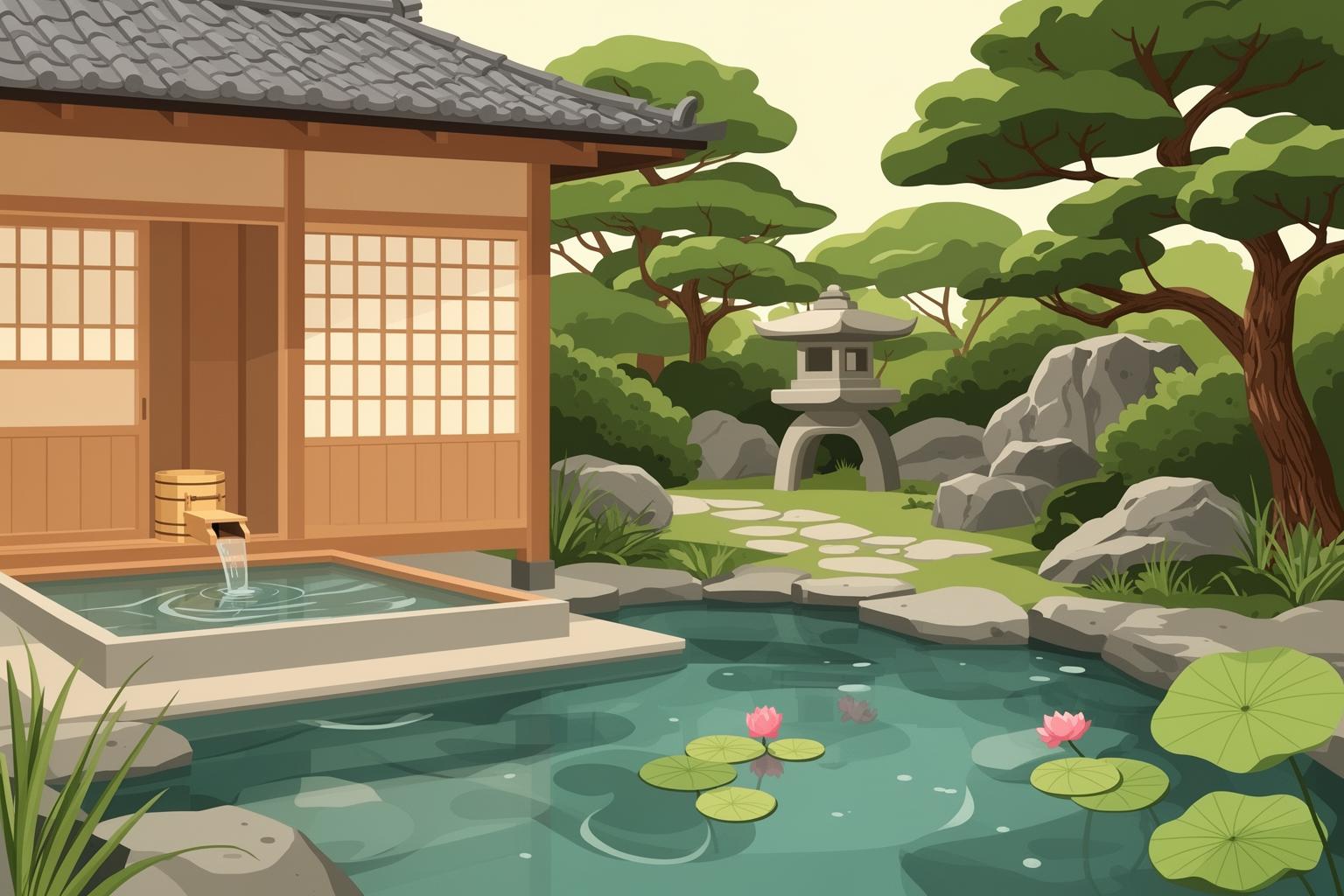
For many older sento, the experience continues even after you leave the water. Once dried off and dressed, there is often one last area intended for social interaction: a small lounge, a porch (engawa), or sometimes a tiny, enclosed garden (tsuboniwa).
This is the cooling-off space, a transitional area that helps ease your return to the outside world. Here, you might find a few chairs, a vintage vending machine offering glass bottles of milk or beer, and perhaps a cabinet filled with manga. People often sit on the edge of the engawa, gazing out at a small, meticulously tended garden featuring a stone lantern and a handful of maple trees.
This space is essential. It extends the social time of the bathhouse. Conversations that started in the changing room or bath can carry on here in a more laid-back setting. It’s where you enjoy the post-bath glow, feeling clean, warm, and satisfied. The presence of a garden, no matter how small, adds a final touch of serenity, linking the bather with nature before stepping back into the concrete urban landscape. Like the Fuji mural inside, it provides a moment of aesthetic reflection, reinforcing the idea that the sento is a place for rejuvenation of both body and spirit.
The Sento as a Social Blueprint
From the temple-like roof that marks its significance to the tiny garden offering a final moment of tranquility, the Japanese sento is a masterpiece of social architecture. Every detail is carefully designed to transform the simple act of bathing into a meaningful community ritual. The design intentionally breaks down social barriers, encourages lingering, and promotes open, easy communication.
The grand facade instills a sense of civic pride in the neighborhood. The genkan levels everyone at the entrance. The centrally placed bandai acts as a human focal point for the community. The inviting datsuijo functions as a minimalist salon where genuine conversations can unfold. The stunning Fuji mural provides a shared vision for all to admire, while the bath layout ensures a respectful, harmonious use of the communal space.
Today, with modern bathrooms in nearly every home, the number of traditional sento has sharply declined. Yet their architectural and social legacy remains. They stand as a testament to a time when community was embedded in the very bricks and mortar of a neighborhood. They remind us that a well-designed space can do more than shelter us; it can shape our relationships, deepen our connections, and offer a place where, even amid a bustling city, we can simply be together.