Someone asked me recently why I’m so fascinated by Japan’s public bathhouses, the sento. After all, in a country where nearly every home has a pristine, often high-tech private bathroom, isn’t the idea of bathing with your neighbors a bit… anachronistic? It’s a fair question. From the outside, it might seem like a relic, a holdover from a time before private plumbing was the norm. But to think of a sento as just a place to get clean is like saying a Spanish plaza is just a place with benches. You’d be missing the entire point. The sento is the neighborhood’s living room, its unofficial community center, and a beautiful, steaming testament to the enduring power of shared space. It’s where social barriers dissolve with the steam, and where the simple act of soaking becomes a profound ritual of connection.
Forget the sleek, minimalist onsen resorts you see in travel magazines for a moment. The classic neighborhood sento is something else entirely. It’s often housed in a magnificent, temple-like building, its swooping `karahafu` roof gable a proud declaration of its importance on an otherwise unassuming residential street. You hear it before you see it sometimes—the gentle clatter of wooden geta on the pavement, the faint sound of an old television filtering out from the changing room. When you step inside, you’re not just entering a building; you’re stepping into a repository of daily life, a place that has absorbed the conversations, worries, and laughter of generations. To understand the sento is to understand a fundamental piece of the Japanese social fabric. It’s where you go to wash away the fatigue of the day, but you leave with something more: a subtle, grounding sense of belonging.
The community spirit that thrives in every sento is mirrored by Japan’s enduring hanko seal, which quietly underpins centuries of cultural tradition.
The Anatomy of a Neighborhood Hub
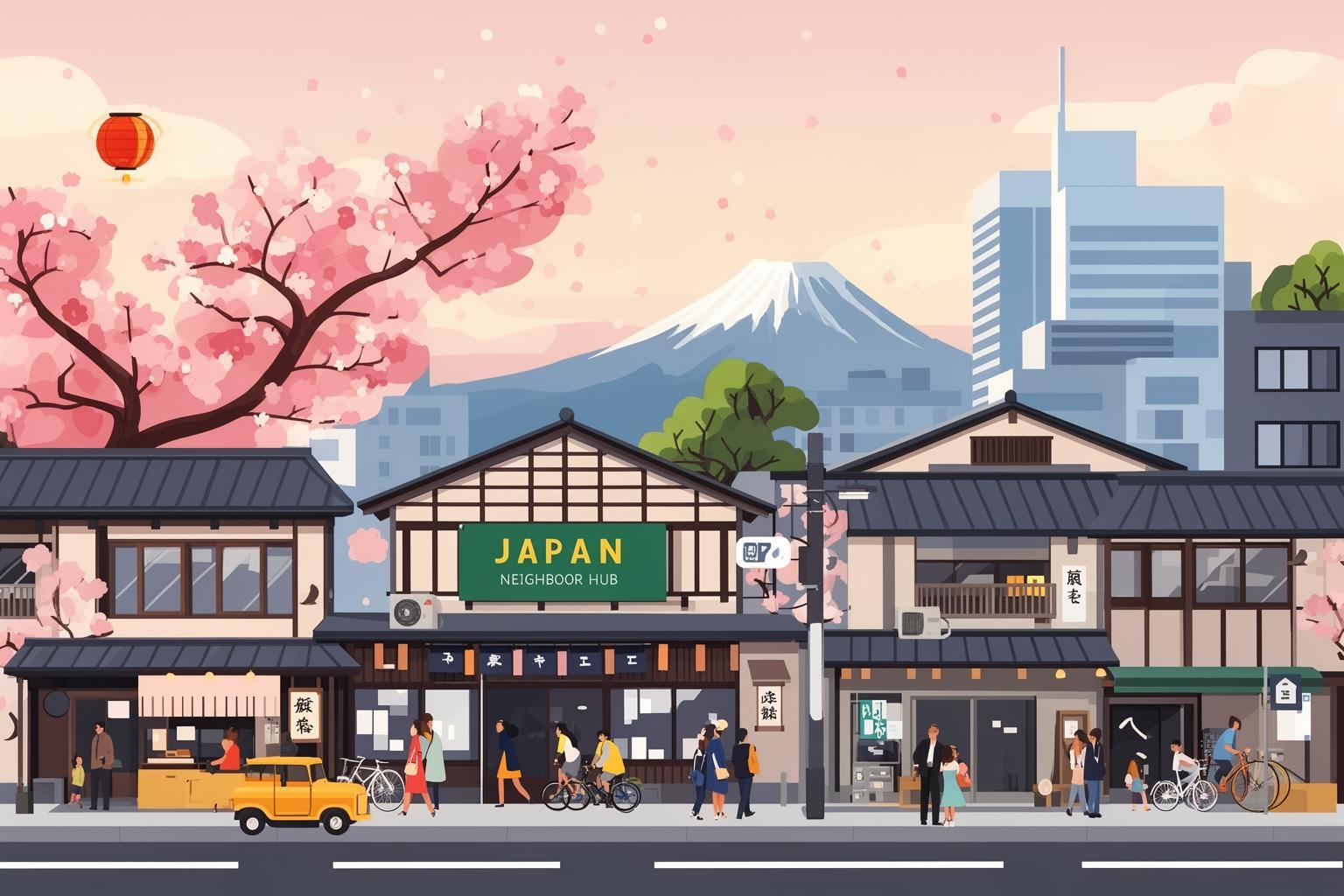
Every sento, whether a grand architectural marvel or a modest neighborhood bath, follows a familiar and profoundly meaningful layout. This design is not merely functional; it is a thoughtfully arranged sequence that leads you from the public outside world into the intimate, communal interior. The architecture itself serves as a language, and understanding it reveals the cultural values embedded within its walls.
The Threshold: Genkan and Getabako
The journey starts at the entrance, the `genkan`, where you perform an act second nature to Japanese culture and essential to the sento experience: removing your shoes. This goes beyond cleanliness; it symbolizes leaving behind the dust and worries of the outside world—the `soto`—as you transition into the shared interior space, or `uchi`.
Your shoes are placed in a `getabako`, a wall of small wooden lockers. You’re often given a wooden key, a `kifuda`, attached to a large block of wood or plastic strip to prevent losing it in the changing room. This moment carries a tactile charm—the smooth, worn wood of the locker door and the satisfying clack when it closes. This simple, universal act levels everyone from the start, putting away your fancy leather boots or worn sneakers—and with them, a piece of your public identity.
The Social Antechamber: The Bandai and Changing Rooms
Once inside, you enter the `datsuijo`, or changing room, overseen by the attendant. Traditionally, this was the `bandai`, a raised platform with a view into both men’s and women’s changing areas. While it might feel unusual for newcomers, its purpose was practical: allowing one person to manage the entire facility. The attendant, often an elderly woman (`obaa-chan`), served as the sento’s heart—the all-seeing matriarch who collected fees, sold soap and towels, and watched over patrons. Today, many sento feature a modern front-desk counter, yet the function remains the same. It’s the nerve center, where you greet the owner with a cheerful “Konnichiwa!” and pay your roughly 500 yen fee—a small transaction but an important social exchange.
The changing room is where the sento’s social essence begins to emerge. These are not sterile locker rooms but comfortable, lived-in spaces. Instead of impersonal metal lockers, you’ll find old wicker baskets (`kago`) for clothes. There’s often a large, vintage scale, a household luxury from an earlier era, and a wall clock displaying local ads and maybe a calendar from the neighborhood liquor store. In a corner, a television usually plays baseball or evening news, offering a familiar, comforting background noise. Vintage coin-operated massage chairs invite you to soothe away your worries for a hundred yen. Conversations flow here: neighbors reconnect after a week apart, old men sit fanning themselves post-bath, discussing politics or daikon radish prices. This space serves as a lounge, clubhouse, and therapy room all at once. And no ritual is complete without a post-bath treat from the vintage refrigerator—a cold glass bottle of fruit milk or coffee milk, opened with a satisfying pop, a nostalgic taste of childhood for many Japanese and a vital aspect of the sento experience.
Water, Walls, and Windows to Another World
The bathing area is where the true magic unfolds. It’s a vast space, designed not only for functionality but also to evoke a sense of everyday transcendence. The high, vaulted ceilings serve a purpose beyond aesthetics; they allow the abundant steam to rise and dissipate, preventing the room from becoming an oppressive fog. Positioned high on the walls, large windows known as `takamado` let in natural light, creating an airy and open atmosphere that contrasts with the enclosed, private bathrooms typical of modern homes. The soundscape is a harmonious blend of echoes: the rhythmic splashing from the washing stations, the deeper reverberation of the main baths, and the soft murmur of conversation. Yet, it is the visual elements that most profoundly define the space.
The Fuji-san Mural: An Iconic Backdrop
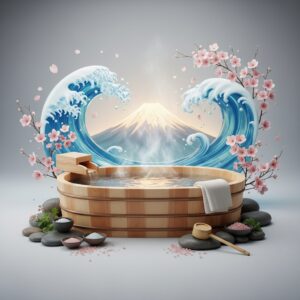
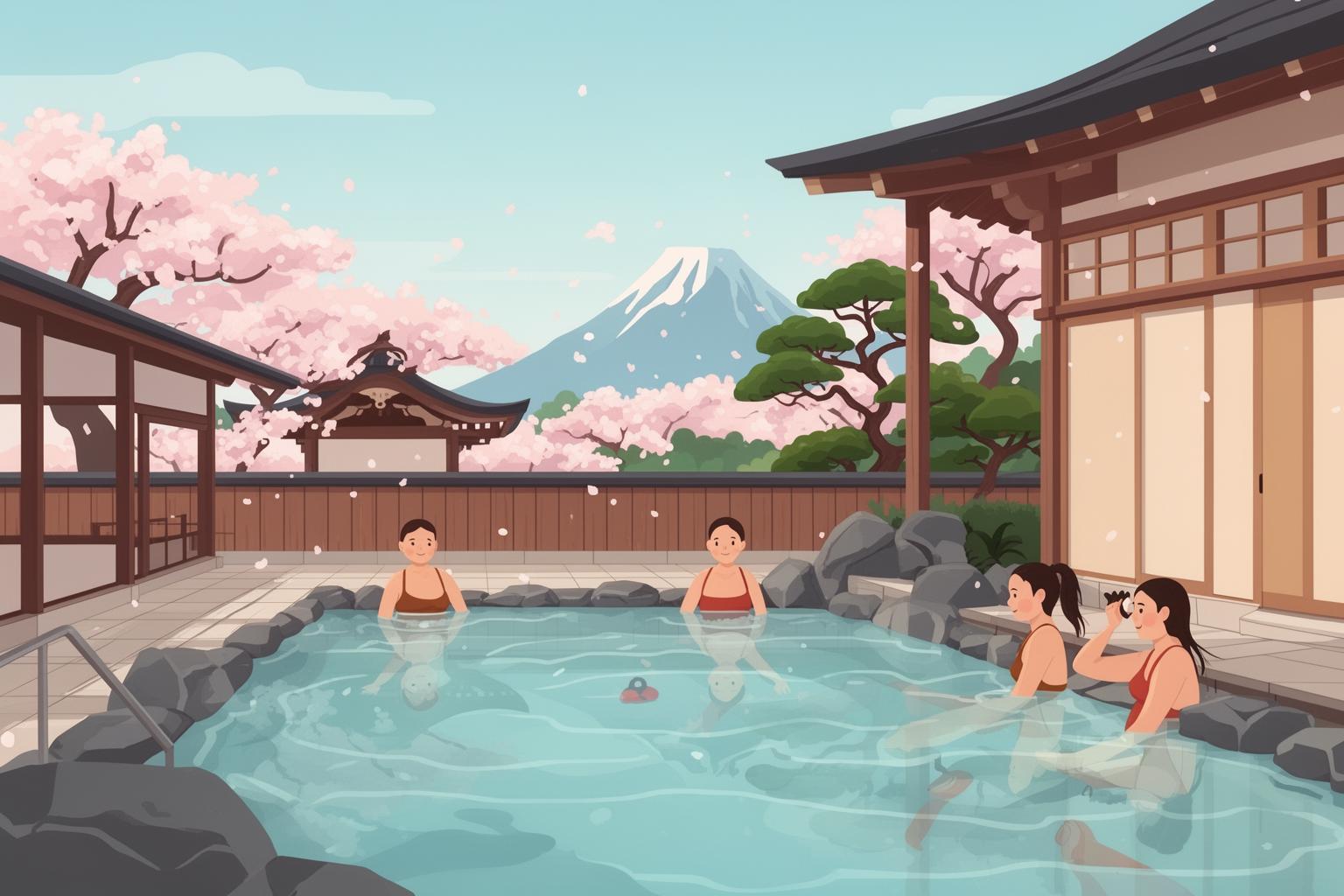
The most distinctive feature of any classic sento is the `penki-e`, the large painted mural that dominates the wall behind the baths. More often than not, this mural depicts Mount Fuji. Why Fuji? The tradition reportedly began in 1912 at a sento in Kanda, Tokyo, when the owner, originally from Shizuoka Prefecture (where Fuji is located), commissioned an artist to paint it as a reminder of home. The idea caught on, and soon sento across Tokyo, and eventually throughout Japan, embraced the practice.
The Fuji mural is more than mere decoration. For city dwellers living in cramped apartments surrounded by concrete, this majestic, idealized landscape offered a glimpse of a grander, more natural world. Soaking in the hot water while gazing at the snow-capped peak became a form of affordable, daily escapism. It mentally expanded the bathhouse walls, providing a shared focus and a moment of collective wonder. Today, only a few dedicated sento mural painters remain in Japan, masters like Maruyama Kiyoto, who continue to preserve this unique and beautiful art form. The paintings are often vibrant and bold, created within a few hours using special paints designed to withstand heat and humidity.
Tiled Art and Architectural Details
Beyond the Fuji mural, the walls and floors serve as a canvas for exquisite tilework. Intricate mosaics made from `Kutani-yaki` or other decorative tiles frequently depict auspicious symbols such as koi fish swimming upstream, graceful cranes, or seasonal flowers. These tiles were not mass-produced; they reflected the pride of the sento owners and their commitment to crafting a beautiful space for the community. The patterns and colors can be breathtaking, transforming a plain wall into folk art. Look down, and even the bath floor itself may be adorned with beautiful pebbles or distinctive tiles.
The architecture speaks volumes on its own. The grandeur of the `miyazukuri` style, with its temple-like details, was a purposeful choice. It raised the public bath from a simple utilitarian facility to a place of importance—a palace for the people. This was a democratic luxury, a stunning space available to everyone for the price of a few coins.
Living Museums of Community Life: A Selection of Sento
While the basic template remains the same, each sento possesses its own distinct character, shaped by its history, its owner, and the community it serves. Some resemble grand bathing palaces, while others are modest, impeccably preserved time capsules. Visiting them feels like exploring living museums, each narrating a unique story about Japanese urban life.
Daikoku-yu (Adachi, Tokyo): The King of Sento
If there were a king of Tokyo sento, Daikoku-yu would likely hold that title. Situated in a quiet residential area of Adachi ward, its magnificent `miyazukuri` architecture is impossible to overlook. Built in 1927, it exudes the grandeur of a historic temple. The graceful `karahafu` gable is adorned with intricate carvings of elephants and peonies, showcasing craftsmanship rarely seen in modern structures. It is a designated Tangible Cultural Property, and rightly so.
Entering feels like stepping back in time. The `datsuijo` boasts a stunning coffered ceiling (`go-tenjo`) reminiscent of a castle. The lockers are traditional wooden types, and the entire atmosphere is warm and authentic. Yet the true gem is the view from the changing room: it opens onto a small, pristine Japanese garden with a pond filled with carp. An `engawa`, a traditional veranda, runs along the edge, where patrons often sit after bathing, cooling off and enjoying the scenery. The bathing area itself is equally impressive, featuring a classic Fuji mural and several types of baths. Daikoku-yu is more than a bathhouse; it is an architectural treasure that the neighborhood cherishes with palpable pride. It is their castle.
Funaoka Onsen (Kyoto): A Cabinet of Curiosities
Kyoto’s Funaoka Onsen is legendary in a different way. Despite its name, it is a sento rather than a natural hot spring, and is one of Japan’s most wonderfully eclectic and historically rich bathhouses. Established in 1923, the building is also a Tangible Cultural Property, but it is its interior that truly distinguishes it. It resembles less a bathhouse and more a cabinet of curiosities.
The changing room is a visual delight. The transom panels (`ranma`) between rooms feature astonishingly detailed wood carvings. One famously depicts the 1932 Shanghai Incident—a surprisingly intense subject for a bathhouse—while another portrays the mythical Tengu goblins. The walls are adorned with vibrant Majolica tiles imported during the 1920s. The marvels continue into the bathing area, which includes a cypress bath (`hinoki-buro`), an outdoor bath (`rotenburo`) with a stone bridge, and even Japan’s first-ever electric bath (`denki-buro`), sending a mild current through the water—a bizarre but beloved experience. Bathing at Funaoka Onsen feels like immersing oneself in a physical timeline of 20th-century Japanese tastes and history. It is a place layered with time, palpable in the very air.
Inari-yu (Kita, Tokyo): Showa-Era Time Capsule
Not all remarkable sento are grand temples. Some, like Inari-yu in Tokyo’s Kita ward, are noteworthy for their meticulous preservation of a humble, everyday atmosphere. Entering Inari-yu is like stepping onto the set of a Showa era (1926-1989) movie. Operating since 1930, it seems little has changed. The building, wooden lockers, sloping wooden floor of the changing room, and wall advertisements all feel frozen in time. The bath area features the customary Fuji mural, but the overall ambiance is cozier and more intimate. It is this very absence of grandeur that makes it so cherished. Inari-yu appeared in the popular movie Thermae Romae, yet has resisted becoming a tourist attraction. It remains primarily a neighborhood bathhouse. You will see elderly regulars who have been coming for fifty years, their movements slow and practiced. It is a powerful reminder that the true value of a sento lies not only in its architecture but in its steadfast role as a quiet, enduring anchor in the lives of ordinary people.
The Unspoken Etiquette of Communal Space
The physical design of the sento tells only part of its story. What truly makes it a community hub are the unspoken rules and shared understandings that guide behavior inside its walls. This etiquette isn’t about strict formality; rather, it’s founded on mutual respect and a collective effort to preserve a peaceful atmosphere. The space itself both encourages and upholds this code of conduct.
The Kake-yu Ritual: Washing Before You Soak
Before even considering stepping into the main tubs, you must wash yourself thoroughly. At the entrance to the bathing area, there is a row of washing stations, each equipped with a small stool, a faucet, and a bucket. The first step is to take a bucket of hot water from the bath—known as `kake-yu`—and rinse your body. Then, sitting on the stool, you scrub yourself clean with soap. This is the fundamental rule of the sento. While it’s certainly about hygiene—no one wants to soak in dirty water—it also represents a deeper gesture of respect for the shared resource of the bath and those using it. You purify yourself of individual dirt before joining the collective. It’s a small act of consideration that sets the tone for the entire experience.
“Hadaka no Tsukiai”: Naked Communication
This is perhaps the most profound social aspect of the sento. `Hadaka no tsukiai` means “naked communion” or “naked friendship.” The idea is that when everyone is stripped of their clothes, they are also free of external social markers—the company president’s expensive suit, the delivery driver’s uniform, the student’s trendy attire. In the bath, all are equal.
This creates a unique social dynamic. The hierarchies governing life outside the sento dissolve. A CEO may find themselves casually chatting about the weather with a construction worker. An elderly man might offer unsolicited but well-meaning advice to a young student. It fosters a raw, unguarded form of communication that is rare in a culture that often values formality and subtlety. This is why business deals have been made and political alliances formed amid the steam of the sento. It’s a place where people can speak honestly and listen without bias. It serves as the great equalizer.
Knowing Your Place (Without Saying a Word)
Beyond the major rules, there is a subtle dance of unspoken etiquette. You don’t splash or swim in the baths. Large bath towels aren’t brought into the bathing area; only small washcloths are allowed. When not in use, the small towel should be placed on your head or the side of the tub, never touching the bathwater. When leaving the bathing area to return to the changing room, you are expected to wring out your small towel to avoid dripping water on the floor. No one will scold you if you forget, but you may receive a gentle look. Observing these subtle rules shows you understand and respect the shared nature of the space. It is a quiet expression of community membership.
The Future of the Neighborhood’s Living Room

It would be misleading to portray the sento without recognizing the challenges it faces. During the postwar economic boom, as private bathrooms became common, the demand for public baths declined drastically. In the late 1960s, there were more than 18,000 sento throughout Japan; today, fewer than 2,000 remain. Many have permanently closed, unable to cope with rising fuel expenses and an aging customer base, with their magnificent buildings often demolished to make way for apartment complexes or parking lots. Each closure represents a small tear in the social fabric of the neighborhood.
However, the story is not finished. In recent years, there has been an encouraging resurgence of interest in sento culture. A new generation, raised with private baths, is discovering the unique charm of the public bath. They are attracted not only by the nostalgic appeal and beautiful architecture but also by the sense of community and connection often missing in modern urban life. Young entrepreneurs are revitalizing their family’s aging sento with modern renovations, creating “designer sento” that include stylish cafes, craft beer on tap, and co-working spaces. Some have rebranded themselves as “runner’s stations,” offering lockers and a bath to joggers for a set fee. These innovations are breathing new life into an old institution, demonstrating that the sento can adapt to meet the demands of the 21st century.
Ultimately, the sento persists because it provides something a private bathroom never can: a place to be alone, together. It serves as a refuge from the relentless pace of city life, a space to quietly reflect while surrounded by the gentle, anonymous presence of neighbors. It embodies the idea that community is not an abstract concept but something created through shared rituals in shared spaces. It is more than just hot water. It is the soul of the neighborhood, and it is still steaming.