Walk through a Japanese park around 6:30 in the morning, especially in the summer, and you’ll likely encounter a scene that’s both wonderfully mundane and quietly profound. You’ll hear a simple, slightly jaunty piano melody drifting through the trees, a sound as familiar to the Japanese as the chime of a train station. Following the music, you’ll find a group of people—retirees in tracksuits, mothers in aprons, sleepy schoolchildren—all standing in neat rows, moving in unison. They raise their arms, bend at the waist, rotate their shoulders, all with a gentle, practiced rhythm. This is Rajio Taiso, or Radio Calisthenics, and it’s one of the most visible, yet least understood, pillars of daily life in Japan. It’s a national habit, a morning ritual that unfolds in public parks, schoolyards, and even factory floors across the archipelago. To an outsider, it might look like a simple, slightly dated group exercise class. But to understand Rajio Taiso is to understand something essential about the social logic of Japan: the deep-seated belief in the power of routine, the importance of the collective, and the quiet harmony found in moving as one. This isn’t just about waking up the body; it’s about tuning the community.
The enduring communal spirit of these morning exercises is further enriched by the mystery of Radio Taiso, which unveils the captivating evolution of this national practice since the 1920s.
What Exactly Is Rajio Taiso?
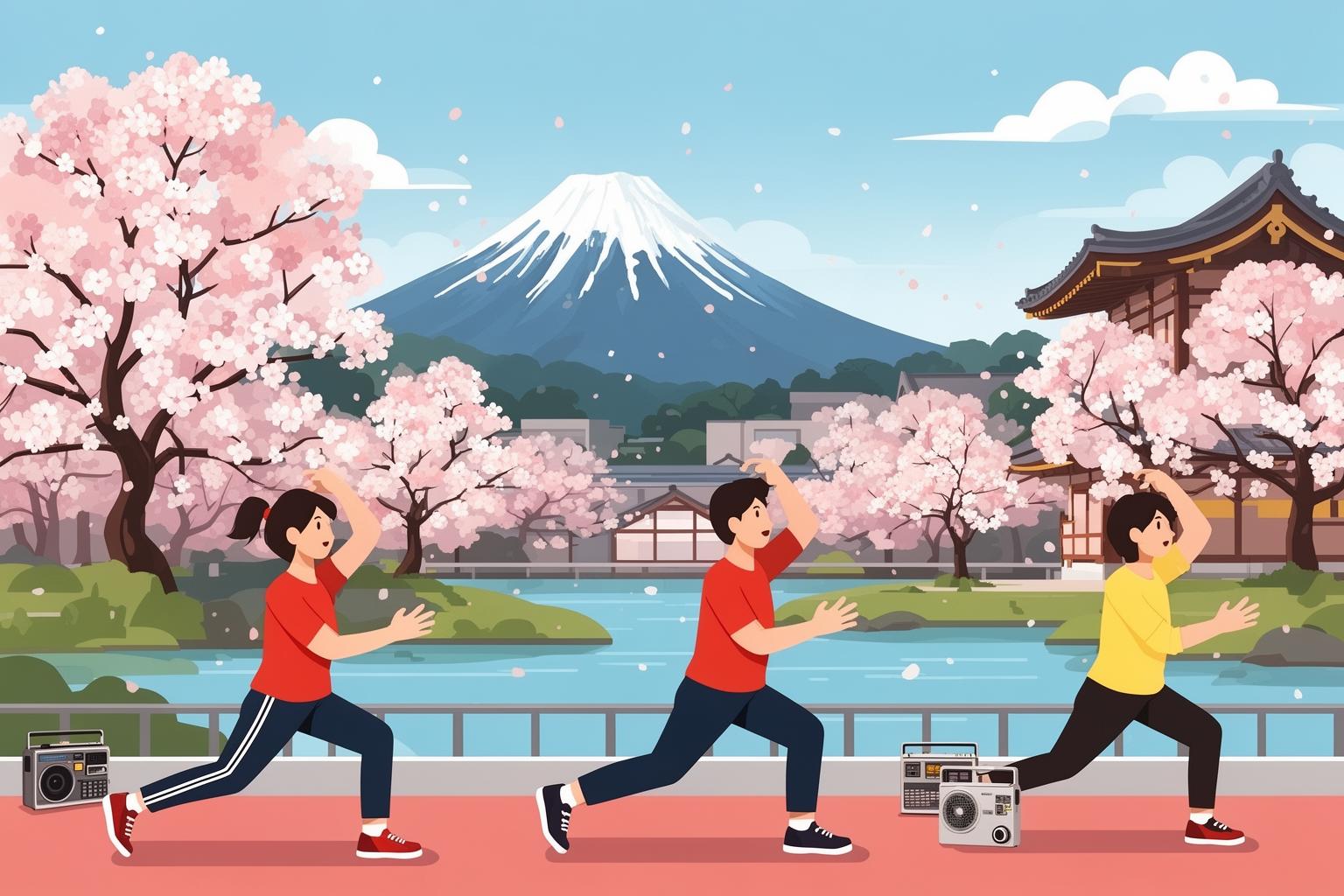
At its essence, Rajio Taiso is a series of low-impact calisthenic exercises performed to music and directed by voice instructions. The entire routine is brief, lasting about three minutes and fifteen seconds. It is designed to be universally accessible—movements that a six-year-old child and an eighty-six-year-old grandparent can perform side by side. By design, it serves as the great equalizer of physical fitness.
The Music and the Movements
The soundtrack of Rajio Taiso is as iconic as the exercises themselves. A simple, elegant piano melody sets the rhythm and signals for each movement. A gentle, encouraging voice counts along—“ichi, ni, san, shi” (one, two, three, four)—creating a calm and predictable soundscape. Anyone who grew up in Japan can recognize the tune within the first few notes. It’s auditory nostalgia, instantly transporting listeners back to summer mornings with the feeling of cool air on their skin.
The routine is a masterpiece of functional design. There are two main versions. Rajio Taiso Dai Ichi (Radio Calisthenics Number One) is the most common, focusing on gentle movements to increase flexibility and stimulate circulation. It includes thirteen exercises, beginning with simple arm stretches and progressing to bending, twisting, and light bouncing. Rajio Taiso Dai Ni (Radio Calisthenics Number Two) is slightly more vigorous, aimed at building strength, and often performed in workplaces before physical labor. Every movement serves a purpose: warming major muscle groups, improving posture, stimulating circulation, and gently awakening the nervous system. There are no complex steps or intimidating poses. The goal is not to break a sweat but to smoothly transition the body and mind from rest to readiness.
A Voice From the Past, A Presence in the Present
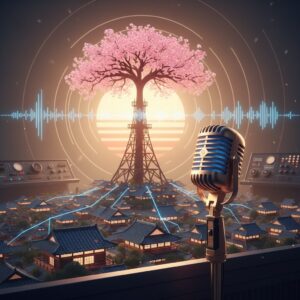
The “Rajio” in Rajio Taiso is more than just a historical footnote; it remains a living part of the tradition. The exercises are broadcast daily on NHK (Nippon Hōsō Kyōkai), Japan’s national public broadcaster. The main broadcast airs at 6:30 AM on NHK Radio 1, a tradition that has continued almost without interruption for decades. This is significant because it means that at the same moment in Hokkaido, Tokyo, and Okinawa, thousands of groups are moving to the exact same rhythm, guided by the same voice from the national broadcaster. This shared, real-time experience turns a local practice into a national one. It weaves an invisible thread connecting elderly neighbors in a Kyoto park with factory workers in Nagoya. In that moment, they all participate in the same ritual, reinforcing a sense of national unity through a shared physical experience. The radio waves serve as a nationwide metronome, setting the pace for the day ahead.
The Origins of a National Habit
Like many aspects of modern Japan, Rajio Taiso represents a captivating fusion of foreign influence and local adaptation. Its origins are not rooted in ancient samurai drills or mystical monastic traditions, but rather in the practical, health-focused culture of 1920s America. This concept was imported, adapted, and so thoroughly integrated into Japanese culture that its overseas beginnings have largely faded from memory.
An American Concept, A Japanese Adaptation
In the 1920s, radio was a groundbreaking technology, and American companies—especially the Metropolitan Life Insurance Company—began airing morning exercise programs to encourage public health. Japanese officials visiting the U.S. observed this practice. At the time, Japan was rapidly industrializing and modernizing, with the government eager to improve the health and fitness of its population for economic and military purposes. A robust citizenry meant efficient workers and capable soldiers. In 1928, the Postal Life Insurance Bureau (a government agency) launched its own program, initially named Kokumin Hoken Taiso (National Health Exercises). They hired musicians and physical education specialists to design a routine tailored specifically for the Japanese people. Broadcast on the new NHK network, the first session aired on November 1, 1928, from a park in Tokyo, celebrating Emperor Hirohito’s coronation. From the beginning, it was clear that this exercise was intended not only for individual health but also for national well-being and unity.
From Imperial Unity to Post-War Renewal
The development of Rajio Taiso closely reflects Japan’s 20th-century history. Throughout the 1930s and during World War II, the exercises became a powerful means of fostering national unity and discipline. Performing them collectively was framed as a patriotic act, a contribution to the strength of the empire. Following Japan’s 1945 surrender, the Allied occupation forces banned the broadcasts, viewing them as part of the militaristic and ultranationalist system they aimed to dismantle. Still, the exercises had grown so popular and embedded in daily life that people continued performing them from memory. Recognizing their value for public health and their non-political nature, NHK collaborated with experts in education, sports, and medicine to develop a new, democratic version. In 1951, the Rajio Taiso known today was introduced. It returned not as a state instrument, but as a lively, uplifting activity that promoted the health and peaceful reconstruction of the nation. This post-war transformation was hugely successful, securing Rajio Taiso’s enduring place in Japanese culture for future generations.
The Social Fabric of Synchronized Stretching
To view Rajio Taiso simply as a form of exercise overlooks its deeper significance. Its true strength lies in its role as a social binder. It is a ritual that creates and sustains community connections in diverse environments, ranging from neighborhood parks to corporate offices.
The Morning Ritual in the Neighborhood Park
The quintessential Rajio Taiso experience occurs in the morning at a local park. These groups are often self-organized and primarily made up of the elderly, for whom the routine forms a vital part of their day. It offers a reason to leave the house, a gentle dose of physical activity, and, most importantly, effortless social engagement. In a society facing rapid aging and where loneliness is a serious concern, this daily gathering acts as an essential social lifeline. It provides a low-pressure opportunity to see familiar faces, exchange a few words, and reassure that everyone is well. It’s community care dressed as calisthenics. There is a quiet sense of accountability; if a regular participant misses a few days, someone will notice and perhaps check in. This simple act of coming together strengthens a feeling of belonging.
The Corporate Warm-Up
Enter a Japanese factory, construction site, or traditional corporate office before the workday begins, and you may witness another form of this ritual. Employees line up and perform Rajio Taiso collectively. This is not only about physical health; it carries a powerful cultural meaning. The group exercise clearly marks the boundary between personal time and company time. It serves as a mental reset, a moment to shake off the commute and focus on the work ahead. More significantly, it reinforces the Japanese concept of dantai koudou, or group action. By moving in unison, the team physically expresses the principles of cooperation and unity expected in their work. It’s a subtle yet effective team-building practice that harmonizes everyone’s rhythm before the day begins. It conveys that success depends on collective effort rather than individual achievement.
School Days and Summer Stamps
For nearly every person in Japan, the strongest memories of Rajio Taiso stem from elementary school summer vacations. For about a month, children are encouraged to gather each morning at the local park or schoolyard to perform the exercises. They receive a special attendance card, the rajio taiso kaado. Each day they participate, they earn a colorful stamp. Completing the card becomes a goal and a source of pride. At summer’s end, a full card can often be exchanged for a small prize, such as a notebook or candy. This system exemplifies social brilliance. It instills the habit of Rajio Taiso from an early age, linking it with friendship, summer enjoyment, and the reward of consistent participation. It teaches children the value of routine and showing up—not for grades, but for the shared experience itself. Decades later, the sound of that piano music can trigger waves of nostalgia for those sunlit mornings, the slightly sleepy sensation, and the small happiness of earning a new stamp on the card.
The Deeper Meaning: More Than Just Exercise
The continued popularity of Rajio Taiso in an age of advanced gyms and individualized wellness apps highlights the deeper cultural and psychological needs it meets. It is a physical routine that aligns with some fundamental aspects of the Japanese mindset.
A Metronome for Daily Life
Japanese culture highly values routine, rhythm, and predictability. There is profound comfort in familiar patterns, whether it’s the changing seasons, the train schedule, or the structure of a formal ceremony. Rajio Taiso serves as a metronome for everyday life. It is a fixed point, an anchor at the start of the day. Regardless of what happened yesterday or the uncertainties to come, the 6:30 AM broadcast remains constant. The piano plays, the voice counts, and the movements stay the same. This steadfast consistency offers a sense of stability and order in a world that often feels chaotic. It acts as a collective deep breath before the day begins.
Group Harmony in Motion (Wa 和)
The key cultural concept embodied by Rajio Taiso is wa (和), roughly meaning group harmony. Wa represents the idea that a community functions best and most pleasantly when individuals prioritize the group’s needs and flow over their own personal desires. Rajio Taiso is a perfect physical expression of wa. Whether in a park or on a factory floor, there are no star performers and no competition. No one tries to stretch further or jump higher than their neighbor. The aim is to move in unison, blending into the collective. Individuality yields to the shared rhythm. This synchronized movement subtly reinforces the importance of cooperation and shared identity. It reminds everyone that they belong to a larger whole, and that there is strength and beauty in moving together.
The Physical and the Psychological
Beyond its social and cultural significance, the personal benefits are tangible. Physically, it effectively combats the stiffness associated with aging or sedentary habits. It promotes circulation, enhances joint mobility, and gently exercises the body without risk of injury. Psychologically, the benefits are equally meaningful. For the elderly, it offers structure and social interaction, helping to prevent isolation. For workers, it provides a mental break, a moment of mindfulness before tackling demanding tasks. For all participants, it is a simple, attainable act of self-care that connects them to a national community. Rajio Taiso is a small, daily triumph that starts the day on a positive, proactive note.
Rajio Taiso in the 21st Century: Still Relevant?
In a hyper-modern Japan characterized by bullet trains, robotics, and vibrant youth subcultures, does a simple, analog morning exercise routine still hold significance? The answer is a definite yes, although its role continues to evolve.
An Analog Habit in a Digital Age
It’s true that participation in Rajio Taiso is not as widespread as it once was. Many younger office workers in sleek Tokyo high-rises are more inclined to start their day with coffee and a smartphone rather than group calisthenics. Some view it as a relic from a more conformist era, emblematic of the Showa Period’s focus on collective identity. Mandatory participation in some companies can feel restrictive to those who value individuality and personal freedom. Yet, it has not disappeared; it has simply carved out a modern niche.
A Fresh Appreciation
In many respects, the modern world has made Rajio Taiso more relevant than ever. For Japan’s large and growing elderly population, it remains an essential tool for maintaining physical health and social connections. Additionally, there is a rising counter-movement against our screen-saturated, isolated lifestyles. The simple, communal, and device-free nature of Rajio Taiso is now viewed by some as a refreshing remedy for digital burnout. It provides a moment of genuine, embodied connection—to one’s own body and to those nearby. During the COVID-19 pandemic, these outdoor, socially-distanced sessions became even more valuable, offering a safe way to alleviate the loneliness of lockdowns. Far from being outdated, Rajio Taiso has proven remarkably resilient and adaptable as a cultural institution. It quietly affirms that some of the most effective solutions to modern challenges—loneliness, inactivity, and lack of community—are often the simplest. It remains the gentle, rhythmic pulse that awakens Japan, one synchronized stretch at a time.