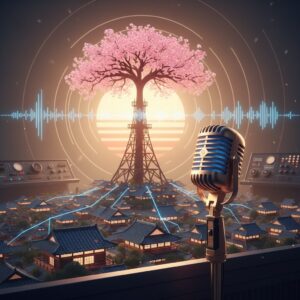
If you find yourself in a Japanese neighborhood park on a summer morning, just as the sun is beginning to burn off the night’s humidity, you’ll likely hear it. A simple, almost childlike piano melody drifting from a crackling loudspeaker. It’s 6:30 AM. All around you, people will stop their conversations, put down their water bottles, and turn to face the source of the sound. Schoolchildren with stamp cards hanging from their necks, elderly couples in matching tracksuits, office workers on their way to the station—they all begin to move. Not with the slick precision of a choreographed dance, but with a kind of familiar, ingrained rhythm. They raise their arms, stretch to the side, bend at the waist, and rotate their shoulders, all in gentle, practiced unison. This is Radio Taiso, or Radio Calisthenics. It’s a three-minute, nationally broadcast exercise routine that has been a fixture of Japanese life for nearly a century. And for an outsider, it is a deeply curious spectacle.
In a country famous for its hyper-modernity, its bullet trains and robot cafes, this simple, analog ritual feels like a broadcast from another era. It’s a scene that could have taken place in 1955, or 1985, or yesterday. The persistence of Radio Taiso begs a question: why? Why does a routine born from 1920s American public health initiatives, and later co-opted by Imperial Japan, still hold such a powerful sway over millions of people in the 21st century? It’s tempting to dismiss it as mere exercise, a quaint national habit. But that’s missing the point entirely. Radio Taiso isn’t just about physical fitness. It’s a complex cultural phenomenon, a key that unlocks some of the fundamental principles of Japanese society. It’s about community, shared responsibility, the subtle power of nostalgia, and the quiet comfort of a collective rhythm. To understand Radio Taiso is to understand something profound about how Japan functions, one gentle, synchronized stretch at a time.
This enduring spirit of collective participation can also be seen in Japan’s traditional public baths, where the community-centered sento acts as a vital neighborhood hub.
A Clockwork Ritual: The Anatomy of the Nation’s Workout
Before delving into its cultural significance, it’s important to understand what Radio Taiso actually is. At its core, it comprises two separate routines, each lasting about three minutes and fifteen seconds. These are broadcast back-to-back every morning at 6:30 AM on the national public broadcaster, NHK. The highlight isn’t a high-energy fitness instructor, but rather a gentle, looping piano melody accompanied by the calm, encouraging voice of an announcer counting the beats: “Ichi, ni, san, shi… go, roku, shichi, hachi.” (One, two, three, four… five, six, seven, eight.)
Dai Ichi: The Universal Language of Movement
The first routine, “Radio Taiso Dai Ichi” (Number One), is the better-known of the two. It features thirteen simple, full-body movements designed to be accessible to nearly everyone, from kindergarteners to nonagenarians. The exercises are logical and intuitive. The routine begins with raising your arms and stretching deeply, then moves on to rotating your arms, bending your torso sideways, stretching the chest, and bending forward and backward. Gentle knee bends, leg-and-arm coordination movements, and a deep breathing exercise conclude the sequence.
No specialized equipment, complex choreography, or high-impact moves are involved. The approach is inclusive by design. Each movement aims to awaken the body, improve circulation, and increase flexibility without causing strain. It’s a masterclass in functional design—a physical routine refined over decades to deliver maximum benefit with minimum risk. For millions, the sequence is as ingrained as tying their shoes; it’s pure muscle memory, a physical vocabulary learned in childhood and never forgotten.
Dai Ni: A Step Up in Intensity
Following directly after Dai Ichi is “Radio Taiso Dai Ni” (Number Two). This routine is designed to be somewhat more vigorous, targeting a younger, more active audience. Dai Ni features more dynamic movements intended to build muscular strength and coordination. It includes exercises such as jumping in place, twisting the torso more forcefully, and more complex combinations of arm and leg movements. While Dai Ichi focuses on gentle awakening, Dai Ni aims to infuse a bit more energy for the day ahead. Many workplaces and schools adopt Dai Ni as their standard routine, while public park gatherings—especially those with many elderly participants—often stick to the more universal Dai Ichi.
The widespread reach of these broadcasts is remarkable. Beyond the 6:30 AM radio slot, the routines are shown several times daily on NHK television. Videos are readily available on YouTube. The music is instantly recognizable to nearly everyone in Japan. The exercises are performed in schools to start sports days, in offices to break up the workday, on construction sites to help prevent injuries, and in evacuation centers after natural disasters to foster a sense of normalcy and community.
An American Idea, Forged in Imperial Ambition
What’s intriguing about Radio Taiso is that it is not an ancient Japanese tradition. Its origins are firmly rooted in the West, emerging from the early 20th-century fascination with public health and efficiency. The direct inspiration came from a 1920s health and wellness program sponsored by the Metropolitan Life Insurance Company in the United States, which was broadcast over the radio for the American public.
Japanese officials visiting the U.S. were impressed by the concept of using this new mass medium—the radio—to enhance the physical fitness of an entire nation. In 1928, the Postal Life Insurance Bureau (a government agency) adapted the idea for Japan. The timing was intentional, as the first broadcast coincided with the grand celebrations of Emperor Hirohito’s coronation. From the beginning, Radio Taiso was infused with a national purpose.
Its objective was clearly stated: to create a healthier, more unified, and more disciplined population. In an era marked by rising nationalism and industrialization, a strong body was regarded as essential to a strong nation. The simple, synchronized movements served as a perfect metaphor for the ideal society envisioned by the country’s leadership: everyone moving together, in harmony, toward a common goal. It was heavily promoted in schools, factories, and military units. Practicing Radio Taiso was not only about personal health but also a small act of patriotic duty.
This connection with militarism and emperor-worship led to its decline after World War II. During the Allied Occupation, General Douglas MacArthur’s administration banned Radio Taiso, viewing it as a tool of totalitarian indoctrination. For several years, the morning airwaves were silent.
However, the concept was too popular and, frankly, too useful to vanish completely. In 1951, a new version was developed and reintroduced by NHK, alongside the Ministry of Education and the Ministry of Health. This revived Radio Taiso was carefully purged of its militaristic and imperial connotations. The emphasis shifted from national duty to democratic values of public health, recreation, and building a bright future for a new Japan. This skillful rebranding was pivotal to its survival. It retained the structure and accessibility of the original but was given a new, gentler purpose. It became a symbol not of the past but of a healthy, peaceful, and forward-looking society.
More Than Movement: The Unspoken Social Contract

To view Radio Taiso simply as a workout is to fundamentally misinterpret it. The three minutes of gentle stretching serve only as the prelude to a much deeper social performance. It is a ritual that reinforces some of the core principles of Japanese culture: community, group harmony, and shared experience.
The Rhythm of Community
This is most evident in the summer park gatherings. During summer vacation, elementary schools often hold daily Radio Taiso sessions for local children. Kids receive a `hankou`, a stamp card, and for each morning they attend, they earn a cute stamp. Once the card is filled, they receive a small prize at the end of summer, such as a snack or stationery. It’s a simple, ingenious form of social engineering. The stamp card gamifies participation and helps build a daily habit. It encourages kids to get outdoors and adds a loose, informal structure to their vacation days.
But these gatherings aren’t only for children. They become a focal point for the entire neighborhood. Elderly residents, for whom the routine is an essential tool for maintaining mobility, form the backbone of these groups. Parents and grandparents accompany the children. It’s a low-pressure, low-stakes social event. There’s no need to engage in conversation or make plans. You just show up. Moving together, even with strangers, creates a powerful, unspoken bond. It’s a physical expression of a community checking in with itself—a quiet affirmation that “we are all here, together.” In a society that can often feel reserved, this shared physical ritual offers a comfortable form of social connection, particularly for elderly people who might otherwise face isolation.
The Discipline of the Group
Radio Taiso also provides a strong lesson in `wa` (和), the concept of group harmony, which is arguably the most important value in Japanese society. The ideal is for the group to operate as a cohesive, frictionless unit. While Western exercise culture often celebrates the individual—the personal best, the solo journey, the customized workout plan—Radio Taiso is deeply communal. Success is measured not by how high one can jump or how deeply one can stretch, but by participation in the collective act.
This philosophy is why it remains a mainstay in many institutional settings. At numerous schools, the entire student body performs Radio Taiso together before sports festivals. On construction sites, foremen lead their crews through the routine as both a warm-up and safety briefing, helping everyone focus and physically prepare for the workday. In some traditional companies, the day still begins with the piano melody, signaling a transition from individual lives to a collective work identity. The message is clear: we are now a team, and we will move with shared purpose.
This is not to say it’s a mindless act of conformity. People participate with varying degrees of enthusiasm. Some stretch vigorously; others move in a sleepy, half-hearted manner. But everyone takes part. The key is simply joining in. It’s a daily, physical reaffirmation of one’s place within the group.
A Lifeline of Nostalgia
Perhaps the strongest force preserving Radio Taiso is nostalgia. For those who grew up in Japan, the opening bars of the piano theme serve as the unofficial soundtrack of childhood. It evokes vivid sensory memories: warm summer air, cicadas buzzing, the scent of damp earth in the park, the simple pride of earning another stamp on your card. It connects Japanese people across generations. A 70-year-old grandmother and her 7-year-old grandson share the exact same physical reference point. Standing side-by-side, they can perform the same routine—a bridge of shared experience spanning decades of societal change.
This shared memory acts as a powerful cultural anchor. In an ever-changing world, Radio Taiso is a reassuring constant. It’s a tradition that requires no explanation—its value is felt rather than spoken. This deep emotional connection is something no new fitness app or trendy workout can replicate. It is a piece of living history, a collective memory re-enacted every morning by millions.
The Elegant Science of a Three-Minute Habit
While the cultural significance is profound, we must not overlook the physical benefits. Radio Taiso is an expertly crafted form of preventative medicine, and its enduring popularity is partly because it truly works.
The routine was carefully designed, not assembled haphazardly. It was created by specialists in physiology and physical education. The sequence of movements is intentional. It begins with gentle stretches to boost blood flow to the major muscle groups, then progresses through exercises that enhance flexibility in the spine, shoulders, and hips. It includes balance and coordination work, concluding with deep breathing to soothe the nervous system and oxygenate the blood. This holistic, full-body regimen is intended to prepare you for the day ahead.
Its accessibility is crucial. There are no barriers to entry. You don’t need costly athletic wear, a gym membership, or any equipment. Nor do you need to be particularly fit. The movements can be adapted for any age or skill level. This inclusiveness sharply contrasts with many modern fitness trends, which can often seem exclusive, competitive, or intimidating. Radio Taiso is a democratic approach to wellness; it is for everyone and every body.
An Analog Ritual in a Digital World
Naturally, Radio Taiso is not without its detractors, nor is its future assured. Some younger Japanese regard it as an outdated relic, representing the conformity and collectivism they wish to leave behind. The image of an entire office performing synchronized exercises can seem antiquated, a vestige of a more rigid, hierarchical Japan. Participation in schools and companies has declined, as perspectives on work and life evolve.
Yet, it persists. Its role has adapted to fit the modern world. Numerous high-definition tutorials are available on YouTube. Even tech companies sometimes incorporate it as a wellness activity or an ice-breaker. During the COVID-19 pandemic, many people turned to the televised broadcasts as a simple, grounding routine to follow at home during lockdowns.
It continues to play a crucial role in community-building, particularly for Japan’s rapidly aging population. For many seniors, the daily gathering is their most significant social interaction of the day. It offers structure, gentle exercise, and a vital sense of belonging. In this light, Radio Taiso is not a relic but a key piece of social infrastructure.
So, why does this straightforward routine from the 1920s endure? Because it has proven to be an exceptionally versatile cultural tool. It has served as a vehicle for nationalism, a symbol of post-war recovery, a community-building method, a childhood memory, and a practical health regimen. It functions on multiple levels at once. It is both deeply personal—a quiet moment to stretch in the morning light—and profoundly communal—an act of shared identity.
Radio Taiso has endured because it fulfills a basic human need for rhythm and connection in a simple, accessible, and elegant manner. It is the quiet heartbeat of the Japanese morning, a three-minute testament to the proverb keizoku wa chikara nari—continuity is strength. It reminds us that sometimes the most lasting traditions are the simplest, preserved not in grand monuments but in the collective muscle memory of a nation.