
Ask anyone to sketch a picture of a Japanese professional, and you’ll likely get the same image: the dark suit, the sensible shoes, the briefcase, the unwavering loyalty to a single company from graduation to retirement. This is the salaryman, the corporate warrior who built post-war Japan. For decades, he wasn’t just a type of employee; he was the ideal. His life was a testament to a grand social contract: you give the company your time, your energy, your everything, and in return, it gives you a life of stability, predictability, and purpose. It was a path carved in stone, a social ladder with clear, evenly spaced rungs.
But what happens when that ladder is pulled away? What happens when the rungs crack, or when people simply decide they don’t want to climb it anymore? In Japan, the answer, for millions, has a name: furiitā, or “freeter.” The word itself is a classic piece of Japanese-made English, a portmanteau of the English word “free” and the German word for worker, Arbeiter. It describes a person who earns a living through a series of part-time jobs, temporary contracts, and freelance gigs, existing outside the traditional corporate structure. To an outsider, it might sound like the gig economy, but in Japan, it’s a far more loaded term. It’s not just a career choice; it’s a social statement, a demographic reality, and a quiet rebellion that has been reshaping the country’s workforce and its definition of a successful life for over three decades.
Understanding the freeter is to understand the hairline fractures that have appeared in the monolithic ideal of Japanese society. It’s a story about economic upheaval, generational divides, and the search for personal freedom in a culture that has historically prized the collective over the individual. It’s the story of what happens when the promise of lifetime security vanishes, and a new generation is forced—and later, chooses—to write its own rules for work, identity, and happiness.
This transformation in work-life balance is paralleled by shifts in cultural expression, as seen in the way purikura culture redefined self-representation decades before the digital age.
The Birth of the Freeter: When the Bubble Burst
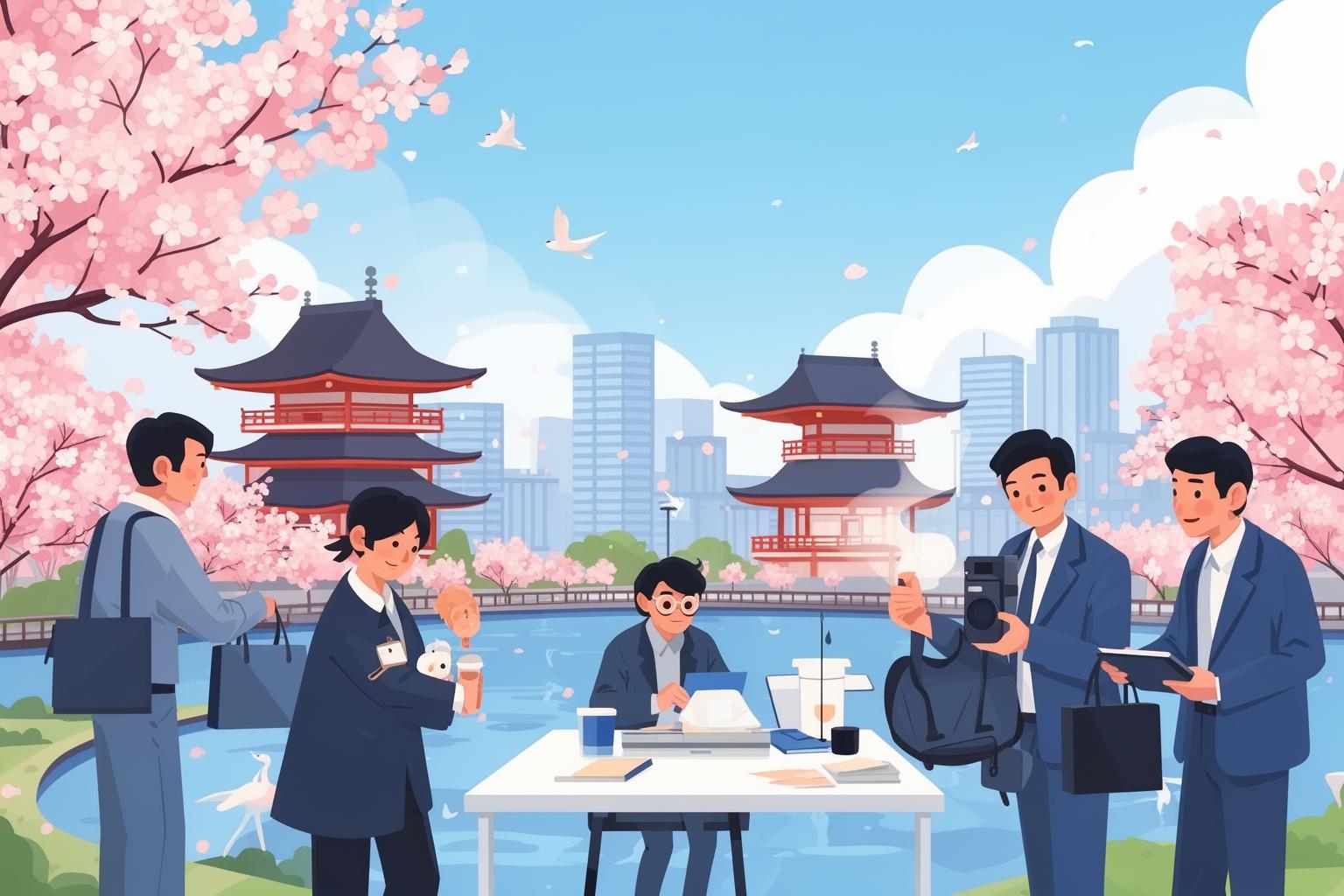
The freeter didn’t appear out of nowhere. They arose from the ruins of an economic illusion. To understand why someone would opt for such an unstable path, you first need to comprehend the rigid and all-encompassing system they rejected.
The Gilded Cage of Lifetime Employment
Post-war Japan experienced an economic miracle, rising from devastation to become a global powerhouse. The driving force behind this miracle was the corporation, powered by the salaryman. The system governing this world rested on two pillars: shūshin koyō, or lifetime employment, and nenkō joretsu, seniority-based wages. When a young man graduated from a reputable university, he would be recruited by a major corporation. This was more than just a job; it was a form of corporate adoption. He was expected to remain until he received his gold watch and retirement bonus. In return, the company provided cradle-to-grave support. His salary would rise steadily with each year of service, regardless of individual performance. The company might offer subsidized housing, family benefits, and generous expense accounts. His identity became deeply intertwined with his employer. Rather than saying, “I’m an accountant,” he would say, “I’m with Mitsubishi,” or “I’m a Sony man.” This system offered immense social and economic stability. It became the foundation of the modern Japanese middle class. It promised a linear, predictable life: job, marriage, mortgage, children, retirement. It was safe. It was secure. And for many, it was suffocating.
The Lost Decade and the Shattered Promise
In the late 1980s, Japan was at the pinnacle of global success. Its asset price bubble was inflating to unprecedented levels. Tokyo real estate was valued higher than all the real estate in the United States. The stock market soared. It seemed the miracle would never end. Then, in the early 1990s, it did. The bubble burst with stunning speed. Stock prices crashed, and property values plummeted. The resulting period of economic stagnation became known as the Ushinawareta Jūnen, or the Lost Decade. For the first time in generations, the corporate giants that had seemed invincible faced the unthinkable: downsizing, restructuring, and hiring freezes. The sacred promise of lifetime employment was broken. Companies could no longer afford to act as surrogate families for all their workers. They began letting staff go and, crucially, stopped hiring new graduates en masse.
This gave rise to what is now called the “Employment Ice Age.” An entire generation of young people, the hyōgaki sedai, graduated from university only to find the doors to the corporate world firmly closed. The path their fathers had followed was gone. The social contract was broken. These were intelligent, educated individuals who had followed the rules, only to discover the game was cancelled. With no other options available, they took on part-time jobs to survive. They became convenience store clerks, cafe waiters, and temporary office staff who were never hired permanently. At first, “freeter” was a term tinged with pity, a label for those who had failed to secure a “real” job. They became the unfortunate casualties of a fractured economy.
Redefining Work and Life: The Freeter’s Choice
What started as a necessity for one generation soon transformed into a deliberate choice for the next. As the economy settled into a new, slower normal, the freeter lifestyle began to lose some of its negative stigma. For younger Japanese who had grown up seeing their salaryman fathers come home late, exhausted, and unfulfilled, the gilded cage of corporate life seemed less like a promise and more like a prison. They recognized the trade-off—total devotion for total security—and began to question whether it was worth it.
From Necessity to Philosophy
A new type of freeter emerged. This wasn’t someone unable to find full-time work; rather, it was someone who didn’t want one. This decision was a quiet yet radical act of defiance against the corporate culture of karōshi (death from overwork). It rejected endless hours of unpaid overtime, stifling office hierarchies, and mandatory after-work drinking parties, or nomikai, where real company politics unfolded. The freeter philosophy emphasized something the salaryman model largely neglected: personal time. By piecing together part-time jobs, individuals could control their own schedules. One could work intensively for six months, then take two months off to travel. One could work mornings and dedicate afternoons to a passion for music or art. The freeter lifestyle offered a flexibility and freedom that was simply unattainable within the rigid structure of a traditional Japanese company. It was an attempt to separate one’s life from one’s labor, to find identity beyond a corporate name badge.
The Economics of Freedom
The everyday reality of a freeter is a patchwork of employment. A person might work three days a week as a barista, two days as a data-entry temp, and pick up weekend shifts at a local izakaya. Variety is a crucial part of the appeal. Instead of a single, monolithic career, life becomes a collection of experiences. This model is supported by the nature of Japan’s service economy. There is a constant demand for part-time labor in retail, food service, and logistics. The pay, known as jikkyū (hourly wage), is often low, but for a young person without family responsibilities, it can suffice. The aim is not to climb a career ladder; it is to earn enough to support a life lived on one’s own terms. This approach fundamentally challenges the Japanese virtue of gaman, or enduring hardship for the sake of future reward. The freeter seeks fulfillment in the present, prioritizing immediate quality of life over the promise of a distant, and no longer assured, comfortable retirement.
The Social Cost and Unspoken Realities
While the pursuit of freedom is commendable, the freeter lifestyle is fraught with substantial social and economic challenges. In a society that continues to highly value stability and conformity, living on the edges comes at a considerable cost.
The “Second-Class” Citizen Stigma
This is where the implicit social logic operates. Despite the increasing number of non-regular workers, a deeply ingrained bias against them remains. To older generations, freeters may appear aimless, irresponsible, and immature—perpetual adolescents shirking adult responsibilities. This stigma has tangible consequences. Landlords often hesitate to rent to freeters, wary of their unstable income. Banks rarely approve loans or credit cards for them. Lacking the prestige of a well-known company on a business card is a significant social disadvantage. One of the biggest obstacles arises in relationships. When meeting a potential partner’s parents, the question “Where do you work?” is crucial. Listing part-time jobs instead of a reputable corporation can end the conversation. Freeters are often viewed as unsuitable partners who cannot provide the financial security expected for starting a family. They live in a socially precarious position, repeatedly forced to justify their life choices in a world that equates worth with job security.
The Precarious Reality Behind the Freedom
The freedom associated with the freeter lifestyle often cuts both ways. It entails a profound lack of security. Part-time workers in Japan receive few, if any, benefits compared to full-time employees. Seasonal bonuses, which can comprise a significant portion of a salaryman’s annual income, are absent. Navigating national health insurance and pension systems can be complicated and frequently results in reduced coverage. There is no paid sick leave, no job security, and no clear route for career advancement. Freeters can be dismissed with little warning and lack a corporate safety net. This situation has fostered a growing class of “working poor”—people who work over 40 hours per week across multiple jobs yet still struggle financially. The wage gap between regular and non-regular employees doing the same work remains a serious and ongoing problem. Moreover, as freeters grow older, their vulnerability intensifies. The physical demands of many part-time jobs become increasingly difficult to meet, and without a career path or retirement savings, the prospect of old age becomes daunting. The freedom of their twenties can turn into the poverty of their sixties.
The Freeter’s Impact on Modern Japan
The rise of the freeter phenomenon goes beyond a mere collection of personal stories; it has had a profound systemic impact on Japanese society and its economy. It has fundamentally altered the labor market’s composition and sparked a nationwide dialogue about the true meaning of work.
Shifting the Corporate Landscape
For Japanese companies, the expansion of a non-regular workforce offered a remedy to the economic challenges of the Lost Decade. Freeters and other temporary workers created a flexible, low-cost labor pool that could be adjusted according to demand. This allowed businesses to remain efficient and competitive. However, it also entrenched a two-tier labor system. On one side are the seishain, permanent, full-time employees enjoying benefits and job security. On the other are the hiseiki, non-regular workers who now comprise nearly 40% of Japan’s workforce. This divide has led to deep-rooted inequality and is often cited as a cause of stagnant wage growth and weak domestic consumption. The flexibility that benefits corporations comes at the expense of individual stability.
A New Definition of Success
Despite the difficulties, the freeter phenomenon has irreversibly shifted Japanese cultural values. It embodies a widespread challenge to the traditional salaryman ideal. By choosing—or being compelled—to exist outside that framework, freeters have shown that life can hold meaning and purpose without allegiance to a single corporation. They have played a role in normalizing work-life balance in a society where work has often defined existence. This shift in mindset is gradually influencing the mainstream. Younger generations, including those with full-time jobs, are increasingly likely to seek reasonable working hours, change jobs if dissatisfied, and prioritize their personal lives. In its own way, the freeter lifestyle acted as a catalyst, prompting a rigid society to become somewhat more accepting of alternative life paths. It has helped pave the way for wider acceptance of diverse lifestyles, contributing to trends such as the rise of solo culture and a move away from traditional family structures.
The Future of the Freeter
Today, the term “freeter” feels both outdated and more relevant than ever before. Although the specific economic conditions that gave rise to the first wave have faded, the fundamental aspects of flexible, precarious work have become a global phenomenon. The growth of the gig economy, driven by platforms like Uber and DoorDash, can be seen as a technological evolution of the freeter concept. The challenges remain strikingly similar: lack of benefits, unstable income, and the ongoing struggle for recognition as legitimate workers.
In Japan, the government continues to wrestle with labor reform, striving to bridge the divide between regular and non-regular employees, albeit with mixed success. The “aging freeter” issue poses a significant potential social crisis. Nevertheless, the cultural shift they embody is unmistakable. The freeter is a complex and paradoxical figure—representing both economic failure and personal freedom, precarity and possibility. They are the human face of a broken economic promise and the forerunners of a new, more individualized way of life. Their story serves as a reminder that when old systems collapse, people don’t simply vanish into the wreckage. Instead, they find new ways to build, work, and live, shaping a society that is messier, more uncertain, but perhaps a bit freer.