If you’ve ever channel-surfed late at night in Japan, you’ve probably stumbled upon it: a lone samurai standing perfectly still in a bamboo grove, the wind rustling the leaves, his hand resting on the hilt of his sword. There’s no music, no snappy dialogue. Just a long, heavy silence. Your first thought might be, “Is anything going to happen?” But if you keep watching, you realize something profound is happening. The tension in that silence is more gripping than a dozen explosions in a summer blockbuster.
This is the world of jidaigeki, or Japanese period dramas. To many outsiders, the genre is synonymous with spectacular sword fights and stoic warriors—a whirlwind of flashing katanas and dramatic last stands. And while the action is certainly a key ingredient, it’s not the main course. To focus only on the choreography of the fight is to miss the entire point. The real story, the soul of jidaigeki, isn’t found in the clash of steel. It’s found in the quiet moments in between: the weary sigh of a masterless warrior, the subtle tightening of a jaw, the shared, unspoken understanding between two rivals over a cup of tea. It’s a cinema of restraint, where the heaviest burdens are carried silently and the most significant battles are fought within.
So, what’s behind this stoic vibe? It isn’t just an artistic choice for dramatic effect. It’s a reflection of a deeply ingrained philosophy, a code of conduct that governed every aspect of a samurai’s life. To truly understand these films, you have to look past the blade and into the immense weight of the world resting on these characters’ shoulders. We’re going to explore the unspoken language of these films, the philosophical bedrock of the samurai class, and why these centuries-old stories of silent suffering and unwavering duty still resonate so powerfully in modern Japan.
The unspoken resonance of jidaigeki mirrors the perpetual heartbeat of modern Japan, where the dynamic rhythm of 24/7 konbini culture offers an unexpected yet equally compelling narrative.
The Grammar of Silence and Stillness
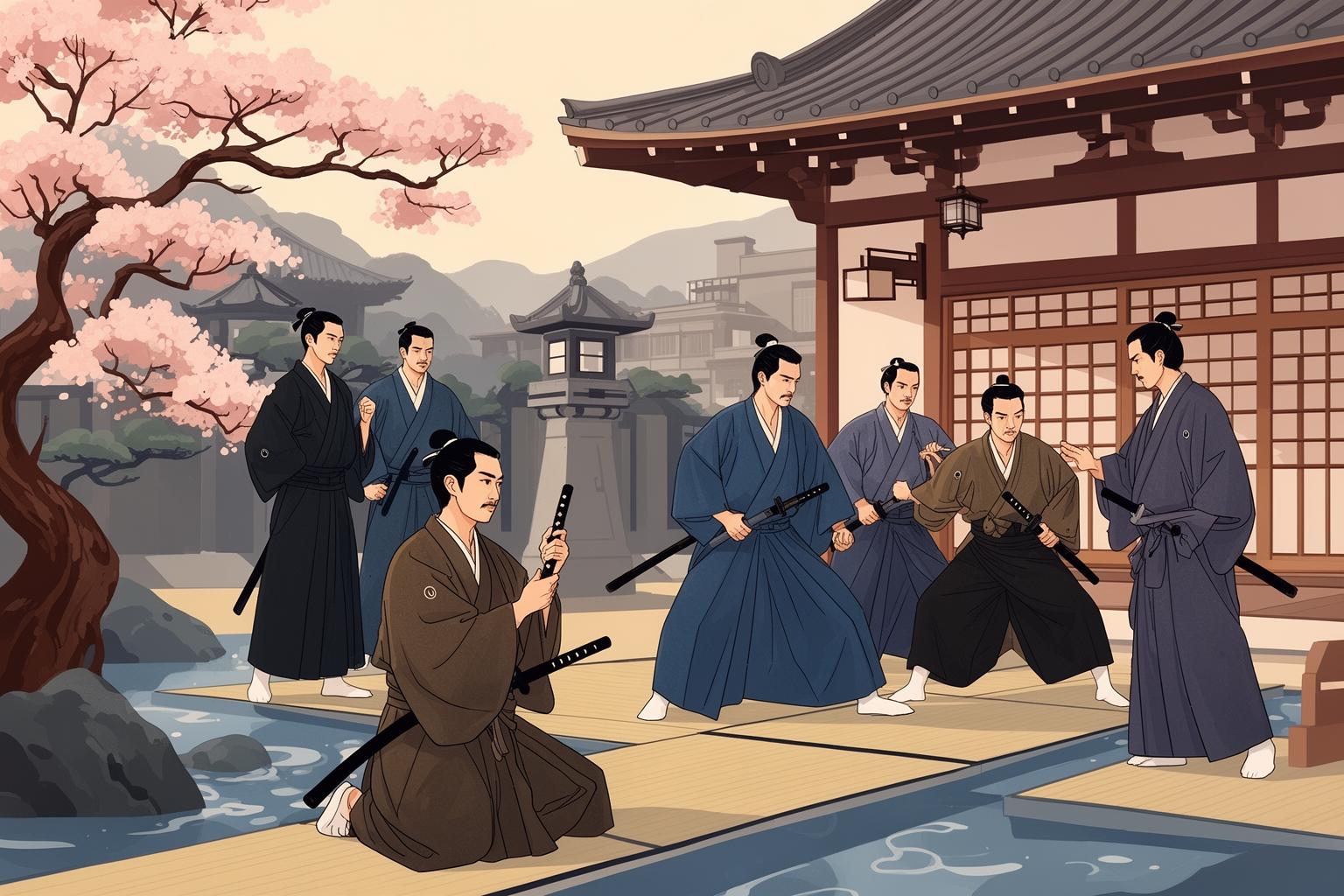
Western cinema, especially in its action genre, tends to avoid silence. It is often viewed as empty space that must be filled—with a clever one-liner, a swelling orchestral score, or the background noise of a lively city. In jidaigeki, however, silence is not merely a lack of sound; it is a presence. It serves as a narrative device as powerful as any line of dialogue. When two samurai face each other across a dusty road, the prolonged stillness before the draw is where the true conflict unfolds. It is a battle of wills, a psychological evaluation of the opponent’s spirit, resolve, and fear. The eventual, lightning-fast strike is merely the physical conclusion to a fight already won or lost during the preceding quiet.
This intentional use of empty space is grounded in the Japanese aesthetic concept of ma (間). Ma can be translated as an interval, a gap, or a pause, but its significance goes deeper. It is the deliberate emptiness that shapes and gives meaning to what surrounds it. In a painting, it is the unpainted area that highlights the subject. In music, it is the rest between notes that creates rhythm and emotion. In jidaigeki, ma is the pregnant pause in a conversation that conveys more than words ever could. It is the empty room where a character sits alone, contemplating a difficult choice. The camera lingers, compelling the audience to share in the character’s solitude and feel the weight of their internal struggle.
This principle extends to the characters’ physical presence. The actors are trained to communicate a universe of meaning through subtle gestures. A samurai’s posture is perfectly upright, not only because it is historically accurate but because it expresses a state of constant readiness and self-discipline. The way he walks, the way he sits in the formal seiza position, the almost imperceptible nod of his head—every movement is intentional and devoid of flourish. This is not poor acting or a lack of emotion. It is the physical expression of a mind trained to suppress personal desires and project an image of unshakeable composure. When a character must deliver bad news or accept a fatal order, their face may remain a calm mask, but the slight clenching of a fist or the subtle flicker in their gaze reveals the full story of their inner torment. This style of performance requires the audience to engage actively, to interpret the nuances, rather than passively absorb emotions through explicit dialogue and exaggerated gestures.
The Crushing Weight of the Bushido Code
Why such intense self-control? What philosophy could possibly require a person to so thoroughly master their own emotional landscape? The answer lies in bushido, the unwritten code of the samurai. Far more than merely a set of combat rules, bushido was a comprehensive ethical and moral framework that dictated how a warrior should live and, just as importantly, how they should die.
The stoicism portrayed on screen is a direct result of this code’s immense pressure. The samurai were expected to embody a set of virtues that often stood in direct conflict with basic human nature. Understanding these virtues is key to unraveling the characters’ motivations.
Gi (義): Rectitude and Moral Duty
Perhaps the cornerstone of the code, gi refers to strict moral rectitude—the ability to decide on a course of action based on reason without hesitation. For a samurai, the right path was often the most difficult. It meant upholding justice even at great personal sacrifice. In many jidaigeki plots, the protagonist faces a corrupt official or a cruel lord. His sense of gi compels him to act, even if it results in becoming a rōnin (a masterless samurai), losing his social standing, and facing certain death. His stoic demeanor in this choice is not a sign of fearlessness; it is a demonstration of his unwavering commitment to moral duty over personal safety.
Yū (勇): Courage Beyond the Battlefield
Courage, within bushido, was not simply about bravery in combat. It was often described as “the courage of endurance.” It meant facing hardship, poverty, pain, and loss without complaint. A samurai who lost his fortune or fell into disgrace was expected to bear suffering with quiet dignity. This underpins much of the silent melancholy in jidaigeki. We see heroes living in squalor, taking on menial work to survive, yet never losing their sense of inner composure. This quiet fortitude was considered a higher form of courage than reckless bravado on the battlefield.
Meiyo (名誉): The Primacy of Honor
Honor was the currency of the samurai class, tied not only to the individual but also to their family and lord. A loss of honor was deemed worse than death, which is why seppuku (ritual suicide) was seen as a way to restore honor in the face of failure or disgrace. This relentless, crushing pressure to maintain one’s meiyo explains the extreme sensitivity to insults and the strict adherence to protocol. A samurai’s stoic expression might mask the terror of making a mistake that could bring shame upon his entire lineage. The stakes were impossibly high, and emotional outbursts were viewed as signs of weakness that could endanger one’s honor.
Giri (義理) vs. Ninjō (人情): The Central Conflict
This tension drives the plot of countless jidaigeki films. Giri can be translated as social obligation or duty, whereas ninjō represents personal feelings or human emotion. The life of a samurai was a constant, agonizing battle between these two forces. A samurai might be commanded by his lord (giri) to execute his childhood friend (ninjō). He might fall in love with a woman from a rival clan, forcing him to choose between his heart (ninjō) and loyalty to his family (giri). The stoic silence is the battlefield where this internal war is fought. The character’s impassive expression is a desperate effort to uphold his giri, while the audience senses the raging storm of ninjō beneath. The tragedy of jidaigeki is that giri almost always prevails, forcing the hero to sacrifice personal happiness for the sake of duty.
Archetypes of Stoicism: The Faces of Endurance
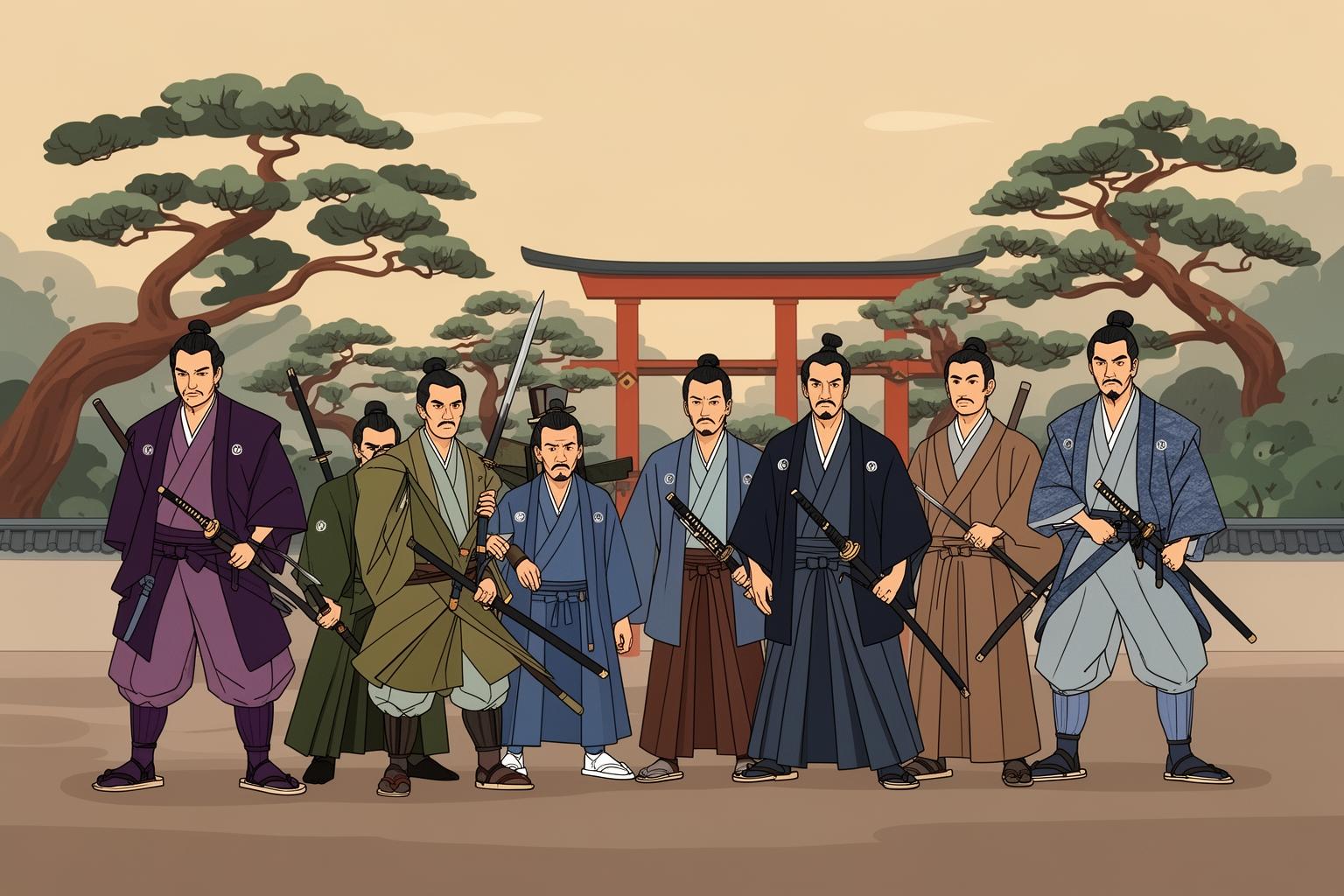
While the bushido code was universally followed by the samurai class, its pressures took different forms within the recurring character archetypes that populate the world of jidaigeki. These figures are neither simple heroes nor villains; they are complex individuals shaped by the strict demands of their era.
The Rōnin: Freedom in Exile
Perhaps the most iconic figure in the genre is the rōnin, the masterless samurai. Having lost or abandoned his lord, he becomes an outcast, wandering the land and selling his sword to earn a meal. Though free from direct clan obligations, he remains bound by his own internal code. Characters such as Toshiro Mifune’s Sanjuro in Akira Kurosawa’s Yojimbo embody this archetype. He is cynical, gruff, and seemingly motivated only by money. Yet, as the narrative progresses, his actions reveal a deep commitment to justice (gi). He uses his formidable skills to protect the vulnerable and punish the wicked, even without personal gain. His stoicism serves as a protective shell, a way to navigate a corrupt world that offers him no place. His silence becomes his armor.
The Loyal Retainer: The Burden of the Impossible Choice
The loyal retainer is a man ensnared by his own virtue. His defining trait is unwavering loyalty to his lord. He represents the ultimate expression of the giri-ninjō conflict. His personal desires, his family’s welfare, and even his life are subordinate to his master’s commands. The film Harakiri (1962) offers a devastating critique of this blind loyalty, portraying how a lord’s cruel and arbitrary demand for honor results in immense human suffering. The retainers in such stories bear their tragic fate with a grim, quiet resignation. Their stoicism is not a matter of choice but a necessity—the only viable response to a system demanding absolute self-sacrifice.
The Reluctant Swordsman: The Weight of a Gift
Another compelling archetype is the low-ranking samurai who excels with the sword but finds no pleasure in violence. He is often a kind, gentle man, a devoted husband and father who would prefer a life of quiet study or farming. The Twilight Samurai (2002) offers a beautiful and poignant portrait of such a man. The protagonist, Seibei, is so poor that he is mocked by his fellow samurai. Yet when his duty to his clan requires him to fight, his skill proves legendary. His stoicism arises not from arrogance but weariness. For him, the sword is not a symbol of honor but a heavy burden. He fights with profound sorrow, and his quiet dignity in the face of poverty and danger makes him one of the genre’s most human and relatable heroes.
The Modern Echo: Why the Stoic Samurai Endures
It might be easy to write off jidaigeki as mere historical fantasy, an outdated relic with little significance to modern Japan. However, that would be a serious misunderstanding of its lasting appeal. These films are not simply about a past era; they serve as a mirror reflecting some of the most enduring cultural values and social pressures in Japan today. In many ways, the stoic samurai is the spiritual predecessor of the contemporary salaryman.
The concept of gaman) (我慢), meaning enduring the seemingly unbearable with patience and dignity, directly descends culturally from the samurai’s stoic resilience. It embodies the idea of persevering through hardship without complaint, whether that means working long, grueling hours, managing a difficult boss, or overcoming personal challenges. The emphasis on group harmony (wa, 和) in Japanese companies often requires individuals to suppress their own opinions and desires for the collective good—a modern manifestation of prioritizing giri over ninjō.
The distinction between honne (本音), one’s true feelings, and tatemae (建前), the public facade one displays, is another parallel. A samurai was expected to present a tatemae of unwavering loyalty and composure, despite any inner turmoil (honne). Similarly, in many Japanese social and professional contexts, there is an expectation to maintain a smooth, agreeable front, keeping genuine thoughts and emotions concealed. Jidaigeki offers a dramatic, high-stakes depiction of this tension, which unfolds more subtly in everyday life.
When a modern Japanese viewer watches a samurai hero silently accept a tragic destiny for the sake of duty, they are observing more than just a historical drama. They are witnessing a romanticized and heightened reflection of the cultural pressures they face daily. The samurai’s silent struggle validates their own quiet endurance and acknowledges the importance placed on self-sacrifice and perseverance. The stoic hero is not merely an action figure but a cultural ideal.
To fully appreciate a jidaigeki film, one must reset their cinematic pace. You need to embrace the silence and pay attention to the stories conveyed through a tightened grip on a teacup or a lingering, sorrowful gaze at falling cherry blossoms. The spectacular swordfights act as punctuation, but the quiet, stoic moments form the language. This is where the heart of the genre lies—a recognition that true strength is not measured by how loudly you shout or how fiercely you fight, but by the burdens you bear silently and the steadfast dignity with which you carry them.