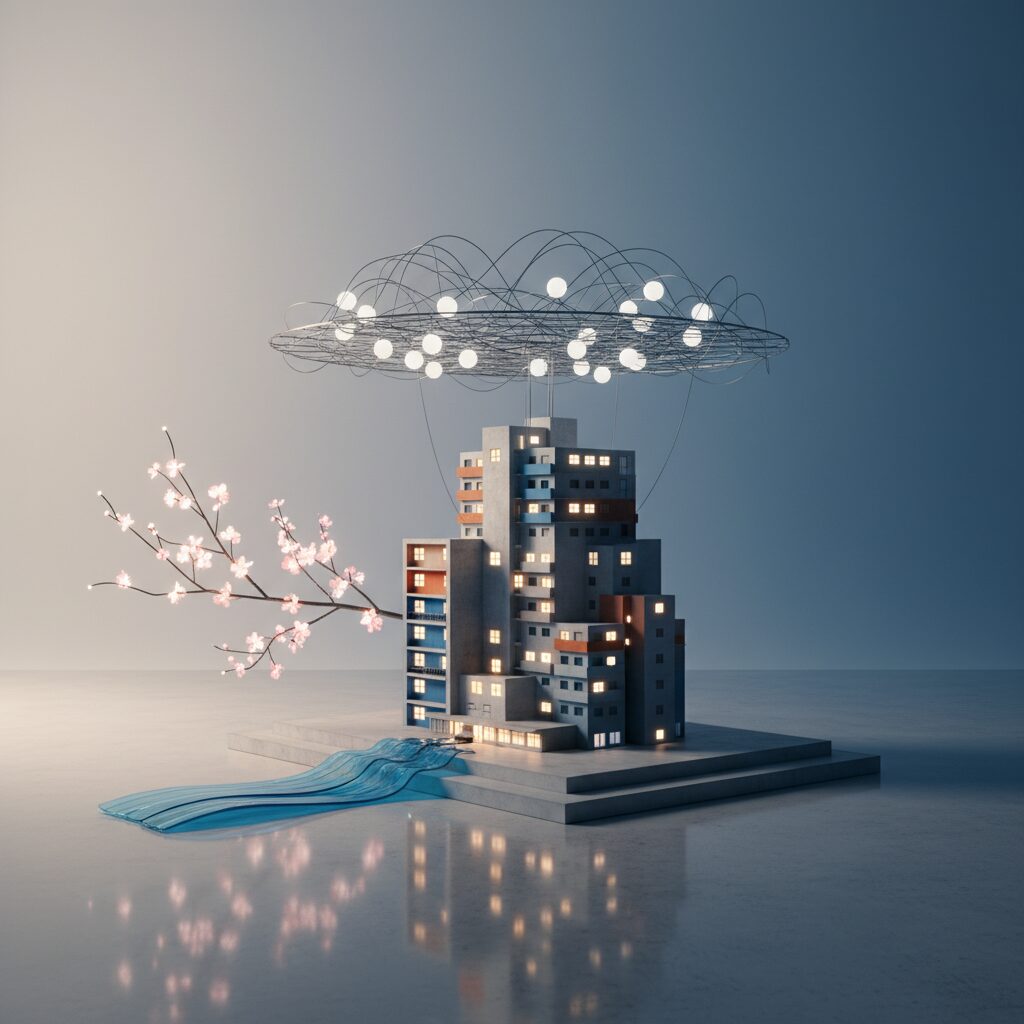
Take a train out of any major Japanese city, and you’ll eventually see them. Rising from the suburban landscape in stoic formation, they are vast collections of concrete apartment blocks, uniform and relentlessly geometric. Balconies repeat in hypnotic patterns, connected by external walkways and stairwells. To the casual observer, they might look drab, utilitarian, even a bit grim—relics of a bygone era. They are danchi, Japan’s post-war public housing complexes. For decades, they were simply part of the background, the unremarkable architecture of everyday life. But for a growing and intensely passionate subculture, these buildings are anything but unremarkable. They are destinations. They are canvases. They are monuments to a collective dream, and they are begging to be photographed.
This is the world of danchi photography, a niche hobby that sits at the fascinating intersection of architecture, social history, and urban exploration. It’s a scene populated by architects, designers, history buffs, and ordinary people who find profound beauty in these aging structures. Armed with cameras, they venture into quiet suburbs to document everything from the grand, sweeping lines of a housing block to the smallest details: a faded barbershop sign, a retro-futuristic water tower, the unique design of a playground slide. They are not just taking pictures of buildings; they are capturing the ghost of Japan’s twentieth-century ambition. So what is it about these concrete behemoths that inspires such dedication? Why spend a weekend chasing the perfect light on a building most people ignore? The answer lies in what the danchi once represented, what they became, and the quiet stories they still tell.
Beyond their inherent aesthetic allure, these concrete landscapes invite a broader exploration of urban design nuances, as exemplified by the innovative concept of borrowed scenery that reimagines the relationship between built form and nature.
The Birth of a Concrete Utopia
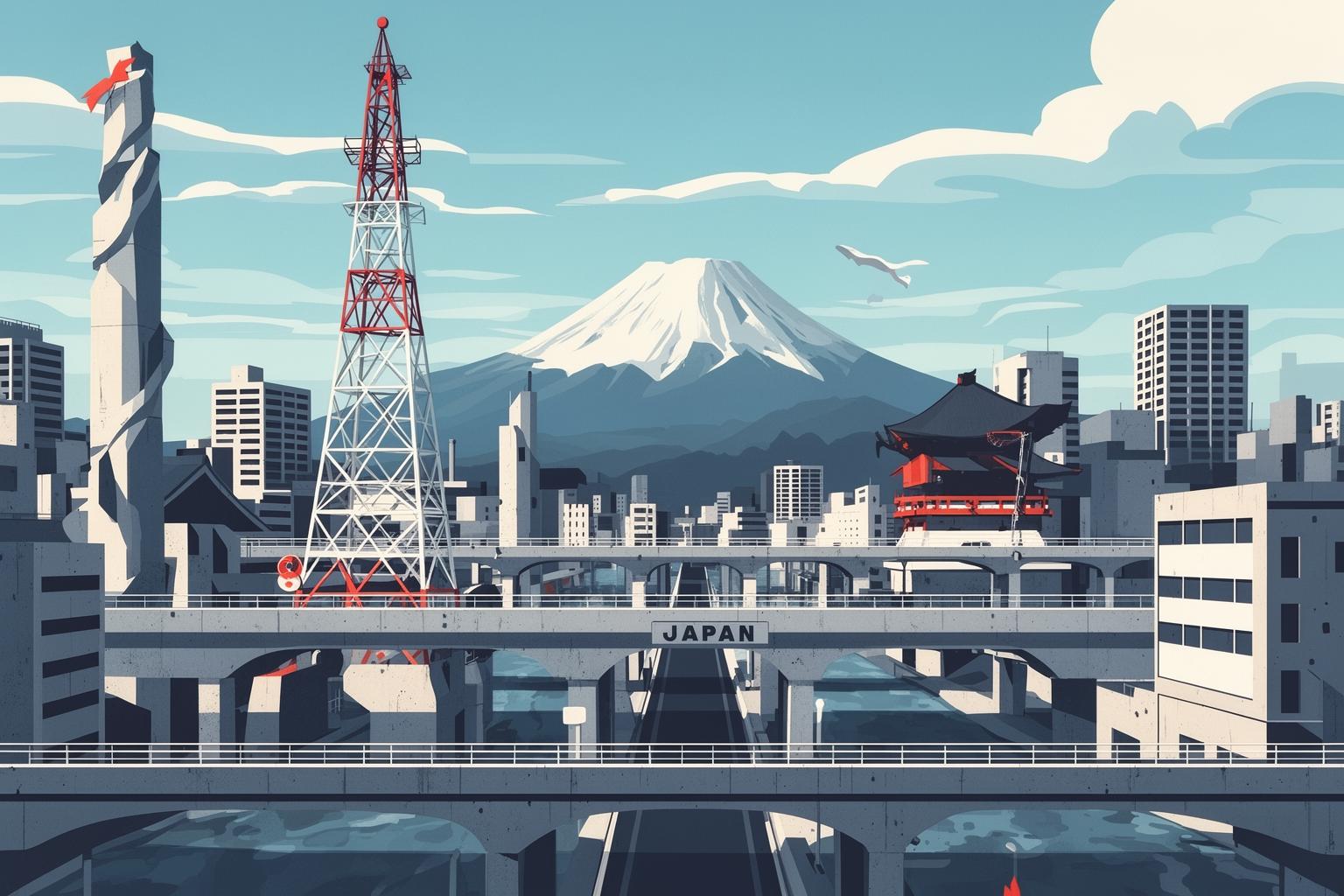
To grasp the obsession, you first need to understand the dream. The Japan of the 1950s was a country struggling to recover from the devastation of war. Its cities lay in ruins, and a severe housing shortage gripped the population as people flocked to urban centers seeking work in the growing industries. The government’s response was bold and visionary. In 1955, it created the Japan Housing Corporation (JHC), charged with rebuilding Japan, one apartment at a time.
The outcome was the danchi. But these were more than just housing developments; they were models for a new way of living. They marked a significant departure from the traditional, often cramped, multi-generational Japanese home. For the first time, average families could aspire to a modern, Western-influenced lifestyle. The JHC introduced the groundbreaking “DK” floor plan—the dining-kitchen—which merged the areas for eating and cooking, saving valuable space and encouraging family togetherness. While commonplace now, it was a revelation at the time.
These apartments featured impressive modern conveniences: a private kitchen with a gas stove, a stainless-steel sink, a flush toilet, and a private bathroom. This represented the peak of domestic technology, a sharp contrast to the shared facilities and wood-burning stoves many were accustomed to. The danchi were designed as self-contained micro-cities, thoughtfully planned with green spaces, playgrounds, shopping arcades, clinics, and post offices. They were built to foster community and embody a bright, clean, and hopeful future. Securing a place in a new danchi was like hitting the jackpot; they were status symbols, tangible evidence of Japan’s remarkable economic recovery and the rise of its new middle class.
From Modern Dream to Forgotten Landscape
For two decades, the danchi stood as the epitome of modern living. But dreams, much like buildings, can age. As Japan’s economy soared through the 1970s and 80s, aspirations evolved. The collective vision of a modern apartment gave way to the individualistic ideal of mai hōmu (my home)—a detached, single-family house with a small garden and parking space. The very qualities that once made the danchi so appealing—their compactness and uniformity—started to feel confining. They came to be seen as stepping stones, a place to begin a family before moving on and upward.
As the original residents grew older and their children left, the once lively communities began to empty out. The buildings themselves, constructed quickly and economically, began to deteriorate. Concrete stained, paint peeled, and the once-modern fixtures became hopelessly outdated. The danchi gradually took on a new reputation, one linked not to youthful optimism but to aging populations, loneliness, and economic decline. In the media, they sometimes appeared as backdrops in stories about kodokushi, or solitary deaths, where elderly residents died unnoticed. Once symbols of Japan’s bright future, they had become quiet monuments to its past, ignored and largely unloved by the mainstream.
Yet this period of neglect is exactly what laid the groundwork for their rediscovery. As these complexes slipped from public view, they became preserved capsules of a distinct era, place, and aesthetic. They waited for a new generation, one without memories of the original enthusiasm, to appreciate them anew.
The Rise of the Danchi Hunters
This new generation comprises the danchi photographers, an informal community of enthusiasts who have transformed these complexes into destinations for architectural pilgrimage. Often referred to as danchi manā (danchi manner) or simply danchi-zuki (danchi lovers), they share their discoveries through blogs, social media, and self-published zines, exchanging information about the most interesting, well-preserved, or architecturally significant complexes across the country.
Their method is investigative, appreciative, and frequently deeply affectionate. They do not focus on ruin-gazing or documenting urban decay. Instead, they embark on a treasure hunt for design, history, and the subtle marks of human life. Acting as archivists of a fading social experiment, their photography centers on several key elements that make the danchi so captivating.
Geometry and Repetition
From afar, the most remarkable aspect of a danchi is its scale and powerful, rhythmic geometry. Photographers are attracted to the stark, repetitive patterns of windows, the strict grid of balconies, and the bold lines of concrete stairwells. There is a minimalist, nearly abstract beauty in this uniformity. Inspired by modernist and brutalist movements, these buildings were designed with a functionalist clarity that proves incredibly photogenic. Capturing the play of light and shadow across these expansive concrete facades, and finding the ideal angle to highlight their monolithic presence, is central to the aesthetic. It’s about discovering the sublime within mass production.
The Star House and Other Typologies
Not all danchi were constructed alike. The early era of the JHC was a time of intense architectural experimentation, and photographers seek complexes featuring rare or unusual layouts. The unquestioned holy grail is the “Star House” (sutā hausu). These are low-rise blocks shaped like a Y, with three apartments branching out from a central stairwell. This design aimed to maximize light and ventilation for each unit, a brilliant piece of functional design that is also visually striking. Locating and photographing a Star House is a rite of passage for any serious enthusiast. Other prized designs include “box-style” point blocks, terrace houses, and various experimental typologies that diverged from the standard long-block format. Knowledge of these types and their architects turns a simple photo outing into an architectural safari.
Details and ‘Seikatsukan’
The true essence of danchi photography, however, is found in the small details and traces of human presence. The Japanese have a beautiful word for this: seikatsukan, roughly meaning “the feeling of lived-in life.” This distinction separates sterile architectural shots from compelling images. Photographers focus on the textures of everyday existence: the colorful chaos of laundry hanging from balconies, the unique tiles on a vintage shopfront, the patina of a rusted handrail, and the whimsical, often quirky, concrete animals in a Showa-era playground.
They document the subtle alterations residents have made over the years—a personalized entryway, a carefully tended collection of potted plants on a balcony, or an irregular window frame. These are the marks of individuality on a backdrop of uniformity. They also seek out typographic gems: fading, hand-painted signs for the local tofu shop or barber, the retro-cool fonts on building nameplates, or the elegant numbering on apartment doors. These details narrate the human story of the danchi, capturing decades of lives lived within their concrete walls.
Why Now? Nostalgia, Aesthetics, and a Search for Authenticity
The rise of this subculture in the 21st century is no coincidence. It is fueled by a convergence of cultural trends that make the modest danchi suddenly relevant and attractive.
Showa-Era Nostalgia
Japan is currently enveloped in a strong wave of nostalgia for the mid-Showa period (approximately the 1950s-1970s). This was a time marked by seemingly limitless optimism, economic expansion, and social unity. For younger generations who did not live through it, it symbolizes a simpler, more analogue, and perhaps more genuine era. The danchi serve as perfect symbols for this feeling. Their design, materials, and the worn community facilities all recall this lost golden age. Photographing a danchi becomes a way to travel back in time and connect with a foundational era of modern Japanese identity.
An Appreciation for Modernist Architecture
This interest is also part of a broader rediscovery of mid-century modernism. After years of being seen as outdated, the clean lines, functional forms, and honest use of materials typical of post-war architecture are once again appreciated. In a country where urban landscapes often appear as chaotic clusters of disposable, short-lived buildings, the danchi stand out for their sturdy, planned integrity. They were constructed to endure, with a clear social purpose and a cohesive design philosophy. For those tired of the visual clutter of modern cities, the orderly world of the danchi offers an aesthetic sanctuary.
Documenting a Disappearing World
Perhaps the most pressing reason is the awareness that time is limited. Many original danchi, now over sixty years old, have reached the end of their practical lifespan. UR Urban Renaissance, the successor to the JHC, is systematically demolishing and redeveloping older complexes nationwide, replacing them with modern, anonymous high-rises. While these new buildings are undoubtedly more comfortable, they lack the historical character and unique design of their predecessors.
For photographers, each shutter click is an act of preservation. They are creating a priceless visual archive of a crucial chapter in Japan’s social and architectural history before it vanishes from the landscape forever. Their work guarantees that the story of the danchi—from the initial vision through the gradual decline to eventual rediscovery—will not be lost.
More Than Just a Photo: The Danchi Community
What began as an individual pursuit has grown into a vibrant community, connected primarily through the digital realm. Instagram and Twitter serve as the movement’s main galleries, where hashtags like #団地 (danchi), #団地萌え (danchi-moe, a cute term for danchi infatuation), and #公団住宅 (kōdan jūtaku, public housing) showcase a stunning array of images. Many accounts focus on specific niches: danchi water towers, danchi playgrounds, or even danchi typography.
This online engagement extends into the physical world. Enthusiasts create and trade exquisitely designed doujinshi (self-published zines and photo books) at art-book fairs. They hold small-scale photo exhibitions in independent galleries and lead “danchi tours,” guiding fellow fans through sprawling complexes, highlighting unique architectural features and sharing historical stories. These events cultivate a sense of shared purpose, turning a solitary hobby into a collaborative effort of documentation and appreciation.
At its core, danchi photography is a profound act of close observation. It involves training the eye to discover beauty, history, and humanity where most see nothing but monotonous concrete. It stands as a quiet rebellion against the relentless rush of urban renewal and a celebration of the overlooked. These photographers do more than capture buildings; they preserve the memory of society’s loftiest ambitions, etched into the very fabric of the suburbs. Through their photos, the danchi cease to be mere relics. They come alive, not just as structures of concrete and steel, but as monuments to the enduring, beautifully imperfect dream of a better life.