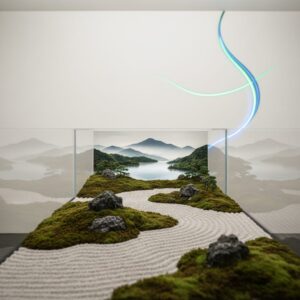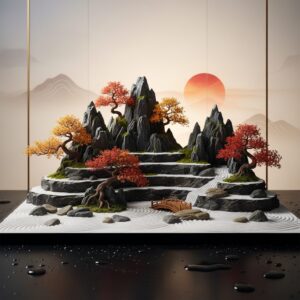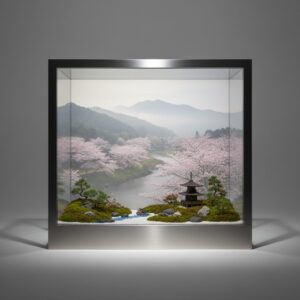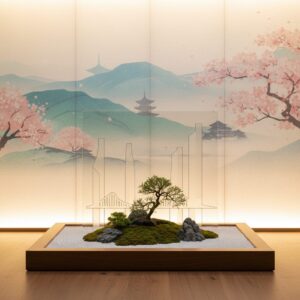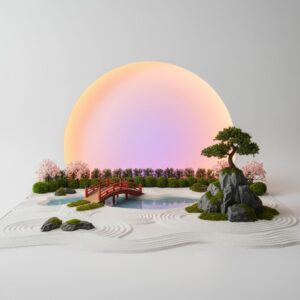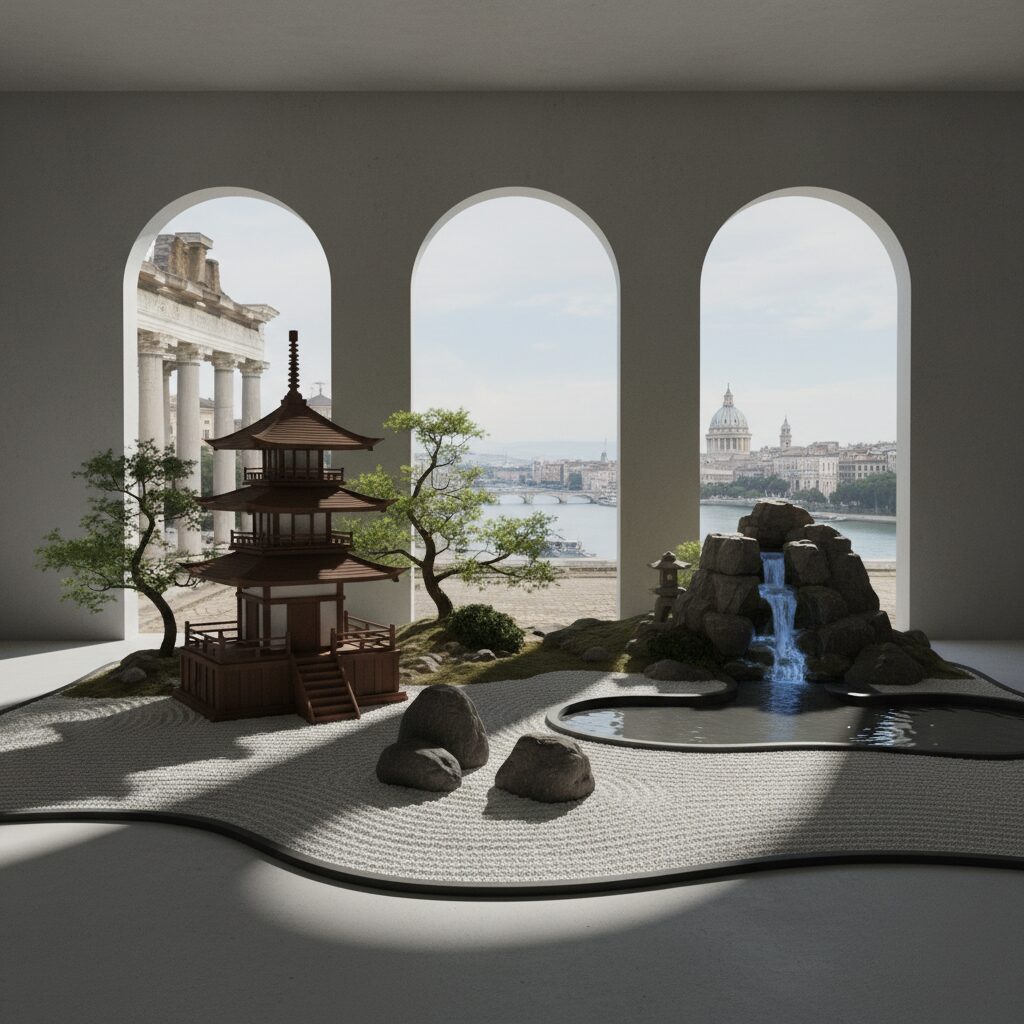
You’re standing in a Japanese garden, a space so perfectly composed it feels like a dream. Every rock is placed with intention, the moss is a carpet of deep green velvet, and a stone lantern stands silent guard over a trickling stream. It’s a world unto itself, meticulously crafted and enclosed. But then you look up, past the carefully clipped azalea bushes and the simple bamboo fence. In the distance, framed perfectly by the arching branches of a maple tree, is the majestic peak of a mountain, its silhouette cutting into the vast blue sky. Suddenly, the garden doesn’t feel enclosed at all. It feels boundless. That mountain, miles away and utterly outside the garden’s physical property, is as much a part of the design as the polished stepping stones under your feet. What you’re experiencing is not a happy accident. It’s a centuries-old design philosophy known as shakkei.
Translated literally, shakkei (借景) means “borrowed scenery.” It’s a concept that lies at the very heart of Japanese landscape architecture, a technique so subtle and profound that it fundamentally redefines where a garden begins and ends. This isn’t just about having a nice view. It’s the art of deliberately incorporating the surrounding landscape into the garden’s composition, making the distant scenery an integral component of the immediate design. The garden becomes a frame, and the world beyond becomes the painting. This philosophy transforms a finite plot of land into an experience of infinite space, a quiet dialogue between the man-made and the natural, the near and the far. Understanding shakkei is to understand something essential about the Japanese approach to space, nature, and the beauty of interconnectedness. It’s a reminder that true artistry often lies not in what you create, but in how you frame what is already there.
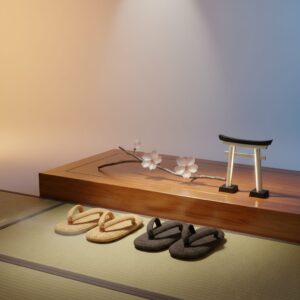
This interplay of created space and boundless scenery mirrors how a Japanese genkan subtly defines the threshold between the inside and the expansive natural world.
More Than a Pretty View: The Core Principles of Shakkei
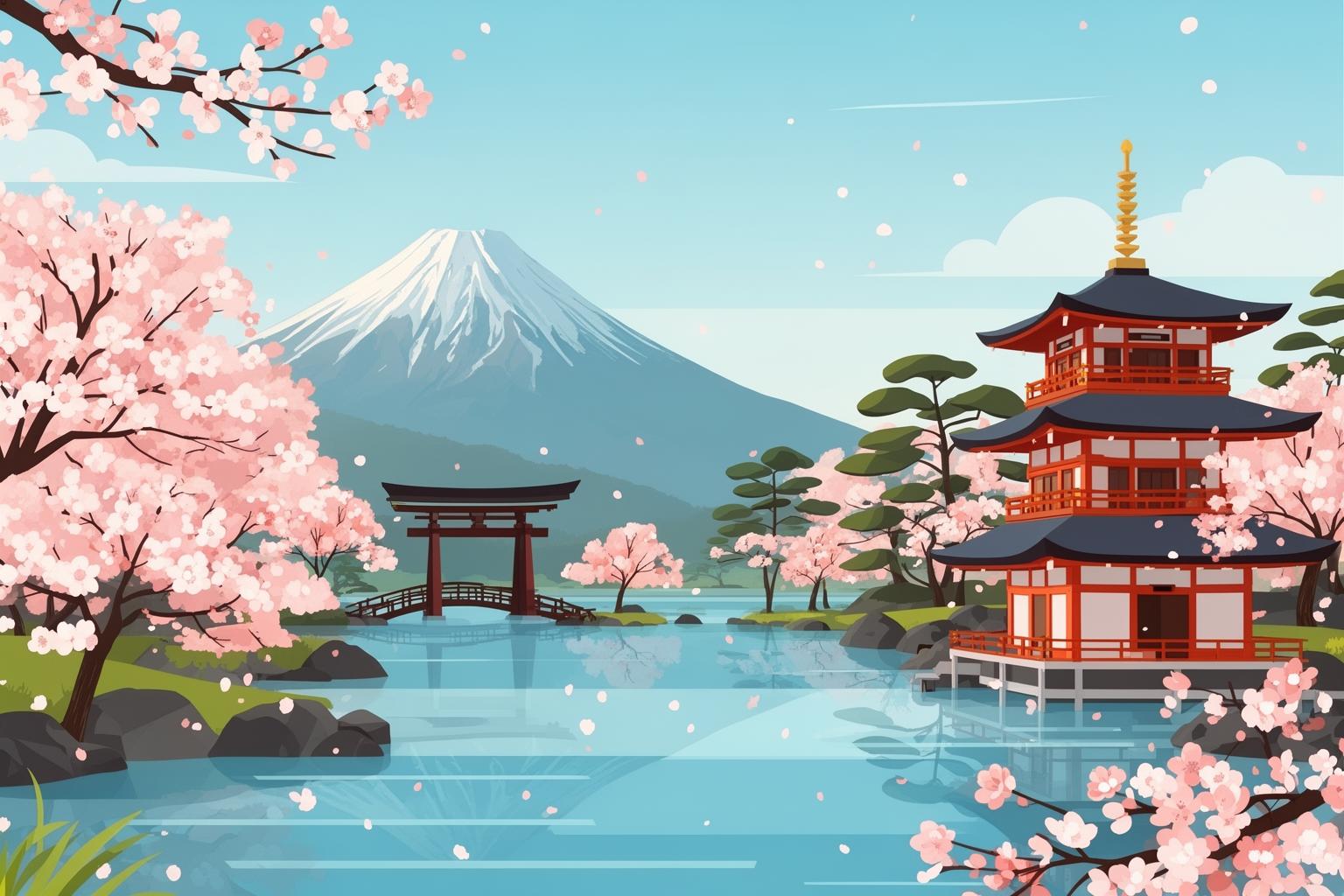
At first glance, shakkei might appear to be simple opportunism—if there’s a great view, why not use it? Yet, the truth is much more intricate and deliberate. A garden designer practicing shakkei acts less like a builder and more like a visual composer or perhaps a film director. They craft an experience, guiding your gaze and constructing a narrative through space.
The philosophy rests on a delicate interplay among three visual planes. The first is the foreground, the garden itself (kinkei, 近景). This is the element the designer has direct control over: the ponds, rocks, plants, and paths. This area is carefully designed not only to be beautiful in its own right but also to serve a higher function—as a starting point for the eye.
Next comes the middle ground (chūkei, 中景), which serves as a visual link. This might be a cluster of trees, a neighboring roofline, or a low hedge bordering the property. Its role is vital. It connects the immediate garden to the distant view, smoothing the transition so the eye doesn’t abruptly jump from a nearby rock to a far-off mountain. It also helps conceal undesired elements—such as power lines, modern buildings, or anything that might break the illusion—while linking the elements meant to be connected.
Finally, and most importantly, is the borrowed scenery itself, the distant view (enkei, 遠景). This is the centerpiece, the element the garden modestly incorporates. It could be a mountain, a forest, a distant pagoda, a body of water, or even a uniquely shaped hill. The entire composition of the foreground and middle ground is designed to showcase this distant element in the most beautiful and evocative way.
The brilliance of shakkei lies in its balance. The garden in the foreground must be engaging enough to hold your interest, yet not so dominant that it overshadows the borrowed view. It should feel like a complete, harmonious scene. The designer uses garden elements to create a frame, directing the viewer’s attention with nearly theatrical precision. The aim is a seamless integration, where the boundary between the private garden and the public landscape fades, merging into a single, unified work of art.
The Four Types of Borrowing
Japanese garden theory is methodical above all else. Over the centuries, masters have classified shakkei into four distinct types, each characterized by the direction and scale of the borrowed element. This classification is more than mere academic detail; it highlights the adaptability of the philosophy, demonstrating its application across a broad spectrum of settings, from expansive imperial estates to compact urban courtyards.
Enshaku (遠借) – Distant Borrowing
This is the most traditional and grandest form of shakkei. Enshaku entails borrowing a prominent, large-scale natural feature, usually a renowned mountain or an extensive forest. It represents an ambitious act of visual appropriation, making a monumental part of the landscape the focal point of the garden. The result is a sense of majesty and wonder. The garden provides an intimate, human-scale environment while at the same time linking the observer to the vast power and timelessness of nature. Imagine a garden framing a view of Mount Fuji or, in Kyoto, the iconic Mount Hiei. The mountain is not merely a backdrop but becomes the garden’s anchor, its spiritual and aesthetic center. The seasonal changes on the distant slopes—the fresh greens of spring, deep summer shadows, vibrant autumn hues, and the stark whites of winter—reflect the garden’s own shifting moods.
Rinshaku (隣借) – Adjacent Borrowing
Not every garden enjoys a mountain vista. Rinshaku is a more intimate, neighborly form of borrowing. It involves incorporating features from a nearby property, such as a neighbor’s graceful grove of trees, a historic temple roof, or a distinctive wall. This type of shakkei reflects a less individualistic, more communal aesthetic approach in pre-modern Japan. The visual enjoyment of a neighbor’s well-tended forest was regarded as a shared resource. By strategically placing a window or creating an opening in a fence, a designer could “borrow” that beauty, expanding the perceived space of a small garden. It’s a clever solution for denser living areas, visually blending property lines to create a communal landscape of beauty that benefits all.
Gyōshaku (仰借) – Upward Borrowing
What if your view is boxed in on all sides? Gyōshaku offers an elegant solution: look upward. This technique involves borrowing the sky. In a small, enclosed courtyard garden (tsuboniwa), where horizontal views are limited, the sky becomes the principal borrowed element. The layout focuses on framing a portion of the heavens. The courtyard walls, rooflines, and the minimal planting of a single tree all guide the eye upward. The garden becomes a vessel for the sky, capturing its shifting light, drifting clouds, the silver moon, or the star patterns. This approach transforms a potentially claustrophobic space into a contemplative one, creating a direct connection to the infinite cosmos. It powerfully reminds us that even in the tightest urban environment, a link to the vastness of nature remains possible.
Fushaku (俯借) – Downward Borrowing
In contrast, fushaku involves borrowing a view that lies below the garden. This method is most often used in gardens situated on hillsides or cliffs. From a carefully selected vantage within the garden, the viewer looks down on a borrowed scene—a winding river, a shimmering lake, or a quilt of fields in the valley below. This generates a striking sense of height and perspective, making the observer feel as if floating above the landscape. The garden foreground, with its sturdy rocks and firmly rooted trees, conveys stability and safety, juxtaposed with the vast, distant panorama below. It is a technique that plays with vertigo and command, offering a sweeping experience that extends the garden’s influence far into the surrounding terrain.
The Frame is Everything: How Designers Control the Gaze
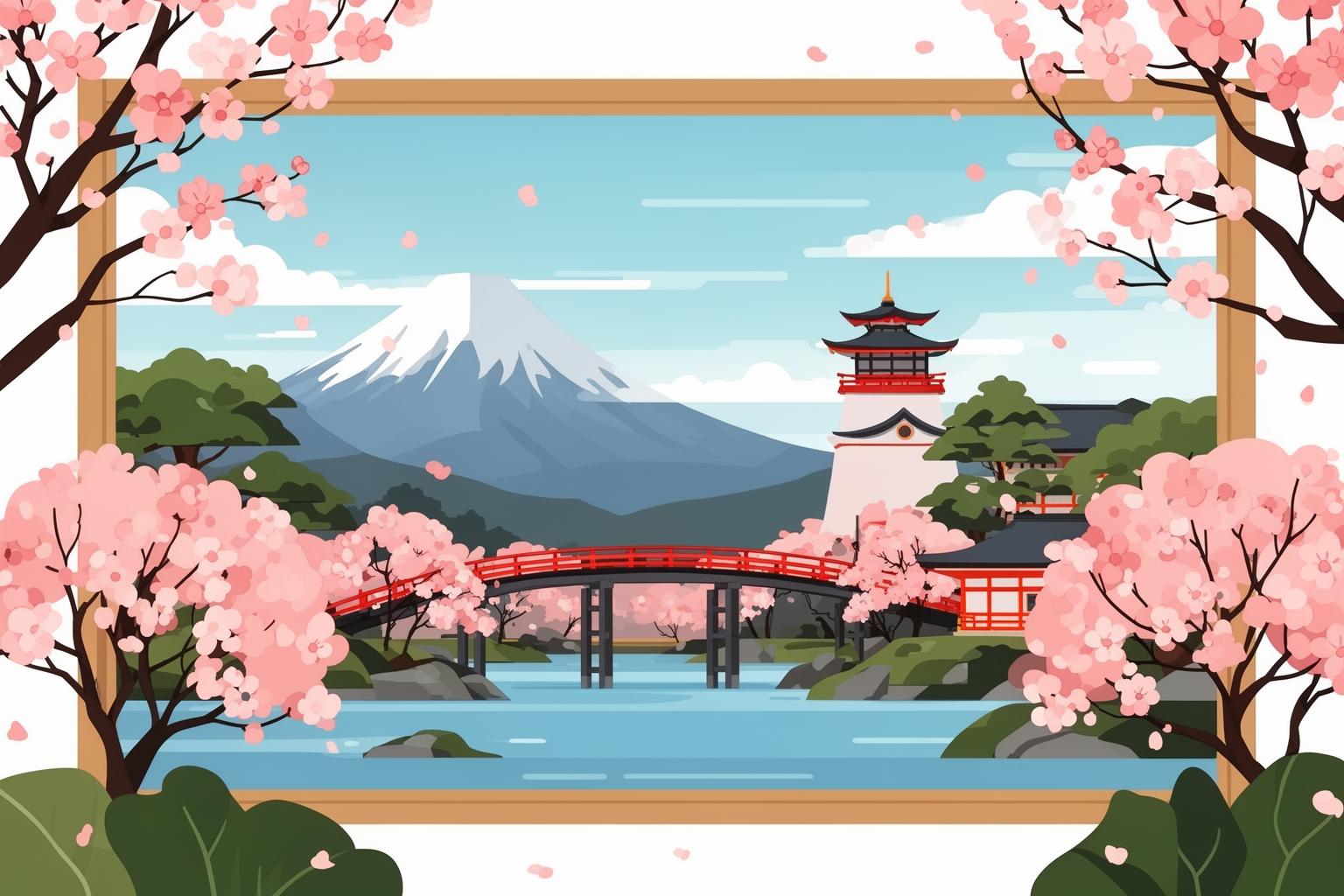
Shakkei is not a passive process. A beautiful view alone does not automatically create a borrowed scenery garden. The key lies in the active, deliberate framing that directs the viewer’s gaze and shapes reality. Garden designers are experts in visual manipulation, using a variety of architectural and natural elements to craft the ideal scene.
Perhaps the most powerful tool is the building itself. A window or open veranda in a temple or villa often serves not only as an opening for light and air but as a carefully calculated frame. This is known as madogoshi no e, literally a “picture through a window.” From a specific spot inside a room, frequently the seat of honor, the window frames the garden and its borrowed scenery as a living, breathing painting. The dark interior of the room makes the sunlit scene outside appear more vivid and focused, while the window’s structure—its shape, the frame material—becomes part of the composition.
Beyond the building, the garden’s own features are used for framing. A low, sweeping wall might be built at a precise height to conceal the visual clutter of a village in the middle distance while revealing the mountain peaks beyond. A thick hedge may have a strategically placed opening, called an “eye-stealing window” (manako-mado), offering a tantalizing, compressed glimpse of the distant scenery. Trees play a crucial role as well. Their trunks and branches can act as natural, organic frames. A designer might prune a pine tree over decades, shaping its branches to perfectly showcase a distant castle nestled between them. This approach is not about dominating nature but collaborating with it to curate a specific experience.
The principle of miegakure, or “hide and reveal,” is also fundamental to the experience. The full borrowed view is seldom shown all at once at the entrance. Instead, it unfolds gradually as you move through the garden. A winding path might lead you through a dense bamboo thicket, where the view is fully obscured, heightening your anticipation. Then, as you round a corner, the landscape opens up, revealing the full, breathtaking panorama from a carefully designed viewing pavilion. This sense of discovery—the view appearing and disappearing—makes the experience dynamic and memorable, transforming a static scene into a narrative that unfolds across time and space.
A Philosophy of Space: What Shakkei Says About Japanese Culture
The techniques of shakkei are captivating, but its real significance lies in what it uncovers about the underlying cultural mindset. It is much more than just an aesthetic choice; it represents a worldview embodied in soil, rock, and water.
At its essence, shakkei conveys a powerful message about the blurring of boundaries. In a Western context, gardens have often been regarded as fortresses against the wildness of nature—a space defined by imposed order, enclosed by high walls and sharp lines. The Japanese garden, through shakkei, proposes a different approach. It suggests that the divide between the human-made space (uchi, inside) and the natural world (soto, outside) is permeable and perhaps even illusory. Rather than shutting the world out, the garden invites it in. This reveals a profound belief in the continuity between humanity and nature, emphasizing that we are not separate from our environment but an inseparable part of it.
This fosters a sense of harmony and humility. The designer who borrows a mountain does not claim ownership of it. Instead, they acknowledge its superior power and beauty. The act of borrowing is one of respect. The garden becomes a modest platform from which to admire the grandeur of the surrounding landscape. This stands in sharp contrast to, for instance, the formal gardens of Versailles, where nature was bent entirely to a human-conceived, rational geometry, showcasing man’s dominion over the land. Shakkei celebrates collaboration, not conquest.
Moreover, the philosophy embraces the Buddhist notion of impermanence. The borrowed scenery is never fixed. Clouds drift across the sky, light shifts throughout the day, and the seasons change the colors of the distant hills. Consequently, a shakkei garden is never complete and never identical from one moment to the next. It is a living entity, a collaboration with time itself. By incorporating a dynamic, changing landscape, the garden serves as a constant reminder of the fleeting beauty of the world, reflecting the Japanese aesthetic principle known as mono no aware. The garden encourages viewers to be present, to savor the unique beauty of a particular moment, knowing it will never return in exactly the same way.
Lastly, shakkei harnesses the power of suggestion and imagination, much like traditional ink wash paintings or seventeen-syllable haikus. It does not spell everything out. By framing a part of a larger scene, it implies the existence of the broader world beyond the frame. The true, complete garden is not simply what the eye perceives; it is what the mind creates by linking the foreground to the distant background. The empty space holds as much significance as the visible elements. It allows the imagination to roam freely, making the experience deeply personal and endlessly intriguing.
Finding Shakkei in the Wild: Where to See It
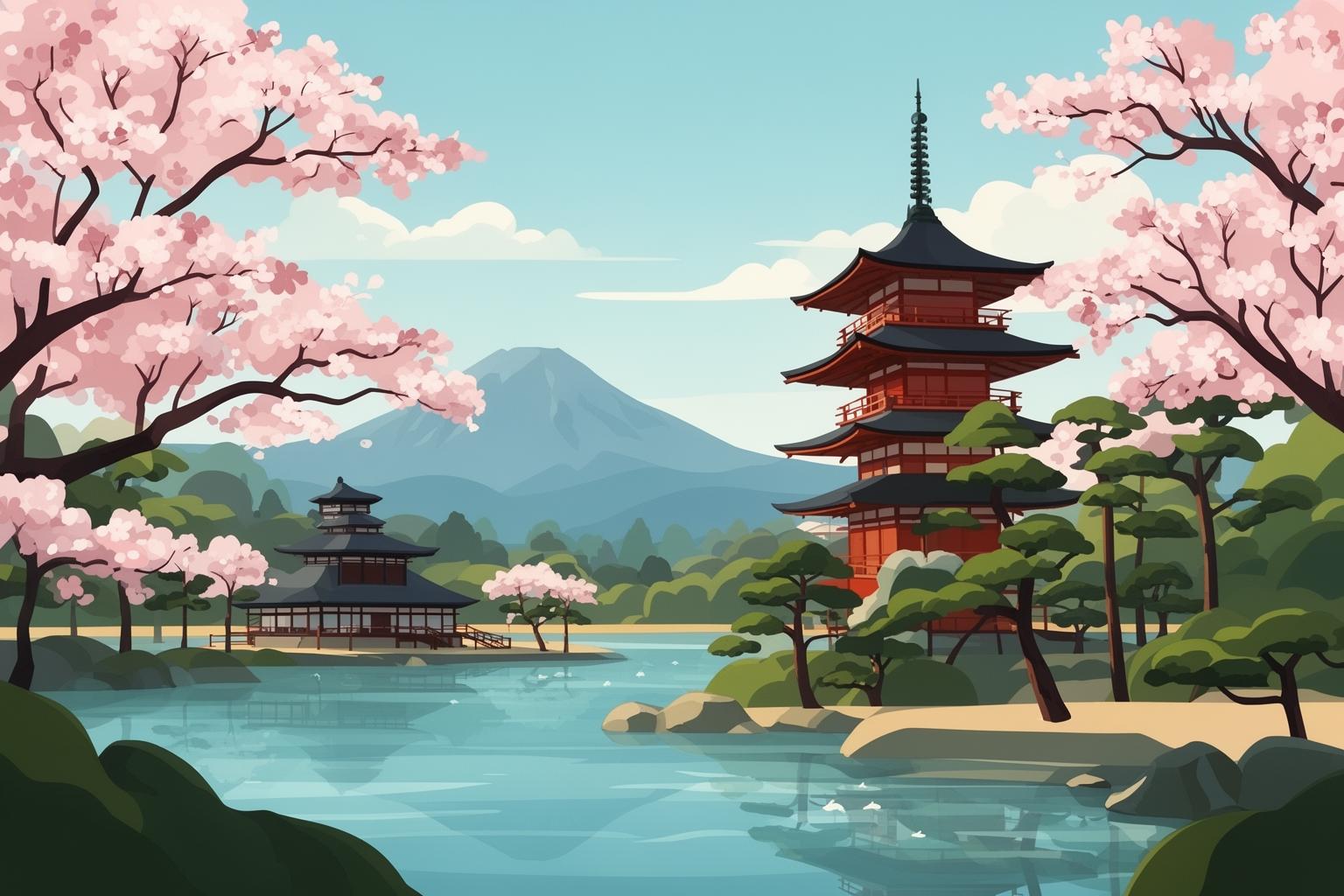
While this philosophy is evident in gardens throughout Japan, some examples are so expertly created that they have become definitive representations of the art. Experiencing shakkei in these places is to observe the concept realized with breathtaking perfection.
Shugakuin Imperial Villa, Kyoto: Frequently regarded as the apex of shakkei design, Shugakuin, constructed in the 17th century, is a masterpiece of landscape composition. Its upper garden boasts a large pond and a pavilion perched on a high point. From this viewpoint, the garden’s carefully trimmed hedges and islands serve as a foreground, perfectly framing the majestic form of Mount Hiei in the distance. The dam forming the pond is cleverly disguised as a modest bridge, and the surrounding trees are pruned to preserve the ideal line of sight. It is a magnificent, large-scale example of enshaku, or distant borrowing.
Tenryu-ji Temple, Kyoto: Situated in the picturesque Arashiyama district, the Sogenchi Teien (Sogen Pond Garden) at Tenryu-ji is among the oldest of its kind, with its original design dating to the 14th century. The garden is a harmonious blend of rocks and a central pond, yet its true brilliance lies in its seamless integration of the surrounding mountains, including Arashiyama and Kameyama. The forested slopes seem like a natural extension of the garden itself, their beauty mirrored in the still waters of the pond. This is a compelling example of how a garden can completely merge with its natural environment.
Adachi Museum of Art, Shimane Prefecture: Demonstrating that shakkei remains a living art, the gardens at the Adachi Museum are a contemporary marvel. Established in 1970, the museum is renowned for its modern Japanese art collection, but its gardens are arguably the main attraction. The museum’s founder, Adachi Zenko, believed the gardens were a form of living Japanese painting. Vast windows inside the museum serve as “living scrolls,” framing impeccably maintained gardens of white sand, moss, and pines. These gardens, in turn, borrow from the pristine natural mountains beyond. The boundary between the cultivated garden and the wild landscape is nearly imperceptible, creating a flawless, layered work of art that has been rated as Japan’s top garden for more than twenty years.
Visiting these sites reveals that shakkei is more than a technique; it is a whole way of seeing. It offers a quiet lesson in perspective, encouraging you to look beyond the immediate and appreciate the connections that link the small spaces we craft to the vast world we inhabit. It invites you to perceive the world not as separate, walled-off plots, but as a single, continuous landscape. Next time you find yourself in a beautiful place, pause and look beyond its edges. You might be surprised by what you can borrow.