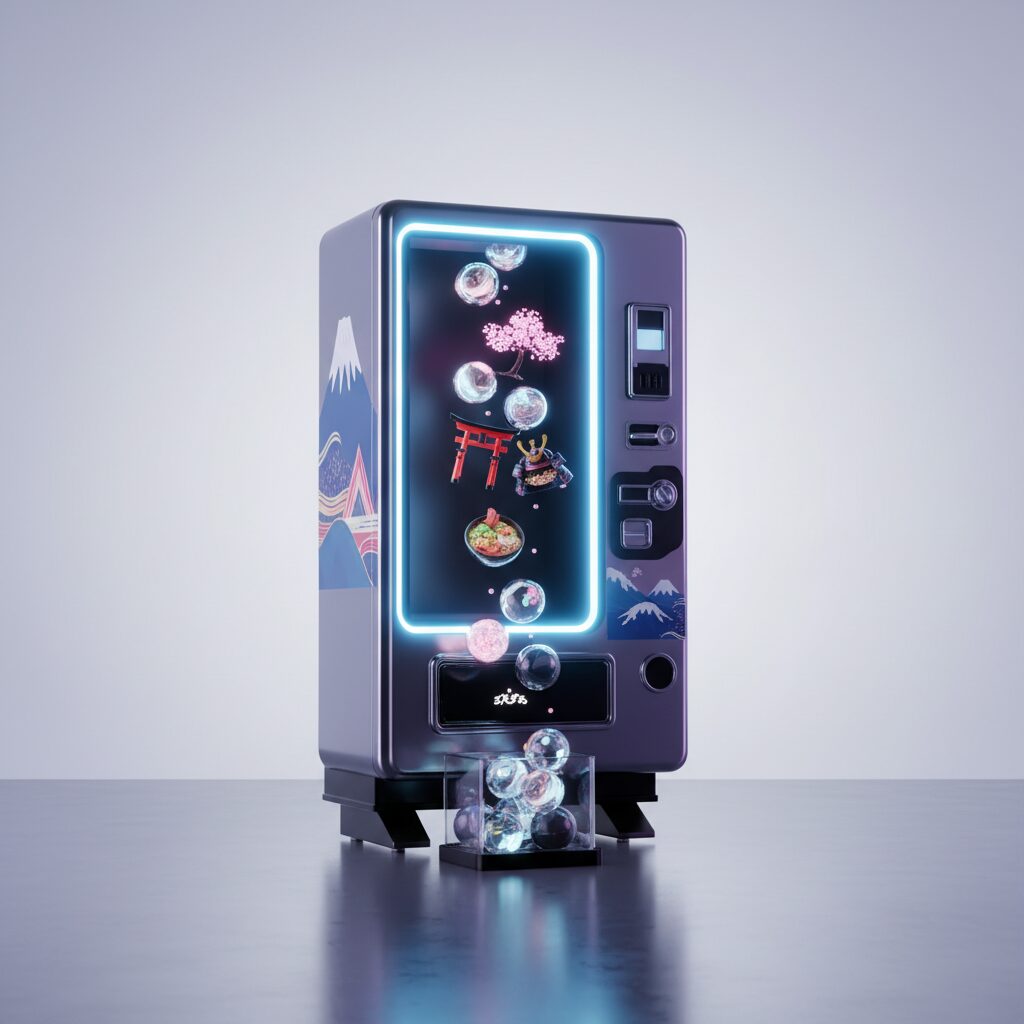
You asked me what single object encapsulates Japan for me, and I know you were probably expecting something like a temple gate, a perfectly sculpted bonsai, or maybe a bowl of ramen. Those are all valid, of course. But for me, the most honest answer is something far more mundane, yet infinitely more revealing: the vending machine. Specifically, the lone vending machine on a quiet street, humming away under the midnight sky. It stands there, a silent sentinel bathed in a soft, synthetic glow, offering up everything from hot coffee to cold beer with an unwavering, 24-hour reliability. In many other countries, this would be an invitation for vandalism, a smashed-glass relic within a week. In Japan, it’s just part of the furniture of the street, as unremarkable and as essential as a lamppost.
These machines, called jidōhanbaiki (自動販売機) or jihanki for short, are more than just convenient dispensers of drinks and snacks. They are a fundamental part of the country’s architecture, its social contract, and its very soul. They are cyberpunk made real, but stripped of the dystopia. They are glowing beacons of trust in a high-tech society, monuments to a culture of convenience that borders on the sublime. They tell you everything you need to know about Japan’s relationship with public space, safety, automation, and the quiet comfort of an impersonal transaction. Forget the tourist brochures for a moment. If you want to understand the rhythm of daily life in Japan, you need to understand the silent, luminous world of the jihanki.
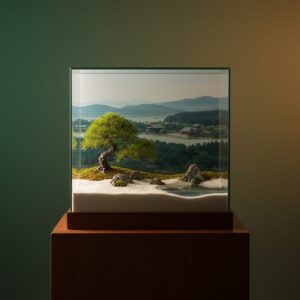
The vending machine’s quiet yet essential presence in Japan’s urban tapestry echoes the refined notion of shakkei, where traditional design seamlessly borrows nature into modern public spaces.
The Unblinking Network: A Machine for Every Occasion
Before you even start to explore the cultural significance, you must first contend with the sheer, overwhelming omnipresence of these machines. It’s no exaggeration to say they are everywhere. Statistics show that Japan ranks among the highest in the world for vending machine density, with approximately one vending machine for every thirty people. However, numbers alone don’t quite convey the full picture. It’s their placement that truly astonishes.
Naturally, you’ll find them concentrated in expected locations: train stations, office buildings, and tourist attractions. But that’s only the beginning. You’ll see them standing guard in the remote corners of residential cul-de-sacs, their lights piercing the darkness. You’ll spot them nestled against the walls of secluded Shinto shrines, offering cans of sweet red bean soup alongside traditional amulets. I’ve encountered them halfway up mountain trails, a startlingly modern convenience in the midst of ancient nature. I’ve seen them patiently waiting beside sprawling rice paddies, miles from the nearest town. They occupy the in-between spaces, forgotten nooks, and tiny plots of land too small for anything else. They form a nationwide, decentralized network of instant gratification.
A Cornucopia in a Can
The contents of these machines are a world unto themselves. Although most vend beverages, the range is staggering and reveals much about the Japanese palate and the country’s passion for seasonal variety. During summer, the machines dispense cold green teas, barley teas (mugicha), sports drinks, and a dozen coffee varieties, from sweet and milky to bold black espresso shots. These options are usually lit with blue lights.
Then, as autumn’s first chill sets in, something magical occurs. Overnight, parts of the machines transform. The blue lights shift to a warm, inviting red. These are the hot drinks. The very same coffee cans now come steaming hot, a small marvel of thermal technology that doubles as a vital hand-warmer during cold winter commutes. But it’s not just coffee. You can find hot royal milk tea, hot lemon tea, and even hot soups. A can of creamy corn potage, rich with actual corn kernels, may sound odd, but on a freezing January night it’s truly a blessing. This simple, seasonal switch from cold to hot perfectly captures Japan’s attentiveness to seasonal changes and its commitment to comfort.
Beyond beverages, the jihanki world expands into the delightfully unusual. Some machines serve hot food like french fries, takoyaki, and fried chicken, delivered in cardboard boxes after a minute of whirring and buzzing from built-in microwaves. Other machines offer dashi, the essential broth stock of Japanese cooking, in glass bottles. You can purchase fresh eggs, bags of rice, loaves of bread, and even local vegetables from farm-stand vending machines. In business districts, machines might sell neckties and dress shirts for salarymen who accidentally spilled coffee before an important meeting. Elsewhere, you’ll find umbrellas, toys, batteries, and even sake or draft beer, complete with a plastic cup filled from the bottom up. Each one serves as a solution to a potential problem, a tiny outpost of preparedness in a culture that prizes it above nearly all else.
The Social Contract: An Ecosystem of Trust
This entire system, this vast network of unattended cash boxes stocked with merchandise, depends on one simple yet powerful principle: trust. The exceptionally low crime and vandalism rates in Japan act as the invisible software enabling the hardware of the jihanki to operate smoothly. The notion of leaving a machine like this on a deserted street corner overnight is unimaginable in many parts of the world. Here, it is standard practice.
This is not due to some oppressive surveillance regime; although security cameras are present in cities, you can find machines standing untouched in rural areas miles away from any cameras. It stems from a deeply rooted social contract and a collective respect for public and private property. There is a shared understanding that this convenience benefits everyone, and to vandalize or steal from a machine would break this community trust and disrupt the greater social harmony. The idea of not causing trouble, meiwaku o kakenai, is a fundamental aspect of Japanese society, and the jihanki quietly benefits from it.
The Comfort of the Machine
There is also a subtler cultural logic at work. Japanese culture often values smooth, efficient, and low-friction interactions. While the service in any Japanese shop is known for being polite and meticulous, it also involves a certain level of social ritual—the greetings, the bowing, the exchange of formalities. The vending machine offers a different option: flawless service with no social obligation.
It is the ultimate silent servant. Always courteous, always accessible, it never judges your decision to buy a can of beer at seven in the morning. For those who may feel shy, pressed for time, or simply uninterested in human interaction, the vending machine provides a small refuge of effortless transaction. It meets a need quickly and anonymously. This does not imply that Japanese people are antisocial; rather, it recognizes that there are moments when the quiet efficiency of a machine is preferable. It offers a brief space of privacy in one of the world’s most densely populated countries. It’s a small bubble of personal space where you can obtain what you want without exchanging a single word.
This automation also fulfills a practical role in a country facing a shrinking workforce and an aging population. A vending machine can perform the role of a 24-hour convenience store in a low-traffic area with only a fraction of the labor cost. It ensures that even in remote or depopulated regions, essential services remain available around the clock. They represent a low-maintenance, highly efficient solution to an imminent demographic challenge.
Architecture of Convenience: Masters of In-Between Space
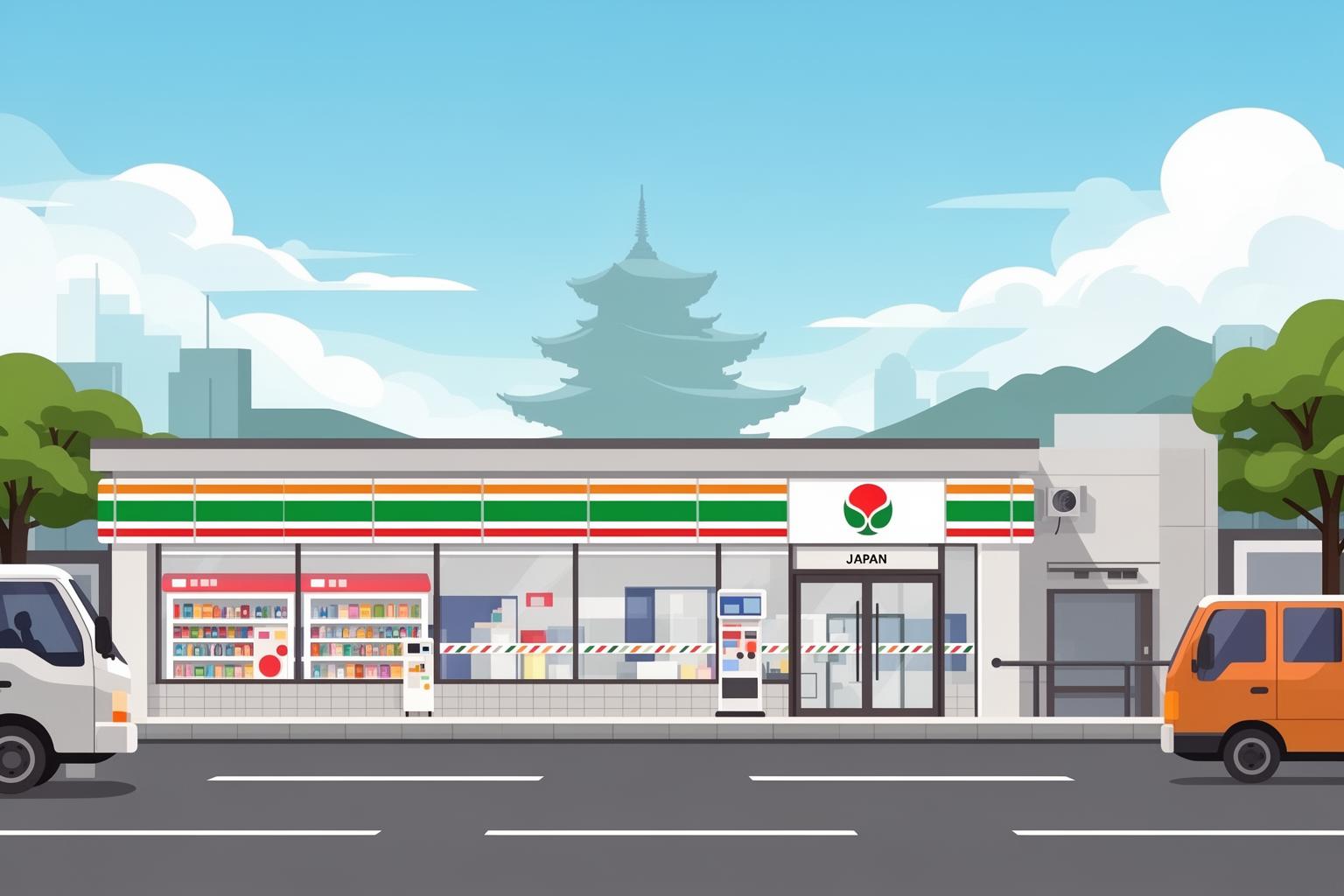
From an urban planning viewpoint, vending machines exemplify the Japanese art of using sukima (隙間)—the gaps, cracks, and leftover spaces within the city. In a country where land is precious and every inch is utilized, the jihanki thrives in places where nothing else fits. They are installed in impossibly narrow gaps between buildings, tucked into alcoves beneath staircases, and positioned along blank retaining walls. They turn dead space into hubs of activity and commerce.
Stroll through any residential area in Tokyo or Osaka, and you’ll witness this principle firsthand. A spot that might be a neglected, trash-filled alley elsewhere becomes, in Japan, a clean, well-lit row of vending machines. They bring light, purpose, and function to the city’s overlooked corners. This goes beyond efficiency; it reflects a mindset that recognizes potential in every space, no matter how small. The vending machine, perfectly sized and shaped, occupies these urban niches, turning them into essential elements of the streetscape’s circulatory system.
The Cyberpunk Glow
This leads us back to the concept of the cyberpunk sentinel. The aesthetic of iconic cyberpunk films like Blade Runner is defined by the contrast between advanced technology and urban decay, often lit by neon signs in a perpetually rain-slicked night. Japan’s vending machines embody this aesthetic in reality, but with an important distinction: the setting is not one of decay, but of meticulous order and safety.
The light from a vending machine does more than illuminate. On a dark street, it acts as a beacon, creating a small pool of safety—a landmark signaling that you’re not entirely alone. For someone walking home late at night, the familiar hum and glow of a jihanki can be deeply comforting. It’s a sign of life, of a system still running and serving, even when shops are closed and streets are empty. They are the city’s unblinking eyes, silently keeping watch.
This light changes the street’s atmosphere. A row of these machines can transform a dull concrete underpass into a lively corridor of light and color. Their combined glow pushes back the darkness, creating a feeling of care and security. They are a fundamental part of Japan’s nighttime landscape, as iconic as izakaya red lanterns or Shinjuku’s neon signs. They provide ambient light for the quiet, everyday moments of urban life.
The Economic Underpinnings
Certainly, this entire ecosystem also functions as a significant economic engine, operating efficiently due to several key factors. Japan continues to be largely a cash-based society. Although electronic payments are increasingly common, physical yen—particularly coins—still dominate many everyday transactions. The 100-yen and 500-yen coins serve as economic workhorses, and vending machines are perfectly designed to accept them. This dependence on physical currency ensures a steady, reliable stream of income for the machines without requiring complex credit card processing systems, even though many modern machines now accept IC cards like Suica and Pasmo.
The ownership model also plays a role in their widespread presence. While beverage giants such as Suntory, Coca-Cola, and Asahi operate extensive fleets of machines, private individuals and small business owners can also get involved. A landowner may lease a small portion of their property to a beverage company in exchange for a share of the profits and free electricity. Alternatively, they can purchase and operate their own machine, stocking it with products of their choice. This creates a decentralized form of passive income, encouraging people to find suitable locations for machines on their property. It’s a micro-business that is accessible, simple to maintain, and requires minimal space.
This model fosters continuous innovation. Companies compete not only through their beverage offerings but also via machine features. Today, you can find machines with large touchscreens, energy-saving eco-modes, and even “disaster response” functions. After an earthquake, some machines are programmed to dispense their contents for free, providing emergency hydration to the public. This represents an impressive blend of corporate interest and public good, creating a system that is both resilient and socially responsible.
More Than a Machine: A Cultural Touchstone
Ultimately, the Japanese vending machine goes beyond its basic function. It has become a cultural icon, a quiet presence in the lives of millions. It embodies a unique blend of technology, trust, and a deeply ingrained desire for convenience. It symbolizes a society that has, in many respects, perfected a particular kind of automated intimacy.
Buying a drink from a machine is a small, everyday ritual. It’s the salaryman grabbing a can of BOSS coffee to start his day. It’s the group of high school students hanging around after class, sharing a bottle of melon soda. It’s the elderly woman purchasing a bottle of water as she heads to the local temple. These moments are quiet and ordinary, yet they are intertwined with daily life, with the vending machine as the silent backdrop.
There is a strange warmth in these cold machines. The sensation of a heated can of coffee warming your hands on a chilly day is a simple but profound pleasure. The assurance that, regardless of where you are or what time it is, you can likely find a machine selling a drink provides a subtle, steady comfort. In a world that often feels unpredictable and chaotic, the jihanki stands as a small stronghold of absolute reliability.
They occupy street corners and quiet alleys, not as cold, impersonal machines, but as keepers of light. They are the quiet, ever-present, and distinctly Japanese guardians of the urban environment, offering little comforts, one coin at a time.