You probably don’t think much about your front door. It’s a functional object, a barrier against the elements and unwanted visitors. You might have a doormat for a cursory wipe of the shoes, maybe a small table for keys and mail. You step across the threshold, and you’re home. The transition is instantaneous, a simple matter of closing the door behind you. In Japan, however, that moment of entry is not a single, seamless action. It is a process, a ritual, and a profound statement about the separation of worlds. It all happens in a small, deceptively simple space called the `genkan`.
To a first-time visitor, the `genkan` might just look like a sunken entryway, a practical place to leave your shoes. But to understand this space is to grasp a fundamental principle of Japanese culture. It’s more than a mudroom; it’s an airlock between the public and the private, the outside and the inside, the ‘soiled’ and the ‘pure’. It is the physical manifestation of a deep-seated cultural concept that governs social interactions, relationships, and even language. Forgetting to take your shoes off here isn’t just a minor slip in etiquette, like wearing a hat at the dinner table. It’s a violation of a sacred boundary, akin to walking into a bedroom and climbing into bed with your muddy boots still on. The `genkan` is where the outside world, with all its grime, chaos, and social obligations, is ceremoniously shed before one can enter the inner sanctuary of the home. This small architectural feature is, in fact, one of the most eloquent expressions of the Japanese worldview you will ever encounter.
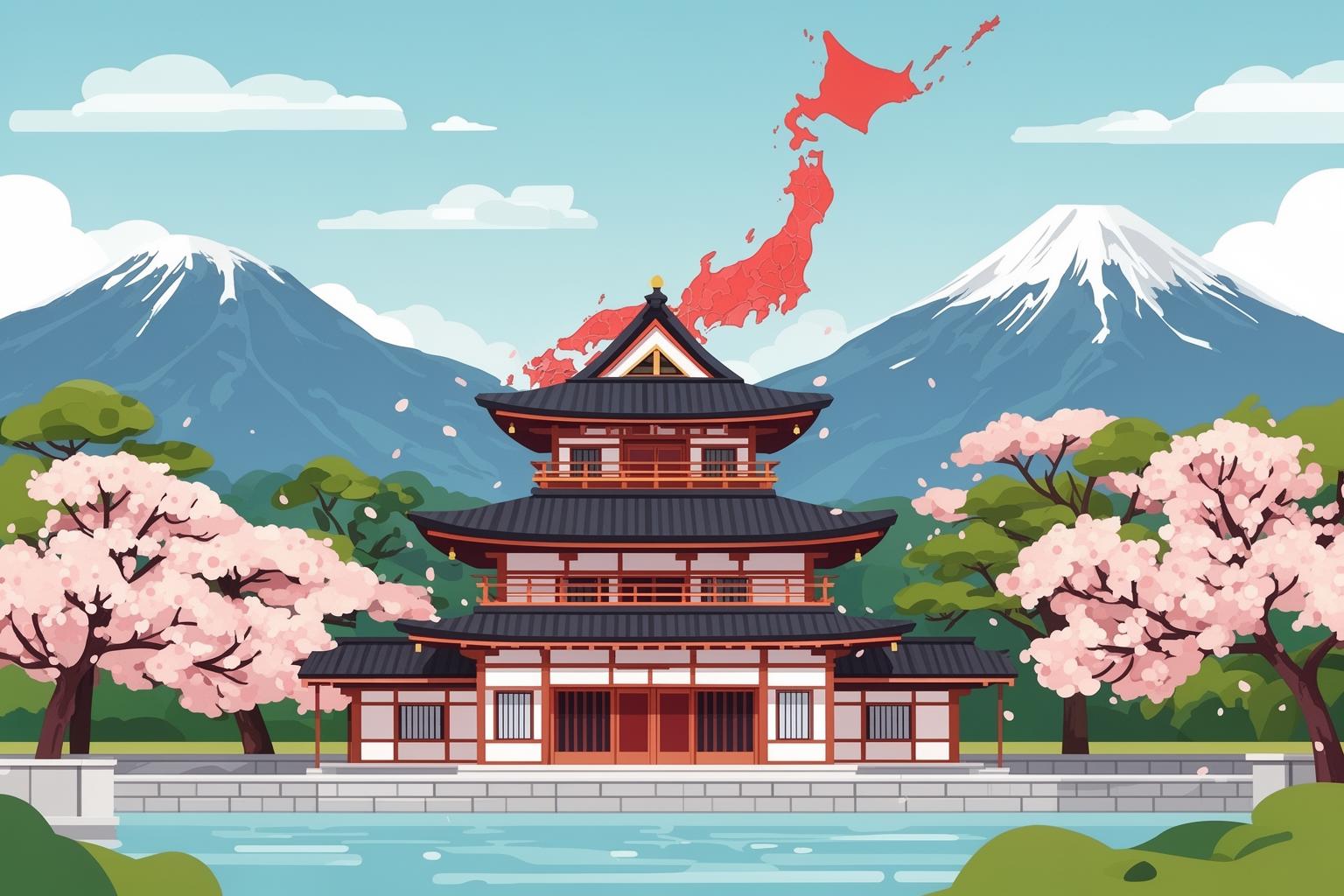
This curated transition between the inner sanctum of the home and the world beyond echoes the broader cultural shift witnessed in Japan’s rural traditions, as illustrated by the revitalized Satoyama landscape, where nature and heritage intertwine.
The Anatomy of a Threshold
To grasp the cultural significance of the `genkan`, you first need to understand its physical structure. It’s more than just an empty space near the door; it possesses a distinct and consistent layout, whether in a traditional Kyoto home or a compact Tokyo apartment. Here, design serves function.
Doma: The Ground Floor
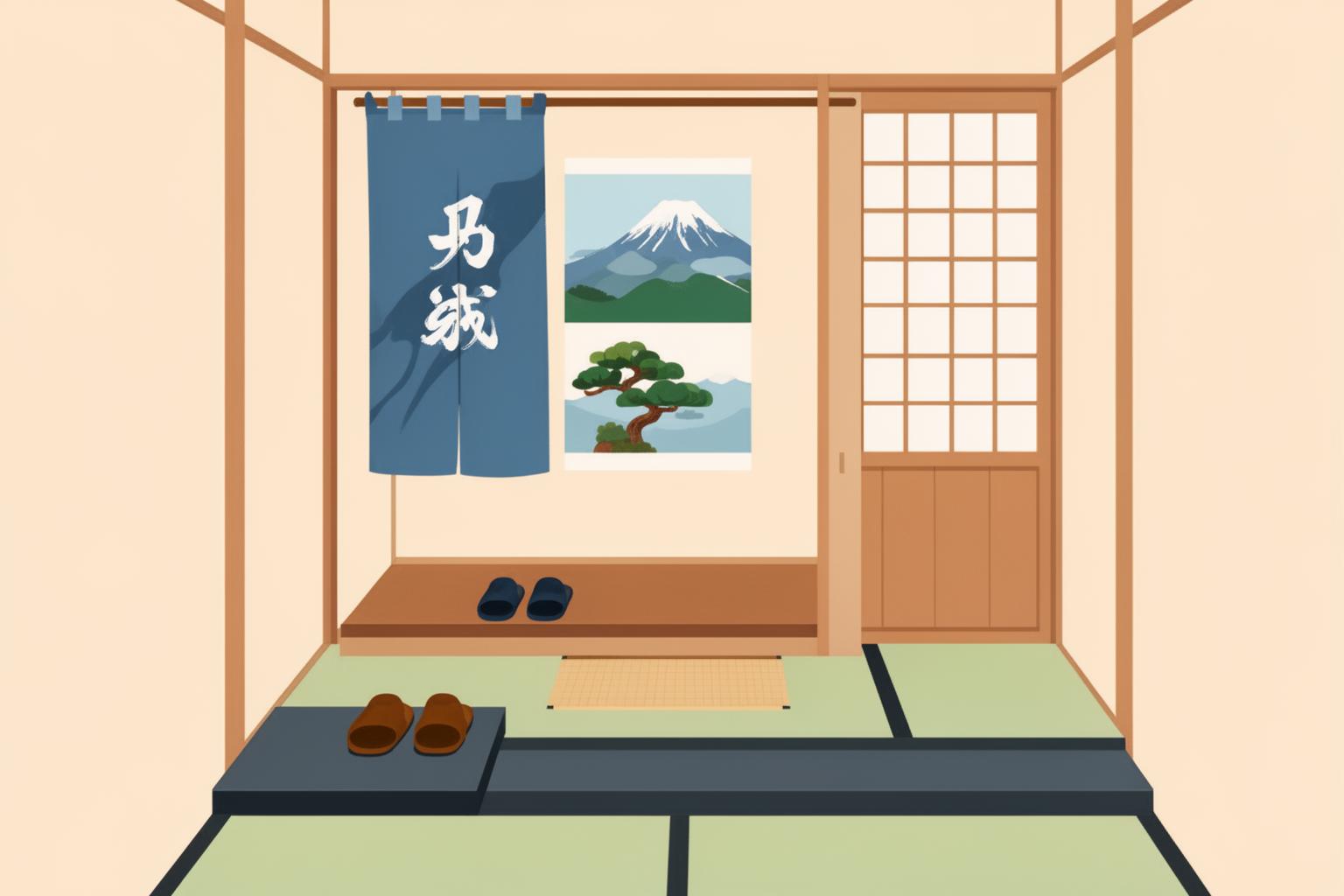
The first area you enter, right inside the front door, is the `doma` (土間). The characters translate to ‘earth space’ or ‘dirt room.’ This is the lowest part of the entryway. In historic farmhouses, this earthen floor space was where messy tasks—such as storing tools, chopping vegetables, or cooking on a clay stove—were done. It was a semi-outdoor area covered by a roof. Nowadays, the `doma` is typically finished with tile, stone, or concrete, but its role remains unchanged: it functions both practically and symbolically as part of the outdoors. This is where you remove your shoes. Feet wearing street-worn footwear should only touch this surface. It serves as neutral ground, a buffer zone between the outside world and the private interior.
Agarikamachi: The Crucial Step
The most significant element of the `genkan` is the `agarikamachi` (上がり框), the raised step that borders the `doma`. It represents a literal and symbolic boundary. Often carved from a single polished wood piece, it marks the edge of the home’s main floor. Crossing it means officially entering the inner sanctum, the `uchi` (inside). Stepping up onto the `agarikamachi` in socks or bare feet is the climax of the entry ritual. It physically embodies a psychological shift—you leave the `soto` (outside) behind. Though only a few inches high, this step creates a profound symbolic divide. It is a boundary that commands respect. The worst transgression in the `genkan` is letting the soles of your outdoor shoes touch this raised floor. Such contact is a physical contamination that symbolizes a deeper social violation—blurring the sacred divide between inside and outside.
Getabako: The Shoe Sanctuary
Opposite the `doma` is almost always a `getabako` (下駄箱), or shoe cupboard. The name dates back to when `geta` (traditional wooden clogs) were commonly worn. This is more than just storage—it’s a vital part of the ritual. Shoes aren’t left scattered on the `doma`; they are placed inside the `getabako`, out of sight. This act of enclosing them reinforces their outsider status. They are contained and disconnected from the external world before you proceed further inside. In smaller apartments, the `getabako` may be a modest cabinet, while in larger homes, it can be an elaborate piece of furniture, sometimes topped with flowers or artwork—a first welcoming gesture to guests who have completed the entry ritual.
The Ritual of Transition
The physical design of the `genkan` is intended to support a specific set of actions. This ritual is learned from childhood and performed almost instinctively, a daily dance of transition that reinforces cultural values. It’s a series of movements that, once understood, unveils a world of social significance.
The Art of Shoe Removal
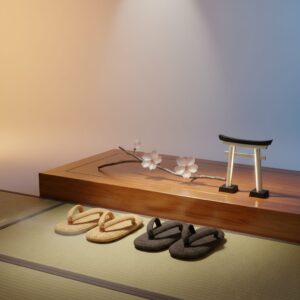
When entering a Japanese home, you don’t just kick off your shoes. There is a graceful and respectful manner to doing so. After opening the door, you step into the `doma`. You slip off your shoes while facing forward, toward the house. Then, you step up onto the `agarikamachi`, being careful not to let your socks or bare feet touch the lower `doma`. Once safely on the upper level, you turn around to face the door. You then crouch to arrange your shoes neatly together, toes pointing outward toward the door. This is not simply about tidiness. It’s a gesture of consideration. It prepares the shoes for a smooth exit later and shows respect for the home by not presenting the soiled soles of your shoes to its interior. A thoughtful host may even turn a guest’s shoes for them as a sign of welcome—a subtle yet meaningful act of hospitality.
The Slippers Protocol
As soon as you step up, you will almost always be offered a pair of slippers (`surippa`). These are the designated indoor footwear. By removing your own shoes and putting on the slippers provided by the host, you complete the transition. You leave your outside self behind and accept the uniform of the inside world. This is not optional. Walking around a Japanese home in socks is sometimes acceptable, especially on tatami mats where slippers are not allowed, but generally, it is expected you wear the provided slippers. This leads to another fascinating aspect of the ritual: the toilet slippers. Many homes have a separate pair of slippers waiting just inside the bathroom door. You are expected to switch from your house slippers into the toilet slippers, and crucially, to switch back when leaving. Accidentally wearing toilet slippers back out into the hallway is a common and slightly embarrassing mistake for foreigners. This practice highlights the deep commitment to separating spaces according to purity and function. The bathroom is considered an ‘unclean’ area, so its footwear must not contaminate the rest of the home.
The Boundary for Business
Not everyone who comes to the door is invited to cross the `agarikamachi`. The `genkan`, especially the `doma`, serves as an ideal space for brief, transactional interactions. A delivery driver dropping off a package, a mail carrier needing a signature, or a neighbor stopping by for a quick visit will conduct their business entirely within the `doma`. They are not invited to step up. This allows for a polite and efficient interaction without crossing into the private space of the home. The homeowner may step down into the `doma` to meet them, temporarily entering the ‘neutral zone’ before retreating back into the safety of the `uchi` space. In this way, the `genkan` acts as a social filter, marking the nature of a visit by how far into the space someone is allowed to enter.
Uchi-Soto: A Philosophy Made Physical
To fully grasp the significance of the `genkan`, we must look beyond architecture and etiquette and delve into social psychology. The `genkan` serves as the most potent physical symbol of the Japanese concept of `uchi-soto` (内 Soto 外), meaning ‘inside/outside’. This concept is crucial for understanding Japanese society.
Defining the Worlds
`Uchi` (内) signifies the ‘inside’ world, encompassing your home, family, close coworkers, or any group you belong to. Within the `uchi` circle, communication tends to be more relaxed, informal, and direct. You can express your true feelings (`honne`). It is a realm of comfort, trust, and shared identity—it is your refuge.
`Soto` (外) represents the ‘outside’ world, including everyone and everything beyond: strangers, people from other companies, and society at large. In `soto` interactions, behavior is more formal, reserved, and polite. You display a public persona (`tatemae`), a carefully crafted version of yourself designed to maintain smooth and harmonious relations. The `soto` world prioritizes social duties and strict hierarchies.
The Genkan as the Airlock
Daily life in Japan involves continuous negotiation and transition between these two worlds. The `genkan` acts as the main gateway for this shift. Removing your shoes in the `doma` is not merely about footwear; it symbolizes shedding your `soto` identity. You leave behind the pressures, pretenses, and formalities of the outside world. Stepping up onto the `agarikamachi` marks your entrance into your `uchi` identity, a space where you can be more authentic. This daily practice reinforces the mental and emotional divide between these two spheres. This is why being invited beyond someone’s `genkan` into their home is such a meaningful gesture, signifying acceptance into their `uchi` world and a deep level of trust and friendship that surpasses casual acquaintance.
This also explains why the home is viewed as an intensely private space in Japan. Unlike some Western cultures where casual house parties are common, inviting someone into one’s home is a far more intentional and significant act. The `genkan` silently guards that privacy, preserving the absolute boundary between the hectic outer world and the tranquil inner world.
Historical Roots: From Farmhouses to High-Rises
The `genkan` is not a recent invention. Its shape and purpose are firmly rooted in the history of Japanese architecture, evolving over centuries while maintaining its fundamental symbolic significance. Its continued presence, even in the most contemporary architectural designs, highlights its cultural indispensability.
From Practicality to Formality
As noted, its origin can be traced back to the `doma` of traditional farmhouses (`minka`). This was a purely functional area with an earthen floor that served as a transition zone between the muddy fields outside and the clean, elevated wooden floors where the family lived and rested. It functioned as a workshop, a kitchen, and an entrance all in one.
During the Edo period (1603-1868), as society grew more hierarchical, the `genkan` began to assume a more formal, social role, especially in samurai and wealthy merchant homes. The entryway became a place to welcome guests of different social standings. The size, materials, and detail of the `genkan` turned into a powerful status symbol. A grand `genkan`, featuring a wide, beautifully grained `agarikamachi` and elaborate woodwork, communicated the wealth and prominence of the household. It was the first impression, the stage for presenting the family’s social status.
Modern Persistence
What is truly remarkable is how this feature has persisted. Following the Meiji Restoration and throughout Japan’s rapid industrialization and modernization in the 20th century, architectural styles shifted drastically. Wood and paper gave way to concrete and steel. Yet, the `genkan` remained. Step into any modern `manshon` (condominium) in a Tokyo skyscraper, and you will find it. The front door opens not into a hallway but onto a small, sunken `doma`, typically tiled or made of durable laminate, with a distinct step up to the main living area. It may be just a square meter of space, and the raised step only a few centimeters high, but it is always present. Though the materials have changed, the principle remains uncompromised. This steadfast presence shows that the `genkan` is not merely a stylistic relic. It serves a profound and lasting cultural need for a clear, physical boundary between the public and private realms. It is as vital to the Japanese idea of ‘home’ as the kitchen or bathroom.
Beyond the Home: The Genkan Principle in Society
Once you learn to recognize the `genkan` principle, you begin to notice it everywhere. The idea of shedding the outside world before entering an interior space is not limited to residential buildings. It’s a pattern that recurs throughout many aspects of Japanese life.
Schools and Workplaces
In any Japanese school, from kindergarten through high school, the first thing you’ll encounter upon entering is a large wall of `getabako`. Students arrive, open their assigned shoe locker, remove their street shoes, and put on their `uwabaki`—simple, soft indoor shoes often color-coded by grade level. This not only serves the practical purpose of keeping the school buildings exceptionally clean but, more importantly, marks the school as a distinct `uchi` space. By changing their shoes, students transition into their role as members of the school community. Teachers participate in the same ritual. This practice reinforces the concept that the school is a special, controlled environment, separate from the world outside its gates.
While most modern corporate offices have eliminated this custom, it is still maintained in many traditional companies as well as hospitals, clinics, and government buildings, where you will be expected to remove your shoes and wear communal slippers.
Temples, Shrines, and Restaurants
When visiting a temple or shrine, you are almost always required to remove your shoes before entering the main hall or any building with tatami mats. This act serves as a gesture of respect and purification, marking your passage from the profane, everyday world onto sacred ground. Similarly, many traditional restaurants—especially those featuring tatami mat seating (`zashiki`)—ask guests to leave their shoes in a `getabako` at the entrance. This practice protects the delicate tatami and helps create a more relaxed, intimate, and home-like dining atmosphere. It signals a transition from a formal public outing to a more comfortable, `uchi`-like experience.
A Step into Understanding
The `genkan` is much more than just a vestibule. It serves as a stage for a daily ritual, a physical boundary between worlds, and a constant, quiet reminder of a core cultural philosophy. It guides social behavior, shapes relationships, and maintains a sense of order and purity that holds deep significance in Japan. Architecturally, it embodies the idea that home is not merely a place, but a state of being—one that must be protected, respected, and approached with intention.
To an outsider, the rules may appear complex or overly meticulous. Why the different slippers? Why the specific arrangement of shoes? However, every action has a purpose, rooted in the desire to preserve the important distinction between the `soto` world of public life and the `uchi` world of private sanctuary. Understanding the `genkan` is the first essential step in crossing the threshold into a deeper appreciation of Japan itself. It is a small space that contains a whole world of meaning, demonstrating that sometimes, the most profound cultural lessons are found right at the front door.