Ask most people to picture Japan, and their mind probably jumps to one of two extremes. On one end, you have the Blade Runner-esque cityscape: Tokyo or Osaka, a dense vertical forest of concrete and glass, pulsating with neon and crisscrossed by impossibly punctual trains. On the other, the serene, untouched wilderness: misty mountains shrouded in ancient cedar, volcanic peaks capped with snow, a vision of pure, sublime nature. Both of these images are true, of course. But they miss the landscape where, for centuries, most of Japanese life actually happened. They miss the middle ground.
This middle ground has a name: satoyama (里山). The word itself is a simple, elegant map. Sato (里) means village, a place of human settlement. Yama (山) means mountain or hill. Satoyama is the landscape where the two meet—the foothills, managed woodlands, and agricultural mosaics that surround rural communities. It’s not pristine wilderness, left to its own devices. Nor is it a purely man-made artifice like a city. Satoyama is a third thing, a semi-natural environment shaped by generations of human hands, a place of deep, symbiotic relationship between people and the land.
For most of Japan’s history, this was the engine of rural life. It provided firewood, charcoal, food, fertilizer, and building materials. In return, human activity—coppicing trees, clearing undergrowth, maintaining paddies—created a unique patchwork of habitats that supported a staggering level of biodiversity. But in the whirlwind of post-war modernization, as cities swelled and lifestyles changed, the satoyama was largely forgotten. The connection was severed. The woodlands grew dark and tangled, the paddies were abandoned, and a way of life faded into memory, becoming the stuff of nostalgic anime and historical dramas.
Yet, something remarkable is happening. Across the country, a quiet but determined movement is underway to bring these landscapes, and the wisdom they hold, back to life. It’s a “Satoyama Renaissance,” a rediscovery of this vital middle space. In an age of climate change, food insecurity, and urban alienation, a growing number of Japanese people are looking to these managed forests and fields not as relics of the past, but as a potential blueprint for a more sustainable and meaningful future. This is the story of how Japan is remembering its own backyard, and what it’s finding there.
This resurgence of rural life not only revives cherished ecosystems but also echoes historical spatial concepts, as seen in the subtle design of the engawa, where traditional boundaries between inside and out gracefully meld together.
What Exactly is Satoyama? The Ecology of Coexistence
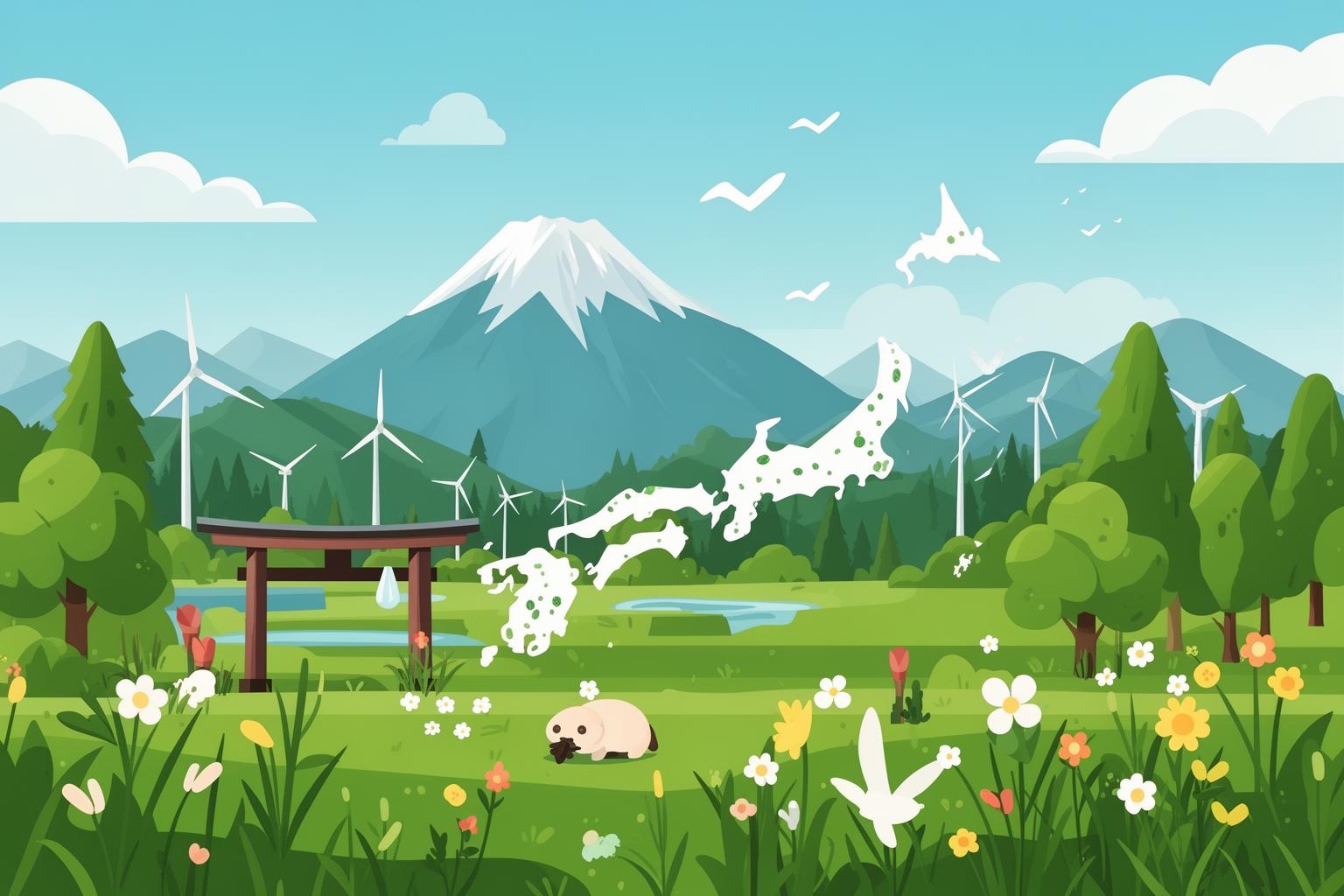
To understand the renaissance, you first need to grasp what is being revived. It’s easy to see a satoyama landscape—a gentle hill dotted with trees, a cluster of farmhouses, and terraced rice paddies climbing a valley—and think only of a quaint, pastoral scene. A charming view. But that completely misses the point. A traditional satoyama is not mere scenery; it is a highly functional, intricately interconnected working system.
Beyond a Pretty View: A Working Landscape
Consider the satoyama as a living pantry and tool shed for a village. Every element served a purpose, woven into the cyclical rhythm of the seasons. The woodlands nearest the village were often coppiced forests. Trees such as oak and chestnut were regularly cut back to their stumps, perhaps every 15 to 20 years. This wasn’t destructive; rather, this regular cutting encouraged vigorous regrowth, producing a sustainable supply of straight, uniform poles ideal for firewood and, more importantly, for making charcoal (sumi), the primary fuel for cooking and heating for centuries. This practice also allowed sunlight to reach the forest floor, fostering a rich understory of plants.
A little further out, bamboo groves provided another essential resource. The fast-growing culms were harvested for everything from building materials and agricultural tools to intricate crafts and edible bamboo shoots in spring. Then there were the grasslands, maintained by regular cutting, which supplied fodder for livestock and thatch for roofing traditional houses (kayabuki). Fallen leaves and green matter from the forest floor were carefully gathered to create compost (taihi), the natural fertilizer enriching the rice paddies below.
The rice paddies themselves, often striking terraced fields (tanada), were the system’s heart. Their intricate irrigation channels drew water that flowed from the satoyama forest, which acted like a natural sponge, absorbing rainfall and releasing it slowly and cleanly. This water management system often included man-made ponds (tameike) serving as reservoirs, ensuring a steady water supply for crops and creating crucial wetland habitats. The whole system was a closed loop: the forest nourished the paddies, the paddies sustained the people, and the people cared for the forest. It was a masterpiece of sustainable agriculture, perfected long before the term existed.
A Mosaic of Life
The most profound outcome of this ongoing human engagement was biodiversity. We often assume that the best way to preserve nature is to leave it untouched, as pristine wilderness. But the satoyama tells a different story. The very act of management—regular cutting, clearing, and harvesting—created a dynamic mosaic of diverse habitats in close proximity. There were young, sunlit coppiced forests, older shaded woods, open grasslands, bamboo groves, wetlands beside the paddies, and streams and ponds.
This patchwork of environments supported a far greater variety of life than a uniform, single-canopy forest or a modern monoculture farm ever could. Different species flourished in different parts of the mosaic. The sunny clearings hosted flowering plants that attracted countless insects, which in turn fed birds. The forest floor, bathed in sunlight, yielded a seasonal bounty of edible wild vegetables (sansai) and mushrooms. The clean water of streams and ponds sheltered fish, frogs, and fireflies—their faint glow a hallmark of summer evenings in the Japanese countryside.
This landscape was essentially a living calendar. The blooming of particular flowers signaled planting time. The call of a specific bird marked a seasonal shift. The satoyama was not just a workspace; it was the foundation of Japanese cultural sensitivity to nature’s subtle changes, an appreciation reflected in the nation’s art, literature, and cuisine. It was a landscape where human culture and natural ecology were not opposed but deeply and inseparably intertwined.
The Long Decline: How Japan Forgot Its Backyard
For a system so elegantly crafted and so integral to Japanese life, its decline occurred remarkably swiftly. The complex bond between people and the satoyama, honed over centuries, started to unravel in the mid-20th century. The narrative of its deterioration mirrors Japan’s post-war transformation—a story of new energy sources, shifting priorities, and a mass migration that emptied rural areas.
The Post-War Economic Miracle and the Fuel Revolution
The driving force behind this change was the “fuel revolution.” Following World War II, Japan entered an era of extraordinary economic growth. This brought widespread access to inexpensive and convenient fossil fuels. Kerosene, propane gas, and electricity reached homes even in remote areas. Suddenly, the arduous task of gathering firewood and producing charcoal was rendered unnecessary. The main economic incentive for managing satoyama woodlands vanished almost overnight.
At the same time, agriculture was undergoing a profound shift. The government encouraged modernization to secure food supply. Chemical fertilizers replaced the need for compost harvested from the forest floor. Concrete irrigation channels improved efficiency but disrupted natural water flow and destroyed habitats. Large machinery was introduced, effective on flat lands but unsuitable for the small, terraced paddies of satoyama terrain. Additionally, the opening of global markets flooded Japan with cheap imported timber, devastating the domestic forestry sector. It became more cost-effective to purchase wood from abroad than to maintain local forests.
The economic rationale that had upheld the satoyama for generations was completely reversed. What had once been a precious resource turned into an economically burdensome liability.
The Demographic Drain
Even more impactful than economic changes was a profound social shift. The post-war economic boom centered around cities. Factories and corporations offered jobs, higher education, and the allure of a modern, dynamic life. For young people in rural villages, the decision was clear. They left en masse for Tokyo, Osaka, and Nagoya, abandoning their elderly parents and grandparents.
This mass departure drained the countryside of its youth and workforce. Satoyama management is labor-intensive, requiring a community of able-bodied individuals to perform seasonal tasks like cutting, clearing, and planting. As villages emptied and aged, there was simply no one left to maintain the work. The cyclical system of care and harvest came to a stop.
The effects were evident on the landscape itself. Once-managed coppiced woodlands were abandoned to grow wild. Without regular cutting, they became dark, dense, and overgrown, with a tangled understory that suppressed diverse forest floor plants. Invasive bamboo, no longer harvested, spread rapidly, overwhelming native forests. Stone-walled terraced rice paddies crumbled from neglect. Ponds filled with silt. Paths vanished. The landscape, once a vibrant mosaic, turned into a monotonous, neglected thicket. This condition of abandonment and decay is known in Japanese as kouhai (荒廃). The living system began to fail.
The Renaissance: Rediscovering the Value of the Middle Landscape
For decades, the satoyama was neglected, regarded primarily as a symbol of an outdated, declining Japan. However, beginning in the 1980s and gaining momentum through the 90s and 2000s, a new awareness started to take shape. A diverse group of people began to view these abandoned landscapes not as signs of decay, but as opportunities. The Satoyama Renaissance emerged not from a single government mandate, but from a grassroots movement, with various groups rediscovering the value of this intermediate landscape for their own unique reasons.
An Awakening: From Neglect to Necessity
The initial impetus came from conservationists and ecologists. For a long time, the dominant belief in environmental circles was that nature should remain untouched. Yet, in Japan, scientists recognized that this approach was ineffective. Species once common in rural areas were vanishing. They came to understand that the biodiversity they aimed to preserve was not the result of untouched wilderness, but rather the product of traditional human interaction with the satoyama. To protect these species, it was not enough to simply fence off the forest; the human-nature relationship had to be actively restored, which meant resuming practices like tree cutting.
This concept gained formal recognition. The Ministry of the Environment began acknowledging satoyama as vital reservoirs of biodiversity and cultural heritage. The idea was prominently presented on the international stage, particularly when Japan hosted the 10th Conference of the Parties to the Convention on Biological Diversity (COP10) in Nagoya in 2010. The “Satoyama Initiative” was introduced as a global effort to promote and support similarly managed sustainable landscapes. What had once been viewed as a domestic, nostalgic concern was reframed as a worldwide example of sustainable living.
New People, New Purpose: The Modern Satoyama Steward
The key question, however, was who would take on the work? The original caretakers had largely disappeared. The answer came from an unexpected and diverse group of individuals.
Urban residents, weary of city life and yearning for a closer bond with nature, began forming volunteer groups. On weekends, they traveled to rural areas to engage in conservation activities—clearing underbrush, planting trees, repairing paddy walls. For them, it was a form of leisure, education, and a means to contribute to something concrete.
Corporations, aiming to meet their Corporate Social Responsibility (CSR) goals, started “adopting” forests. They funded conservation initiatives and encouraged employees to participate in volunteer events, viewing it as a way to promote environmental values and foster team building.
Then there are the migrants. A growing number of people, disillusioned with the stressful, anonymous life in large cities, began making “I-turns” (moving from their city of origin to a new rural area) or “U-turns” (returning to their rural hometown). These newcomers, often in their 30s and 40s, bring new energy, skills, and perspectives to depopulated villages. Their return is not driven by necessity but by a choice of lifestyle, often centered around small-scale organic farming, craft production, or operating cafes and guesthouses.
These new stewards are not simply replicating the past. Equipped with modern tools, scientific knowledge, and innovative ideas, they are creating a hybrid approach that honors tradition while adapting to contemporary realities.
Satoyama Capitalism: Can Tradition be Profitable?
For this renaissance to extend beyond a weekend pastime, it must be economically sustainable. This has led to the development of what some call “Satoyama Capitalism”—a new economic model that uncovers modern value in traditional resources and practices.
This model does not focus on mass production but rather on high-value, niche products and experiences. Ecotourism plays a significant role. Visitors pay for guided nature walks, workshops on traditional crafts such as indigo dyeing or charcoal making, and farm-stay experiences where they can help plant or harvest rice. The narrative behind the landscape becomes part of its allure.
Artisanal food production is another important aspect. The unique, chemical-free environment of a restored satoyama is ideal for cultivating premium organic rice, vegetables, and fruits. These products are sold at higher prices to discerning urban consumers. Local brewers produce distinctive sake using rice grown in specified restored terraced paddies. Wild berries and fruits from the forest are transformed into gourmet jams and cordials.
Even traditional products are being reinvented. High-quality charcoal, once considered a humble fuel, is now prized by upscale restaurants for grilling. Bamboo is being utilized not only for crafts but also as a source of biomass energy. Innovators are discovering ways to turn the riches of the satoyama into viable businesses that support modern livelihoods, demonstrating that ecological restoration and economic activity can coexist successfully.
The Satoyama in the Modern Japanese Mind
The revival of the satoyama is more than an ecological or economic initiative; it resonates deeply within the modern Japanese psyche. It reflects a collective yearning for a sense of place and connection amid a hyper-modernized world.
A Nostalgic Ideal
For the majority of Japanese city dwellers, the satoyama exists as a powerful, almost mythical ideal. It embodies the landscape of furusato (ふるさと), a word that translates to “hometown” but carries a profound emotional resonance, evoking a nostalgic sense of one’s roots and a simpler, warmer past. It’s the idyllic, sunlit world portrayed in the beloved Studio Ghibli film My Neighbor Totoro. The film’s setting—with its camphor tree spirit, lush forests, and rice paddies tended by a close-knit community—perfectly captures the idealized satoyama.
This cultural image holds immense power. It represents a Japan before the frenetic pace of the economic miracle—a place where life moved slower, communities were stronger, and the bond between humans and the spirits of nature remained intact. The satoyama renaissance is, in part, an effort to rediscover or recreate that feeling in reality. It is a search for the Japan of Totoro.
Challenges and Realities: Not Just a Ghibli Film
Naturally, the reality is far more complex and difficult than an animated film. The renaissance is not a magical, sweeping fix for rural Japan’s problems. It is a slow, challenging, and often fragile process.
The most significant obstacle is demographics. While some young people are moving to the countryside, the prevailing trend continues to be aging and depopulation. A small number of newcomers cannot reverse decades of decline on their own. Cultural gaps and sometimes friction exist between the enthusiastic new residents with fresh ideas and the aging long-term inhabitants who may be wary of change.
Economic viability remains a constant struggle. Many satoyama-based businesses are small-scale and rely on the passion of their founders. Competing with the efficiencies of globalized industrial agriculture is nearly impossible. Finding a market and achieving consistent profitability demands immense creativity and perseverance.
Additionally, the erosion of the human-nature boundary has introduced new problems. With fewer people in the mountains, populations of wild animals such as boar, deer, and even bears have surged. These animals now regularly descend from overgrown forests to raid crops, damage property, and threaten residents. The previous harmonious balance has been replaced by a new, often tense conflict between humans and wildlife.
The Satoyama Renaissance, then, is not a triumphant return to a golden age. It is an ongoing patchwork of experiments, small victories, and persistent challenges. It is a negotiation between a nostalgic ideal and a complex reality.
What is clear, however, is that satoyama is no longer just a forgotten landscape. It has been reimagined as a classroom, a laboratory, and a sanctuary. It is a place where people are striving to forge a new relationship with the land—one that draws on the sustainable practices of the past to address the urgent questions of the future.
The story of Japan in the 21st century may well be defined by this quiet, continuous effort. The country’s future may not depend solely on its dazzling technological achievements or economic strength, but on its capacity to reclaim and reinvent the wisdom hidden within these humble, human-tended hills and valleys. The satoyama embodies the profound idea that sometimes, to move forward, one must first find their way back to the middle ground—the space where people and nature can learn to live together once again.