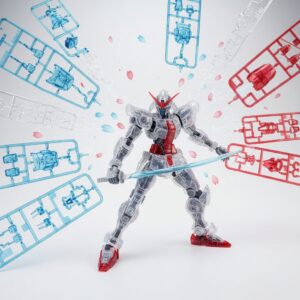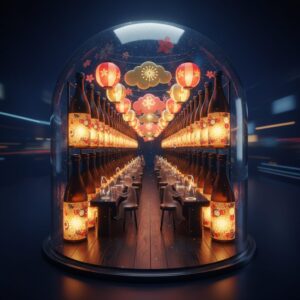
Walk into a certain kind of cafe in Tokyo, and you might feel a strange sense of dislocation. The tables and chairs are ordinary enough. The low hum of conversation is familiar. But the walls are plastered with floor-to-ceiling images of impossibly-eyed anime characters. The menu features curry dyed an alarming shade of green and parfaits constructed to look like a magical sword. At one table, a young woman is meticulously arranging a small army of acrylic keychains around her plate, taking photos from a dozen different angles. No one bats an eye. Welcome to the world of the Japanese collaboration cafe, or korabo kafe.
To the uninitiated, it’s easy to dismiss these places as cynical marketing exercises, a place to sell overpriced lattes and cheap merchandise to a captive audience. And on one level, that’s not entirely wrong. They are, after all, commercial enterprises. But to leave the analysis there is to miss the point entirely. It’s like looking at a church and only seeing a building designed to collect donations. These cafes are something far more significant. They are temporary sanctuaries, meticulously designed spaces where the virtual worlds of anime, manga, and video games manifest in the physical realm. For a fleeting 90-minute window, they offer fans not just a meal, but a pilgrimage site—a place of belonging, ritual, and quiet communion with the stories and characters that give their lives meaning.
These are not permanent fixtures like a Hard Rock Cafe. Their defining characteristic is their ephemerality. A cafe dedicated to a popular action anime one month might, after a swift two-day transformation, reopen as a pastel-drenched haven for a romantic mobile game. This constant flux creates a sense of urgency, turning a simple cafe visit into a limited-time event you simply cannot miss. Getting in often requires navigating a complex online lottery system, a process that filters out casual curiosity and ensures that nearly everyone present is a true devotee. This isn’t just about grabbing a bite to eat; it’s about participating in a phenomenon. It’s about being in a room where your niche, passionate interest isn’t just tolerated, but celebrated as the central, organizing principle of reality, if only for a little while.
While these character cafes offer a transient portal into immersive storytelling, Japan’s evolving creative spirit also shines through the vibrant shifts in gyaru youth culture, reflecting a broader narrative of innovation and rebellion.
The Menu as Scripture
One of the first things you notice inside a collab cafe is that the food is more than just food. It serves as a medium for storytelling. The menu functions less as a list of culinary choices and more as a chapter from the source material, translated into edible form. A quick look shows that nothing is by chance; every dish and drink is a carefully crafted tribute, a deep-cut reference only a devoted fan would recognize.
This is where the true magic starts. You won’t see a generic “cheeseburger with character branding.” Instead, you’ll find “The Undefeated King’s Victory Curry,” sculpted to resemble a lion’s mane in honor of a character’s nickname, or “The Tearful Goodbye Soda,” a two-toned blue drink that shifts color when you add a separate vial of lemon syrup, echoing a poignant scene from the anime’s finale. The ingredients themselves carry symbolism. A dish might be intensely spicy to reflect a character’s fiery nature, or include a vegetable they famously dislike, presented as a playful challenge to fans. Ordering and eating becomes a participatory act in the narrative—a way to connect with a character on a sensory level and literally internalize a piece of their world.
The drinks often represent characters most directly. Each major character in a series typically has their own signature beverage, with colors and flavors carefully selected to match their design, abilities, or personality. A calm, stoic swordsman might be symbolized by a blueberry and mint soda, while a cheerful, energetic hero receives a vibrant orange and passionfruit drink. For fans, picking a drink is an expression of loyalty. You’re not just ordering a beverage; you’re ordering your oshi—your favorite, the one you support above all others. And when it arrives, it feels like a small homage, a tangible piece of their spirit brought to your table.
This culinary world-building extends down to the finest details. Desserts are often the showstoppers—elaborate creations of ice cream, cake, and fruit that mimic iconic symbols, weapons, or locations from the series. A simple chocolate mousse transforms into the dark, ominous castle of the final boss. A fruit parfait becomes the enchanted forest where the protagonists first met. These aren’t just desserts; they are edible dioramas, meant to be admired and photographed before being enjoyed. Eating them feels almost like a transgression—a delicious destruction of a tiny masterpiece.
The Ritual of the Random Coaster
If the food represents the scripture, then the merchandise is the sacred relic. In the world of collab cafes, the most important ritual often centers around a small, laminated piece of cardboard: the coaster. Nearly every themed item you order—whether food, drink, or dessert—comes with a “free” piece of exclusive, limited-edition merchandise. Usually, it’s a coaster, but it could also be a plastic bookmark, a small clear file, or a placemat. The key element is that it’s random. You don’t get to choose. You might order the stoic swordsman’s blueberry soda, yet receive the cheerful hero’s coaster instead.
This element of chance, the principle behind the gacha machine, is the driving force behind the entire social economy of the cafe. It turns a simple meal into a high-stakes game of luck. The moment the server places your drink along with a face-down coaster on the table, a palpable tension fills the air. You, and everyone around you, silently pray for their oshi. The slow peel, the reveal—it can bring a moment of pure joy or quiet disappointment.
But this is where community comes into play. A disappointing draw is not the conclusion; it marks the beginning of an interaction. The random distribution system acts as a brilliant social lubricant, gently encouraging solitary fans to step outside their bubbles and join a temporary, goal-oriented community. Soon, you’ll see people tentatively holding up their unwanted coasters, scanning the room. A quiet, highly ritualized dance of trading begins.
The exchange is polite and formulaic. One person approaches another table and, with a slight bow, presents their coaster. “Sumimasen,” (Excuse me), they’ll say, “Yuzuru wo motte imasu ga, Kaede to koukan dekimasen ka?” (I have Yuzuru, would you be willing to trade for Kaede?). This low-stakes negotiation breaks the ice. It’s a moment of connection with a stranger, based on a shared understanding of who these characters are and what they mean to both parties. Finding someone to trade with, successfully acquiring your oshi, is a small victory that makes the whole experience more rewarding. It fosters a sense of camaraderie, a feeling that for these 90 minutes, you are all allies in a common quest.
This trading ecosystem extends beyond the cafe walls. Outside popular venues in districts like Ikebukuro or Akihabara, impromptu trading circles often form on the sidewalks. Fans lay out collections of coasters, acrylic stands, and keychains on cloths, looking to buy, sell, and trade toward completing sets or gathering their favorite character’s full collection. The cafe visit is just the beginning; the items obtained inside fuel a vibrant subculture of collectors and traders.
A Sanctuary for the Solo Pilgrim
Look around any collab cafe, and you’ll notice a remarkable number of people dining alone. In many Western cultures, this might be seen with a touch of pity. But here, the ohitorisama (person on their own) is not an object of sympathy; they represent the main demographic. These cafes cater as much to the solo enthusiast as they do to groups of friends. Coming alone is not a sign of loneliness, but a mark of focus and devotion.
The solo fan is seeking an intensely personal experience. They are on a date, not with another person, but with a character, with a story. Their aim is not social interaction, but deep immersion. And the cafe environment is expertly tailored to support this.
This is most apparent in the ritual of the tabletop shrine. Almost every fan, whether solo or in a group, arrives with a small pouch or case. From it, they bring out their own personal collection of their oshi’s merchandise: acrylic stands, rubber keychains, a beloved plush doll called a nui. These items are then carefully, lovingly arranged on the table alongside the food they’ve ordered. The acrylic stand is positioned just so, as if gazing at the parfait modeled after their signature weapon. The nui is propped against a glass, a miniature fork placed in its soft hands. This forms a small, personalized altar, a sacred scene where the fan’s collection from outside the cafe interacts with the special, limited-time offerings.
The next thirty minutes are often devoted to photography. The fan takes out their phone and captures this scene from every possible angle. They adjust the lighting. They shift a keychain a few millimeters to the left. They create a perfect, idealized tableau that says, “I was here, and so was my favorite.” This photography is not just for memory alone. It’s a vital part of modern fandom. The images are promptly uploaded to social media platforms like Twitter or Instagram, shared with a global network of fellow fans. It’s a way of declaring, “I have completed the pilgrimage.” A digital offering demonstrating devotion and sharing the unique beauty of the cafe’s creations with those who couldn’t attend. It is a deeply personal act performed for a public audience of peers.
In this context, the atmosphere inside is often surprisingly serene. It’s a quiet, respectful space. The background music is the show’s soundtrack, and conversations remain low. Everyone is absorbed in their own ritual—arranging merch, taking photos, savoring each bite of their themed food. There is no judgment here. No one finds it strange to hold a full conversation with a plush doll. No one will rush you as you take the perfect photo. This is the core appeal of the collab cafe: a safe space, an anshin dekiru basho, where the eccentricities of deep fandom are the norm. For 90 minutes, you don’t have to explain your passion to anyone. Everyone simply understands.
The Business of Ephemeral Worlds
While the fan experience centers on ritual and community, the business model behind collab cafes is a masterclass in marketing, logistics, and understanding fandom psychology. Their temporary nature is not a flaw; it is their defining feature.
By existing only briefly—typically four to eight weeks—the collaboration creates a strong sense of urgency. This is not a landmark you can visit at any time. It is a fleeting event, a momentary convergence of a physical space with a beloved fictional world. This scarcity drives immense demand, making lottery systems for reservations essential. It turns a meal into a prized, exclusive experience that generates significant online buzz. Fans who secure a spot feel accomplished before even stepping inside.
For intellectual property holders—the anime studios, game developers, and manga publishers—these cafes serve various purposes beyond direct revenue. They act as powerful promotional tools that maintain engagement during long waits between new seasons, game releases, or manga volumes. They provide a physical touchpoint for the brand, keeping it visible and relevant in the real world. Additionally, they offer a low-risk way to conduct market research. By monitoring which character-themed drinks are most popular and which coasters are most traded, companies gain real-time insights into popularity, influencing future marketing strategies and merchandise production.
For venue owners, the rotating theme model is highly efficient. Instead of being tied to a single concept that might become stale, they cater to successive passionate, built-in audiences. The core infrastructure—kitchen, tables, staff—remains constant. Only the “skin” of the cafe changes. Decorations, menus, and background music are replaced, creating a fresh new world. Over a year, one space can host a dozen different fandoms, ensuring a steady flow of motivated customers. It’s a flexible, adaptable model that reduces the risk of a permanent themed restaurant failing once the initial excitement fades.
This cycle of creation and dismantling gives the subculture its distinctive rhythm. Fandoms know their time is limited. They flock to the cafe, share their experiences online, and engage in a fervent period of trading and collecting. Then, as quickly as it arrived, the cafe closes. The decorations come down, the menu vanishes, and the space is cleared, ready for the next story. Fans are left with memories, photos, and a collection of small, precious coasters—proof that, for a brief, magical time, their favorite world became real.
A Place to Belong
Ultimately, the lasting appeal of the collaboration cafe extends well beyond clever marketing or Instagram-worthy food. It addresses a fundamental human need: the search for what Japanese culture calls ibasho—a place where you feel safe, accepted, and free to be yourself.
In a society that often values group harmony and public conformity, fandom offers an essential space for personal identity and self-expression. A passion for a particular anime or video game can become a defining part of who you are. Yet, this enthusiasm may not be understood or shared by family, coworkers, or mainstream culture. It can feel like a private, almost secret aspect of your life. The collab cafe transforms that. It takes this personal passion and makes it public, communal, and validating. It becomes the tangible embodiment of an online community, a real-world home for a digital tribe.
The entire experience can be viewed through the lens of hare and ke, the traditional Japanese distinction between the special and the everyday. The ke represents your daily life: your commute, your job, your routine. Visiting the collab cafe is a conscious step into the realm of hare: the sacred, the celebratory, the festive. The lottery, the journey to a specific neighborhood, the eager anticipation of themed decor—it’s all part of a modern pilgrimage that sets you apart from the ordinary world and prepares you for a unique experience.
Inside, you are immersed in the sights, sounds, and flavors of a world you cherish. More importantly, you are surrounded by others who share that same love. You don’t need to explain the meaning of a particular symbol on a dessert or why securing a specific coaster matters. That understanding is the shared language of the space, the foundation of a temporary yet powerful sense of belonging.
So the next time you come across a photo of a brightly colored anime-themed curry, look deeper. Don’t just notice the novelty. See the intricate ecosystem it represents. See the lone fan carefully arranging their acrylic stand for the perfect shot, lost in a moment of quiet delight. See the silent, respectful exchanges between strangers as they trade small cardboard squares. In these fleeting, fantastical spaces, you are witnessing more than a meal. You are witnessing a community finding its anchor, a subculture shaping its sanctuary, and individuals discovering a place where, for just a little while, all the worlds they carry inside them become real.