You’ve probably seen Akira Kurosawa’s masterpiece, Kagemusha. It’s a sweeping samurai epic about a petty thief recruited to impersonate a dying warlord, Takeda Shingen, to deceive his enemies. The film is a cinematic triumph, but it’s also a brilliant entry point into a concept that runs far deeper in Japanese society than most outsiders realize. The word kagemusha (影武者) literally translates to “shadow warrior,” but its meaning has expanded over centuries to describe something more nuanced and pervasive: the shadow leader. This is the figure who wields true power from behind the scenes, the unseen hand guiding the public-facing figurehead. It’s a role that has migrated from the bloody battlefields of feudal Japan to the polished boardrooms and political backrooms of the modern nation.
To understand Japan is to understand that what you see is often not the full picture. Power rarely operates in a straight line. It flows through intricate, often invisible channels, guided by relationships, obligations, and a deep-seated cultural preference for separating public appearance from private reality. The Kagemusha is not just a historical curiosity or a cinematic trope; it is the personification of this very principle. It’s a strategic playbook for leadership that prioritizes stability, continuity, and the protection of the core decision-making entity over the glorification of any single individual. From the shogun who ruled in the emperor’s name to the unassuming vice president who actually runs the company, the shadow leader is a recurring character in Japan’s story. Untangling this idea reveals the unspoken logic that governs how influence is accumulated and exercised in one of the world’s most complex societies.
The subtle dynamic of concealed power extends beyond political corridors into rural realms where Japan’s fading satoyama exemplifies the enduring influence of traditional landscapes on modern societal structures.
The Original Shadow Warrior: Decoys on the Battlefield
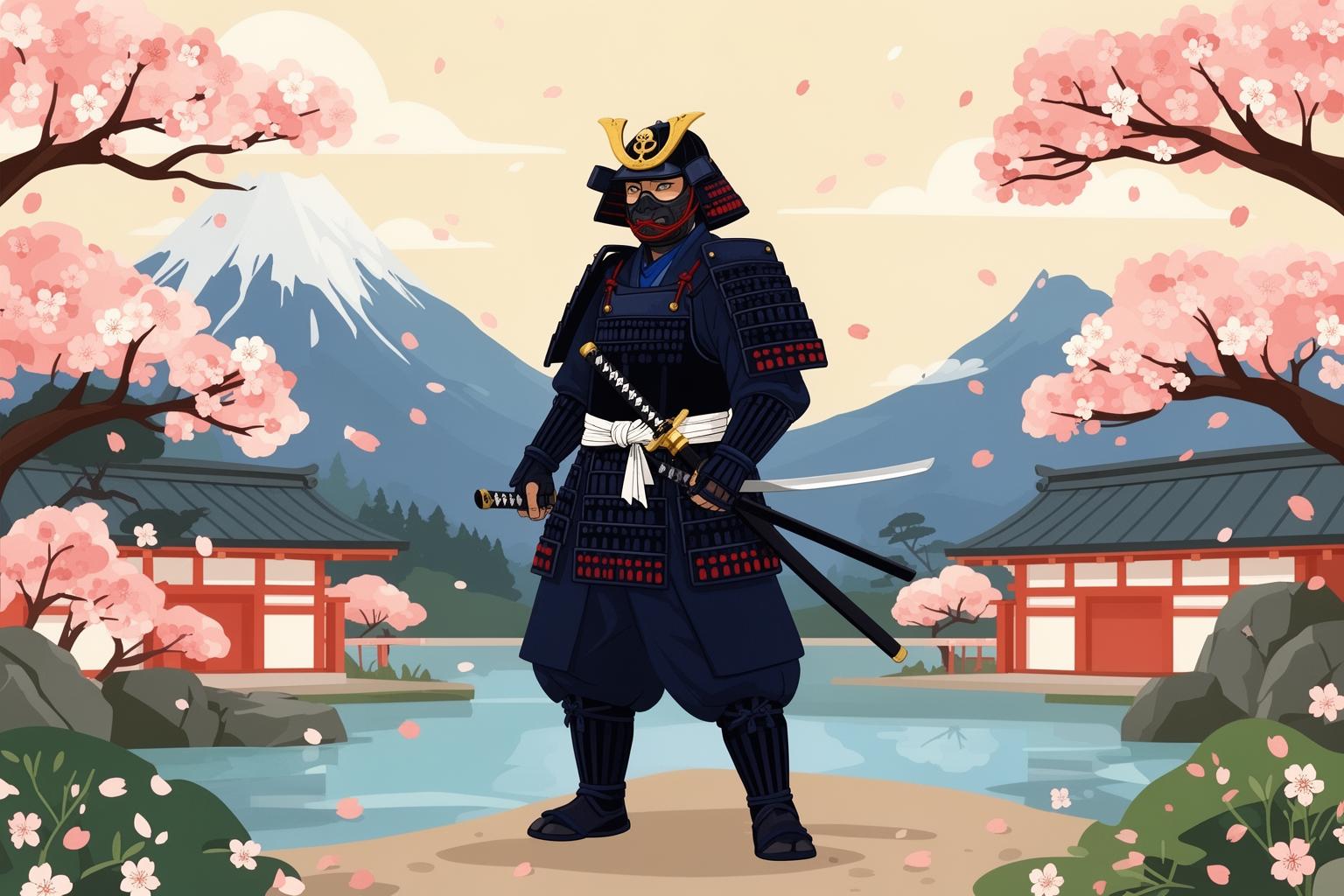
The concept of the Kagemusha originated from harsh necessity during the Sengoku period, the “Age of Warring States” spanning the 15th and 16th centuries. Japan was a fragmented land of rival clans, where powerful daimyō (feudal lords) competed for dominance. In this perilous setting, the leader was paramount; his survival ensured the clan’s continued existence, while his death could trigger immediate collapse and absorption by an enemy. Assassination was a constant danger, not only amid battle but also within the presumed safety of one’s own castle.
The Kagemusha arose as a practical response to this existential threat. A lord would choose a double, often a lower-ranking samurai or even a commoner who closely resembled him, to serve as a political and military decoy. This role required more than just appearance; the shadow warrior underwent intense training to imitate the lord’s voice, posture, gait, and distinctive habits. He also had to master military strategy and court etiquette, capable of deceiving both the enemy and many within his own ranks.
The most famous example, immortalized by Kurosawa, is Takeda Shingen, one of the period’s most brilliant tacticians. Historical records indicate that he used several doubles throughout his campaigns. The strategic benefit was significant. A Kagemusha could appear on a distant battlefield front, diverting enemy forces from the real commander’s position. He could attend ceremonies or inspect troops, maintaining the illusion that the lord was present and healthy—an essential factor in sustaining morale and projecting strength. If an assassin’s arrow hit its mark, it might strike the decoy instead, allowing the true leader to survive and continue the fight.
This practice underscores a crucial early distinction in Japanese leadership: the separation of the individual from the role. The Kagemusha embodied the symbol of the leader—the presence, authority, and steadfast figurehead of the clan. Meanwhile, the real man was free to concentrate on the substance of leadership—forming covert alliances, planning surprise attacks, and managing the clan’s resources without constant exposure to danger. The shadow warrior’s existence implicitly acknowledged that the image of power was itself a weapon, one that could be wielded, manipulated, and even sacrificed to protect the genuine source of that power.
From Feudal Lord to Shogun: The Emperor’s Evolving Shadow
As the turmoil of the Warring States period diminished and Japan was unified under the Tokugawa clan in the early 17th century, the concept of Kagemusha evolved. It shifted from a literal, physical decoy on the battlefield to a more refined and systemic political framework. The clearest example of this evolution is found in the delicate, centuries-long interplay between the Emperor and the Shogun.
For almost seven hundred years, from the Kamakura period through to the end of the Edo period in 1868, Japan functioned under a dual power structure. On one side stood the Emperor in Kyoto. Believed to be descended from the sun goddess Amaterasu, he was the divine head of state and the ultimate source of legitimacy and spiritual authority. He served as the symbolic father of the nation, a revered and sacred figure who remained above the everyday political fray.
On the other side was the Shogun, based initially in Kamakura and later in Edo (modern-day Tokyo). The Shogun was the country’s top military commander and the de facto ruler, holding the real political, economic, and military power. He directed the government, led the armies, and controlled the country’s administration. Although his authority officially stemmed from an imperial commission, in truth, the Emperor was a gilded captive, his court cut off from any genuine influence.
Within this system, the Shogun effectively functioned as the nation’s Kagemusha. The Emperor was the radiant, public-facing emblem of Japan—the ultimate tatemae, or public façade. He conducted sacred rituals and maintained the unbroken divine lineage that shaped national identity. Meanwhile, the Shogun represented the honne, the true intent and power behind the Chrysanthemum Throne. He was the one making the tough, often unpopular decisions necessary to govern. This arrangement was a brilliant piece of political engineering, allowing the Shogunate to exercise absolute power under the unquestionable legitimacy of the Emperor. Any uprising against the Shogun was, by extension, a rebellion against the imperial will—a sacrilegious act.
This political framework institutionalized the principle of Kagemusha on a national scale. It demonstrated that a system could be remarkably stable and resilient when the symbolic leader and executive authority were separated. The Emperor absorbed the reverence and devotion of the people, remaining unsullied by political intrigue. The Shogun and his administration bore the burdens of governance, managed conflicts, and faced public scrutiny. The figurehead provided continuity and a sacred national identity, while the shadow ruler delivered the practical—and sometimes ruthless—leadership required to maintain order. This model left a profound imprint on the Japanese mindset, establishing a pattern for power dynamics that would resurface in a very different context centuries later.
The Meiji Restoration and the Modern Corporate Samurai
The arrival of Commodore Perry’s black ships in 1853 ended Japan’s self-imposed isolation and sparked a period of profound transformation. The Tokugawa Shogunate collapsed, and in 1868, the Meiji Restoration ostensibly restored power to the Emperor. Japan launched an intense drive toward modernization, determined to catch up with the West and resist colonization. The feudal class system was dismantled, the samurai were disarmed and stripped of privileges, and a new era of industrialization commenced.
Yet old habits proved hard to break. Deeply entrenched structures of loyalty, hierarchy, and authority did not simply disappear; they were absorbed into the new institutions of modern Japan, most notably the military and the vast family-owned industrial conglomerates known as zaibatsu. These corporations—Mitsubishi, Mitsui, Sumitomo, among others—became the new territories, and the businessmen who controlled them became the new samurai, exchanging swords for briefcases but maintaining a similar code of discipline, loyalty, and strategic acumen.
It was within this corporate environment that the Kagemusha concept found its modern expression. The public face of a company—the president or CEO (shachō)—may be the one delivering speeches, meeting with foreign dignitaries, and appearing in annual reports. He symbolizes the company’s public identity. However, anyone familiar with serious business in Japan quickly learns that the person with the most impressive title does not always wield the greatest power.
Frequently, the real influence rests with a “shadow leader.” This individual might be a retired chairman holding an official title like “special advisor” (komon or sōdanyaku). While officially his role is advisory, in practice, his office may be larger than the current CEO’s, and no major decision is made without his implicit consent. He serves as the guardian of the company’s institutional memory, the hub of its most vital relationships, and the ultimate mediator in internal conflicts. In many respects, the current CEO manages the company on his behalf.
Alternatively, the Kagemusha might be the head of a powerful internal division or a seemingly modest vice president who has dedicated decades to the company. While the president handles the “soto” (external) world of public relations and formal representation, this figure oversees the “uchi” (internal) domain of operations, personnel, and internal politics. He is the one who navigates the complex network of obligations and alliances that truly keep the company functioning. His influence is not based on a business card title but on years of accumulated trust, knowledge, and informal authority.
This corporate framework echoes its feudal and political antecedents. It shields the core of power from risk. The public-facing president can become a scapegoat if a scandal arises or a new venture falters. He may be replaced, allowing the company to present a new face to the public while the underlying strategy and power structure, guided by the Kagemusha, remain intact. This ensures continuity and stability, prioritizing the institution’s long-term well-being over the career of any single executive.
Reading the Air: How to Spot a Kagemusha Today
Identifying a shadow leader in modern Japan involves less examining an organizational chart and more “reading the air” (kūki o yomu)—the essential Japanese skill of perceiving unspoken social dynamics. The Kagemusha seldom reveals their presence. Their influence is subtle, indirect, and conveyed through nuanced signals.
In politics, watch for the heads of major factions (habatsu) within the ruling party. Although the Prime Minister serves as the head of government, their ability to implement policy and remain in power often hinges on the backing of these faction leaders. These influential figures, who may be former prime ministers or senior cabinet members themselves, act as kingmakers. They work behind the scenes, forging alliances, controlling cabinet appointments, and shaping the party’s ideological course. They are the Kagemusha of Nagatachō, the political nucleus of Japan.
In business, observe whom people defer to in meetings. While the president may appear to make decisions, these are often pre-approved through nemawashi—literally “turning the roots.” This informal, behind-the-scenes consensus-building is where genuine discussions occur. The Kagemusha stands at the heart of this process. During formal meetings, notice which senior managers look to someone before expressing their views. That individual, regardless of their official rank, is likely the true power center.
Another indicator is the role of the senior advisor, the komon. Often retired executives or bureaucrats retained on the payroll, their function may seem unclear from a Western viewpoint. Yet in Japan, they frequently safeguard the company’s key relationships with government agencies or crucial business partners. Their opinion carries great weight, capable of making or breaking deals with a single phone call. They personify the company’s network, and their influence surpasses their formal job title.
The system is intentionally structured this way. Formal procedures like ringi-sei, where proposals circulate upward for approval, create a paper trail of shared responsibility. This disperses accountability and gives the impression that decisions arise organically from the group. In truth, the proposal’s progression is often steered by the invisible hand of a shadow leader who has already employed nemawashi to ensure it aligns with their strategic goals. The formal process is a show of consensus; the actual decision was made well in advance.
The Psychology of the Shadow: Why It Works in Japan
To an outsider, this shadow leadership system may appear inefficient, obscure, or even deceptive. Yet it endures because it aligns perfectly with several fundamental pillars of Japanese cultural psychology. It is not an anomaly but the logical consequence of a society operating on principles fundamentally distinct from those of the individualistic West.
The first principle is the distinction between uchi-soto (inside/outside). Japanese society is organized into concentric circles that define relationships. The uchi group represents your inner circle—family, company, team—where you can be more relaxed and direct. The soto world includes everyone outside that circle, where interactions demand greater formality and politeness. The official leader primarily manages the company’s soto face, presenting a polished and harmonious image to the outside world. The Kagemusha functions within the uchi realm, where the messy, unfiltered exercise of power takes place.
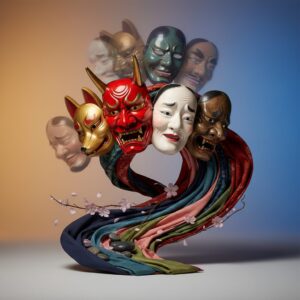
This directly relates to the concept of honne-tatemae, the difference between one’s true feelings and intentions (honne) and the public façade or opinions one displays (tatemae). In Japan, this is not regarded as hypocrisy but as an essential social lubricant enabling society to operate smoothly. A CEO’s public statements are tatemae, while the shadow leader’s strategic directives represent honne. The Kagemusha system provides a framework where this duality can coexist without internal conflict.
Most importantly, this system serves the paramount goal of preserving wa (和), or group harmony. Direct confrontation is culturally taboo. Openly challenging a superior or engaging in contentious debate during a public meeting risks a severe loss of face for all involved. The Kagemusha structure allows difficult decisions and power struggles to be resolved behind closed doors. By the time a decision is publicly announced by the figurehead leader, a consensus has already been carefully formed in the shadows. This maintains the illusion of effortless unity and ensures the group remains harmonious, at least on the surface.
The individual is secondary to the group. A Western business hero often emerges as a charismatic, disruptive visionary who leaves a personal mark on a company. In Japan, such a figure can arouse suspicion. The ideal leader prioritizes the collective good and the institution’s longevity. The Kagemusha system epitomizes this ideal. The visible leader acts as a temporary custodian, while the shadow leader quietly carries forward the enduring will and spirit of the institution, passing it from one generation to the next without fanfare.
So, the next time you watch the news from Japan or sit in a meeting with a Japanese company, look beyond the person at the podium. Listen for the silences, observe the subtle gestures of deference, and try to perceive the invisible currents of influence in the room. The real power may not be where you expect. It may reside in the shadows, with a quiet, unassuming figure whose name you might not even know but who continues a centuries-old tradition of leading from behind the throne. This is not merely a relic of the past; it is a living, breathing strategy for navigating the present, and one of the most essential keys to understanding Japan’s intricate machinery.