If you want to find the real, beating heart of a Japanese neighborhood, don’t look for it in the gleaming high-rises or the minimalist cafes that populate Instagram feeds. You have to look for the arches. Sometimes they are grand, rust-streaked steel structures heralding the entrance with blinking neon. Other times they’re humble, concrete gateways with faded paint. But they all lead to the same place: the shōtengai, the local shopping arcade. Step beneath one, and you’re not just entering a street, you’re stepping back in time.
The air itself seems different here. It’s a thick, layered tapestry of smells: the sweet, soy-sauce glaze of grilling eel from a tiny stand, the sharp, briny scent of fresh fish on ice, the earthy aroma of roasted tea leaves, and the faint, lingering sweetness of red bean paste from a generations-old sweets shop. The neon glare of central Tokyo is replaced by the softer, more humane glow of paper lanterns and fluorescent tubes. This is not the Japan of bullet trains and robots. This is the Japan of the Shōwa era (1926-1989), specifically its post-war boom years, preserved under glass, or more accurately, under a long, sheltering roof.
These covered shopping streets are living museums, accidental time capsules that tell the story of Japan’s frantic, optimistic climb from the ashes of World War II. They are the physical embodiment of the nation’s mid-century dream—a dream of prosperity, community, and the quiet dignity of a well-lived local life. While many are now fading, their paint peeling and their shutters permanently drawn, they remain one of the most honest and evocative spaces in the entire country. To walk through a shōtengai is to walk through the memories of a nation, to feel the ghosts of its ambitions and the quiet strength of its communities. Forget the tourist brochures for a moment; this is where you find a piece of Japan’s soul.
To truly immerse yourself in this preserved Shōwa-era atmosphere, you can experience it firsthand by visiting a classic Showa-era kissaten.
The Anatomy of a Time Capsule
At first glance, a shōtengai may appear as a chaotic jumble of storefronts. However, there is a clear logic to its design, a formula honed over many decades. Understanding its components is akin to learning the grammar of a forgotten language.
The All-Weather Promise of the Arcade
Its most defining feature is, naturally, the roof. The ākēdo, as the Japanese term it—borrowed from the English word “arcade”—was a groundbreaking idea at the time. In a country with scorching, humid summers and typhoon-prone autumns, the guarantee of a weatherproof shopping experience was pure modern magic. It transformed running errands from a chore governed by the weather into a dependable, leisurely pursuit. The roof itself makes a statement. In some older, more grand shōtengai, you’ll find high, vaulted ceilings with translucent panels that diffuse daylight into a soft, cathedral-like glow. In others, it’s a simpler, corrugated structure. But in every case, its function is the same: to create a public, yet protected space—a communal living room for the neighborhood.
The architecture beneath the roof reflects a similar mid-century aspiration. Storefronts often display tile work in shades of ochre, avocado green, and sky blue—colors lifted straight from a 1960s design palette. Signage is a delightful tangle of typographic history. Elegant, hand-painted characters on wooden boards hang alongside buzzing neon signs with futuristic, space-age fonts and sun-faded plastic banners advertising sales from decades past. This visual cacophony, rather than feeling discordant, conveys a rich sense of layered history. Nothing is ever completely demolished and rebuilt; instead, new layers are simply added atop the old.
The Ecosystem of Everyday Life
The true brilliance of the shōtengai lies in its carefully curated ecosystem of shops. It was designed to provide every household necessity for daily life, creating a self-sufficient microcosm within a few hundred meters. A classic shōtengai is anchored by specialists who form the cornerstone of Japanese home cooking.
There is the yaoya, the greengrocer, with pyramids of seasonal vegetables and fruits spilling onto the street. Produce here is often locally sourced, and the owner can advise which daikon is best for simmering and which persimmons are at the peak of sweetness. Next is the sakana-ya, the fishmonger, a place of controlled, clean chaos. The air is cool, fragrant with sea breezes, with neatly arranged trays of shimmering silver-skinned fish, pink tuna, and live clams. The fishmonger, a master with a knife, can gut, scale, and fillet a fish in seconds, preparing it exactly as needed for the evening meal. Completing the trio is the niku-ya, the butcher. Here, you’ll find not only cuts of meat but also a sizzling deep-fryer producing golden-brown korokke (potato and meat croquettes) and menchi-katsu (minced meat cutlets)—perfect as an after-school snack or a quick addition to a home-cooked meal.
Beyond this core, the arcade extends further. You’ll find a tofu-ya, where tofu is freshly made in the back of the shop each morning and sold submerged in tubs of water. There’s the okome-ya, the rice seller, with sacks of rice varietals from around Japan, each boasting its own distinct flavor and texture. An ocha-ya, a tea shop, fills the air with the comforting scent of roasting hōjicha. And no shōtengai is complete without a wagashi-ya, a traditional Japanese confectionery, with its glass case filled with delicate, seasonal sweets that are as much art as food—pounded rice cakes (mochi), sweet bean jellies (yōkan), and intricately shaped treats reflecting the flowers of the season.
But life in the arcade is not only about food. It catered to every daily need. A small, cluttered stationery shop offers notebooks for schoolchildren and fine paper for letter writing. A pharmacy, often guarded by the iconic Sato-chan, a cartoon baby elephant mascot, dispenses not just medicine but also friendly advice. You might find a futon shop, its wares rolled and stacked high, or a tiny electronics store run by the same elderly man since the 1970s, who can still repair a vintage radio but seems baffled by smartphones.
And then there is the kissaten. The quintessential Shōwa-era coffee shop serves as the social heart of the arcade. Step inside, and you enter a world of dark wood paneling, worn velvet seats, and the gentle bubbling of syphon coffee makers. The air is thick with the smell of toast and the faint aroma of stale cigarette smoke from a bygone era. Here, elderly women gossip over “morning sets” of thick toast and boiled egg, while local business owners take quiet breaks reading the newspaper. The kissaten is a sanctuary of slowness in a nation obsessed with speed.
Born from Ashes: The Post-War Economic Miracle
To grasp why the shōtengai is so imbued with a particular kind of nostalgia, you need to understand the era that gave rise to it. Japan in the 1950s and 60s was a country struggling to recover from total devastation. Its cities lay in ruins, its economy was shattered, and its national spirit deeply wounded. What followed was one of the most extraordinary economic recoveries in modern history, often dubbed the Japanese Economic Miracle.
This was not merely a top-down corporate movement driven by industrial giants like Toyota or Sony. It was a grassroots surge of energy and ambition. As neighborhoods were rebuilt, the shōtengai emerged as the commercial and social heart of this new, hopeful Japan. They became the engines of an emerging domestic consumer culture. For the first time, ordinary families had disposable income and were eager to embrace a more convenient, modern way of life.
The shōtengai was where this dream took tangible form. It was the place where families purchased their first “Three Sacred Treasures”—the television, the washing machine, and the refrigerator. These were not impersonal transactions at a big-box retailer; they were significant milestones, often accompanied by the local electronics shop owner personally delivering and setting up the appliance, proudly explaining its features. The arcade served as a stage for upward mobility, a space where the abstract idea of rising GDP translated into real, everyday improvements.
The mindset of the era was one of unstoppable forward progress. The future was seen as inherently better than the past. With its modern roof and dazzling display of consumer goods, the shōtengai symbolized this progress. It stood as a collective triumph over the poverty and scarcity of the immediate post-war years. It demonstrated that hard work could bring a better life, not only for individuals but for the entire community. This shared experience created an exceptionally strong local identity, with the shōtengai as its tangible center.
The Social Glue of the Neighborhood
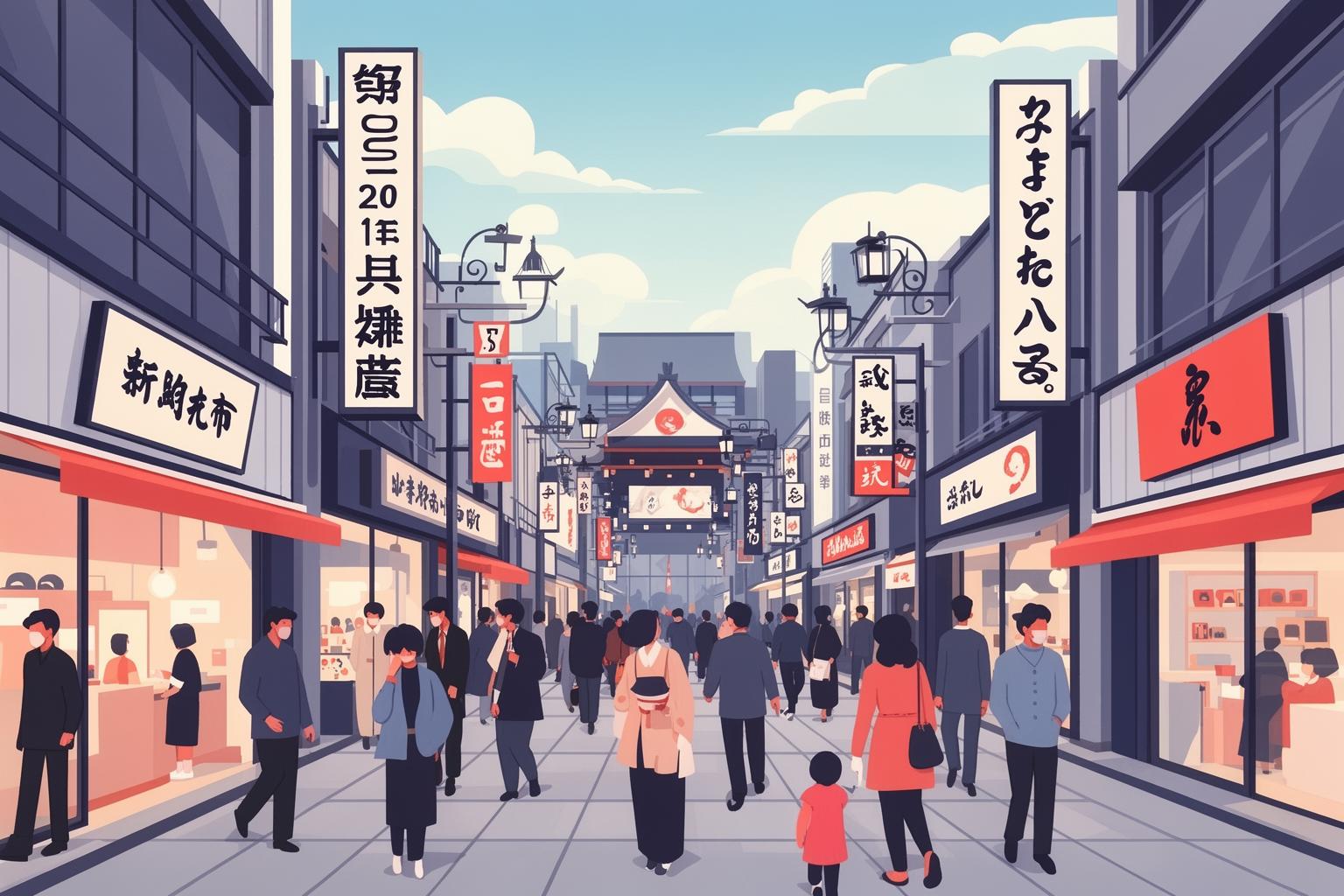
The shōtengai was always more than merely a collection of stores. It served as the neighborhood’s public square, its information center, and its support network. The commerce conducted here was deeply personal, intricately woven into the fabric of human relationships. This stood in stark contrast to the cold, impersonal efficiency of a modern supermarket.
Shopkeepers were not simply vendors; they were respected figures within the community. The butcher knew which families had young children and would reserve leaner cuts of meat for them. The greengrocer was aware that a particular elderly customer preferred her vegetables cut a certain way because of her arthritis. This was a system built on trust and mutual understanding. Customers were recognized by name, not by loyalty card numbers. A common practice, tsuke, or running a tab, allowed customers to pay for their daily groceries at the end of the month. This system could only thrive in a high-trust, close-knit community.
Many shop owners practiced go-yō-kiki, a highly personalized service where they would call or visit the homes of regular customers, especially the elderly, to take orders. The goods would then be delivered directly to their doorstep. This was more than convenience; it was a vital social service and a way to check in on the community’s most vulnerable members. The daily delivery from the fishmonger or tofu maker provided a point of human contact and a brief conversation that could be a lifeline for someone living alone.
The arcade also served as the stage for the community’s shared rituals. During seasonal festivals, or matsuri, the shōtengai would be transformed. Paper lanterns were hung, banners raised, and the street filled with the sounds of drums and flutes. Locals paraded a portable shrine (mikoshi) through the arcade to bless the businesses, and temporary stalls appeared selling festival foods like fried noodles (yakisoba) and grilled squid (ikayaki). These events were not designed for tourists but for residents—a powerful reaffirmation of their shared identity and a way to pass traditions down through generations.
In this way, the shōtengai acted as a sort of social safety net. It was where local gossip was shared, job leads exchanged, and neighbors looked out for one another. It was the living, breathing heart of the community, with every transaction and conversation adding another layer to its rich social tapestry.
The Long, Slow Decline and the Fading Echo
Visiting a shōtengai today often feels like a poignant experience, as you witness the end of an era. Many of these once-bustling arcades now lie eerily quiet, with a large number of their storefronts shuttered by metal gates. These are called shattā-gai, or “shutter streets,” serving as a somber reminder of the powerful economic and social forces that have transformed Japan.
The decline began subtly. The first significant challenge was the rise of supermarkets in the 1960s and 70s. These supermarkets introduced a new, American-style shopping experience: one-stop convenience, seemingly endless variety, and often lower prices. Though they lacked the personal connections found in shōtengai, they offered efficiency—a strong appeal for busy households.
Following this was the surge in suburbanization and the rise of car culture. As families moved farther from city centers into newly developed suburbs, their shopping preferences changed. Large suburban shopping malls, such as those operated by chains like ÆON, became the new commercial hubs. Boasting expansive parking lots, multiplex cinemas, and international chain stores, these malls provided a form of family entertainment that the modest local arcade could not match. The shōtengai, generally situated near train stations, had been designed for a pedestrian-oriented world—a world that was rapidly disappearing.
Lastly, and perhaps most decisively, came the twin challenges of demographic shifts and the internet. Japan’s aging population and declining birthrate have reduced the customer base for these local shops. More importantly, this has triggered a succession crisis. The children of shopkeepers who built these arcades often chose different paths, relocating to big cities for university and corporate careers. With no successors to inherit the family businesses, when the older generation retires, the shutters come down permanently.
E-commerce delivered the final blow for many. Why walk to a local shop when Amazon can bring almost anything to your door within a day? The core values of the shōtengai—localism, personal service, and community—clashed with a new era that prioritized global choice, speed, and digital convenience above all else.
The outcome is the bittersweet atmosphere evident in many arcades today. A thriving, third-generation fishmonger may stand next to a derelict shop, its windows covered with paper for years. The cheerful recorded music piped through the arcade’s aging speakers often fills an almost empty street. It is a space haunted by the ghosts of its past—a once vibrant hub of community, now gradually and quietly fading away.
Why They Still Matter: Pockets of Resistance and Reinvention
However, the story of the shōtengai is not merely one of decline. Dismissing it as a relic would overlook its lasting vitality and its unexpected revival. In an increasingly homogenized world, these arcades provide a compelling counterbalance: a sense of place, authenticity, and human connection.
This appreciation is growing, particularly among younger Japanese weary of the sterile uniformity found in minimalist cafes and global fashion chains. A “Shōwa retro” craze has swept youth culture, with the shōtengai at its core. The old kissaten, once considered hopelessly outdated, are now treasured for their genuine ambiance. The straightforward, satisfying food of local diners (shokudō) is being rediscovered. People are seeking experiences that feel authentic and steeped in history, and the shōtengai delivers this in abundance.
This revived enthusiasm is sparking a quiet renaissance in some arcades. Drawn by low rents and the historic character of old storefronts, a new wave of entrepreneurs is moving in. Their aim is not to recreate the past but to build upon it. You might find a stylish craft coffee roaster opening in a former rice shop, an artisanal bakery occupying an old tailor’s space, or a trendy natural wine bar taking over a dusty liquor store. These new ventures bring fresh energy and attract a younger crowd, creating a captivating blend of old and new. The elderly woman buying her daikon radish now shares the arcade with a young graphic designer enjoying a single-origin pour-over.
Some shōtengai have also embraced tourism, recognizing that their genuine, old-world charm is a significant asset. Locations like Yanaka Ginza in Tokyo or the Teramachi Arcade in Kyoto have become destinations in their own right, drawing visitors eager to experience a different facet of Japan. They provide a tangible link to a vanishing past, and in doing so, have found a new economic purpose.
Above all, the shōtengai serves as a living example of an alternative way of life. It represents a hyper-localism that is increasingly appealing in our globalized world. It supports small, independent businesses over multinational corporations. It values human interaction above algorithmic efficiency. The shōtengai is a storehouse of social capital, reminding us that the vitality of a community rests on daily, face-to-face encounters. It poses a quiet yet profound question: in our haste toward progress, what have we lost?
How to Experience a Shōtengai Like a Local
For any curious traveler, visiting a shōtengai offers a chance to look behind the scenes and glimpse the workings of everyday Japanese life. However, to truly appreciate it, you need to approach it with the right attitude. This is not a theme park or a museum with carefully arranged exhibits. It is a living, breathing community.
First, slow down. The pace of the shōtengai is leisurely. Walk slowly and engage all your senses. Observe the hand-written price signs, which are a craft in themselves. Look for the family photos often proudly displayed behind the counters. Listen to the casual conversations between shopkeepers and their regular customers. Notice the small, seasonal decorations—a branch of plum blossoms in early spring, a paper carp streamer for Children’s Day, a sprig of maple leaves in autumn.
Don’t hesitate to engage. A simple “Konnichiwa” (hello) and a smile can go a long way. Even without speaking Japanese, genuine curiosity is a universal language. Point at something interesting and ask, “Kore wa nan desu ka?” (What is this?). The owner will likely be pleased to explain, using gestures and a few words of English. This is how you move beyond being a tourist and become a guest.
Above all, participate. The best way to experience a shōtengai is to become a customer, even in a small way. This is the realm of what the Japanese call tabe-aruki, or eating while walking. Buy a freshly fried korokke from the butcher’s shop and enjoy it while it’s still piping hot. Purchase a single, exquisite nerikiri sweet from the wagashi maker. Try a skewer of grilled mochi brushed with sweet soy sauce. This isn’t just about tasting the food; it’s about joining in the arcade’s daily commerce and supporting its ecosystem.
Find a kissaten, settle into one of the worn booths, and order a coffee. Sit for half an hour and simply watch. Watch the elderly men shuffle by on their way to the pachinko parlor. Watch mothers with children on bicycles stop for a chat. Watch shopkeepers sweep the pavement in front of their stores. Here you will sense the true pulse of the neighborhood, a gentle, steady rhythm far removed from the frenetic energy of major tourist spots.
The shōtengai is a fragile and endangered creature. Each one that disappears takes with it a whole universe of memories, relationships, and traditions. It is more than just a shopping street; it is a living archive of Japan’s most optimistic era and a blueprint for a more connected community. To walk beneath its arches is to hear echoes of the past and to feel, if only for a moment, the steady, resilient heartbeat of a neighborhood.