Walk past any major train station in Japan, from the neon canyons of Shinjuku to a quiet suburban stop, and you will eventually be assaulted by a singular, overwhelming sensory experience. It starts with the sound—a deafening, chaotic waterfall of metallic clattering, j-pop anthems cranked to eleven, and the triumphant digital fanfares of a thousand simultaneous jackpots. Then comes the light, pulsing and strobing from beyond sliding glass doors, a hypnotic invitation to a world of pure audiovisual overload. If you get close enough, a wave of stale cigarette smoke and charged ozone hits you. This is the world of pachinko, an activity that pulls in millions of Japanese people every single day. From the outside, it looks and sounds exactly like a casino. Rows of people sit mesmerized before flashy machines, feeding them money in the hopes of winning big. Yet, if you ask anyone, they’ll tell you that gambling for cash is illegal in Japan. And they’re technically right. This is the central paradox of pachinko: it is a multi-billion dollar industry built on a game of chance that is, through a masterpiece of legal gymnastics, not considered gambling. But this isn’t just a story about a clever loophole. It’s about a deep-seated need in Japanese society—for escape, for anonymity, and for a very specific kind of noisy, solitary meditation. To understand pachinko is to understand the pressures and unspoken rules of life in modern Japan.
Amid the relentless clamor of pachinko halls, Japan’s multifaceted social landscape also finds solace in the enduring purikura ritual that nurtures unexpected bonds in an ever-changing world.
A Pinball Machine on Steroids
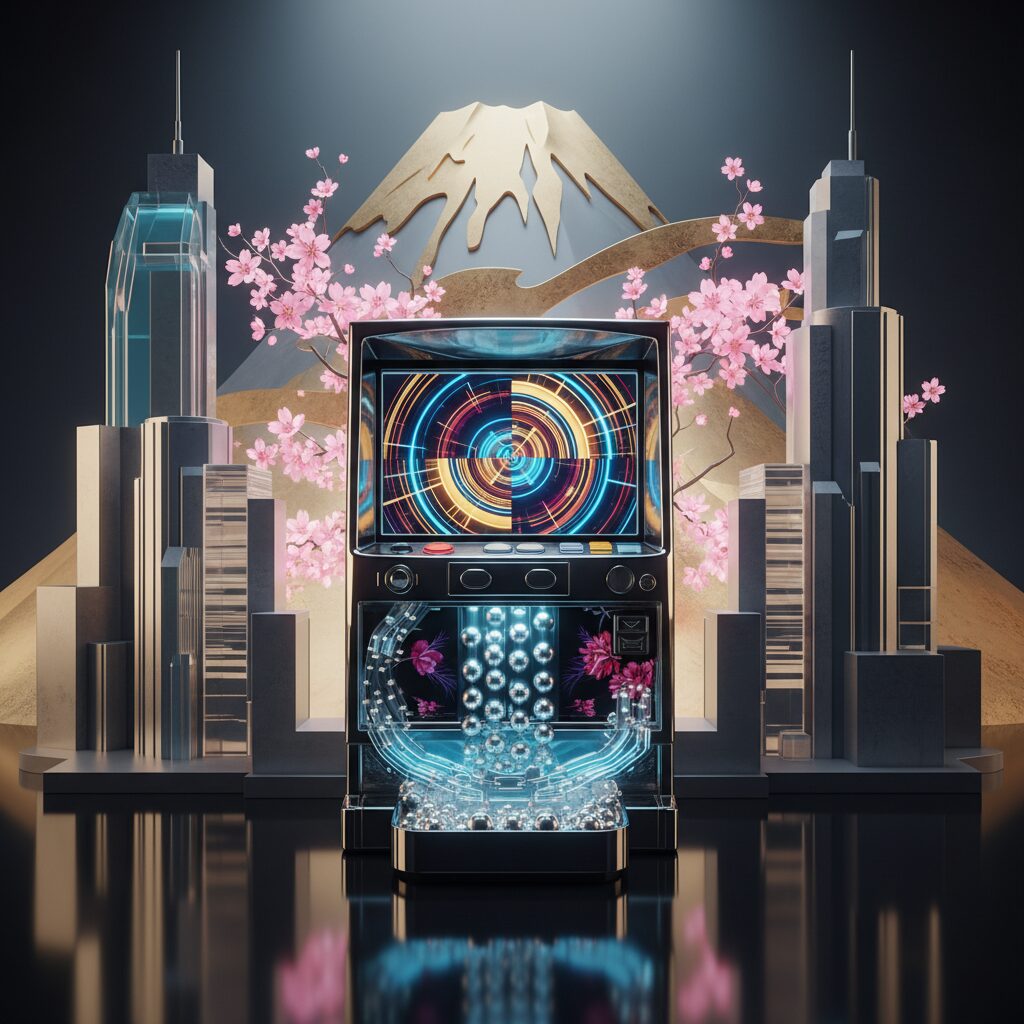
So, what goes on inside these deafening halls? At its essence, pachinko is a mechanical game, resembling a vertical pinball machine. Players don’t use flippers; instead, they rent a tray of tiny steel balls for a set price, usually a few yen per ball. These balls are loaded into the machine, and the player operates a single knob that controls the speed and force with which the balls are launched into the playing field. The field itself is a dense array of brass pins. The balls cascade down, bouncing unpredictably off the pins. Most simply fall to the bottom and disappear into the machine’s gullet. But the aim is to get a ball to drop into a specific winning pocket, often a small, centrally located gate. When this happens, the magic begins. The machine comes alive like a slot machine, triggering a digital reel spin on the large LCD screen embedded in its center. If the numbers or symbols line up—say, three sevens—you hit the jackpot, or oatari. This doesn’t trigger a shower of coins. Instead, it unleashes a torrent of more steel balls, thousands of them, which pour into a tray at the bottom of the machine. The thunderous sound of these balls hitting the plastic tray is the music of victory, a sound cutting through the general noise of the parlor. The ultimate goal isn’t to get a high score but to accumulate as many of these silver balls as possible. You fill tray after tray, stacking them behind your seat as trophies of your success. Modern machines, known as “pachislot” (a hybrid of pachinko and slot machine), have made this even more intricate. They feature elaborate storylines based on famous anime, movies, or historical dramas. Hitting a jackpot might trigger a lengthy animated sequence, a boss battle, or a dramatic cutscene, all designed to keep the player fully immersed. You aren’t just playing a game; you’re taking part in a narrative where the reward is a cascade of steel.
The Three-Shop System: A Masterclass in Legal Fiction
This is where we reach the core of the issue. You’ve completed your session and now sit before several trays filled with thousands of steel balls. Having spent ¥10,000, you now possess balls worth ¥50,000. How do you convert this into cash in a country where gambling is illegal? You don’t—at least, not directly. This is where the clever legal workaround called the santen hoshiki, or the “three-shop system,” comes into play. It’s a carefully orchestrated three-step process that preserves the illusion that gambling is not occurring.
Step One: The Parlor Exchange
First, you summon an attendant who assists you in carrying the heavy trays of balls to a counting machine. This device quickly totals your winnings and issues a receipt. You then take that receipt to the parlor’s prize counter. Here, you are shown a catalog of goods you can “purchase” with your winnings. Traditionally, these might have been cigarettes, inexpensive electronics, or snacks. But if you want the cash equivalent, you skip these and ask for the tokushu kehin, or “special prizes.” These typically consist of small, plastic-encased pieces of gold or silver, varying in weight, each with a designated cash value. The attendant hands you a specific assortment of these trinkets matching your winnings’ worth. You now hold a handful of items that look like cheap, worthless plastic. Crucially, no cash changes hands inside the parlor.
Step Two: The Search for the Window
You leave the pachinko parlor with your special prizes. Next, you must locate the system’s second part. Nearby—often in a neighboring building, down a narrow alley, or just around the corner—there is a small, separate business. This spot is usually very discreet: a small, shuttered window, a hole in the wall covered by a curtain, or an unmarked door. No large sign advertises its function. It feels somewhat secretive, intentionally so. This business, on paper, is entirely unaffiliated with the pachinko parlor you just exited. It operates as an independent precious metals dealer or pawn shop.
Step Three: The Cash-Out
You approach this window and slide your plastic-encased gold items through the slot. The person on the other side, often unseen, examines them, counts them, and then slides back a stack of cash. The transaction is complete. You have effectively converted your pachinko winnings into yen. This three-point system establishes a legal barrier. The parlor (Shop 1) gives you prizes, not money. A separate business (Shop 2) buys these prizes from you for cash. A third entity, a wholesaler, then purchases the prizes back from the exchange shop and sells them to the pachinko parlor to be reused. Because the exchanges of balls for prizes and prizes for cash occur between legally distinct businesses, direct gambling laws are not technically violated. Everyone—from law enforcement to politicians—understands how it works, but the system’s plausible deniability allows the industry to flourish within this legal gray area.
A Sanctuary of Noise and Anonymity
Grasping the loophole is one thing, but it doesn’t explain why millions of people are so deeply devoted to this activity. The answer lies less in the excitement of winning and more in the cultural and psychological role these parlors fulfill. In a society that highly values group harmony, social obligation, and strict hierarchies, the pachinko parlor offers a rare and powerful form of escape. It is a place of perfect, uncomplicated solitude. When you sit at a machine, you enter your own self-contained world. You don’t need to talk to anyone. The person beside you might as well be on another planet. There’s no requirement for polite conversation, no concern about social etiquette, no need to perform. For a few hours, the heavy burden of social expectations vanishes. All that matters is you, the machine, and the hypnotic dance of the silver balls. For many, this is a profound relief. Salarymen stop by after a grueling day of navigating complex office politics. Housewives find shelter from the demands of family life. It’s a place where you can be alone without feeling lonely, surrounded by the ambient energy of others but free from any obligation to them. Paradoxically, the sensory overload is a vital part of this meditative escape. The deafening noise isn’t a distraction; it acts as a shield. It works like industrial-strength white noise, drowning out the internal narrative of worries, deadlines, and anxieties. The flashing lights are so intense they command your full attention, forcing you to focus on the present moment. It is a form of forced mindfulness, a secular temple where the mantra is the clatter of steel on brass. In this space, the complexities of the outside world dissolve, replaced by the simple, binary question: will the ball fall into the right hole?
The Social Cost of the Gray Zone
Although pachinko serves as a social pressure valve, it harbors a significant dark side that cannot be overlooked. The very design of the machines—with their near-miss animations, intermittent rewards, and strong audiovisual stimuli—makes them highly addictive. Pachinko addiction, or izonsho, is a serious and often hidden social problem in Japan. It devastates finances, fractures families, and leads to despair. The industry operates in a state of moral ambiguity, offering entertainment and escape for millions while simultaneously fostering devastating addictions in a vulnerable minority. The most tragic expression of this is the recurring news of parents, entranced by the game, leaving their young children unattended in cars. In the summer heat, such neglect can be fatal, and these horrifying incidents starkly highlight the destructive power of gambling addiction. Additionally, the industry has long been linked to organized crime, the yakuza, who historically managed prize exchange shops and provided loans to desperate gamblers. Although police crackdowns have weakened these connections, the shadowy underworld image persists. There is also the complex and sensitive matter of its ties to North Korea. A significant number of pachinko parlor owners are Zainichi Koreans (ethnic Koreans with permanent residency in Japan). During the Cold War, it was widely believed that a portion of the industry’s large profits was funneled back to North Korea through pro-Pyongyang groups in Japan, supplying the isolated regime with essential foreign currency. While this link has weakened in recent decades, it has left a lasting stain on the industry’s reputation and contributes to the social stigma surrounding it.
An Empire in Slow Decline?
The golden age of pachinko appears to be behind us. The industry has experienced a gradual but steady decline over the years. Stricter government regulations have been introduced to mitigate the addictive nature of the machines, capping the maximum payouts and making it more difficult to win big. The widespread availability of smartphones offers a more convenient and often cheaper form of entertainment. Japan’s aging population leads to a shrinking customer base, and younger generations have not embraced the pastime with the same enthusiasm as their parents. Nationwide smoking bans, now extended to many pachinko parlors, have also significantly altered the atmosphere, deterring some devoted players for whom smoking and playing were closely intertwined. In response, the industry is attempting to reinvent itself. New parlors are brighter, cleaner, and better ventilated, designed to create a less intimidating space for newcomers and women. They are focusing more on machines themed around the latest blockbuster anime and video games, hoping to draw in a younger, more tech-savvy crowd. Still, the essential question remains: is pachinko a resilient cultural institution capable of evolving, or is it a 20th-century relic gradually fading into obscurity? Its continued existence reflects its deep roots in the Japanese psyche. It stands as a testament to a legal loophole, a refuge for the socially weary, and a source of both joy and sorrow. It embodies a strange, contradictory, and utterly captivating aspect of Japanese life—a place where one can gamble without gambling, feel alone in a crowd, and find a moment of calm amid a flood of noise.