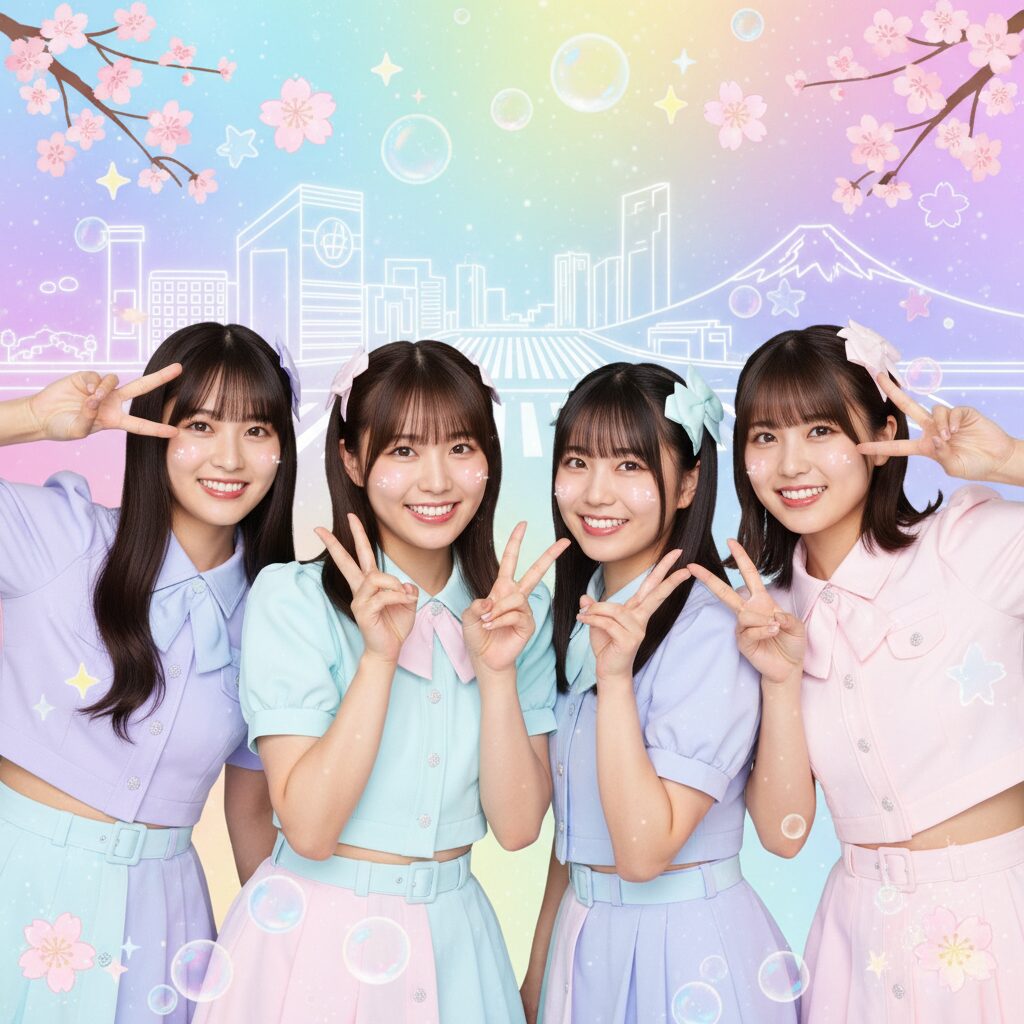
Walk into any multi-story game center in Japan, past the clatter of pachinko machines and the hypnotic glow of rhythm games, and you’ll find it. A dedicated floor, or at least a sprawling, brightly lit corner, that feels like a portal into a different dimension. The air is thick with the sound of cheerful electronic jingles and bursts of laughter. This is the realm of purikura, the humble photo booth elevated to an art form and a vital social ritual. To the uninitiated, it might look like a kitschy relic from the 90s, a technological fossil in an age where high-definition cameras are in every pocket. But that’s missing the point entirely.
Purikura—short for purinto kurabu, or ‘print club’—is not about taking a simple photograph. It’s a performative act of friendship, a collaborative creative process squeezed into a frantic ten-minute window. It’s about squeezing into a small, perfectly lit box with your closest friends, striking a series of codified poses, and then frantically decorating the resulting images with a chaotic symphony of stamps, glitter, and inside jokes. In a world saturated with ephemeral digital content, purikura offers something tangible: a glossy, shareable artifact that says, “We were here, together, and we made this.” It’s a practice that has weathered the seismic shifts of social media, smartphones, and changing youth trends, proving that its appeal was never just about technology. It’s about the deep-seated human need to create and keep physical tokens of our most important connections.
Purikura represents not just a playful escape but also a reflection of the daily grind of Japanese life, where a brief, creative retreat becomes a vivid celebration of passion and persistence.
The Birth of a Cultural Phenomenon
To grasp the staying power of purikura, you need to revisit its explosive debut in the mid-1990s. Economically, Japan was experiencing its “Lost Decade,” yet culturally, it was a time of remarkable creative vitality, especially among young people. This was the period of the kogyaru—high school girls with tanned skin, bleached hair, and loose socks—who set the standards for cool. They were the original influencers, shaping a culture rooted in communication, trends, and shared aesthetics.
Into this environment, in 1995, game companies Atlus and Sega introduced the first ‘Print Club’ machines. The idea was simple but groundbreaking: a photo booth that printed small, sticker-backed portraits. The early machines were basic, with a limited selection of frames and backgrounds. However, they tapped into something vital. For a generation of young women, it became a means of creating a personalized, tradeable symbol of friendship.
It wasn’t just a photo; it was a tangible object. These tiny stickers quickly became woven into everyday life. They were stuck on phones, in notebooks (purichō, or purikura albums, became essential items), and on personal belongings. Having a sticker featuring you and a friend was a public affirmation of your bond. Collecting them helped chart your social world. The technology itself was almost secondary to the social role it played. The machines rapidly became a sensation, spreading through arcades and department stores, cementing their place as a vital part of teenage social culture.
The Anatomy of the Ritual
The purikura experience is a multi-stage performance refined over many years. It involves much more than simply inserting a coin and smiling for the camera. The process itself is what solidifies its role as a bonding activity.
Step One: The Booth
First, you select your machine. Modern purikura arcades offer an overwhelming variety of options, each with a distinct aesthetic. One might promise a dreamy, soft-focus effect, while another offers a sharp, model-like style. The machines bear names like ‘Melulu’, ‘Chou Me-me’, or ‘97%’. Choosing is part of the fun, a negotiation among friends about the mood you want to capture.
After paying, you enter the booth, which serves as the inner sanctum. It’s a surprisingly sophisticated setup, often equipped with studio-quality lighting, a green screen, and a large touchscreen. A cheerful, high-pitched digital voice briskly guides you through the process: “Get ready! Three, two, one!” The machine instructs a series of poses, displaying examples on the screen. There’s no time to hesitate. You and your friends erupt into a flurry of peace signs, heart shapes made with your hands, and cheeks pressed together. The entire photoshoot lasts just a few minutes of spontaneous, uninhibited chaos. The aim isn’t a perfect, poised portrait; it’s to capture the energy of the moment.
Step Two: The Creation Station
This is where the real magic happens. After the photoshoot, you move to an editing booth connected to the main machine. A timer, usually set for around ten minutes, flashes on the screen, creating a sense of creative urgency. Here, the raw images appear, already enhanced with impossibly smooth skin, enlarged eyes, and slimmed jaws—the standard purikura aesthetic.
Now, the canvas is yours. Two styluses are provided so friends can decorate simultaneously. This phase is a frantic, collaborative endeavor. One person might be writing the date and location while another adds cat-ear stamps and glittery hearts. You can add text, draw freely, apply digital makeup, and select from hundreds of pre-designed stamps and frames. It’s a form of digital graffiti, a way to layer your shared personality onto the image. Inside jokes are immortalized, memories recorded, and a simple photo transforms into a rich, personalized keepsake. The time limit encourages quick decisions and teamwork, making the decoration step an exciting game in itself.
Step Three: The Artifact
When the timer ends, the machine prints your creation onto glossy sticker paper. The layout is pre-selected, determining whether you receive a few large stickers or many small ones. The sheet slides out warm to the touch. This is the prize. Everyone gathers around to admire the finished product, followed by the final ritual: cutting and dividing the stickers. Scissors, usually provided nearby for this purpose, are used. Each person takes home a piece of the shared memory. This physical token is the essential final step. It’s not a digital file lost in a phone gallery; it’s a tangible object that proves the experience happened.
More Than a Selfie: The Psychology of Purikura
In the age of smartphones, the continued popularity of purikura seems almost paradoxical. Why pay for a photo booth when you can take countless selfies for free? The answer lies in what purikura offers that a smartphone camera cannot: a dedicated space, a curated experience, and a tangible keepsake.
A Safe Space for Expression
The purikura booth creates a private world. It’s a small, enclosed area away from public view. Inside, you are free to be playful, try out poses, and be vulnerable with your friends without fear of judgment. This experience is fundamentally different from snapping selfies on a crowded street. The environment is carefully controlled—the lighting is flattering, the camera angle fixed, and the post-processing software crafted to present an idealized version of everyone. This eliminates the pressure to find perfect lighting or the right angle and allows the group to focus purely on enjoying themselves. It’s a secure stage for lighthearted self-expression.
The Analogue Antidote
We live in a time of digital overload. Our phones store thousands of photos, most of which we rarely revisit. This endless flow can diminish the value of each image. Purikura serves as the antidote. It is a finite, intentional act. You pay for a session, receive a limited number of photos, and have a strict time limit for editing. This scarcity gives the final product a sense of worth and significance.
The physical sticker sheet stands as a defiance against the intangible nature of digital media. It can be held, shared, and displayed. It takes up actual space in the real world. For a generation raised on screens, the charm of a real-world object that represents a digital-age experience is powerful. It anchors a fleeting moment in a lasting form.
Friendship Made Manifest
Ultimately, purikura is less about photography and more about friendship. The entire process is designed for groups. Squeezing into the booth, collaborating on decorations, and sharing the results all strengthen social bonds. It’s a team-building ritual disguised as a photo opportunity.
The resulting sticker is tangible proof of that connection. It’s a small trophy commemorating your shared time. When you place it in your album or on your laptop, you’re preserving not just a photo, but an emotion. Looking back at old purikura sheets is like flipping through a visual diary of your friendships, each sticker a gateway to a particular moment, place, and group of people. In Japan, where group harmony often takes precedence over individualism, an activity that honors the collective ‘we’ over the individual ‘me’ naturally holds deep and lasting meaning.
The Future of the Print Club
Purikura has shown remarkable resilience. The industry has evolved with the times, incorporating features like sending digital copies to your phone for easy sharing on social media. Still, the core experience—the booth, the frantic decorating, the physical sticker—remains largely the same. Manufacturers recognize that they are not just selling photos; they are selling an experience.
Despite technological advances, the essential charm of purikura persists. It’s a joyful, slightly chaotic ritual offering a refreshing break from the curated perfection of online life. It celebrates the present moment and creates a lasting, physical token of meaningful connections. Long after the Instagram story disappears and the digital file is lost in the cloud, that little sticker endures, symbolizing friendship, a moment in time, and the enduring magic of the Japanese print club.