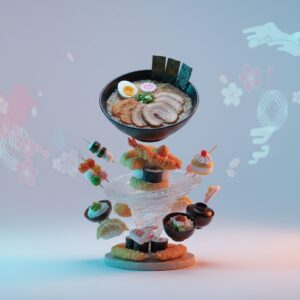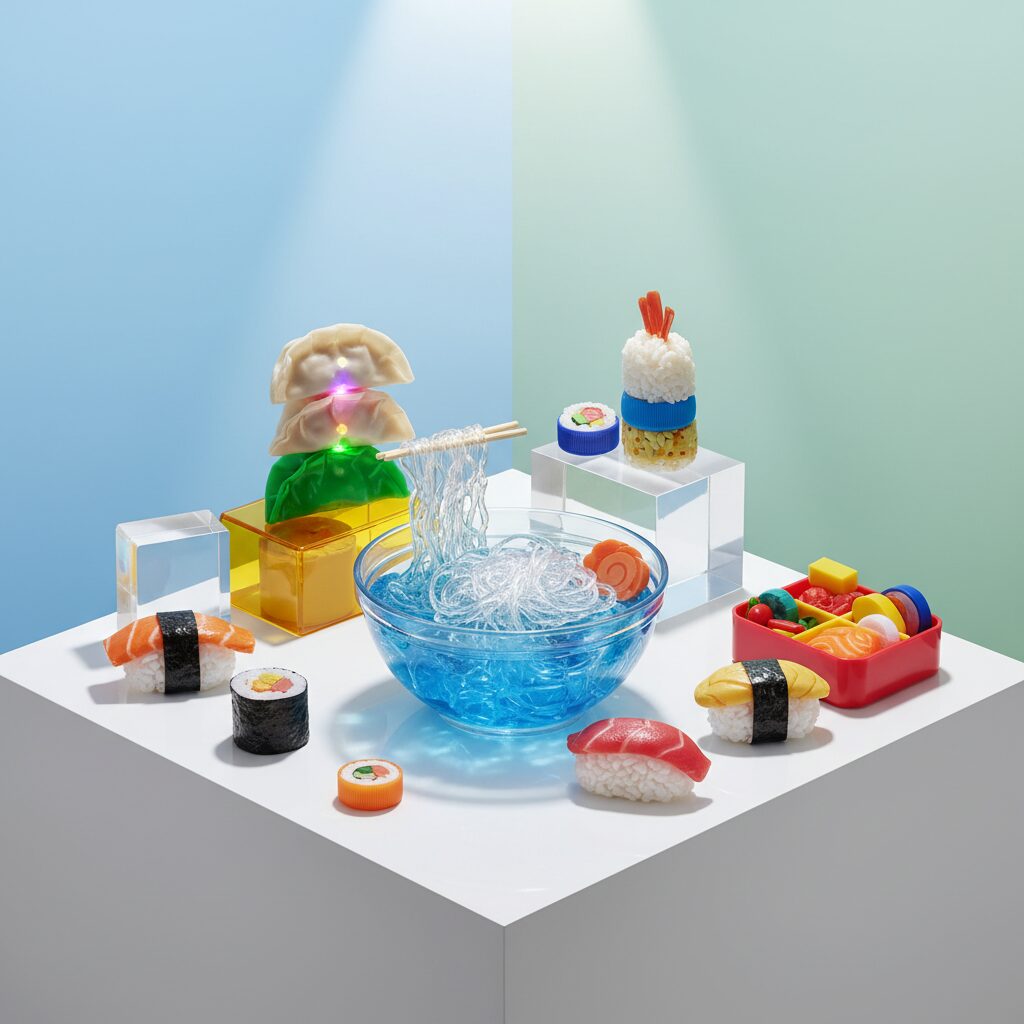
You’ve seen them. Anyone who has spent more than ten minutes walking down a commercial street in Japan has seen them. They sit in glass cases, bathed in a soft, constant light, looking impossibly perfect. A bowl of ramen, its broth gleaming, noodles suspended mid-air by a pair of floating chopsticks. A plate of tonkatsu, its panko crust a mosaic of golden-brown, promising an audible crunch. A slice of strawberry shortcake so pristine, with cream so white and berries so red, it feels like an affront to nature. You stop. You stare. You lean in closer, your brain refusing to reconcile what your eyes are seeing. Is it real? It can’t be. But it looks more real than real food. This is your introduction to shokuhin sampuru (食品サンプル), the wax and plastic food models that are one of Japan’s most delightful and misunderstood art forms. To dismiss them as mere plastic food is to miss the point entirely. These objects are not just decorations; they are a visual language, a cultural contract, and a century-old story of Japanese ingenuity and obsessive craftsmanship. They are a silent, delicious promise displayed for all to see, a fundamental part of the ritual of dining out in Japan.
Intricately mirroring the devotion to detail in every food model, one can appreciate how the hidden systems behind Japan’s konbini cuisine similarly transform everyday practices into a celebration of culture and innovation.
A Solution Born from Misunderstanding

The story of shokuhin sampuru isn’t initially about food. It’s a tale of communication, emerging from a time of significant change and cultural collision. To understand its roots, we need to return to the 1920s, when Japan was eagerly adopting Western ideas, fashion, and, naturally, food. The grand department stores, the elegant depāto, led this transformation. Their luxurious dining halls became popular spots, introducing curious patrons to exotic new dishes like curry rice, croquettes, and spaghetti.
The Post-Quake Boom and a Culinary Challenge
This modernization accelerated after the Great Kanto Earthquake of 1923. As Tokyo rebuilt, it evolved. Western-style cafés and restaurants multiplied. Yet, they faced a basic marketing dilemma: how could they entice customers to order something called omu-raisu (omelet rice) when many had no idea what it was? Written menus were puzzling for diners raised on traditional Japanese cuisine, and photographs were neither widely used nor high-quality. Restaurateurs struggled to connect their new dishes with the public’s imagination.
Then came Takizo Iwasaki, a man from the rural mountain town of Gujo Hachiman in Gifu Prefecture. Iwasaki was neither a chef nor a city dweller; he was an entrepreneur with a sharp sense of opportunity. The founding legend of the sampuru industry is wonderfully simple. One evening at home, he watched his wife prepare dinner and saw a drop of hot wax fall from a candle into a bowl of cool water, where it instantly blossomed into a delicate, flower-like form. At that moment, an idea was born. The true breakthrough came later, inspired by a plate of his wife’s Western-style omelet.
Takizo Iwasaki’s Moment of Insight
Fascinated by the challenge, he set out to create a flawless replica of the omelet using his wax-crafting skills. The process was painstaking, involving much trial and error. He poured melted wax into a mold made from the real dish and carefully painted it to capture the subtle yellow shades and the delicate browned edges. He even recreated the accompanying mound of ketchup-fried rice. When finished, the piece was so strikingly realistic that he famously mistook his wax creation for the actual dish. He realized he had discovered something remarkable. This was not merely a copy but an idealized version, a three-dimensional advertisement that could silently proclaim “delicious!”
Iwasaki founded his company, Iwasaki Mokei Seizo, in 1932. His breakthrough came when he secured a contract with Tokyo’s prestigious Shirokiya department store, crafting an entire menu of sampuru for their dining hall. The effect was immediate and transformative. Customers could see exactly what they were ordering. Sales soared. The sampuru display resolved the communication issue overnight. Soon, restaurants across Japan clamored for their own models. What began as one man’s wax experiment in a small town had evolved into an essential tool for the Japanese food service industry.
The Alchemy of Creation: Turning Plastic into Perfection
The artistry behind shokuhin sampuru reveals a world of meticulous, behind-the-scenes craftsmanship. These are not mass-produced items churned out by machines; each piece is largely handcrafted by skilled artisans who have spent years in apprenticeship. The process is a fascinating fusion of culinary observation and industrial technique, transforming a real dish into its enduring plastic counterpart.
From Ephemeral Wax to Eternal Vinyl
For the initial decades, sampuru were crafted entirely from paraffin wax, the same material first experimented with by Iwasaki. While wax was effective, it had a significant drawback: a low melting point. In Japan’s hot, humid summers or under bright display lights, the models would soften, fade, and literally lose their shape. They were delicate and short-lived.
The industry underwent a transformation after World War II with the introduction of plastics. Polyvinyl chloride (PVC) particularly proved to be an ideal medium. It offered greater durability, heat and fade resistance, and the ability to capture even finer detail. This advancement enabled artisans to perfect their craft, elevating sampuru from a clever novelty to a refined and lasting art form. The switch to plastic is what permits the stunning, permanent realism displayed in cases today.
A Step-by-Step Journey into the Artisan’s Workshop
Creating a food model begins with the real dish. Typically, a restaurant sends a finished, meticulously plated meal to the sampuru workshop. There, artisans begin their work not as sculptors, but as investigators.
First, they study and photograph the dish from all angles, analyzing its visual appeal. Next is the molding process. Each component—a piece of fish, a carrot slice, a mushroom—is carefully dipped into silicone to form a negative mold. This step is crucial; the liquid silicone penetrates every pore and crevice, capturing each ingredient’s unique texture with perfect accuracy. The rough skin of a potato, the delicate veins of a shiso leaf, the individual grains of rice—all are flawlessly recorded.
Once the molds set, they are filled with liquid PVC dyed to a base hue. This is when true artistry begins. An artisan won’t use a single color for a tuna piece; instead, multiple shades are layered to replicate the fatty marbling of otoro or the deep red of akami. After curing, the plastic pieces come out of the molds as blank, monochromatic canvases.
The painting is where the real magic unfolds. This painstaking, multi-layered procedure is executed with airbrushes and incredibly fine hand brushes. Artisans spend hours reproducing grill marks on a steak, the subtle translucency of a sliced onion, or the glossy sheen of teriyaki sauce. They master illusions using color and gloss to evoke freshness, heat, and taste. That crisp, lacy edge on tempura? Achieved by carefully dripping a special vinyl into hot oil and then meticulously painting to capture white and gold hues. The condensation on a cold beer glass? Tiny, hand-applied droplets of clear resin. The attention to detail borders on obsession.
Finally, the components are assembled. Ramen noodles are arranged to appear dynamic and lively. Garnishes are positioned with precision. Each element is composed to create one powerful impression: oishisou, or “looks delicious.” The finished product often surpasses the visual perfection of the dish it represents—it embodies the Platonic ideal of that food.
Masters of the Impossible
The craft’s pinnacle lies in replicating seemingly impossible feats. The best-known example is the “floating noodles” illusion, where chopsticks seem to lift noodles out of a soup bowl. This effect is achieved by a discreet scaffold made of clear resin or plastic, connecting chopsticks, noodles, and bowl, creating a dynamic, suspended moment that captivates viewers. Creating foam atop a beer or cappuccino is another challenge, requiring special resins whipped into froth before setting. These engineering and artistic achievements prove that sampuru makers are not merely imitators; they are true illusionists.
The Unspoken Contract: What Sampuru Say About Japanese Culture
To grasp the persistence of shokuhin sampuru in the era of Instagram and digital menus, one must look beyond their practical purpose. These plastic models are deeply woven into the social fabric of Japan, embodying core cultural values such as honesty, thoughtfulness, and the pursuit of perfection.
WYSIWYG Dining: The Promise of the Display Case
In many parts of the world, there is a cynical recognition that the food shown in adverts is a stylized fantasy. The towering, juicy burger in the poster hardly resembles the sad, flattened sandwich you actually receive. This disconnect is often a running joke. In Japan, however, it would be seen as a betrayal. The sampuru in the window is not an exaggeration; it is a promise. It represents an unspoken agreement between the restaurant and the customer that says, “What You See Is What You Get.”
The dish served at your table is expected to match the model in the window in size, composition, and presentation. Serving anything noticeably inferior would bring immense shame to the establishment and be a legitimate reason for complaint. This commitment to a standard reflects a deeply ingrained cultural emphasis on honesty in business and a profound respect for the customer. The sampuru acts as the benchmark, the gold standard by which the real food is judged.
The Silent Facilitator of Social Harmony
Japanese culture highly values social harmony and the avoidance of conflict or awkwardness. Shokuhin sampuru play an unexpectedly important role in this. When a group of friends or coworkers are deciding where to eat, a quick look at the display case can resolve everything. It provides immediate, clear information about the cuisine type, portion sizes, and general price range, allowing the group to reach consensus before even entering. This prevents the indecision and debate that often occur in such situations.
The advantage for foreign tourists is clear—it effortlessly bypasses any language barrier. Ordering can be as simple as leading the server outside and pointing: “Kore, kudasai.” This one, please. Even for locals, it streamlines the dining experience. During a busy weekday lunch hour, a worker can select their meal from the window, walk in, order, eat, and leave with maximum efficiency. The sampuru display removes uncertainty and anxiety, making the entire process smoother and more enjoyable for everyone involved.
Sampuru as an Expression of Omotenashi
Ultimately, the sampuru display is a profound manifestation of omotenashi, the distinctive Japanese concept of hospitality that focuses on anticipating and fulfilling a guest’s needs before they are even voiced. The restaurant owner has already considered your potential questions: What is tonkatsu? How large is the ramen? What accompanies the set meal? The display case answers these questions quietly and thoroughly. It is a gesture of deep consideration, intended to put the diner at ease and ensure they can make an informed, confident decision. It is hospitality made tangible, a welcome mat crafted from plastic and artistry.
A Tradition Reimagined: The Future of Fake Food
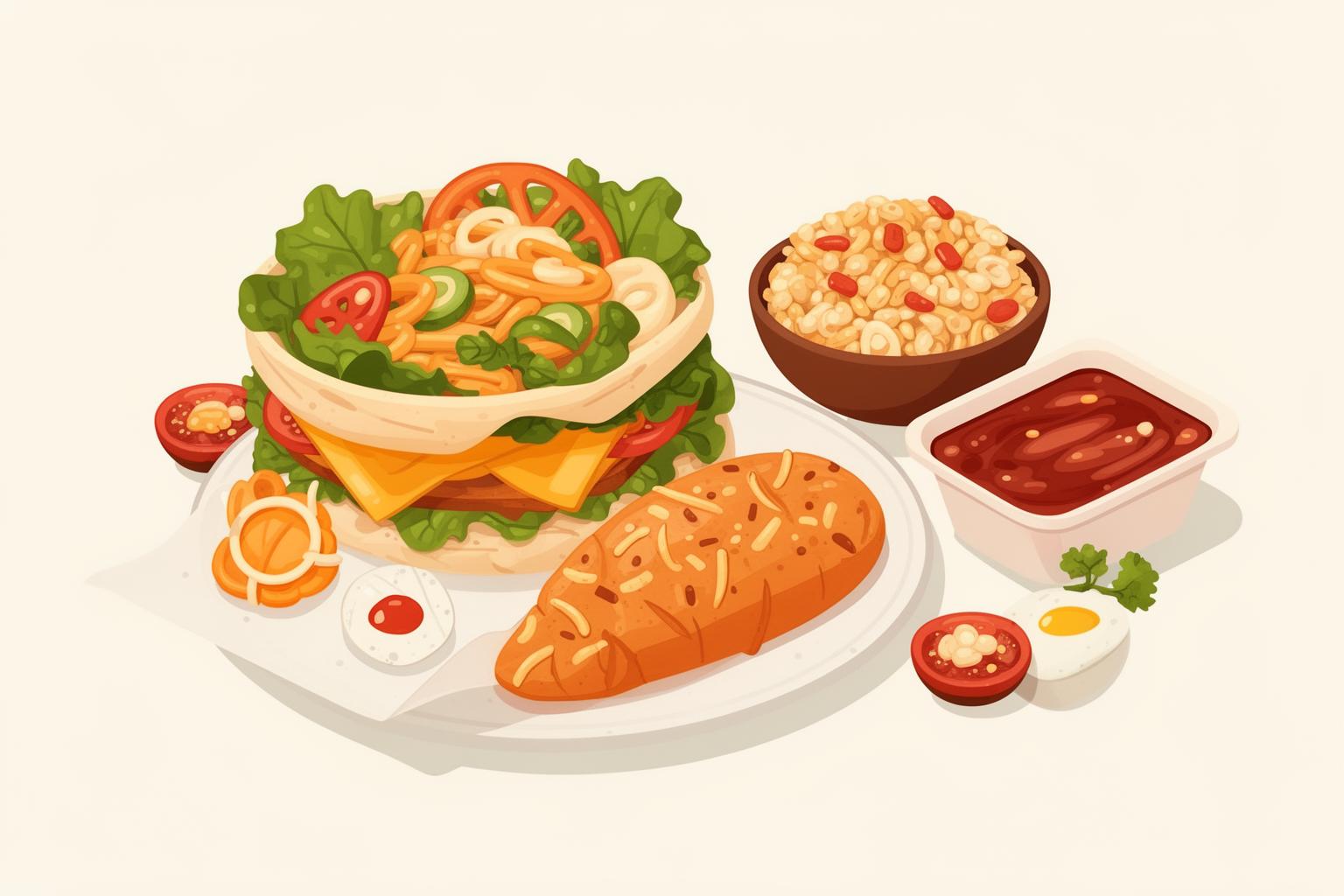
While shokuhin sampuru continues to be a common sight outside numerous restaurants, the art form is far from static. It has evolved, reaching new audiences and finding applications well beyond its original role as a simple menu aid. The industry has adapted to changing times, transforming this commercial tool into both a cultural export and a hands-on experience.
From Kappabashi Street to Your Keychain
As Japan grew into a major tourist destination, the sampuru industry discovered a vast new market. Visitors were so mesmerized by the hyper-realistic models that they wanted to bring them home. This demand sparked a booming business in sampuru-themed souvenirs. In areas like Tokyo’s Kappabashi district, known as “Kitchen Town,” you can find entire shops dedicated to the craft. Alongside full-sized, professional-grade models meant for restaurants, there are now keychains shaped like gyoza, magnets resembling sushi slices, and phone cases decorated with bacon and eggs.
More importantly, the craft has become accessible to the public through DIY workshops. In Gujo Hachiman, Takizo Iwasaki’s hometown and a continuing production hub, visitors can try making their own models. Guided by a master artisan, participants learn the surprisingly intricate techniques of crafting a piece of tempura or the delicate folds of a lettuce leaf from colored wax and vinyl. These experiences have been highly successful, fostering a deeper appreciation for the skill involved and turning the craft from a behind-the-scenes trade into a memorable cultural activity.
New Frontiers: Medicine, Education, and Art
The core skill of shokuhin sampuru—precise, detailed replication—has found uses far beyond gastronomy. Nutritional models that display accurate portion sizes of various foods are employed in schools and hospitals to teach healthy eating habits in a clear and tangible way. The same artisans who create perfect slices of fatty tuna can also produce anatomically correct models of human organs for medical schools, enabling surgeons to practice complex procedures on lifelike replicas.
Additionally, contemporary artists have embraced the medium, using the familiar aesthetic of sampuru to create surreal, humorous, or thought-provoking works. They challenge expectations by crafting impossible dishes or deconstructing familiar foods to make artistic statements. This has elevated sampuru into the realm of pop art, celebrated for its unique visual appeal and cultural significance.
Navigating the Digital Age
Naturally, the industry faces challenges. In an age of QR code menus and restaurant review sites filled with user-uploaded photos, is there still a role for costly, handmade plastic models? Some younger restaurateurs may view them as outdated and unnecessary when tablet menus can be updated instantly and affordably.
Yet, sampuru endures. It offers a tangible, three-dimensional charm that a flat screen cannot match. A photograph can show what a dish looks like, but a well-crafted model conveys its texture and presence. It captures attention on a busy street in a way a website cannot. It serves as both an advertisement and a piece of public art, woven into the very fabric of Japan’s urban landscape. While its function may be shifting, the deep cultural roots and undeniable artistic allure of shokuhin sampuru indicate it is far from becoming a relic of the past.
So next time you find yourself pressed against a restaurant display window in Japan, take a moment to truly appreciate what you see. You’re not merely looking at a clever marketing gimmick or a piece of plastic—you’re witnessing the culmination of a century of innovation, a testament to the Japanese spirit of monozukuri—profound dedication to craftsmanship. It’s a story of cultural adaptation, a guarantee of quality, and an art form hidden in plain sight, presented in perfect, glorious, and utterly inedible detail.