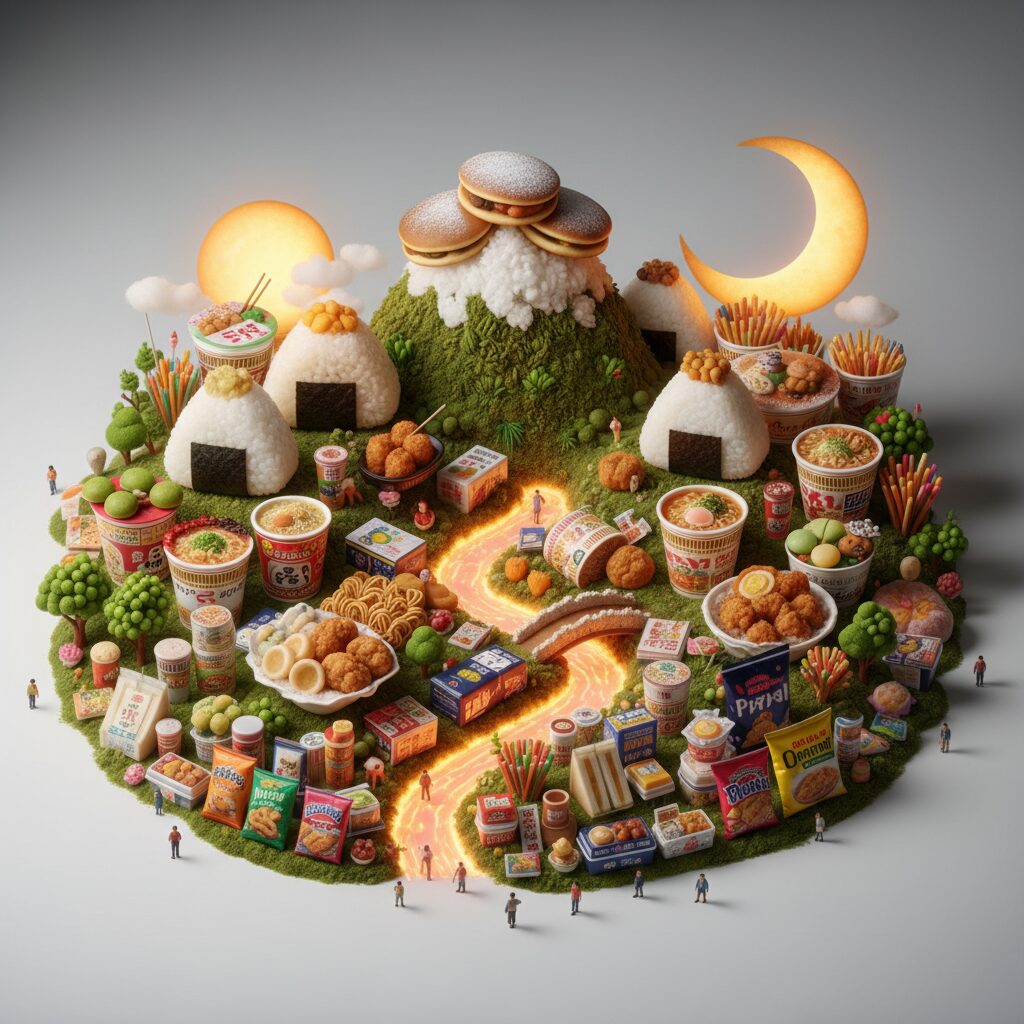
It’s a familiar scene for anyone who has traveled to Japan. You arrive, bleary-eyed from the flight, and step out into a world of overwhelming sensory input. In search of something simple to eat, you find yourself drawn into the bright, clean, and impossibly organized interior of a 7-Eleven, FamilyMart, or Lawson. You grab an onigiri, a plastic-wrapped sandwich, maybe a bento box from the refrigerated shelf. Your expectations, shaped by a lifetime of gas station hot dogs and sad, cellophane-wrapped pastries, are understandably low. This is convenience store food, after all.
Then you take a bite. The rice in the triangular onigiri is fluffy, slightly warm, and perfectly seasoned. The famous egg salad sandwich is a revelation of creamy, rich filling nestled between two slices of cloud-like milk bread. The karaage chicken in the bento box is crispy and shockingly juicy. It’s not just edible; it’s genuinely, profoundly good. This experience is a rite of passage for almost every visitor to Japan, a moment that scrambles preconceived notions of what “fast food” can and should be. The question that inevitably follows, usually mumbled through a mouthful of that perfect egg salad, is simple: How is this possible?
The answer has little to do with better microwaves and everything to do with a uniquely Japanese ecosystem built on three pillars: a cultural baseline that refuses to compromise on food, a fiercely competitive corporate landscape, and a logistical operation of almost frightening precision. This isn’t just about selling snacks. It’s a reflection of deeper national values applied to the most mundane of daily needs.
This deep commitment to flavor and precision is echoed in Japan’s seasonal culinary artistry, as seen in bitter spring flavors.
The Relentless Pursuit of ‘Oishii’

To truly understand the quality of the food, you first need to grasp the expectations of the people buying it. In Japan, there is a common cultural belief that food, regardless of price, should be prepared with care and respect. This idea of ‘oishii’—deliciousness—serves as the foundation for everything.
A National Obsession with Quality
Food in Japan is never considered mere fuel. It represents regional pride, seasonal celebration, and daily enjoyment. This shapes a consumer base with an exceptionally discerning palate. People pay attention to the smallest details: the precise texture of the rice, the crispness of the nori seaweed enveloping an onigiri, the freshness of a single lettuce leaf in a sandwich. A product that doesn’t meet this high, unspoken standard won’t just perform poorly in sales; it will be judged, debated, and quickly discarded. Konbini chains know well that they are not only competing with one another but also against the memory of a home-cooked meal, the quality of a local bento shop, and the very high expectations of 125 million people. There’s no room for mediocrity when customers can distinguish between good rice and exceptional rice with just one bite.
The Konbini Wars: A Battlefield of Flavor
The fierce competition among the “big three”—7-Eleven, FamilyMart, and Lawson—is legendary in Japan’s business world. It’s an ongoing, high-stakes struggle for market share, with food as the chief weapon. This isn’t merely a race to the bottom on price. It’s a contest of innovation and quality fought aisle by aisle. When one chain rolls out a premium egg sourced from a particular farm for its sandwiches, rivals quickly respond with their own enhanced version or a collaboration with a renowned Tokyo bakery. FamilyMart might introduce a new range of sweets crafted by a famous pastry chef, prompting Lawson to launch its own exclusive, upscale dessert featuring Uji matcha. This relentless one-upmanship cycle benefits the consumer, who gains access to a continually improving selection of delicious, carefully developed foods. These companies invest heavily in their private brands, such as 7-Premium, creating products often regarded as superior to those from long-established food manufacturers.
The Invisible Machine: Logistics as an Art Form
The most delicious recipe in the world is meaningless if the final product tastes old or stale. The true magic of the konbini lies in an unseen, behind-the-scenes network that delivers fresh food onto the shelves with unmatched speed and efficiency.
Delivering Freshness, Three Times a Day
The secret to that fresh-tasting onigiri isn’t a blend of preservatives; it’s speed. Unlike convenience stores in many other countries that may receive one large delivery per day or even every few days, Japanese konbini operate on a “just-in-time” model taken to its extreme. Most stores get multiple deliveries daily, often three or more, each carefully timed for a specific meal. The morning delivery brings fresh sandwiches and rice balls for the breakfast and lunch rush. Another arrives in the afternoon with bento boxes for dinner. A late-night delivery might restock drinks and popular snacks. These deliveries arrive in special temperature-controlled trucks—a system known as teion-bin—with separate compartments for frozen, chilled, and room-temperature items, ensuring everything reaches the store in perfect condition. As a result, the food on the shelf has an incredibly short lifespan, often produced in a nearby central kitchen just hours before you pick it up.
The All-Seeing Eye of Big Data
Every purchase at a konbini is a data point, and these chains excel at analysis. The cash register does more than process your payment; it records exactly what was bought, when it was bought, and often the general age and gender of the buyer, as input by the clerk. This flood of data is analyzed in real-time to manage inventory with surgical precision. The system can predict that a certain neighborhood near an office park will sell out of egg salad sandwiches by 1 p.m. on a Tuesday, or that a rainy evening will increase demand for hot oden. This enables each individual store to stock precisely what its local customers want, when they want it. This minimizes waste and ensures popular items are always available. The data also fuels product development, highlighting emerging flavor trends and unmet needs that can be turned into the next popular product.
The Doctrine of Disposal
Walk into a konbini late at night, and you might see a staff member methodically removing perfectly good-looking food from the shelves. This isn’t about spoilage in the usual sense. Konbini chains enforce an extremely strict policy of pulling products well before their official expiration date. Onigiri and bento boxes are often removed after just a few hours on the shelf to ensure what remains is at peak freshness. This practice, known as hinoshu-haiki (daily disposal), would be seen as shockingly wasteful in many other cultures. In Japan, it is a crucial part of the quality promise. It guarantees that customers never take a chance on freshness. This relentless commitment to high standards, even at significant financial cost, strengthens customer trust and sends a powerful message about the brand’s priorities. It is a ritual that supports the entire system’s reputation.
The Science of the Sandwich (and Everything Else)
The consistently high quality of konbini food is no coincidence. It results from methodical, intense, and often secretive research and development that treats a simple rice ball with the same level of seriousness as a luxury automobile.
Where Product Development is a Religion
Behind every konbini product is a team of dedicated food scientists, chefs, and researchers working in cutting-edge R&D labs. They are obsessed with every detail. For the legendary tamago sando, the development team tests dozens of mayonnaise blends to find the perfect balance of creaminess and tang. They collaborate with bread makers to create a proprietary shokupan (milk bread) that remains incredibly soft without becoming soggy from the filling. They measure the ideal boiling time for the eggs down to the second. Even the packaging is an engineering marvel, with special films and multi-part designs to keep moist ingredients separate from dry ones, preserving the meal’s integrity until it’s opened. This level of precision is applied to everything, from the specific ‘al dente’ texture of noodles in a bowl of cold ramen to the variety of strawberry used in a seasonal parfait.
From Farm to Fluorescent Lights
The major chains don’t simply buy their ingredients on the open market; they are deeply involved in the supply chain from the start. They collaborate directly with agricultural cooperatives and farmers to cultivate specific strains of rice ideal in texture and flavor for onigiri. They may contract with a network of vegetable growers to guarantee a consistent, year-round supply of crisp, fresh lettuce for their salads. This vertical integration gives them significant control over the quality and consistency of their raw materials. When you purchase a simple salad, the journey of those vegetables from farm to shelf has been carefully managed and optimized at every stage by the konbini chain itself—a level of oversight typically reserved for high-end restaurant groups.
More Than a Meal: The Konbini’s Role in Daily Ritual

Ultimately, the reason konbini food must be so good is because the konbini itself holds immense importance. It is not just a stop for a road-trip snack; it is an essential part of the daily routine for millions.
An Essential Part of the Social Fabric
To truly appreciate the food, one must understand the konbini’s role in Japanese society. It is much more than a store. It functions as a de facto bank, post office, ticket counter for concerts and travel, copy center, and most importantly, a communal kitchen for the entire nation. In a country characterized by long work hours, small living spaces, and many single-person households, the konbini serves as a vital daily lifeline. It offers breakfast for the office worker on the way to the station, lunch for the student between classes, and dinner for the busy single professional who lacks time or space to cook. This deep social integration means that the konbini bears a responsibility to its customers beyond mere commerce. It must be reliable, consistent, and trustworthy. The quality of its food forms the foundation of that social contract.
A Reflection of Season and Place
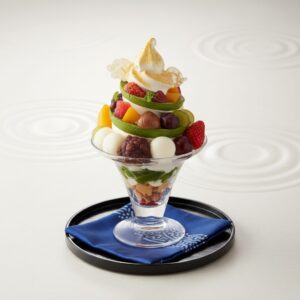
The selection of food in a konbini is never static. It acts as a living, breathing calendar of Japanese culture. In spring, shelves and dessert cases burst with sakura and strawberry-flavored treats. During the sweltering summer months, they are stocked with chilled noodles like soba and somen, along with refreshing citrus jellies. Autumn brings a bounty of items featuring chestnuts, sweet potatoes, and pumpkins. And as winter arrives, the comforting scent of oden—a hot pot of assorted ingredients simmered in savory dashi broth—permeates every store. Beyond seasonal changes, the menu also reflects regional differences. A konbini in Sapporo might showcase products made with rich Hokkaido corn and butter, while one in Fukuoka could offer mentaiko (spicy cod roe) rice balls. This constant evolution and regional specificity turn each visit into a small discovery, linking the convenience of the meal to the deeper cultural rhythms of time and place.
So, the next time you find yourself beneath the bright, even glow of a Japanese convenience store, marveling at the quality of a simple meal, know that it is no accident. It is the visible outcome of a powerful, unseen system—the product of a culture that demands excellence in its food, a fiercely competitive market that tolerates nothing less, and a logistical network of astonishing efficiency. It is a world where data science, culinary art, and social necessity converge within a refrigerated case. The Japanese konbini has solved a puzzle that has eluded nearly everyone else: how to create food that is fast, affordable, accessible, and genuinely, deliciously good. It has turned the ordinary act of grabbing a quick bite into a ritual of quiet, consistent, and distinctly Japanese excellence.