You know how it starts. You’re deep into a late-night YouTube session, letting the algorithm be your guide. Suddenly, it serves you something different. The thumbnail is a soft-focus anime still from the 1980s—a woman with feathered hair, maybe leaning against a sports car, or gazing out at a neon-lit cityscape. The title is a string of Japanese characters followed by a name like Tatsuro Yamashita or Miki Matsubara. You click. And then, it hits you. A wave of impossibly smooth, funky, and melancholic music washes over you. It’s a sound that feels both futuristic and ancient, a dispatch from a past you’ve never known but somehow miss.
This is City Pop, the soundtrack of Japan’s 1980s economic boom, and it has become one of the internet’s most enduring musical obsessions. From algorithmically-generated playlists with millions of views to vinyl reissues that sell out instantly, this once-niche genre has found a massive global audience decades after its heyday. The question is, why? Why does music about driving down the Shonan coast or lonely nights in a Tokyo high-rise resonate so profoundly with a generation of listeners from Los Angeles to Warsaw?
The answer is that City Pop is far more than just music. It’s a portal. It’s the sound of a very specific fantasy: the dream of Japan’s “Bubble Era,” a period of seemingly limitless prosperity and technological optimism. Listening to City Pop is like stepping into a romanticized, hyper-stylish version of the 80s, a world bathed in pastel sunsets and electric neon. It offers an escape into a past that feels more hopeful and effortlessly cooler than our own chaotic present. It’s not just nostalgia; it’s nostalgia for a time and place most of its new fans never experienced. And in decoding that appeal, we uncover a fascinating story about history, fantasy, and the search for solace in a world that lost its script.
City Pop’s nostalgic allure mirrors the dynamic spirit found in Japanese after-school clubs, a movement that reimagines tradition with forward-thinking energy.
The Sound of the Bubble
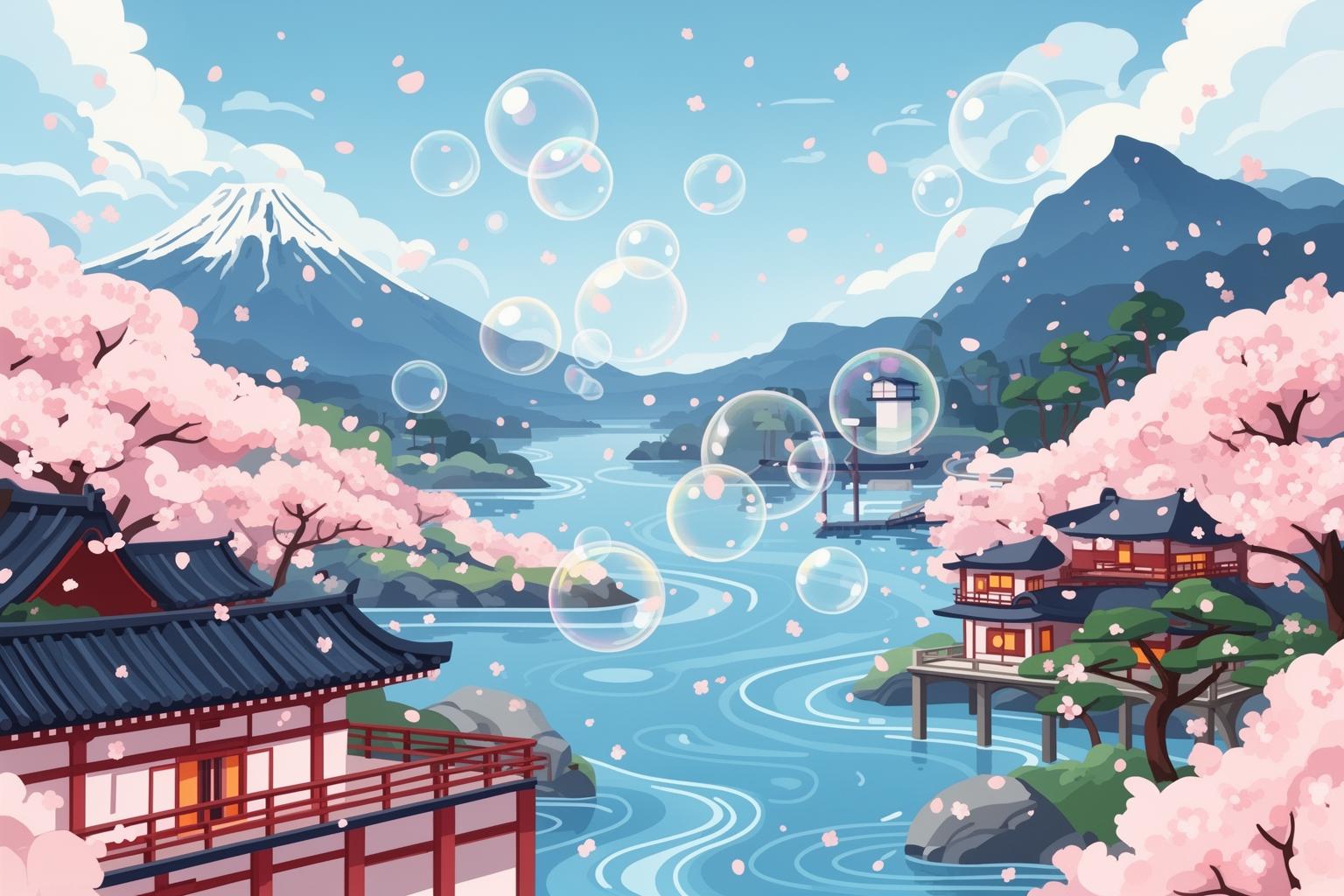
To truly grasp City Pop, you first need to understand the world that gave birth to it. This was more than just music; it was the sonic expression of a national mood, a country at the pinnacle of its economic strength and cultural confidence. The sound is inseparable from the wealth that fueled it.
What Exactly Is City Pop?
Defining City Pop can be challenging because it’s less a strict genre and more an elegant, urban vibe. At its heart, it’s a distinctively Japanese blend of American and Western musical styles popular in the late 1970s and 1980s. Think of it as a musical cocktail: a generous pour of American soft rock and AOR (Adult-Oriented Rock), a splash of polished funk, a touch of soulful R&B, a hint of breezy jazz fusion, and a dash of disco. All of this is filtered through a Japanese pop sensibility, emphasizing strong, often bittersweet melodies.
The core elements are unmistakable once you’re familiar with them. The instrumentation is rich and layered. You’ll hear the warm electric tones of a Fender Rhodes piano, complex and incredibly groovy slap-bass lines, crisp drumming, and soaring saxophone solos that embody the essence of 80s romance. The production quality is immaculate, almost clinical in its precision. This wasn’t garage rock; it was studio-as-instrument music, polished to a mirror shine.
Thematically, the music painted a vivid picture of modern Japanese life. The lyrics moved away from traditional themes of nature or seasons in favor of a new, cosmopolitan world. They told stories of summer romances ending at the beach, solitary drives along coastal highways at dusk, cocktails in skyscraper lounges, and the exhilarating anonymity of city living. Artists like Tatsuro Yamashita, the genre’s unofficial king, crafted intricate tributes to urban energy, while his wife, Mariya Takeuchi, wrote some of the most iconic and emotionally powerful tracks, including the song that later revived the entire genre: “Plastic Love.” Others, like Anri and Toshiki Kadomatsu, created upbeat, sun-soaked anthems for endless summers, while Miki Matsubara’s “Mayonaka no Door / Stay With Me” became a global symbol for the genre’s unique blend of catchy, melancholic funk.
A Soundtrack for Unprecedented Wealth
This slick, high-end sound didn’t arise out of nowhere. It was backed by the most explosive economic boom the modern world had ever seen: Japan’s “Bubble Economy.” Following decades of post-war rebuilding, Japan in the 1980s had become an economic powerhouse. The yen was strong, Japanese companies were acquiring foreign assets, and Tokyo’s real estate was, for a time, worth more than the entire United States. The average citizen experienced this prosperity firsthand. Lifetime employment was common, disposable income was abundant, and a wave of boundless optimism swept through society.
This national affluence directly influenced the music. Record labels had vast budgets to invest. They could hire the top session musicians in the country—players like bassist Tetsuo Sakurai and drummer Shuichi “Ponta” Murakami became legends themselves. They had access to endless hours in state-of-the-art recording studios, outfitted with the latest synthesizers, drum machines, and mixing consoles from Yamaha, Roland, and Korg. This cutting-edge technology is audible on every track. The sound is clean, dynamic, and intricate. It’s the sound of a nation leading the world in technology, eager for its popular culture to reflect the same level of sophistication and quality.
City Pop was aspirational music for an aspirational era. It served as the soundtrack for a new generation of urban professionals who labored in the city’s financial hubs and partied hard in the discos of Roppongi. It was music to be enjoyed on a brand-new Sony Walkman while riding the bullet train or on the premium stereo of a new Toyota Celica. It was the soundtrack of a nation confident it had perfected modernity, building a society that was safe, prosperous, and effortlessly stylish.
Manufacturing an Urban Paradise
The genre’s name is telling. The “City” in City Pop serves as the central figure in this entire cultural story. However, the city it portrays wasn’t a gritty, realistic urban environment; rather, it was a carefully crafted fantasy—an idealized vision of city life that was as integral to the product as the music itself.
The City as Main Character
The Tokyo of City Pop is a dreamlike place. It’s a city full of endless possibilities, where the nights are cool and the lights glow warmly. The music and its related imagery evoke very specific scenes: driving along the Shuto Expressway at night, the orange lights of Tokyo Tower shining in the distance; enjoying a Suntory whisky in a dim bar perched on the 40th floor of a Shinjuku skyscraper; or watching the sunset from a breezy apartment balcony overlooking the bay. It presents an urban life stripped of its daily annoyances—the crowded subways, cramped apartments, and crushing pressure to conform—and portrayed as pure, refined leisure.
This was a groundbreaking act of self-definition for Japan. For centuries, Japanese art and culture had celebrated the rural and natural world. The post-war identity was that of the diligent, self-sacrificing salaryman rebuilding the nation. City Pop introduced a third path: a new identity rooted in urban sophistication, personal freedom, and the pursuit of pleasure. It told young Japanese people that it was stylish to be modern, to embrace Western influences, and to create a life of elegance and consumption in the city. It became the soundtrack for Japan’s emergence on the global stage, not only as an economic power but as a cultural force.
The Aesthetic of Escape
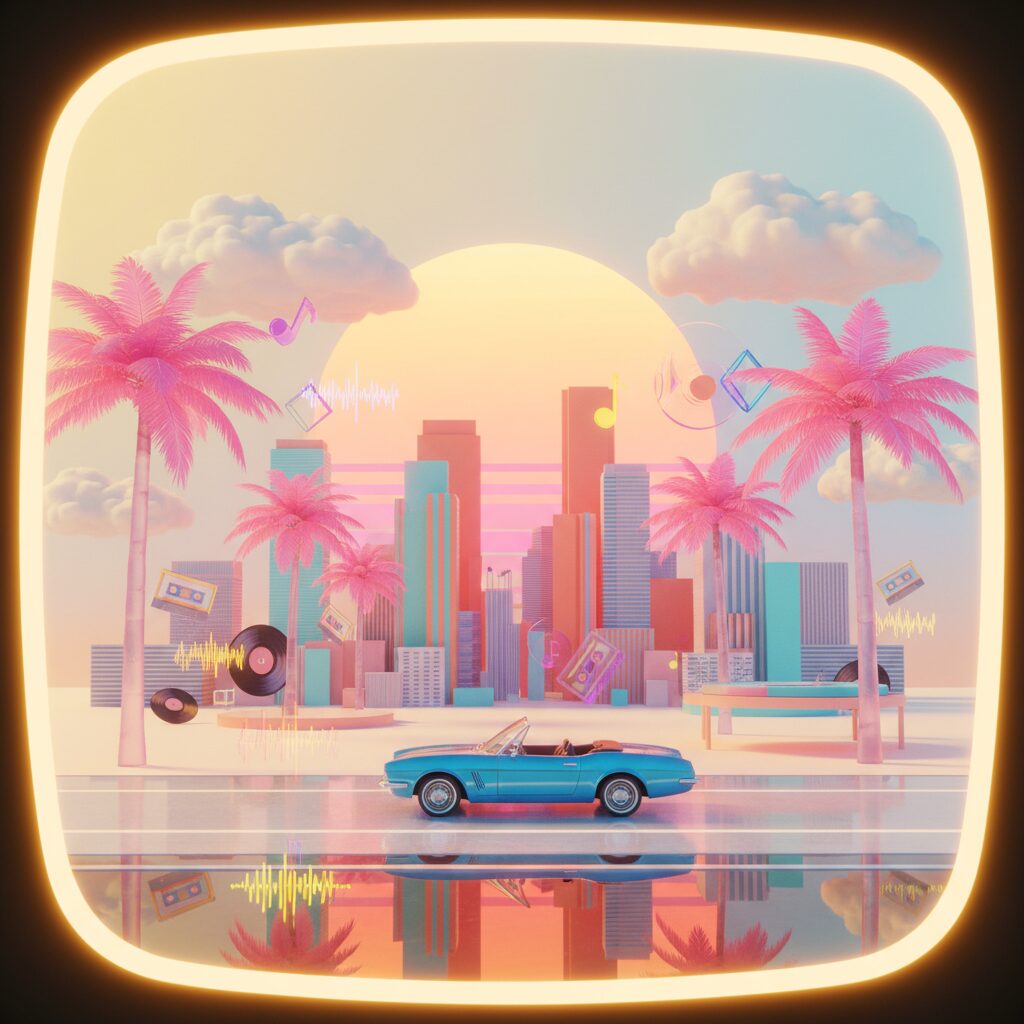
This fantasy was clearly conveyed through the genre’s visual style, especially its album covers. The work of artists like Hiroshi Nagai and Eizin Suzuki is now as iconic as the music itself. They crafted a world of crisp lines, impossible blue skies, sparkling swimming pools, and solitary palm trees silhouetted against a setting sun. Their style was heavily influenced by American aesthetics, particularly the airbrushed hyperrealism of David Hockney and the sun-bleached landscapes of the West Coast.
This imagery was pure escapism. It depicted a resort-like world perpetually in vacation mode. Even when the scenes were urban, they felt calm and uncluttered. People were rarely present in these landscapes, enhancing the sense of a private, personal paradise. This art sold a lifestyle that was just out of reach for most, yet felt tantalizingly close during the boom years. You might not own a beach house in Malibu, but you could own an Anri album with a Nagai cover, and for its 45-minute runtime, be transported there. The music and art combined to create a unified, immersive mood—a vibe of effortless, sun-drenched cool. It was a flawless piece of cultural branding for an era defined by its shimmering, optimistic facade.
The Algorithm and the Anatomy of Nostalgia
For nearly twenty years, City Pop was mostly forgotten in Japan, regarded as a kitschy remnant of an economic bubble long since burst. Its global resurgence was neither orchestrated by record labels nor fueled by critics. Instead, it was a curious and delightful accident of the digital age—a ghost in the machine that discovered a fresh and surprisingly welcoming audience.
How “Plastic Love” Broke the Internet
City Pop’s revival story is inseparable from one song: Mariya Takeuchi’s “Plastic Love.” Released in 1984, the track enjoyed only modest success initially. Yet, around 2017, an unofficial eight-minute version mysteriously started appearing in YouTube recommendations for millions worldwide. The reasons behind the algorithm’s fascination with this song remain unclear, but it quickly spread like wildfire.
Listeners were entranced. The song embodied the essence of City Pop: a sleek, irresistible bassline, sparkling keyboards, and Takeuchi’s smooth, subtly melancholic vocals. Its lyrics recount dancing away heartbreak and seeking superficial connections in the city, adding emotional depth beneath the upbeat rhythm. It was happy-sad music, a sentiment that resonated universally.
This algorithmic anomaly unleashed a flood of interest. Fans of “Plastic Love” were soon guided toward other City Pop songs, unlocking a vast, neglected musical world. The genre also gained momentum from related internet subcultures, especially Vaporwave. Emerging in the early 2010s, Vaporwave heavily sampled and slowed down 80s and 90s corporate lounge music, jazz fusion, and crucially, City Pop. This microgenre celebrated the glossy, consumerist aesthetics of that era, effectively preparing a whole generation of online listeners to embrace the authentic sound. For many, City Pop was the “source code” they had unknowingly sought.
Nostalgia for a Time You Never Lived
Why did this music resonate so strongly in the 2010s and beyond? Primarily because it offers a powerful psychological escape. Many young people today face a world marked by instability. Economic uncertainty, political strife, climate fears, and constant social media stress create a persistent, low-level anxiety. City Pop presents the exact opposite: a realm of unshakable confidence and carefree optimism.
It conjures a time when the future seemed bright and straightforward. Technology—from Walkmans to futuristic cars—was seen as a means to enhance life and joy, not complicate or isolate it. The economy appeared to be on a steady ascent, promising stability and comfort. This is a fantasy of a well-functioning, prosperous adult world—one that feels increasingly out of reach for many Millennials and Gen Zers. This gives rise to a phenomenon called “anemoia,” or nostalgia for an era one never experienced. City Pop lets listeners vicariously relive the last great celebration of the 20th century, a moment when the good times seemed endless.
The Bittersweet Aftertaste
Yet City Pop’s charm isn’t rooted solely in naïve optimism. If it were, it would be little more than a novelty. What sustains the genre is a subtle, persistent thread of melancholy. Even the most lively tracks often carry a sense of impermanence, of joy made poignant by its fleeting nature.
“Plastic Love” perfectly exemplifies this. While ideal for dancing, its lyrics describe a hollow heart and love as a mere game. Miki Matsubara’s “Stay With Me” expresses a desperate plea to a departing lover. This duality is crucial. The music recognizes the loneliness that can exist beneath a glittering urban façade—the emptiness that may accompany material success. This emotional depth keeps the genre from feeling outdated. It captures a form of modern alienation that remains deeply relevant in our hyper-connected yet often isolating world. It’s a fantasy, but one with soul—a fantasy that acknowledges the bittersweet truth that even in paradise, solitude can persist.
The Fantasy Lives On
What started as an online curiosity has now flourished into a true global subculture. City Pop is no longer confined to YouTube algorithms and niche online communities. It has decisively entered the mainstream, demonstrating that its appeal is far from temporary.
From Internet Curiosity to Global Phenomenon
City Pop’s influence can be seen everywhere. Record labels across Japan, America, and Europe are reissuing long-forgotten albums on vinyl to eager collectors. Contemporary Western artists like The Weeknd, Thundercat, and Tyler, the Creator have openly embraced the sounds and moods of 80s Japanese pop in their music, merging its smooth synthesizer tones and intricate chord progressions with modern hip-hop and R&B. DJs at fashionable bars from Brooklyn to Berlin now weave City Pop classics into their sets, prompting immediate recognition and enthusiasm.
In Japan, the phenomenon has been met with a mix of surprise and pride. The music once listened to by their parents—and dismissed for years as outdated—is now celebrated worldwide. This has ignited a domestic revival, with a new generation of Japanese artists heavily influenced by the City Pop sound, carrying the legacy forward. The cycle is complete: the internet’s fascination has breathed new life into the very culture it once romanticized.
More Than Music, It’s a Vibe
Ultimately, the lasting fascination with City Pop is a fascination with a feeling. It’s the sonic equivalent of a faded snapshot of a perfect day. It embodies a world that was confident, stylish, and forward-thinking—a sharp contrast to our often cynical and uncertain times. It’s the dream of a future that never fully came to pass, built on analog technology, urban sophistication, and faith in progress.
Listening to City Pop is an escape into a beautiful, fleeting illusion. It lets us leave our realities behind for a while, stepping into a world where the biggest worry is a summer romance fading with the season. It’s a fantasy of prosperity, innocence, and a cool, confident past that feels more real and desirable than the present. The Bubble burst, the 80s ended, and Japan’s endless summer slipped into a long economic autumn. Yet in the music, the celebration never ends. The skyline always sparkles, the ocean breeze remains warm, and the night is forever young. In a world often unrelenting, that promise of escape is universally understood and deeply cherished.