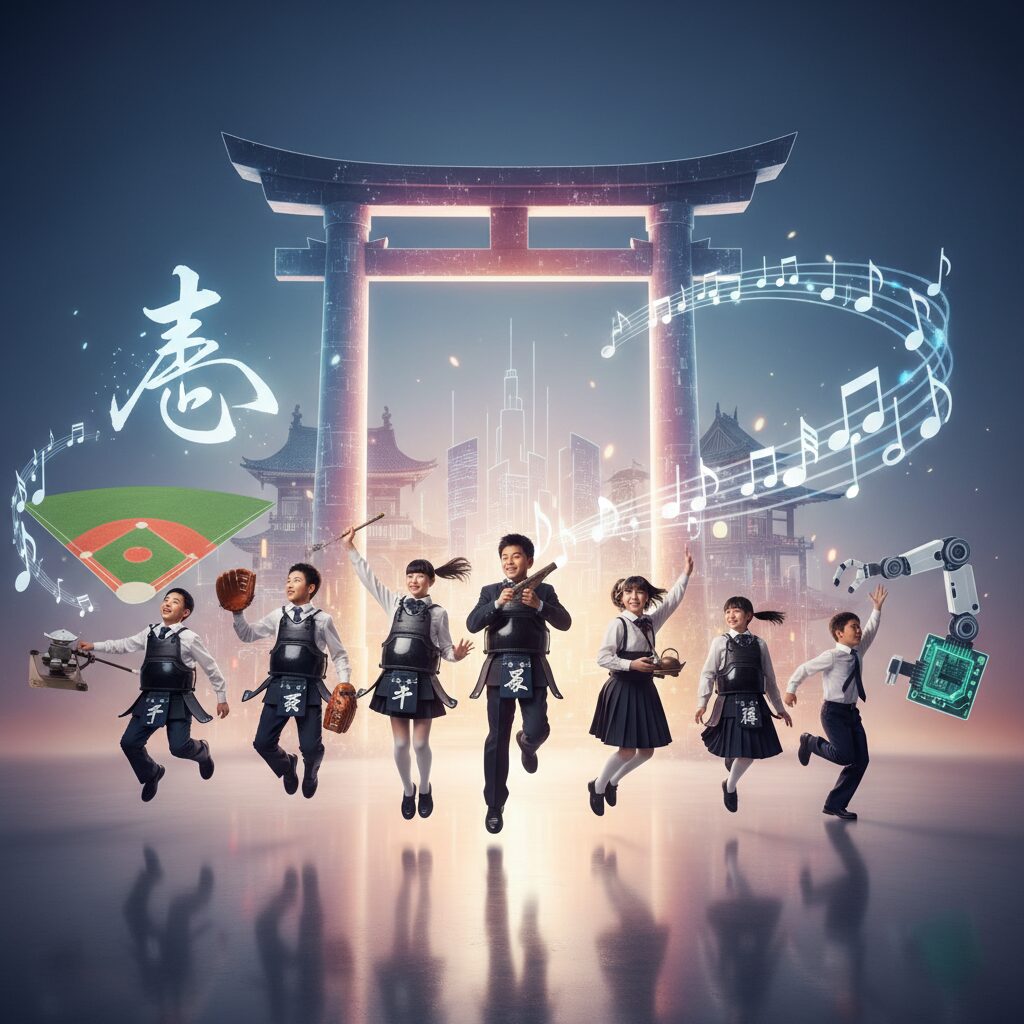
If you ever find yourself near a Japanese junior high or high school after the final bell, you’ll witness a transformation. The laughing, chaotic energy of students flooding out of the main building quickly gives way to a disciplined, almost military order. On the baseball diamond, boys with shaved heads field grounders under the watchful eye of a coach, their shouts of effort echoing in unison. In the kendo dojo, the sharp crack of bamboo swords and guttural cries of kiai cut through the air. Inside, the brass band isn’t just practicing—they are drilling scales and movements with a precision that would impress a drill sergeant. A casual observer might see intense dedication. A tourist might call it impressive passion. But what you’re actually watching isn’t just a hobby. It’s bukatsu.
Bukatsu (部活), short for kurabu katsudō (クラブ活動), are the after-school clubs that are a non-negotiable cornerstone of Japanese adolescence. And to understand them is to understand one of the fundamental mechanisms that forges the Japanese character. Forget the quaint image of a high school chess club or a casual art group. Bukatsu, especially the sports-focused undōbu (運動部), is a crucible. It is a highly structured, all-consuming institution designed to strip away individual ego and instill the core values of Japanese society: discipline, hierarchy, endurance, and unwavering group loyalty. It is, in essence, a form of societal boot camp, and the lessons learned on its fields and in its dojos reverberate through a person’s entire life, shaping the employee, the colleague, and the citizen they will become.
This rigorous commitment to discipline and group identity resonates through Japan’s post-war drinking alleys, where historical passion shapes a distinct cultural narrative.
The Unspoken Contract: More Than a Hobby, Less Than a Choice
In most Western schools, extracurricular activities are optional, serving as a way to explore interests or enhance a college application. In Japan, however, joining a bukatsu is a strong social expectation. Although not formally mandatory, the pressure to participate is overwhelming. Choosing not to join a club marks you as an outsider, placing you in a social no-man’s-land. The question is not if you will join, but which challenging group you will select.
Once chosen, the commitment is absolute. This is not a twice-a-week, one-hour activity. Bukatsu dominates a student’s life. Practice often starts before school with asaren (朝練), or morning training. After classes end, practice continues for hours, often late into the evening, and it doesn’t stop on weekends. Saturdays and Sundays are filled with practice matches, longer training sessions, and tournaments. Even during school holidays—summer and winter breaks—club activities persist. This demanding schedule leaves little time for anything else. It forms a student’s primary social circle, main source of identity outside the classroom, and their first true lesson in intense, structured effort.
The clubs fall broadly into two categories. The most rigorous are the undōbu (運動部), or sports clubs. Baseball, soccer, kendo, judo, volleyball, and track and field are known for their tough schedules and physical demands. The other group is the bunkabu (文化部), or culture clubs, including activities like brass band, calligraphy (shodō), tea ceremony (sadō), and the strategy game Go. Though often seen as less physically intense, they are by no means casual. For example, a championship-level high school brass band practices with discipline and coordination comparable to the most demanding sports teams. The core values of hierarchy and dedication are consistent; only the form changes.
The Iron Hierarchy: The Law of Senpai and Kohai
To grasp the concept of bukatsu, you first need to understand the single most important relationship that governs it: senpai (先輩) and kohai (後輩). This is the rigid, unbreakable hierarchy between seniors and juniors. A senpai is anyone in a higher grade; a kohai is anyone in a lower grade. This is not a casual mentor-mentee relationship as it might be loosely interpreted in the West. It is a formal power structure that controls every interaction.
For a first-year student, the kohai, life in bukatsu is a lesson in respect and servitude. Their duties start and end with serving the seniors. They are the first to arrive and the last to leave. They clean the club room, prepare the equipment, fetch balls, and set up the practice area. During drills, they might spend the entire time in a supporting role, never fully participating in the main activity. Their role is to learn by observing, serving, and making life easier for their senpai.
Language itself is a tool of this hierarchy. A kohai must employ keigo (敬語), the formal, honorific form of Japanese, when speaking to a senpai. They respond to commands with a sharp “Hai!” (Yes!) and are expected to be attentive and obedient at all times. To speak casually to a senior would be an unimaginable breach of protocol, inviting immediate and often severe correction.
In return, the senpai wields absolute authority. They are the guardians of the club’s traditions, the instructors of its skills, and the enforcers of its unwritten rules. They can be mentors, but also disciplinarians. They have the power to command, criticize, and punish. This system is designed to teach a kohai their proper place. It instills deep respect for age and experience and teaches the essential Japanese social skill of recognizing one’s position within a group. This serves as a rehearsal for adult life, reflecting the dynamics of the Japanese workplace, where a junior employee defers to their section chief (kachō) just as they once deferred to their third-year senpai.
The Gospel of Grit: Gaman and the Power of Spirit
If the senpai-kohai system forms the framework of bukatsu, then the philosophy of gaman (我慢) embodies its spirit. Gaman is a fundamental Japanese cultural value loosely translated as “endurance,” “patience,” or “perseverance.” However, it is more than these simple terms. It represents the virtue of silently bearing the seemingly unbearable with dignity and strength. Bukatsu serves as the primary crucible for nurturing this virtue.
Practice is intentionally rigorous, crafted to test students’ physical and mental boundaries. Imagine a baseball team repeating the same fielding drill for hours under the scorching summer sun, or a kendo practitioner performing a thousand practice swings. The aim is not merely muscle memory. Rather, it is to break the individual’s spirit—to push them beyond the urge to quit, and then even further. In this shared experience of hardship, the ego dissipates, and a collective identity is formed.
This is supported by the concept of seishinron (精神論), or the theory of spirit. It is a quasi-spiritual belief that willpower, fighting spirit (konjō 根性), and determination can conquer any physical challenge. Pain is temporary; fatigue is a weakness of the mind. Victory is attained not solely through superior talent or strategy but through a stronger spirit. Coaches frequently shout phrases like “Kimochi de makeruna!” (Don’t lose in spirit!). This philosophy validates endless repetition, exhausting drills, and the rejection of complaints. Complaining signifies a weak spirit. The ideal is to endure silently, demonstrating strength through gaman.
However, this culture of endurance has a darker side. For decades, taibatsu (体罰), or corporal punishment, was an accepted and even expected part of bukatsu. Coaches and senpai would physically punish students for mistakes or perceived lack of effort, a practice justified as “ai no muchi” (a whip of love) intended to toughen them. While officially banned and socially condemned today, the mindset that harshness builds character has been slow to disappear entirely. The boundary between discipline and abuse has often been blurred, reflecting a system that values spirit over well-being.
The Collective Self: We, Not Me
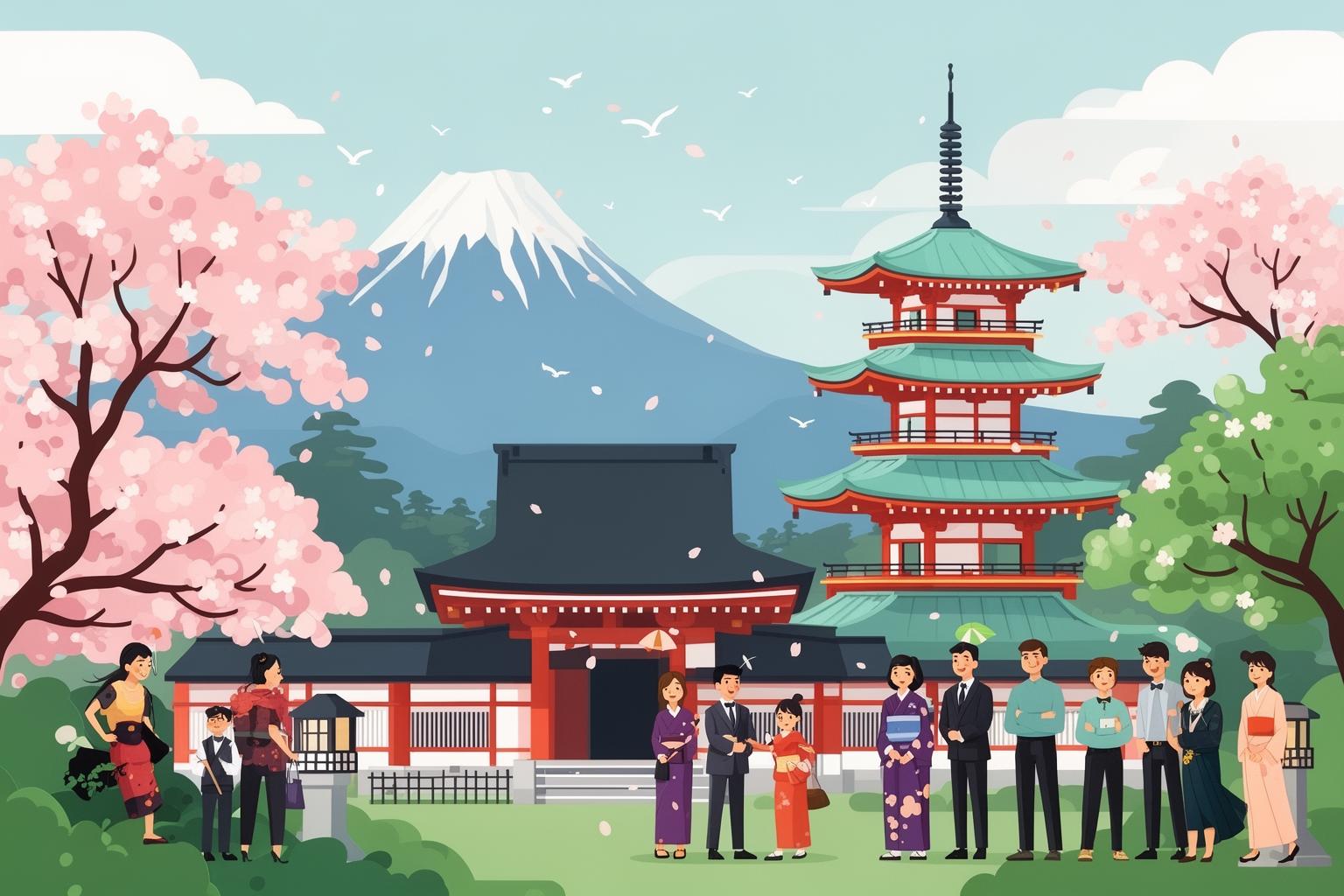
Ultimately, the purpose of bukatsu is to impart one of the most fundamental lessons of Japanese society: the group takes precedence over the individual. The strict structure, the senpai-kohai hierarchy, and the philosophy of gaman all support this central aim. The nail that sticks out gets hammered down, and bukatsu acts as that hammer.
Conformity is crucial. Teams often enforce strict rules on appearance. Baseball players famously shave their heads, a tradition representing the purification of selfish desires and a dedication to the team. Everyone wears the same uniform, carries identical bags, and moves as one collective unit. Individuality is suppressed to maintain a cohesive, harmonious group.
This is further emphasized through the principle of collective responsibility. If one member is late, the entire team might be required to run laps. If someone makes a critical mistake, the whole group bears the shame. This system generates intense peer pressure to perform and conform, ensuring no individual brings dishonor upon the group. It also imparts another essential Japanese social skill: kūki o yomu (空気を読む), or “reading the air.” Students learn to anticipate their seniors’ needs and the group’s mood, acting appropriately without explicit instructions. The ability to read the air is key to functioning effectively within Japanese society.
This unyielding focus on the group perfectly prepares students for the traditional Japanese workplace. The emphasis on harmony (wa 和), the significance of consensus, respect for seniority, and expectations of long hours all directly reflect the lessons learned through bukatsu. The team that endures hardships together on the field becomes the corporate team that works late into the night without complaint.
The Lifelong Mark: Bukatsu’s Enduring Legacy
The experience of bukatsu leaves a lasting impression on a person’s character. For many, it becomes the source of their most treasured memories and strongest friendships—bonds forged through shared challenges. The discipline, resilience, and respect for etiquette gained in the club are valued as essential life skills. In fact, job interviewers in Japan often ask applicants about their bukatsu experience. Serving as captain of a sports team is a notable honor, indicating leadership potential and a demonstrated ability to handle pressure. Being part of a physically demanding club signals toughness, discipline, and an understanding of how to operate within a rigorous, hierarchical structure.
Yet, there is an increasing recognition of its negative aspects. The system that fosters such strong group cohesion can also suppress creativity, critical thinking, and individuality. The normalization of long hours and unquestioning obedience to authority is viewed by some as contributing to Japan’s well-known issues with overwork (karoshi) and workplace inflexibility. The skills that once helped build a post-war industrial powerhouse may be less suitable for the demands of a 21st-century economy that values innovation and adaptability.
In recent years, a national discussion has emerged about reforming bukatsu. Government initiatives aim to reduce practice hours, require rest days, and professionalize coaching to prevent abuse. The objective is to strike a balance—preserving the beneficial elements of discipline and teamwork while safeguarding students’ physical and mental well-being. This debate reflects a wider societal reassessment of how much sacrifice is too much, and whether traditional methods of character-building remain appropriate in today’s world.
Viewing bukatsu as merely an after-school activity misses its true significance. It is a microcosm of Japanese society, a powerful vehicle for socialization that shapes millions of young people annually. It is where the abstract cultural values—hierarchy, harmony, endurance—are brought to life through sweat, discipline, and sometimes tears. To understand the Japanese salaryman who instinctively bows to his boss, the team that functions with seamless cooperation, or the deep cultural belief in enduring hardship without complaint, one must look back to the dusty fields, echoing gyms, and silent dojos of their youth. One must understand the world of bukatsu, where the individual is melted down and reshaped in the image of the group.