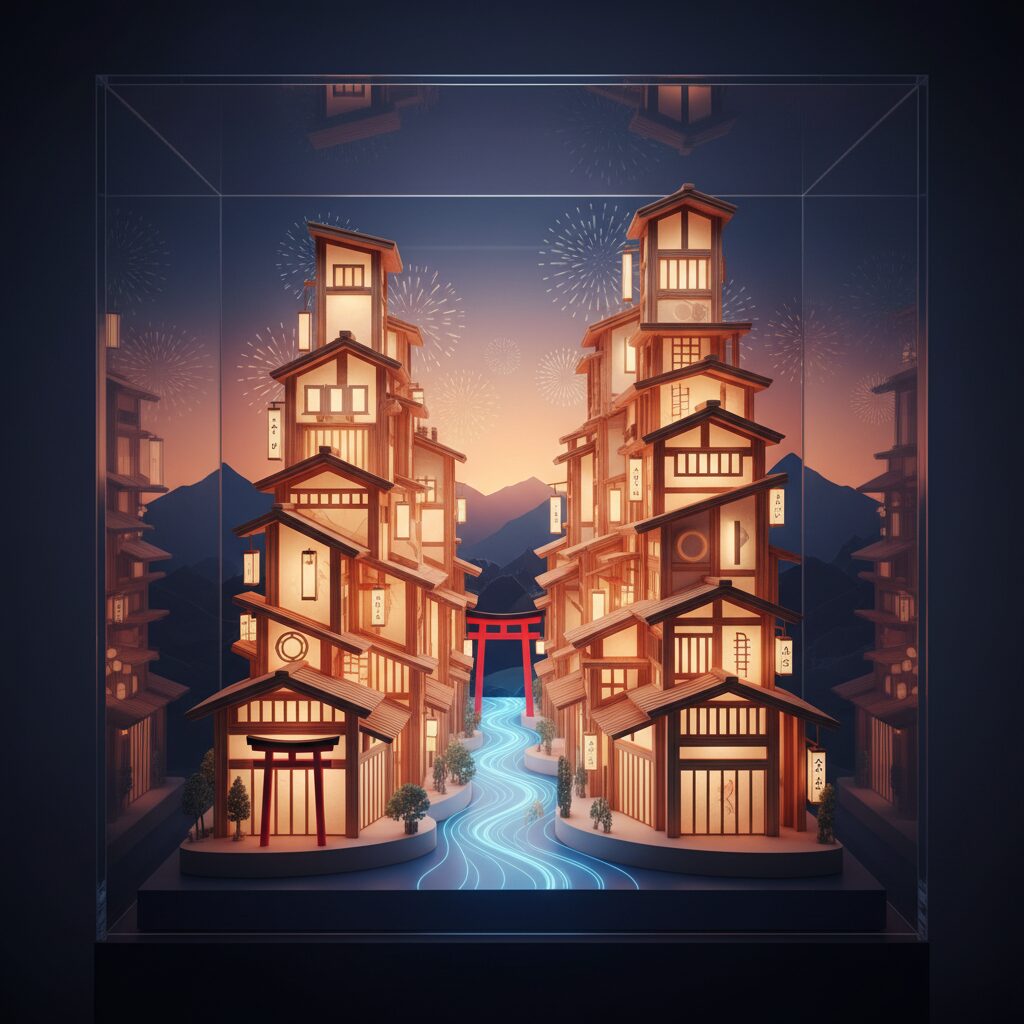
Step out of the glare of the main road, pass under a grand, sometimes fantastically retro arch, and the world changes. The light softens, filtered through a high ceiling of translucent panels. The air stills, suddenly free from wind and the threat of rain. Sounds become more intimate: the cheerful, recorded jingle of a butcher shop’s theme song, the rhythmic clang of a spatula on a hotplate, the squeak of a bicycle’s brakes as an elderly woman glides past. You’ve just entered a shotengai, one of Japan’s covered shopping arcades. And you’ve stepped into more than just a place to buy things; you’ve entered an architectural expression of community itself.
These arcades are a ubiquitous feature of the Japanese urban landscape, yet they defy easy categorization. They are not quite streets, yet they function as public thoroughfares. They are not quite buildings, yet they offer complete shelter from the elements. This ambiguity is their genius. To understand the shotengai is to understand something fundamental about how Japanese culture conceives of public space, community, and the delicate membrane between the two. Forget the sterile, placeless perfection of the modern shopping mall. The shotengai is a living, breathing, and sometimes beautifully frayed ecosystem, and its architecture is the key to its enduring soul. It begs the question: What does this decision to put a roof over a street say about the society that built it?
This unique melding of built and natural environments is further echoed in the subtle influence of infinite garden vistas that extend the dialogue between architecture and community life.
A Roof Over the Public Square
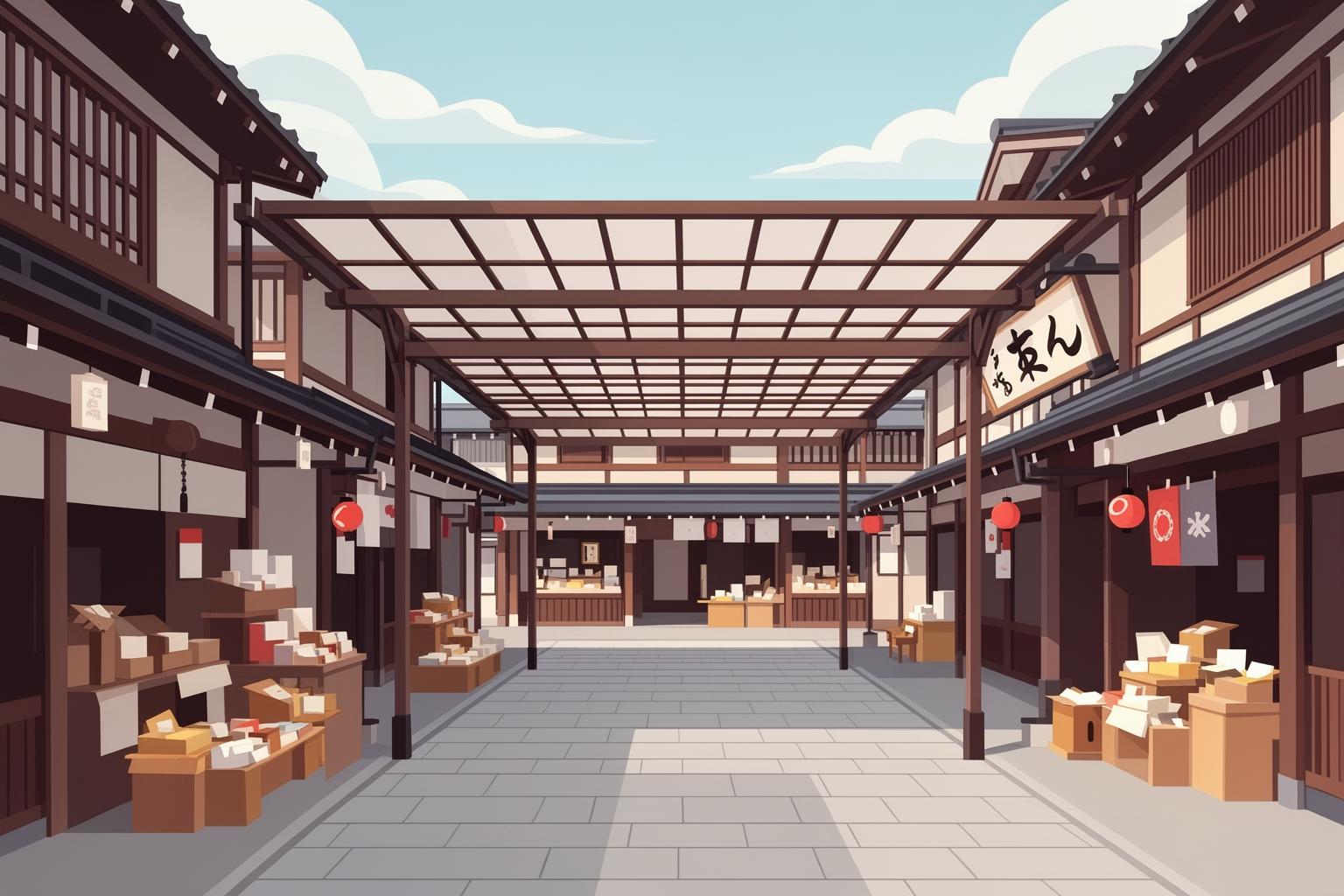
The concept of enclosing a shopping street feels both innovative and entirely sensible. Its beginnings in Japan stem from a basic, universal need: comfort. The country’s distinct seasons, with scorching summer humidity, heavy rains, and winter cold, made open-air shopping challenging. The shotengai emerged as an architectural solution—a way to control the climate of the public square and provide a stable environment for merchants and shoppers alike. This drive to create a controlled, predictable space is a recurring theme in Japanese design, seen in everything from the enclosed courtyards of traditional homes to the precise climate control systems of contemporary skyscrapers.
The Post-War Promise of Modernity
Though earlier examples existed, the shotengai as recognized today is primarily a product of Japan’s rapid post-war economic expansion. In the 1950s and 60s, as cities were rebuilt and a new middle class gained disposable income, these arcades appeared nationwide. They symbolized modernity and prosperity. A shiny new roof spanning a freshly paved street stood as a strong emblem of a brighter, more convenient future. It communicated that the neighborhood was organized, progressive, and ready for business regardless of the weather.
The architecture of this period was optimistic. Steel frameworks and large panels of glass or polycarbonate were engineering marvels, creating bright, airy environments that felt fresh and inviting. For the first time, shopping could be a leisurely activity, free from worries about the weather. The arcade became a contained world, a stage for showcasing a new consumer lifestyle.
Creating a Liminal Zone
Architecturally, the shotengai represents an intriguing ‘in-between’ or liminal space. It is neither entirely public like an open street nor fully private like a department store. This intentional blurring of boundaries is where its cultural importance lies. Remaining a right-of-way, people use it as a shortcut, children ride their bikes through it, and it serves as a genuine pedestrian corridor linking different parts of a neighborhood. Yet, the roof above provides a psychological sense of enclosure—being ‘inside’ a communal space.
This semi-public character fosters a distinct kind of behavior. Shopkeepers’ goods spill out from their storefronts, erasing strict separations between commercial and public space. Benches positioned in the middle invite people to stop and rest, turning a simple passageway into a social gathering spot. The shotengai’s design implicitly signals that this is a place to inhabit, not merely traverse. It’s a part of the city claimed by the community and brought indoors.
The Architecture of Intimacy
If modern malls are designed for efficiency and scale, shotengai are crafted for intimacy and human connection. Their physical form is intentional; each element is tuned to evoke a sense of closeness and belonging. The space itself serves a social purpose, actively promoting the interactions that bind a community together.
The Human Scale
A defining characteristic of a traditional shotengai is its scale. The arcades tend to be narrow, often just wide enough for a few pedestrians to walk side-by-side with a cyclist passing through. The storefronts are small and numerous, producing a dense, varied, and visually engaging streetscape. This intentionally contrasts with the broad boulevards and towering facades found in major commercial districts.
This human scale has a powerful psychological impact. It encourages proximity, making eye contact and casual greetings almost unavoidable. You are not just an anonymous face in a vast crowd. Instead, you are present, visible, and part of a shared, moving flow of people. The low-hanging awnings and the modest height of the arcade roof keep the space from feeling intimidating or alienating. The architecture meets you eye-to-eye, so to speak. It’s a place designed for people, not cars or overwhelming displays of corporate dominance.
The Neighborhood’s Living Room
The enclosed design of the shotengai creates an acoustic bubble. The harsh sounds of the city are softened, replaced by the gentle, ambient murmur of the arcade itself. Conversations, the sizzle of frying food, and the clatter of mahjong tiles from a second-floor parlor—all these sounds are captured and contained by the roof, forming a rich auditory tapestry. This shared soundscape deepens the sensation of being in a communal space, much like a large, elongated public living room.
Here, the architecture enables the unplanned magic of community. Neighbors bump into each other and linger for ten-minute chats. The fishmonger offers a friendly nod to the flower shop owner across the way. The arcade’s physical form holds and nurtures these countless, fleeting moments of social bonding. It’s a space where transactional relationships easily evolve into personal ones, simply because the environment encourages lingering and familiarity.
Reading the Urban Text
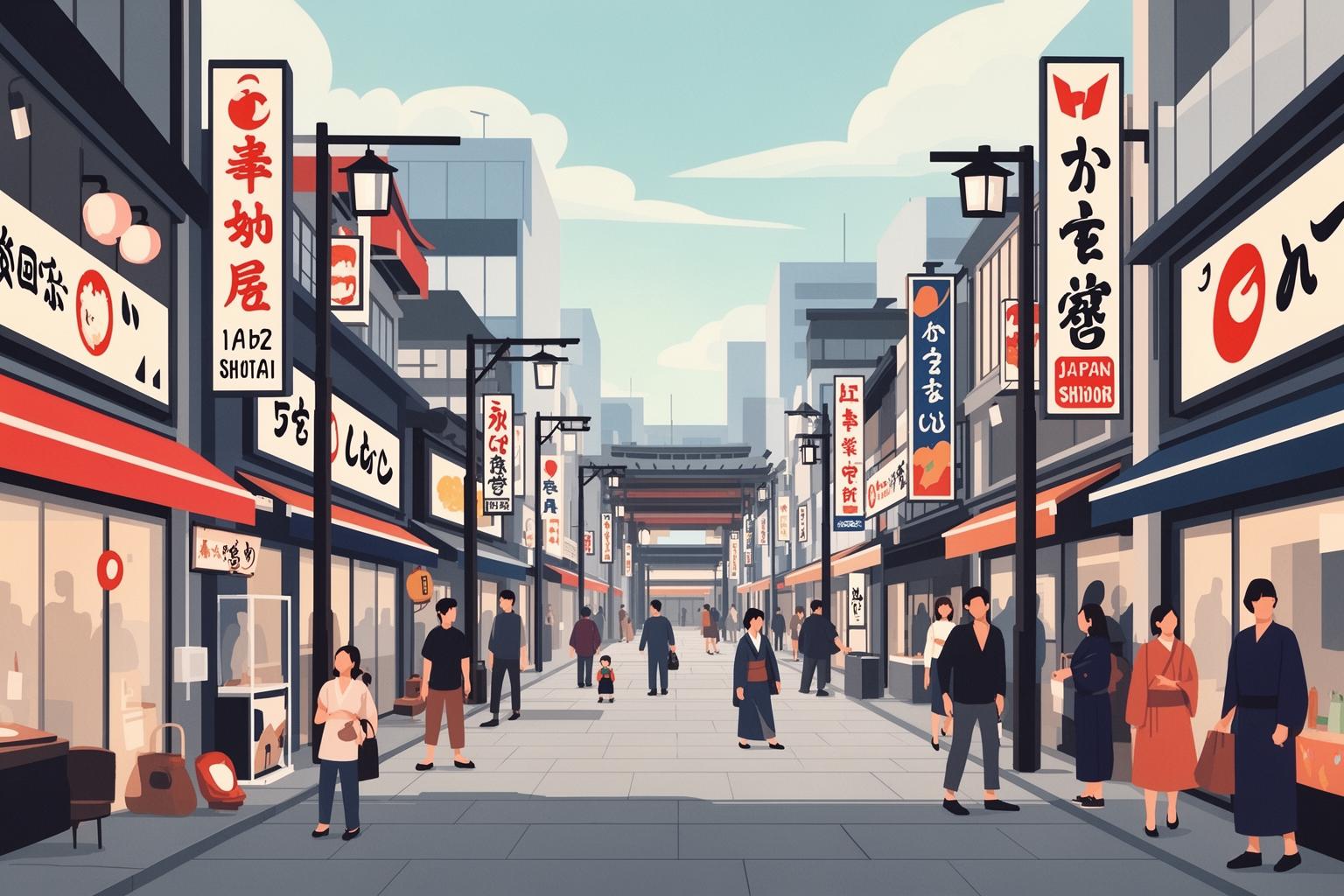
To stroll through a shotengai is to read a narrative crafted in tile, steel, and glass. These spaces are not uniform or centrally planned; most have developed gradually over decades, with each shop owner and generation leaving their distinct imprint. It is this organic, layered quality that defines their true character, and understanding the architectural details unveils the history and values of the neighborhood.
Gateways and Thresholds
Nearly every shotengai is marked by a gate. These entrances range from simple, functional arches displaying the arcade’s name to elaborate, sculptural structures adorned with neon lights and intricate metalwork. Such gates serve as powerful symbolic thresholds, signaling to all who pass that they are leaving the ordinary, anonymous city street and entering a unique district with its own identity and spirit.
The gate’s design often reveals the arcade’s prime era or its ambitions. A gate featuring sleek, mid-century modern lines reflects the optimism of the 1960s, while a more elaborate, colorful gate may indicate a later effort at revitalization, a bold attempt to attract new visitors. This act of marking the entrance transforms the arcade from a mere street into a named, defined place.
The Canopy of Light
The roof is the most defining feature of a shotengai, shaping the entire atmosphere beneath it. The most common style is a simple arched roof made of corrugated or flat translucent panels, bathing the arcade in soft, diffuse light. This creates a calm, almost gallery-like ambiance, softening shadows and tempering the harshness of midday sun.
Some arcades include more decorative details: sections of stained glass casting colorful patterns on the pavement, or retractable segments that open on clear days. The choice of materials and design conveys a message: is the roof purely functional, simply shielding visitors from rain? Or is it an aesthetic element, a “sky” meant to delight and entertain? The quality of light inside a shotengai—always filtered and mediated—is key to its unique sense of being both inside and outside simultaneously.
A Tapestry of Façades and Floors
Look down, and the story continues. The flooring in a shotengai is rarely just asphalt; it is often paved with patterned tiles, bricks, or stones, sometimes incorporating mosaics of the town’s mascot or flower. This attention to the ground plane emphasizes that this is a special, pedestrian-focused zone. It’s a floor, not simply a road.
Then observe the shopfronts. Unlike malls where all stores follow a unified design scheme, a shotengai bursts with individuality. A weathered wooden storefront of a Showa-era tea seller stands beside the gleaming aluminum and glass façade of a modern bakery. An old-fashioned pharmacy with hand-painted signs is juxtaposed with a chain drugstore displaying glaring plastic banners. This architectural collage forms a timeline of the neighborhood’s economic history. Each façade is a testament to a different era, proprietor, and aesthetic. This visual diversity gives the shotengai its texture, depth, and unmistakable authenticity.
Echoes in a Modern World
It’s no secret that many shotengai are facing difficulties. The combined impact of aging populations, the convenience of large suburban shopping centers, and the growth of online retail has resulted in closed storefronts and reduced foot traffic in many arcades, especially in smaller towns. The very architecture that once seemed like a modern marvel can now appear outdated, and the expense of maintaining these large structures is significant.
Nonetheless, this challenge is also inspiring a wave of creative reimagining. Communities are recognizing that the core architectural feature of the shotengai—a large, covered, pedestrian-only public space—is incredibly valuable and adaptable. The answer is not always to revive retail, but to rethink the space’s overall purpose.
In some areas, vacant shops are being transformed into artist studios, galleries, childcare centers, or community spaces for the elderly. The arcade’s roof becomes a precious asset for hosting weatherproof events, from farmers’ markets and craft fairs to music festivals. The architecture provides the stage, while the community brings the new performance.
This process of adaptation highlights the resilience of the original design. The shotengai was created to shelter commerce, but its true role was to shelter community. As commerce evolves, communities are discovering that the need for a sheltered place to gather, connect, and create is more important than ever. The arcade offers a ready-made framework for this 21st-century reinvention.
Walking through a shotengai today is to sense the presence of the past and the uncertainty of what lies ahead. It’s a space filled with echoes. Yet it also stands as a powerful statement in steel and glass about the enduring human need for connection. In an increasingly fast-paced and impersonal world, the shotengai serves as an architectural argument for the significance of the local, the intimate, and the shared. It is a roof not only over a collection of shops but over the heart of a neighborhood.