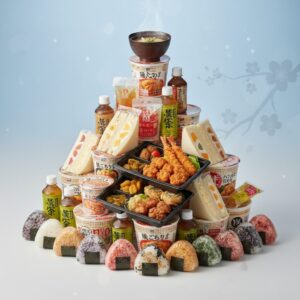
Walk into any Japanese convenience store, a konbini, and the first thing that hits you isn’t the smell of stale coffee or the sight of dusty shelves. It’s a wave of impossibly clean, conditioned air, the cheerful chime of the automatic door, and an almost overwhelming sense of order. The aisles are a masterclass in curated efficiency, offering everything from crisp dress shirts and emergency phone chargers to single-serving bottles of world-class whisky. For the uninitiated, it’s a revelation. For those who live here, it’s an essential, non-negotiable part of the daily rhythm. But the real magic, the arena where the konbini truly transcends its humble name, is in the food section. Specifically, in the refrigerated cases filled with desserts that have no business being this good.
Forget the sad, plastic-wrapped pastries you might find elsewhere. We’re talking about ethereal roll cakes with clouds of fresh cream, wobbly crème caramel with perfectly bitter sauce, and seasonal parfaits layered with the precision of a master patissier. This dedication to quality has made the konbini dessert a legitimate cultural phenomenon, a small, affordable luxury that punctuates the days of millions. Yet, within this paradise of indulgence, a curious and powerful counter-current has emerged. Scan the shelves today, and you’ll see a growing number of packages adorned with phrases like 「糖質オフ」(low sugar), 「高タンパク」(high protein), and, most tellingly, 「罪悪感なし」(zaiakukan nashi)—guilt-free.
This presents a fascinating paradox. Why would a country already celebrated for its relatively healthy diet, its embrace of moderation, and its less-sweet palate suddenly need an entire category of treats designed to absolve them of guilt? What sin are these yogurt-based cheesecakes and bran-flour cream puffs absolving? The answer isn’t just about counting calories. It’s a deep dive into the Japanese psyche, revealing a complex interplay between the ritual of daily pleasure, the immense pressure of self-management, and the relentless innovation that defines modern Japanese life. This isn’t just a story about snacks; it’s about the culture that creates them.
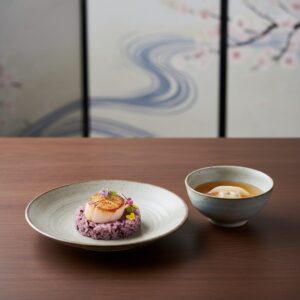
This delicate balance between indulgence and restraint finds a parallel in the sophisticated world of Japanese omakase culture, where every course is as thoughtfully crafted as the desserts lining a konbini.
The Konbini: Japan’s Unexpected Culinary Epicenter
Before we can grasp the ‘guilt-free’ phenomenon, we must first reconsider our perception of the convenience store itself. In many regions, a convenience store is viewed as a last resort—a place to grab a late-night bag of chips or a questionable hot dog when everything else is closed. In Japan, however, the konbini is often the preferred choice. It functions as a bank, a post office, a ticket counter, and, most importantly, a high-quality, fiercely competitive restaurant.
The density of these stores is astounding—there are over 55,000 nationwide, with the three major chains (7-Eleven, FamilyMart, and Lawson) locked in a constant arms race. This rivalry isn’t just about having the coldest drinks or the cleanest restrooms; it’s a battle waged on the front lines of food innovation. Each chain boasts its own private-label brand—7-Premium, FamilyMart Collection, Lawson Select—acting as an in-house food lab. They invest heavily in developing products that are not only convenient but genuinely delicious and often surprising.
This is most evident in the dessert section. The konbini sweets, or konbini suiitsu, are serious business. It’s a realm where trends emerge and vanish within a single season. The quality is remarkably high, often blurring the boundary between mass-produced goods and items found in specialty bakeries or pâtisseries. Lawson’s Uchi Café line, for example, gained fame with its Premium Roll Cake, a simple yet impeccably crafted sponge cake and fresh cream roll that sold millions of units. 7-Eleven is well-known for its choux crème (cream puffs), featuring pastry that remains crisp and fillings rich with real vanilla and egg yolks. FamilyMart continually pushes innovation through collaborations with renowned pastry chefs to create limited-edition offerings.
This environment provided the perfect breeding ground for the guilt-free trend. Japanese consumers were already accustomed to turning to konbini for high-quality, inventive treats. The supply chains were established, R&D teams were sharp, and trust was built. When the cultural demand for healthier indulgence began to take shape, konbini was ideally positioned not only to react but to define the entire category. It had the platform, the power, and the captive audience necessary to elevate a niche health-food concept into a mainstream habit.
Decoding “Guilt-Free”: A Spectrum of Healthy Compromises
Walking down the chilled aisle, the term ‘guilt-free’ emerges not as a single, unified concept but as a range of thoughtfully crafted solutions. It serves as a catch-all phrase encompassing various methods to make indulgence feel more virtuous. Japanese food science has broken down the idea of a ‘guilty’ treat and addressed each element with scientific accuracy. The packaging tells the story, featuring bold numbers and clear labels that specify exactly which indulgence has been reduced.
The Calorie Counters and Sugar Reducers
This is the most straightforward and easily understood type of ‘guilt-free’. The labels leave no doubt: 「低カロリー」(tei-karorii) for low-calorie, and more commonly, 「糖質オフ」(toushitsu ofu) or 「糖質控えめ」(toushitsu hikaeme) for low-sugar. This isn’t about producing bland, joyless diet food. The challenge, enthusiastically taken on by Japanese companies, is to cut sugar and calories while maintaining the crucial texture and flavor.
Lawson is arguably the pioneer and leader in this area. Their in-house bakery line, MACHI café, features an extensive selection of bran-based items known as buran pan (bran bread). What began with simple bread rolls has expanded into a full dessert menu. You can find bran-flour doughnuts, bran-flour chocolate muffins, and even bran-flour cream puffs. The genius lies in the recipe. Instead of tasting like dry health food, the bran flour is blended with other ingredients to create a unique, slightly nutty, and pleasantly dense texture. They offset the reduced sugar by using natural, zero-calorie sweeteners such as erythritol or by emphasizing the richness of ingredients like cream or dark chocolate.
The result is a product that lets someone satisfy a craving for baked goods while consuming just a fraction of the carbohydrates found in traditional versions. It’s a masterful example of food engineering that fulfills the promise of indulgence with fewer metabolic consequences.
The Protein Push
Another key aspect of the guilt-free movement is the enrichment of sweets with protein. The branding here shifts from what’s been removed (sugar, calories) to what’s been added: 「高タンパク」(kou-tanpaku), meaning high protein. This taps into a global fitness and wellness trend but presents it with a distinctly Japanese flair by offering it in the form of delicate desserts.
You’ll find protein bars that mimic the flavors of matcha cheesecakes or gateau chocolat. Yogurts, like the popular Oikos brand, are marketed not just as breakfast items but as creamy, satisfying dessert substitutes, often paired with a separate packet of fruit sauce or granola. There are even drinkable jellies and puddings that provide 15-20 grams of protein per serving.
This strategy cleverly repositions the snack from pure indulgence to a ‘productive’ form of self-care. You’re not just enjoying a treat; you’re fueling your muscles and supporting your body’s needs. It aligns perfectly with a mindset that values efficiency and purpose. The pleasure remains, but it’s now justified by a functional benefit, completely neutralizing any associated guilt.
The “Natural” and “Additive-Free” Angle
Beyond calories and macros lies a more philosophical take on guilt-free eating. This approach emphasizes the purity and quality of ingredients themselves. The key terms here are 「無添加」(mutenka, additive-free), 「素材の味」(sozai no aji, the natural taste of ingredients), and the use of traditional Japanese components known for their health benefits.
Here, you see a beautiful blend of old and new. Tofu and okara (soy pulp) create creamy, dense textures in cheesecakes and brownies, adding protein and fiber while reducing fat. Soy milk serves as a base for ice cream, offering a cleaner, lighter finish than dairy. You might find jellies made with agar-agar instead of gelatin or sweets sweetened naturally with amazake, a fermented rice drink known for its complex sweetness.
This approach appeals to consumers who care less about exact carbohydrate content and more about eating something ‘clean’ and wholesome. The guilt being assuaged here isn’t from calorie overload but from consuming artificial or overly processed products. It resonates with a profound Japanese appreciation for nature and simplicity, elegantly packaged in a modern, convenient format.
The Ritual of the Daily Treat: Culture, Cravings, and Control

To fully understand why ‘guilt-free’ sweets have become so ingrained in Japanese daily life, we need to look beyond the products themselves and explore the cultural forces that generated this demand. This trend is a convergence of social rituals, psychological needs, and deeply rooted philosophies about health and the self.
The Psychology of the Small Indulgence
In a society characterized by long working hours, structured routines, and a collective mindset, the small, personal indulgence holds significant meaning. It serves as an essential punctuation mark in the day. The konbini sweet often acts as a gohoubi (ご褒美)—a personal reward. It’s that small burst of pleasure picked up on the way home from work after a tiring day, a quiet moment of self-care before moving on to evening household duties.
This ritual represents an affordable luxury. For a few hundred yen, one can enjoy a beautifully crafted dessert that offers a brief escape and satisfaction. The konbini, with its 24/7 availability and strategic location on nearly every corner, facilitates this ritual. The ‘guilt-free’ option enhances it, allowing this vital daily ceremony of self-reward to continue without the nagging guilt of undermining one’s health and discipline. It removes the only negative factor from an otherwise perfect equation of pleasure and relief.
Health as a Moral Imperative (Kenkou Shiko)
Health consciousness, or 「健康志向」(kenkou shiko), holds a significant place in Japan. It is not a passing trend but a core element of the national identity, closely linked to Japan’s status as the country with the world’s longest life expectancy. Health is often seen not merely as a personal choice but as a social duty. Staying healthy helps maintain productivity, prevents becoming a burden to family or society, and supports a long, fulfilling life.
Within this context, food choices acquire a moral aspect. ‘Guilt’ (zaiakukan) here is more than a brief feeling of having eaten too much sugar; it reflects a deeper sense of failure in self-management. It’s the feeling of having let oneself down, of momentarily losing control in a culture that values discipline.
This is the cultural environment into which ‘guilt-free’ products entered. They provide a clever solution to this tension, offering an approved way to indulge—a loophole in the system of self-discipline. They satisfy the natural human desire for sweetness and pleasure while reinforcing one’s identity as a responsible, health-conscious person. You can have your roll cake and eat it too because it’s made with bran flour and contributes to your daily fiber intake.
The Unspoken Aesthetics of Slimness
While health discussions often focus on longevity and well-being, it’s impossible to overlook the powerful, often unspoken aesthetic pressures, particularly on women. Japanese media and advertising consistently promote a very specific beauty ideal—predominantly slender.
The pressure to maintain this slim figure is considerable. Although less openly discussed than in some other cultures, it acts as a subtle, constant background influence in everyday life. This fosters a complicated relationship with food, especially desserts, which are culturally seen as indulgent and potentially ‘fattening.’
‘Guilt-free’ sweets serve as a skillful tool for navigating this pressure. Their marketing often subtly targets women, using soft pastel packaging and highlighting benefits like dietary fiber and low sugar. These products enable women to partake in the social ritual of enjoying treats—an after-work snack with colleagues or a dessert after dinner with a partner—without the anxious feeling of consuming something that conflicts with this aesthetic ideal. It’s a way to balance social harmony and personal enjoyment without breaking an unwritten yet powerful social code.
A Taste Test from the Illuminated Shelves
Discussing these concepts is one thing, but the true brilliance of Japan’s guilt-free sweets lies in the eating experience. These are not compromises that disappoint your palate. They are achievements in food science that offer genuinely enjoyable moments, often by reimagining what a dessert can be. The emphasis on shokkan (食感), or texture, is crucial.
Imagine picking up one of Lawson’s Bran Flour Chocolate Muffins. You might expect it to be dry or dense. Instead, it’s unexpectedly moist and light, with a rich cocoa flavor that isn’t overwhelmed by excessive sweetness. The bran adds a subtle, pleasant earthiness and a texture that feels more substantial and less hollow than a typical muffin. You finish it feeling satisfied, not weighed down.
Or consider a soy milk ice cream bar from 7-Eleven. The first thing you notice is its incredibly clean finish. Unlike a heavy dairy ice cream that can coat your mouth, the soy milk base is light and refreshing. It lets the main flavor, whether vanilla or matcha, stand out with clarity. The sweetness is toned down, allowing for a more refined and mature taste profile.
Perhaps the most surprising are the tofu-based desserts. A ‘tofu chocolate gateau’ sounds unusual, but the result is impressive. Silken tofu is blended to create a texture that is impossibly smooth and creamy, somewhere between a mousse and a dense flourless chocolate cake. It delivers the richness and body you expect from a decadent dessert, yet the key ingredient is a high-protein bean curd. It’s a kind of culinary magic, turning a humble health food into a luxurious treat.
These products succeed because they don’t simply attempt to poorly replicate the original. Instead, they embrace their alternative ingredients, creating new and intriguing textures and flavor combinations. They reflect a food culture that values subtlety and innovation in equal measure.
A Harbinger of a Broader Shift?

While konbini remain the most visible platform for this trend, the philosophy of guilt-free indulgence is permeating Japan’s food culture. Upscale department store food halls, the glittering depachika, now showcase elegant pâtisseries offering low-sugar cakes and gluten-free cookies made from rice flour. Cafes in fashionable neighborhoods like Daikanyama and Jiyugaoka prominently promote smoothies and parfaits featuring kale, soy milk, and chia seeds.
Online, recipe sites and Instagram abound with home cooks sharing their own creations of healthy sweets, using traditional ingredients such as azuki beans, kanten (agar), and roasted soybean flour (kinako). This is not merely a corporate-driven trend; it reflects a genuine societal shift in how people relate to food, pleasure, and health.
Naturally, this aligns with a global wellness movement, but the Japanese interpretation is distinctive. Whereas a Western approach might favor bold, assertive health flavors—think of the sharp tang of kombucha or the gritty texture of some protein bars—the Japanese approach emphasizes refinement and harmony. It focuses on subtraction and substitution to achieve balance. The aim is not to overwhelm the palate, but to gently guide it toward a more virtuous, yet still deeply pleasurable, experience. It’s an innovation rooted in a cultural predisposition for subtlety and meticulous attention to detail.
The Art of Permissible Pleasure
Ultimately, the rise of guilt-free sweets in Japan’s convenience stores represents much more than a simple health trend. It offers a glimpse into the modern Japanese psyche, telling a story of how a culture is balancing the clash between tradition and extreme modernity, discipline and desire.
It highlights the konbini’s unique role in society: not merely a store, but a cultural laboratory where the nation’s cravings and anxieties are identified, processed, and repackaged in a convenient, beautifully presented form. It is a concrete outcome of kenkou shiko, where the enduring pursuit of health has adapted to embrace, rather than reject, the small pleasures of everyday life.
What these products genuinely offer is a kind of absolution. They present a brilliantly crafted solution to the universal human tension between indulgence and restraint. They create an approved space for pleasure—a carefully engineered loophole that allows one to satisfy cravings without the slightest trace of guilt. This is the art of permissible pleasure, perfected and accessible 24 hours a day under the cool, bright lights of the local konbini.