If you’ve spent any time in urban Japan, you’ve probably seen them. Groups of young women with matching tote bags adorned with a specific character’s face. Men in suits, leaving the office to line up for limited-edition merchandise for a virtual singer. People of all ages gathered in a themed café, meticulously arranging small acrylic figures of anime characters to photograph alongside their parfait. From the outside, it can look like simple, perhaps slightly obsessive, consumerism. A hobby, cranked up to eleven. But you’ve asked what’s really going on here, and the answer is far more profound than just being a superfan. You’re witnessing oshikatsu.
At its core, the term is simple. It’s a portmanteau of oshi (推し), meaning the one you support or “push,” and katsudou (活動), meaning activities. So, “activities to support your favorite.” But this translation is deceptively bland. It fails to capture the sheer intentionality, the life-affirming structure, and the deep personal meaning this practice holds for millions in Japan. Oshikatsu isn’t just about liking something; it’s about dedicating a significant portion of your emotional energy, time, and disposable income to actively supporting a person, character, or even an object. It’s a framework for living, a source of community, and a powerful, celebrated form of self-expression in a society that often prioritizes the collective over the individual. This isn’t a fringe activity. It’s a mainstream subculture, a vibrant economic engine, and for many, a legitimate answer to the question, “What do you live for?”
This exploration of cultural dedication sometimes converges with moments of introspection, as seen in the nuanced realm of solo activity, where individual passion transforms solitude into a deliberate art form.
The Anatomy of an Oshi: Who or What Gets Supported?
The first thing to grasp is that an oshi can be virtually anything. While the concept originated within idol fandom, it has since expanded to encompass a vast array of possible objects of devotion. This adaptability is central to its widespread appeal. It represents a system of support that can be applied to almost any interest.
Beyond the Idol
Traditionally, an oshi is a member of an idol group. Consider large pop ensembles like AKB48 or the male talent agency giant Johnny & Associates (now SMILE-UP.). Within these groups, fans typically select one member as their oshi and dedicate their support to them. This support is measurable: purchasing their merchandise, voting for them in internal popularity contests, and attending their concerts wearing their designated “member color.” The aim is to help your oshi climb the ranks and achieve success. Their triumph becomes your triumph.
However, the world of oshi has grown well beyond the J-pop scene. The principles of dedicated support have been transferred to numerous other fields, weaving a rich tapestry of contemporary fandom.
Anime and Manga Characters
A vast, and arguably dominant, realm of oshikatsu exists in the world of 2D. Here, the oshi is not a real person but a fictional character from anime, manga, or video games. The devotion remains just as genuine. Fans collect merchandise featuring their character, celebrate their fictional birthdays, and even travel to real-world locations from the anime—a practice called seichi junrei, or pilgrimage to a sacred site. The emotional bond with these characters can be profoundly deep. They embody ideals, struggles, and aesthetics that resonate personally with fans, making them ideal, stable objects of affection.
Voice Actors (Seiyuu)
Voice actors, or seiyuu, serve as a bridge between the 2D and 3D worlds. Initially, they were the unseen talents behind characters. Today, seiyuu are celebrities in their own right. They not only voice characters but also release music, host radio shows, and appear at live events. Supporting a seiyuu provides fans with a dual form of enjoyment: admiration for the characters they portray and appreciation for their individual personality, skills, and career. This dynamic has sparked a powerful industry where a popular voice actor can attract audiences to nearly any project they join.
Stage Actors and Takarazuka
The Japanese theater world is another vibrant hub of oshikatsu culture. This is particularly true for “2.5D musicals,” stage adaptations of well-known anime, manga, and games. Fans eagerly attend to see their favorite characters brought to life by real actors, often developing dual fandoms for both the characters and the actors portraying them. An even longer-established tradition exists in the Takarazuka Revue, an all-female musical theater troupe where women play both male (otokoyaku) and female (musumeyaku) roles. The intense, stylized masculinity of the otokoyaku has fostered a devoted fanbase for over a century, with rituals and levels of passion that constitute oshikatsu in their own right.
The Unconventional Oshi
Here, the concept truly demonstrates its versatility. An oshi can be a sumo wrestler, a Kabuki actor, a specific historical figure from the Sengoku period, a mascot like Kumamon, or even an inanimate object. Dedicated fans exist for particular train models, historic castles, or architectural styles. If something can be admired and supported, it can be an oshi. This wide-ranging applicability means anyone, regardless of their interests, can engage in oshikatsu culture, using its language and rituals to give structure to their passion.
The “Katsu” in Oshikatsu: The Rituals of Devotion
Oshikatsu is defined by action. It is the “katsu” (activities) that distinguish it from passive fandom. These activities are a set of rituals that give physical expression to a fan’s inner feelings of support. They demand effort, planning, and often, considerable financial investment. This is what makes it a lifestyle rather than just a hobby.
The Financial Commitment: Buying Goods and Supporting Sales
In the world of oshikatsu, spending money is a primary and celebrated form of support. Purchasing merchandise, known informally as “goods,” is not simply about personal collecting. It is a direct and visible method of contributing to your oshi’s success. The reasoning is straightforward: high sales figures indicate popularity, which leads to more opportunities for the oshi—more concerts, more media appearances, more roles. The industry revolves around this.
CDs are frequently released with lottery tickets for “handshake events” or special live performances, encouraging fans to buy multiple copies to improve their chances. Blu-ray box sets come in various versions featuring exclusive bonus items. Gacha-style products, where you purchase a sealed package containing a random keychain or trading card, motivate repeated purchases to obtain the one of your oshi. This system transforms the fan from a passive consumer into an active participant, a soldier in a commercial battle for their favorite’s future.
The Pilgrimage: Attending Live Events and Sacred Sites
The pinnacle of oshikatsu is the live event. Whether it’s a concert, a fan meeting, a stage play, or a special talk show, being in the same physical space as your oshi is the ultimate reward. These are communal gatherings full of incredible energy. Fans often dress in their oshi’s image color, carry custom-decorated fans (uchiwa), and perform synchronized light-stick routines. It’s a space of collective effervescence, a moment where thousands of individual devotions combine into a single, powerful wave of support.
Beyond official venues, fans undertake their own pilgrimages. As I mentioned, seichi junrei involves visiting real-world locations that serve as settings for anime or manga. A high school in a small town, a particular train station in Tokyo, or a remote shrine can suddenly become a tourist destination because it was featured in a popular series. Fans go there to feel closer to the world of their oshi, to take photos, and to leave offerings. It’s a way of bringing the fictional world into their own reality.
The Creative Expression: Doujinshi and Fan Works
For many, support also appears as creation. The world of doujinshi (self-published works, usually manga or novels) is a vast ecosystem where fans craft their own stories featuring their favorite characters. Events like Comiket in Tokyo attract hundreds of thousands of people buying and selling these fan-made works. This is not viewed as copyright infringement but as a crucial part of the fan economy that sustains interest in a series. Cosplay, fan art, and writing fan fiction are other avenues where fans actively engage in and expand the universe of their oshi, showing their love through their own creativity.
The Digital Life: Social Media and Community Building
In the 21st century, much of oshikatsu happens online. Platforms like X (formerly Twitter) serve as the central nervous system of fandom. It’s where information is shared, concert tickets are exchanged, and fan communities grow. It’s also the stage for important digital rituals. On an oshi’s birthday, fans coordinate to post messages and fan art at midnight, aiming to get a specific hashtag trending. This collective act of celebration makes their shared affection visible to the world and, hopefully, to the oshi themselves. It strengthens the sense of a united community working toward a common goal.
The Psychology Behind the Passion: Why Does Oshikatsu Resonate So Deeply?

So we’ve clarified the what and the how. But the most crucial question is why. Why does this structured form of fandom wield such influence? Why put in so much effort? The answer lies in how oshikatsu meets several deep psychological needs, especially within the context of contemporary Japanese society.
A Source of Purpose and Structure
Oshikatsu offers a clear, motivating purpose. The goal is straightforward and external: to support the oshi. This can give daily life a strong sense of direction. The reasoning might be: “I work my tough job so I can afford concert tickets.” Or, “I’ll get through this challenging week because I have a new anime episode to look forward to on Friday.” This creates a positive feedback loop. The oshi’s activities—a new song, a new role—serve as milestones and events to anticipate, breaking up the monotony of routine. The fan’s effort, in turn, generates the resources needed to engage with those activities. It gives a sense of mission, turning ordinary duties into steps toward a joyful aim. In this sense, oshikatsu can be a form of ikigai, a reason for living.
Identity and Self-Expression in a Group-Oriented Society
Japanese culture is well known for prioritizing the group, harmony (wa), and avoiding standing out. While this has its advantages, it often leaves little room for vibrant, passionate individual expression. Oshikatsu creates a socially accepted space for exactly that. Within fandom, being intensely and unapologetically passionate isn’t just allowed—it’s encouraged.
Your identity as “a fan of X” becomes a central part of how you define and present yourself. It’s a badge of honor. You may wear your oshi’s color, decorate a bag with their image, and spend hours discussing their qualities with fellow fans. It’s a place where your enthusiasm can flow freely without fear of external judgment. This offers an emotional outlet that may be hard to find in other parts of life, like work or school.
The Joy of Unconditional Support
The bond between a fan and their oshi is inherently parasocial. It is, by nature, one-sided. The fan offers unwavering support and gains joy from watching their oshi succeed and flourish. This connection is compelling because it is pure and simple. It delivers the positive feelings of caring for and nurturing something without the complications, demands, or potential disappointments of mutual, real-world relationships.
The oshi is often described as toutoi—a term roughly meaning precious, sacred, or venerable. There is a sense that the oshi is a pure being who must be protected and supported at all costs. This devotion provides a stable emotional anchor. No matter what troubles arise in your own life, the oshi is there, doing their best (ganbaru), inspiring you to do the same.
Finding Your Tribe: Community and Belonging
Perhaps the most impactful element of oshikatsu is the community. In a time when loneliness is a growing social concern, oshikatsu offers an immediate and powerful way to connect with others. Discovering someone who shares your love for the same obscure character or idol member is a profound experience. You can skip over the usual social formalities; you instantly share a deep, passionate common ground.
These aren’t merely acquaintances; they are nakama—a term meaning comrade or fellow, implying a bond forged through shared challenges or missions. Fans travel together to events, trade merchandise to help each other complete collections, and hold gatherings (oshi-kai) at restaurants or karaoke bars to celebrate their oshi. This shared identity builds strong, supportive friendships that often extend beyond the fandom, providing a vital social safety net.
The Language and Aesthetics of Fandom
Like any vibrant subculture, oshikatsu has its own unique vocabulary and visual symbolism. Understanding these elements is crucial to grasping the mindset of its participants.
Essential Oshikatsu Lingo
Familiarity with a few key terms unlocks the world of fan conversations. Besides oshi, you’ll encounter tan-oshi, which describes someone devoted to only one member of a group, compared to a hako-oshi, who supports the entire group (the “box”). Your single most cherished favorite is your kami-oshi (god oshi). The act of participating in fan activities is often humorously called oshigoto, a pun merging oshi and shigoto (work). When fans gather, it’s known as an oshi-kai (oshi meeting). The overwhelming feeling of seeing your oshi do something amazing and being overwhelmed by their preciousness is simply toutoi.
The Visual Culture: Ita-Bags and Oshi Colors
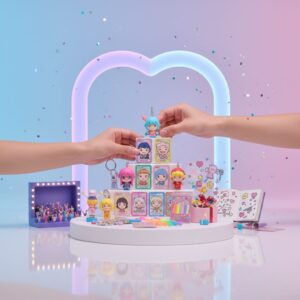
The aesthetics of oshikatsu are bold and expressive. The most famous example is the ita-bag. The name derives from itai (痛い), meaning painful, because these bags are so densely covered in merchandise—keychains, buttons, cards—that they are “painful to look at” for outsiders. However, for fans, the ita-bag is a lovingly crafted shrine, a public expression of affection and identity. It takes considerable time and money to assemble and signals one’s level of devotion to those in the know.
Another important visual element is the use of image colors. Many groups or series assign a specific color to each idol or character. Fans incorporate these colors into their outfits, accessories, hair, and makeup, especially at events. When you see a crowd at a concert with distinct clusters of blue, green, or yellow, you are witnessing this system at work. It acts as a uniform that unites the tribe, a visual shorthand for “I’m here for this person.”
The Other Side of the Coin: The Pressures and Pitfalls
For all its positive, life-affirming aspects, it would be dishonest to overlook the darker side of oshikatsu. The very structures that make it so captivating can also generate tremendous pressure.
Financial Strain and Competitive Fandom
The focus on financial support can foster a highly competitive atmosphere. Some fans feel constant pressure to spend increasingly more to demonstrate their devotion. This often results in considerable financial strain, with people allocating unsustainable portions of their income to merchandise and event tickets. An implicit hierarchy may develop, where those able to attend every event or purchase hundreds of CDs are regarded as “better” fans. This can cause stress and anxiety, detracting from the pure joy of support.
The Pain of an Oshi’s Departure or Scandal
The deep emotional investment in an oshi carries risks. What happens when your oshi “graduates” (a term for leaving an idol group), retires, or gets married? Or even worse, becomes involved in a scandal? For a devoted fan, this can be truly heartbreaking. It may feel like a personal loss, a betrayal, or the end of an era. While the parasocial relationship is one-sided, the pain of its disruption is very real.
Navigating Fandom Rules and Etiquette
Fandoms are communities with their own intricate, often unspoken social rules. There is a strong emphasis on avoiding meiwaku (trouble or annoyance) for both the oshi and other fans. This includes guidelines on behavior at concerts, what is acceptable to post online, and how to interact with the oshi if encountered in public. Managing these internal dynamics can be stressful, and breaking a rule, even unintentionally, can result in ostracism from the community once found welcoming.
More Than a Hobby, It’s a Way of Life
Ultimately, oshikatsu is far more than just the sum of its parts. It represents a deeply human response to the modern world. It is a system that channels passion into constructive, tangible action. It offers structure, purpose, and community centered around the shared goal of supporting something you love.
It’s easy to dismiss this world as frivolous or overly commercialized, focusing only on the piles of plastic keychains and the frantic rush for concert tickets. But doing so misses the point entirely. Beneath it all is a powerful engine for personal fulfillment. It provides a way to feel connected, to have a mission, and to experience pure, uncomplicated joy in another’s success. In a world that often feels isolating and aimless, oshikatsu offers an answer. It gives you a reason to rise each morning, a community that understands you, and a focus for your devotion. It’s not just about what you buy or watch; it’s about who you are. And that is indeed a very serious matter.