So you’ve been to Japan before. You’ve done the scramble at Shibuya, navigated the Shinkansen, and mastered the art of the convenience store egg salad sandwich. You feel like you have a handle on the place. But every morning, as you grab your onigiri and canned coffee, you’re walking past a cultural ritual that’s hiding in plain sight, a quiet cornerstone of daily life for millions: the kissaten ‘Morning Service.’
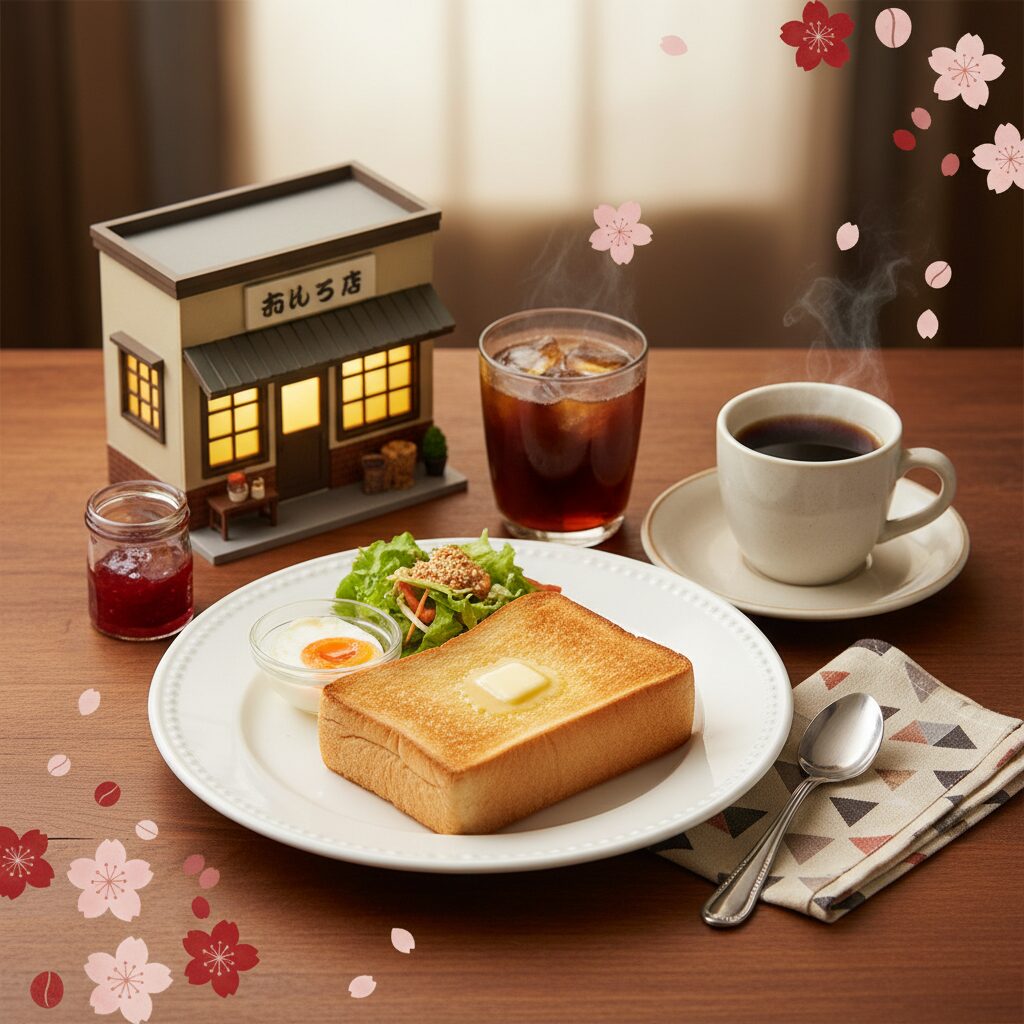
Forget the frantic, grab-and-go breakfast you know. This is its polar opposite. ‘Morning Service,’ or simply mōningu (モーニング), is a uniquely Japanese institution, a breakfast deal that feels almost too good to be true. The premise is simple: between the early morning hours and around 11 a.m., if you order a cup of coffee, you get a small meal—usually thick toast, a hard-boiled egg, and maybe a tiny salad—for free, or for a negligible extra cost. You’re essentially just paying for the coffee.
But this isn’t about a cheap meal. Not really. It’s a cultural ceremony. It’s about the space it happens in—the kissaten (喫茶店)—and the rhythm it provides to the day. For the second-time visitor ready to move beyond the tourist checklist and understand the subtle currents of Japanese society, the kissaten morning is your classroom. It’s a window into a slower, more deliberate Japan, a world away from the neon and the noise. This is where you go to observe the quiet, unstated fabric of the neighborhood, one thick slice of toast at a time.
Embracing the essence of Japan’s morning rituals can inspire a deeper exploration into its culinary secrets, such as the fascinating silent dining art, which adds another layer to the nation’s rich food culture.
More Than a Coffee Shop: The Soul of the Kissaten
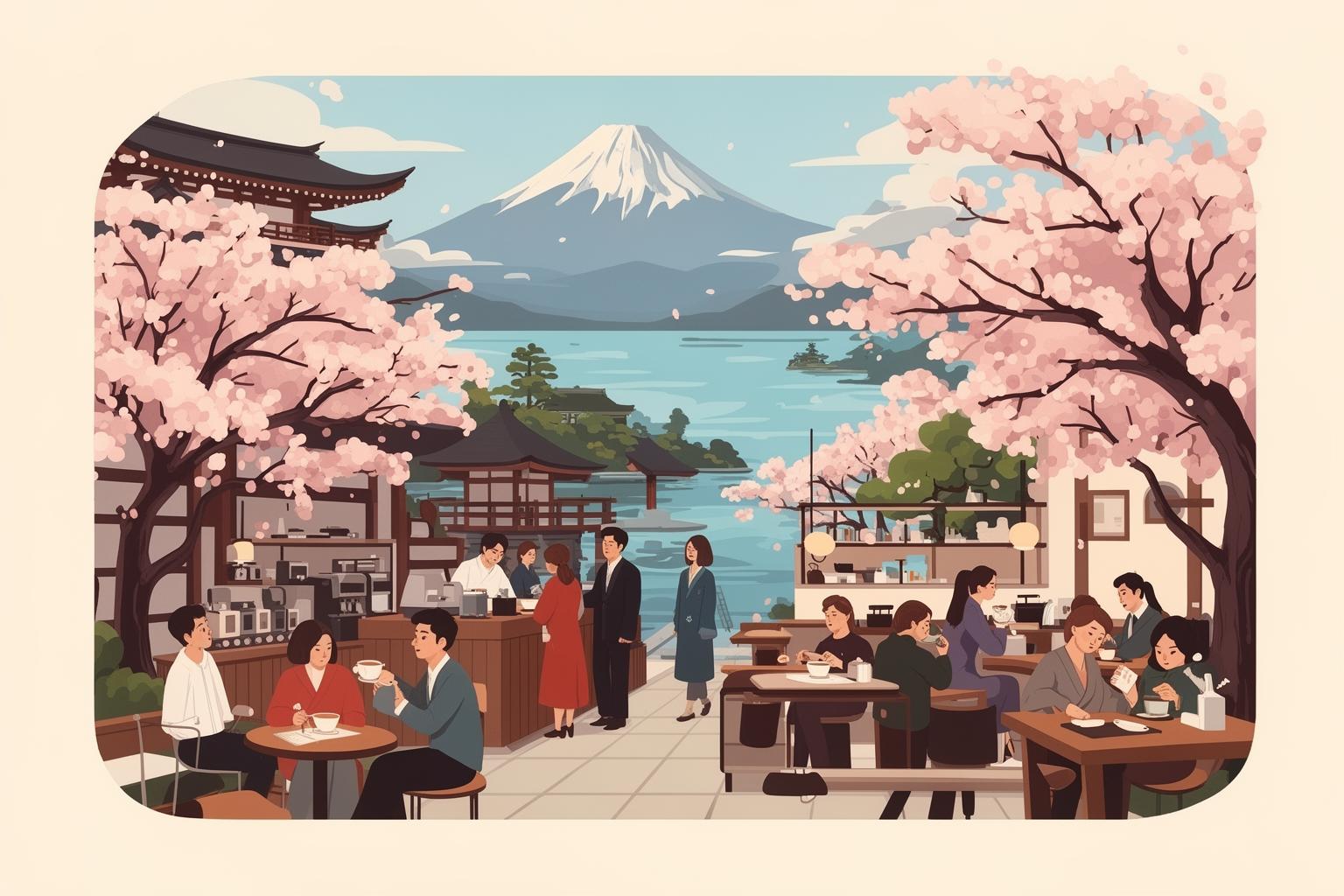
Before we even discuss the food, it’s important to understand the vessel. A kissaten is not just a café. A café is where you go for a quick caffeine fix, to work on a laptop, or to catch up with a friend. A kissaten is something entirely different. It serves as a living room for the neighborhood, a time capsule, and a sanctuary. The term itself roughly translates to ‘tea-drinking shop,’ harking back to an era when coffee was an exotic, sophisticated import.
Entering a classic kissaten feels like stepping back thirty, forty, or even fifty years. Its aesthetic is charmingly and stubbornly resistant to trends. Forget minimalist Scandinavian design; instead, picture dark wood paneling, plush velvet or worn leather booth seats, ornate lamps casting a warm amber glow, and perhaps the faint, nostalgic scent of stale tobacco lingering on the curtains from a bygone age of indoor smoking. There’s no booming pop music here. The soundtrack is usually soft classical, moody jazz, or simply the gentle clinking of porcelain and the rustle of newspaper pages turning.
At the center of this world is the ‘Master’ (マスター, masutā). Neither a barista nor a manager, the Master is the proprietor, the conductor, the soul of the establishment. He (and often it is a he) moves with quiet, practiced economy behind the counter. He might be meticulously polishing glasses, carefully brewing coffee with a syphon—a mad scientist’s device of glass bulbs and open flames that produces a famously clean, strong cup—or simply observing his domain with stoic composure. Small talk is rare. His presence is a steady, reassuring constant. The kissaten is his stage, and the regulars are his cast.
This space isn’t built for speed or efficiency. It’s meant for lingering. It’s a true ‘third place,’ a refuge between the pressures of home and the demands of work. It’s a place to simply be.
The Anatomy of a Perfect Morning Service
The charm of the Morning Service lies in its reassuring predictability. Although variations exist, the classic trio is a masterclass in simple, satisfying nourishment. It’s a formula refined over decades.
The Coffee
This is the cornerstone of the entire experience. The coffee served in a kissaten is usually a dark, rich, full-bodied roast. It’s not the bright, acidic, fruity brew typical of a third-wave café. Instead, it’s straightforward, unapologetically strong, and brewed with meticulous care. Often prepared using a flannel drip (nel drip) or the aforementioned siphon, the aim is for smoothness and depth rather than complex tasting notes of citrus or berry. It arrives in a thick, pre-warmed ceramic cup, often unique and part of the Master’s personal collection. It’s accompanied by a tiny pitcher of cream and a bowl of sugar cubes, tools for the ritual of personalization.
The Toast
The highlight of the food component is almost always shokupan (食パン), Japan’s iconic fluffy white bread, sliced thickly into a cut known as atsugiri (厚切り). We’re talking at least an inch thick. It’s toasted to a perfect golden-brown on the outside while remaining incredibly soft and pillowy inside. It’s a cloud of carbohydrates, the ultimate comfort food. It usually arrives pre-buttered, with the warm butter melting into every nook and cranny, sometimes accompanied by a small serving of strawberry jam or marmalade.
The Supporting Cast
The toast never comes alone. It’s accompanied by a few essential players.
First, the protein: a single hard-boiled egg (yude tamago, ゆで卵), resting in a small dish, waiting to be peeled. It’s simple, modest, and performs its role perfectly. Some establishments might offer a small scoop of scrambled eggs or an egg salad spread for the toast, but the boiled egg remains the ideal classic.
Next, you’ll often find a tiny, almost symbolic side salad. A few leaves of iceberg lettuce, a slice of cucumber, perhaps a wedge of tomato, all drizzled with a savory dressing—often a sesame or a tangy wafu (Japanese-style) vinaigrette. It’s a nod to a balanced meal, a crisp, refreshing contrast to the richness of the buttered toast.
The magic lies in the economics. The entire set might cost 400 or 500 yen—the price of a coffee alone at a modern café. The food is an expression of hospitality, a service. It’s a way of saying, ‘Thank you for starting your day with us. Please, stay a while.’
The Ritual: Who Is This For?
So who are the individuals participating in this daily ritual? The answer offers a glimpse into a cross-section of Japanese society.
You’ll notice the older salaryman, impeccably dressed, sitting alone in a booth. He’s not scrolling on his phone; he’s reading a physical newspaper, carefully folding it into neat sections. The kissaten serves as his decompression chamber, a neutral space before he enters the hierarchical office environment. It’s a moment of calm solitude to prepare himself for the day ahead.
In another corner, there’s a group of elderly neighborhood residents, local retirees. For them, this is their social club. The Morning Service is the fixed point around which their day is organized. The Master knows their orders without needing to ask. They catch up on gossip, discuss the news, and simply enjoy the comfortable silence shared among friends. This is their community hub, a vital barrier against social isolation.
Then there’s the student, or the freelancer, or the writer, using the quiet atmosphere and affordable refreshments as a mobile office. Unlike a busy Starbucks, where you might feel pressured to keep ordering, a kissaten allows for long, uninterrupted periods of focus. Here, you are a guest, not just a customer, and you are welcome to linger.
The Morning Service offers a gentle, dependable rhythm. It acts as an anchor in the day, a small, affordable luxury that is actually an essential part of the social fabric. It’s a quiet act of self-care and community combined.
The Nagoya Exception: Where Morning Service Becomes an Art Form
You cannot have a serious conversation about Morning Service without acknowledging its spiritual home: Nagoya, the capital of Aichi Prefecture. Here, the simple toast-and-egg set is just the beginning. Nagoya’s kissaten culture thrives on a spirit of competitive hospitality known as omotenashi, which has sparked a breakfast arms race.
In Nagoya, ordering a single 400-yen coffee can bring forth an impressive feast. The toast may be served with ogura (小倉), a sweet adzuki red bean paste and local specialty. This ‘Ogura Toast’ is a delightful blend of sweet and savory. But it doesn’t end there. Your coffee might also be accompanied by chawanmushi (a savory steamed egg custard), a small bowl of udon noodles, a piece of fruit, yogurt, and even a small cake for dessert. It is wonderfully and gloriously excessive.
This tradition stems from the region’s history as a commercial hub and its thrifty, practical-minded people who value exceptional value. For kissaten owners, offering an increasingly lavish Morning Service became a source of pride and a way to win customer loyalty. It’s a remarkable example of a local custom growing into a full-fledged cultural identity.
How to Find Your Morning Sanctuary

For visitors, discovering an authentic kissaten is part of the journey. They seldom boast a flashy online presence and are usually found through careful observation.
Seek them out on side streets near train stations, tucked inside covered shopping arcades (shōtengai), or on the ground floor of older, unremarkable buildings in residential neighborhoods. Look for telltale signs: a hand-painted sign with names like ‘Coffee Shop Alps’ or ‘Café de Paris’ (even if they bear no resemblance to a Parisian café), faded plastic food models (shokuhin sanpuru) in a glass case by the entrance displaying the Morning Set, or a spinning barber-style pole, which, for reasons unknown, is sometimes used by kissaten.
When you step inside, a small bell might chime. The Master will probably greet you quietly with ‘Irasshaimase’ (Welcome) and gesture to a seat. Don’t be put off by the silence or the glances from regulars; you are a temporary but welcome guest in their space. Ordering is straightforward — simply say ‘Mōningu, kudasai’ (Morning set, please). Then, put your phone away. Pick up the book you’ve been meaning to read. Gaze out the window. Eavesdrop on quiet conversations. Listen to the gentle hiss of the coffee siphon.
This isn’t an experience to be hurried or captured for social media. It is meant to be savored. The kissaten Morning Service is a relic, yes, but a living one. It stands as a quiet act of resistance against the relentless pace of modern life. It reminds us that sometimes the most meaningful cultural experiences aren’t found in temples or museums, but in the simple, repeated rituals of daily life, served alongside a perfect cup of coffee.