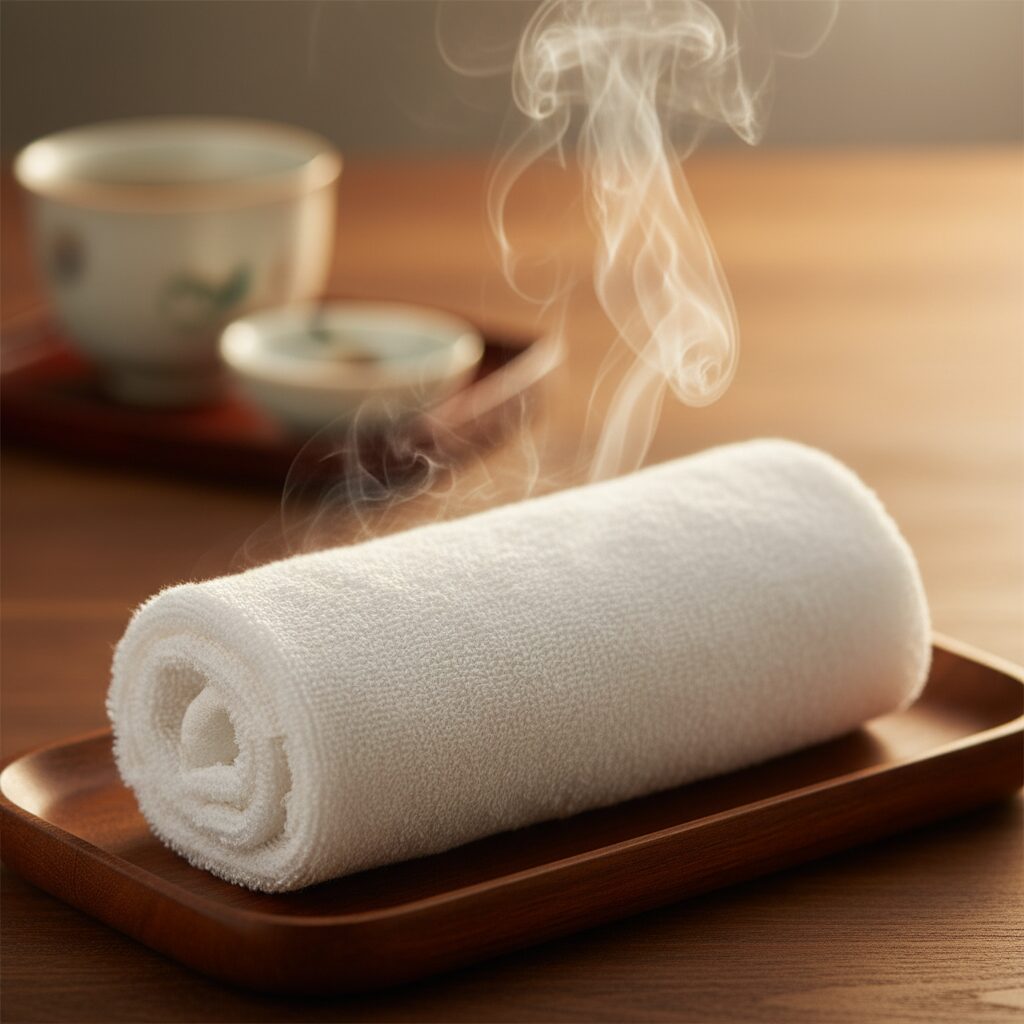
You feel it before you see it. The weight, the warmth, the dense humidity radiating from a small, tightly rolled cylinder of white cloth placed gently into your hands. It’s a sensation that marks a beginning. One moment you are outside, navigating the crowded streets, gripping a cold subway pole, pushing through the humid summer air or bracing against a winter wind. The next, you are inside, seated, and this small, steaming towel is anchoring you to the present moment. This is the oshibori, and in Japan, it’s far more than a tool for hygiene. It’s the first, unspoken word of welcome.
For anyone visiting Japan, the oshibori is one of the first and most consistent cultural encounters. It appears almost magically the moment you sit down in any establishment worthy of the name—from a humble neighborhood ramen shop to a hushed, multi-course kaiseki restaurant. It might be handed to you by a smiling attendant, presented in a simple wicker basket, or laid on an elegant ceramic tray. In the sweltering heat of August, it will be refreshingly cool, maybe even chilled. In the bone-deep cold of January, it will be almost too hot to handle, a welcome shock of warmth that coaxes life back into your fingertips.
It’s easy to dismiss it as a simple wet nap, a pre-meal formality. But that would be like calling a handshake just a touching of hands. The oshibori is a gesture, a ritual, and a perfect microcosm of omotenashi—Japan’s famously intricate and anticipatory style of hospitality. It’s a philosophy of service that’s about perceiving a guest’s needs before they are even articulated. You didn’t ask for a warm towel to soothe your cold hands, but here it is. You didn’t realize how much you wanted to wipe the city grime away before your meal, but the means has been provided. This simple cloth is a profound statement about care, purity, and the transition from the outer world to the inner sanctum of the meal. It is the silent, opening act of a carefully orchestrated experience.
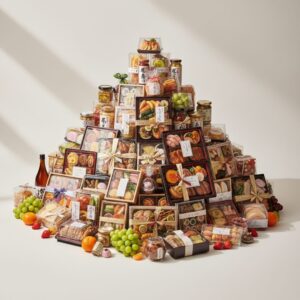
This delicate moment of warm hospitality finds a parallel in the meticulously curated experience of depachika markets, where every culinary detail is crafted to delight the guest.
A Gesture of Purification

To grasp the significance of the oshibori ritual, you need to look beyond its basic function of cleanliness. While it practically serves to clean your hands, its symbolic role holds much greater importance. It acts as a purification ritual, a small ceremony that divides the outside world from the experience you are about to enter.
Marking the Threshold
Consider your journey to the restaurant. You’ve touched door handles, escalator rails, cash, and your phone, carrying the literal and metaphorical grime of the public sphere on your hands. The oshibori is a conscious tool to remove that. When you sit down and unfold the towel, you perform an act of transition. You cleanse yourself not only of germs but also of the distractions of the outside world. It signals your mind to slow down, to fully arrive in this moment, and to prepare to enjoy the food and drink that have been thoughtfully prepared for you. This act creates a fresh start, both physically and mentally.
This concept of purification before a meaningful act is deeply rooted in Japanese culture, originating from ancient Shinto practices. Visitors perform a cleansing ritual called temizu before entering a shrine, using a long-handled ladle to pour water over their left hand, then their right, and finally rinsing their mouth. This purifies body and spirit before approaching the sacred space and connecting with the deities. Although the oshibori in a restaurant is a secular practice, it echoes the same cultural instinct. Eating a well-prepared meal is an experience to be honored, and you prepare for it by first purifying the parts of your body that will come into contact with the food. It’s a subtle yet powerful recognition that this meal is more than mere sustenance; it’s an occasion.
Hospitality as a Physical Touch
The use of a cloth towel rather than a disposable paper wipe is essential. A disposable wipe is purely functional, a product of convenience culture. It’s impersonal, often cold and flimsy, and carries the scent of alcohol. In contrast, a cloth oshibori is a comforting object, with texture and weight. Its temperature is carefully adjusted to the season, offering immediate physical relief. This is hospitality you can sense. It creates a direct, tactile connection between host and guest. Someone has heated or cooled this towel, folded it, and presented it specifically for you. It conveys the message, “We have been expecting you, and we want you to feel comfortable.” In a culture that tends not to express physical affection openly—where hugs and casual touches between strangers are uncommon—the oshibori becomes an accepted and welcome form of physical contact and care.
The Art of the Presentation
The way the oshibori is prepared and presented forms a language of its own. Every detail is deliberate; they are carefully designed to convey the establishment’s character and its level of respect for the guest. It’s a refined art where temperature, texture, and presentation each hold significance.
A Message in Temperature
The most apparent aspect is the temperature. Seasonally adjusting the towel is the simplest expression of omotenashi. Offering a steaming towel on a humid summer day would feel inconsiderate, even cruel. Similarly, a cold towel in winter would be an unpleasant surprise. The host anticipates your physical needs based on the weather outside. The hot towel (atsu-shibo) in winter offers a small indulgence, warming stiff fingers and providing a moment of comforting relief. The cold towel (tsume-shibo) in summer is a blessing, used to wipe away sweat from the forehead and neck, giving a brief, refreshing escape from the intense heat and humidity. This simple gesture embodies a core principle of Japanese hospitality: being mindful of the environment and how it impacts the guest’s comfort.
The Material and the Fold
The towel’s quality speaks for itself. At a casual noodle shop or a lively chain izakaya, you may receive a thin, machine-washed towel, sometimes sealed in plastic for hygiene. It’s practical and clean. As the setting becomes more upscale, towels grow thicker, softer, and more absorbent. A high-end sushi bar or ryotei will provide a substantial cloth with a pleasing weight, perfectly moistened and often folded with meticulous care. The presentation evolves as well. Instead of a plastic basket, the towel might be presented on a lacquered tray, an artisan-crafted ceramic plate, or an elegant bamboo rest. In highly refined places, servers may even use tongs to place the rolled towel directly into your hands, ensuring it remains untouched until it reaches you.
Some venues add a subtle fragrance. While artificial or overpowering scents are considered tasteless, a gentle hint of a natural aroma like hinoki (Japanese cypress) or mint can enhance the experience, adding another sensory dimension to the ritual of purification. These are the nuances that distinguish good service from genuine omotenashi. It is a silent dialogue about quality, care, and the host’s commitment to providing a thoughtful and complete experience from the very first touch.
The Unspoken Etiquette

Like many rituals in Japan, the use of the oshibori is governed by a set of unspoken rules. While a foreigner who stumbles over the etiquette is unlikely to cause serious offense, understanding the correct way to use the towel demonstrates respect for the tradition and the establishment. It’s about recognizing the gesture and responding with a similar level of mindfulness.
Face or Just Hands?
This is probably the most common source of confusion. Is it okay to wipe your face with the oshibori? The answer is nuanced. The towel’s primary, universally accepted function is to clean your hands. Beyond that, it depends on the situation. In a casual, lively izakaya, it’s generally acceptable for men to wipe their face and even their neck, especially on a hot day. This is seen as a sign of relaxation and shaking off the stresses of the workday. However, in a more formal restaurant, it would be considered rude and bad manners. For women, wiping the face with an oshibori is almost always viewed as ungraceful, regardless of the setting, partly because of makeup but also due to differing behavioral expectations. The safest and most respectful practice is to stick to cleaning your hands. Use the towel to thoroughly wipe each finger, then the palms and backs of your hands. The aim is to feel refreshed and clean, not to have a full-body wash at the table.
Its Role Is Brief but Important
The oshibori is meant only for the start of the meal. Once you’ve cleaned your hands with it, its purpose is fulfilled. You should not use it as a napkin to wipe your mouth during the meal or to clean up spills on the table. For that, a separate paper or cloth napkin (nafukin) is usually provided, or you can use your own handkerchief. After its initial use, proper etiquette is to fold the oshibori neatly and place it back on its tray or to the side of your place setting. Leaving it crumpled into a messy ball is considered uncouth. The tidy fold shows you appreciate the clean towel you were given and are treating it with care, even after it has served its purpose.
Reading the Signs
Notice how the oshibori is presented. It can reveal much about the restaurant’s expectations. If you receive a pre-packaged, disposable paper towel (wet-tishu), you are in a very casual, fast-service setting. If a thick cloth towel is brought on a beautiful ceramic dish, you know you’re in an establishment that values detail, aesthetics, and a more refined dining experience. Your own behavior should adjust accordingly. The oshibori serves as the first clue to the restaurant’s atmosphere and level of service.
The Pervasive Towel
The ritual of the oshibori extends beyond just restaurants. Its presence in so many areas of life in Japan highlights how deeply embedded this gesture of hospitality is within the national mindset. It is a core element of the service culture.
Comfort in Transit and Business
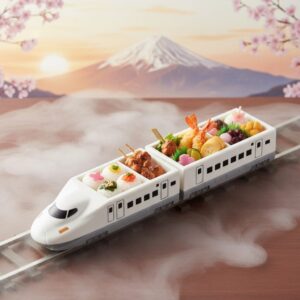
Oshibori can be found in various settings where service and comfort are prioritized. On long-distance trains such as the Shinkansen, attendants often pass through the cars offering passengers a choice of a hot or cold towel, neatly sealed in plastic for convenience. Some long-distance taxi services also provide them as a welcoming amenity. In the business world, it is common for a host to offer an oshibori to guests at the start of a meeting, especially if the guest has traveled a significant distance. This small gesture instantly transforms a sterile meeting room into a more inviting and hospitable environment. It conveys the message, “Please, refresh yourself and get comfortable before we begin.”
The Invisible Industry
It might appear as though every restaurant in Japan operates its own laundry service, but in reality, the system is far more centralized. A large, highly efficient industry of oshibori rental companies supports this daily tradition. Known as kashi-oshibori, these companies operate on a subscription basis, delivering stacks of fresh, clean, sanitized, and perfectly rolled towels to thousands of businesses each morning and collecting the used ones. The used towels are taken to industrial facilities where they are washed at high temperatures, sanitized, and re-rolled by machines or by hand. This unseen infrastructure is what makes the ever-present fresh cloth towel possible. The fact that such a vast industry exists solely to support this small gesture attests to its indispensable role in Japanese service culture.
Ultimately, the oshibori is much more than just a wet towel. It offers a moment of pause, a sensory experience that grounds you in the present. It quietly embodies a culture that elevates service to an art, believing that the truest hospitality lies in anticipating needs and providing comfort without uttering a word. The next time you receive one, take a moment to appreciate its warmth or coolness. Unroll it slowly, and as you wipe your hands, remember you are partaking in a welcome ritual that is as subtle, thoughtful, and deeply Japanese as the meal you are about to savor.