Picture this: a group of young men and women, their hair bleached blonde or sculpted into towering pompadours. They’re decked out in modified school uniforms or elaborate, embroidered jumpsuits that look like something out of a period drama. Their motorcycles, stripped of mufflers, shatter the quiet of a suburban night with a defiant roar. This is the classic image of the Yankii (ヤンキー), Japan’s homegrown delinquent subculture. For decades, they have been the symbol of everything the mainstream Japanese ideal is not: loud, confrontational, and proudly disobedient. They are the rebels, the outcasts, the ones who refuse to play by the rules of a society built on quiet conformity and academic achievement. But here is the paradox that few outsiders ever grasp: peel back the layers of aggressive posturing and anti-establishment style, and you find a core of values that is, shockingly, more traditionally Japanese than Japan itself. These supposed rebels are often fervent adherents to the very principles of hierarchy, loyalty, and collective identity that they appear to be rejecting. Their world is not an outright rejection of Japanese social structure, but rather a distorted, high-contrast reflection of it. To understand the Yankii is to understand the immense pressures and hidden codes of Japanese society itself, and to see how a desire for belonging can manifest in the most unexpected ways. It’s a story about finding honor among the dishonored, and it reveals a surprising truth about what it means to be Japanese when you don’t fit the mold.
This exploration extends to other facets of Japan’s cultural landscape, such as the pachinko phenomenon, where unwavering tradition often collides with the impulses of modern rebellion.
Deconstructing the Delinquent: Who Are the Yankii?
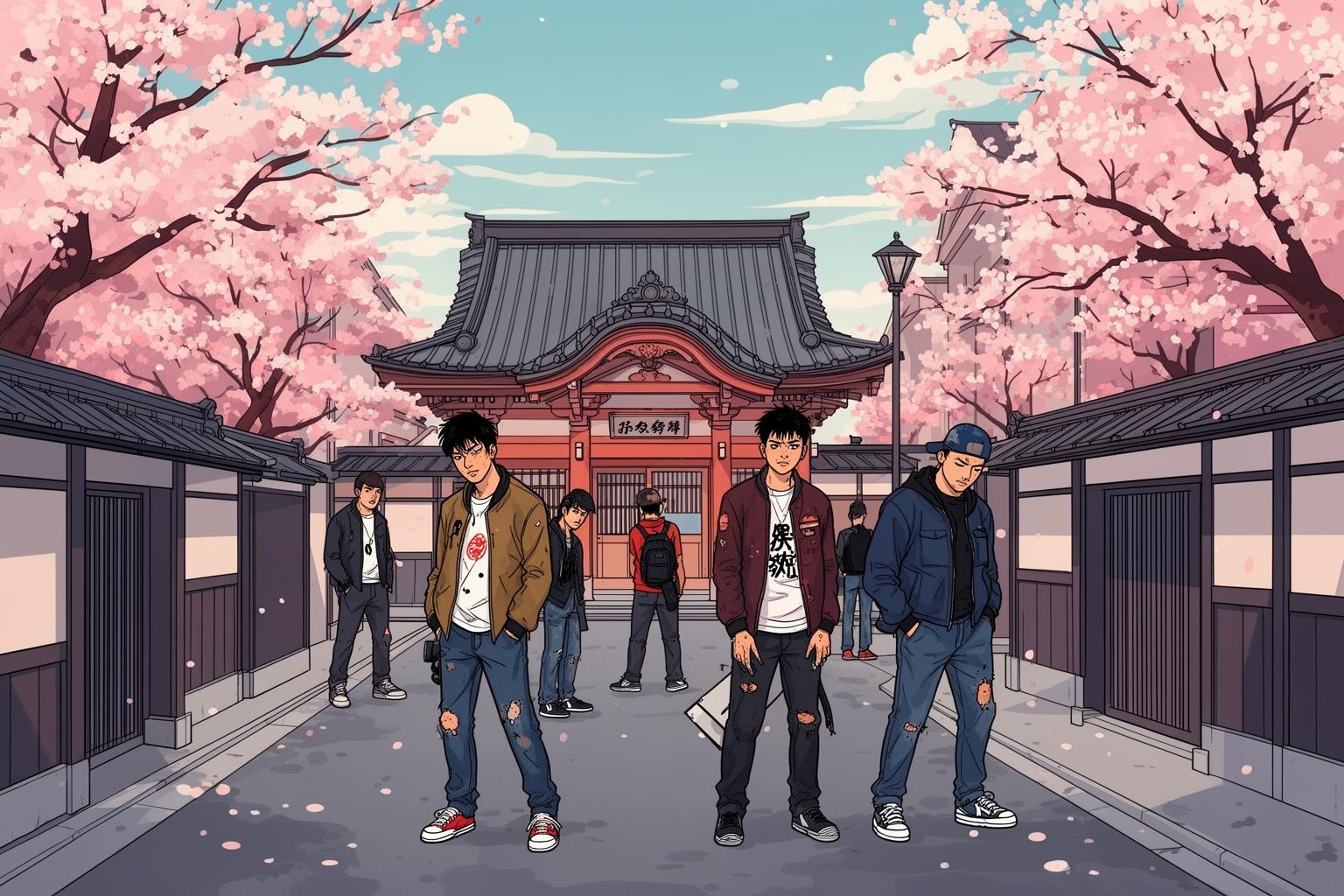
Before we can analyze the paradox, we need a clear understanding of whom we are discussing. The term “Yankii” itself marks a fascinating linguistic evolution. It’s not originally a Japanese word but rather a distortion of the American “Yankee.” Its origins are debated, though the most widely accepted theory traces it back to post-war Osaka, where the bold, casual style of American GIs in the Amemura (American Village) district caught the attention of local youth. What started as a simple label for a specific fashion style gradually evolved over decades into a broader social archetype: working-class youth, often from less affluent suburban or rural areas, who reject the conventional path of diligent study followed by a lifetime career as a salaryman. They are not necessarily hardened criminals in the yakuza sense, though sometimes the lines blur. Instead, they form a distinct social stratum with its own aesthetic, social codes, and a unique definition of what it means to live a meaningful life.
The Uniform of Rebellion
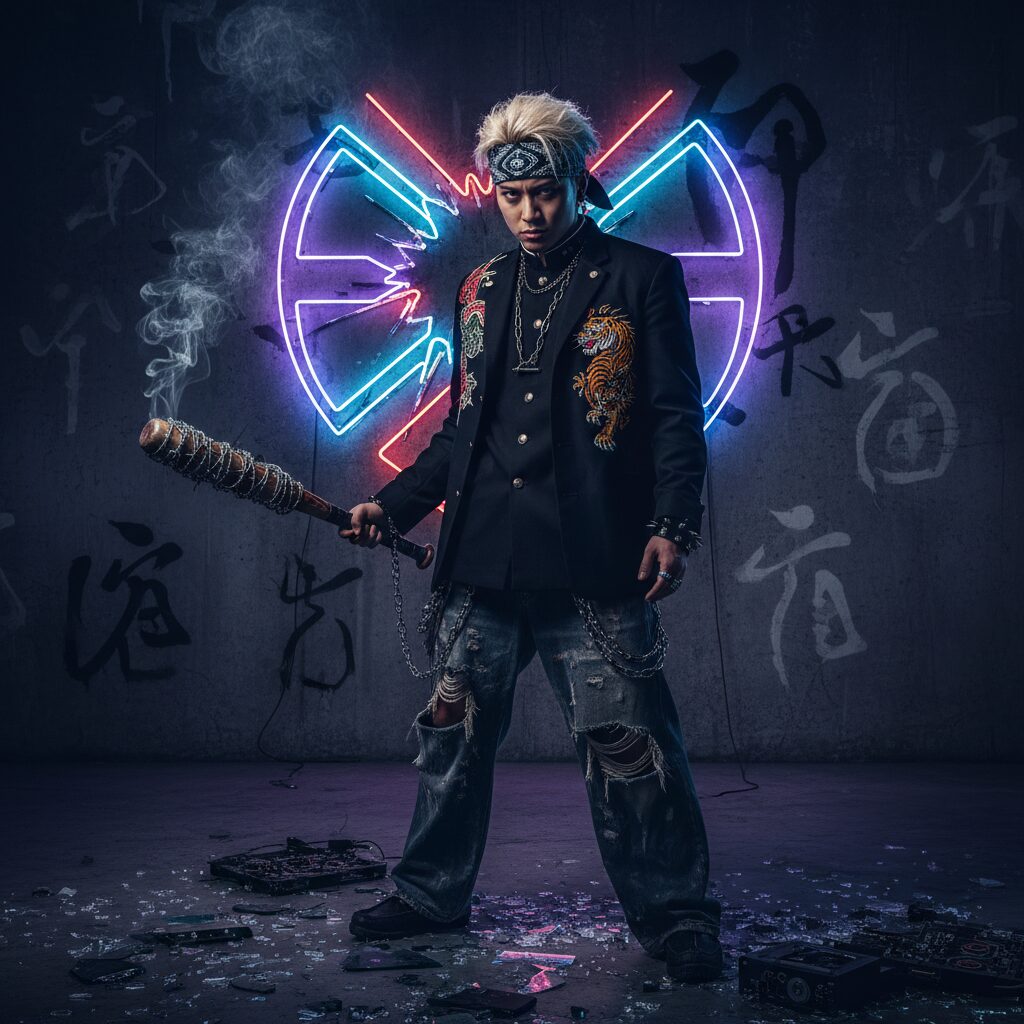
The Yankii aesthetic is deliberate, serving as a carefully crafted uniform of defiance. Every element makes a purposeful statement against accepted norms. The most iconic garment is the tokko-fuku (特攻服), or “special attack uniform.” These long coats or jumpsuits, often in striking colors like white, black, or purple, are adorned with intricate kanji embroidery. The name directly references the uniforms of World War II Kamikaze pilots, repurposing a symbol of ultimate national sacrifice for the sake of their small subculture. The embroidery is not merely decorative; it asserts identity by spelling out the name of their motorcycle gang, hometown, and fierce, poetic slogans such as “Tenjō Tenge Yuiga Dokuson” (天上天下唯我独尊), a Buddhist phrase meaning “I alone am the honored one in heaven and on earth.” It’s a daring claim to significance in a world that often marginalizes them.
Their hairstyles carry equal symbolism. The traditional male style is the regento, a slicked-back pompadour, or the panchi pāma, a tight perm. Both men and women often bleach their hair blond, brown, or even more vibrant colors as a common rite of passage. In a country where conformity is so valued that many schools still mandate black hair, dyeing it becomes one of the most immediate and visible acts of rebellion against the system. It’s a simple yet powerful statement: “I refuse to conform.”
They even alter their school uniforms. Boys shorten their jackets into tanran (短ラン) or lengthen them into chōran (長ラン), pairing these with excessively baggy pants. Girls might wear skirts uncharacteristically long, a nod to an earlier era of female delinquency. Each alteration represents a small but potent act of reclaiming an identity the institution seeks to suppress.
The Social Landscape: An Alternative Path
Yankii culture flourishes in spaces where mainstream ambitions fade. These are often young people alienated by the intense academic pressures of Japan’s education system. They view the path through cram schools, university entrance exams, and a lifetime of corporate employment as not only undesirable but unattainable. Typically the children of laborers, truck drivers, and small-business owners, they frequently follow similar paths. Their world revolves around manual labor, local businesses, and strong community ties far removed from the shiny office towers of Tokyo. This background is critical. Their rebellion is not an intellectual stance born of abstract philosophy; rather, it is a visceral, social reaction to being pushed to society’s edges. The subculture provides a complete alternative social framework, offering a sense of belonging, a clear hierarchy, and a path to respect and status denied by mainstream society. In their world, academic grades hold no value, but loyalty to friends and bravery in conflict mean everything.
The Unspoken Code: Yankii and the Ghost of Bushido
Here we reach the core of the contradiction. Although the Yankii seem to embody anarchy, their internal world is surprisingly rigid and governed by strict rules. Their social structure closely mirrors, though in a rougher form, traditional Japanese society. In many respects, they enact a more intense version of the social codes that shape the lives of the very salarymen they scorn. It’s as if they’ve taken the software of Japanese social dynamics and installed it onto the hardware of rebellion.
Loyalty Above All: The Bonds of the Team
The most sacred value in the Yankii world is loyalty to one’s group, or chīmu (チーム). This bond is absolute and forms the foundation of their entire social existence. Betraying the group or disrespecting its leader is the gravest offense, often prompting severe consequences. This strong group-first mentality is a fundamental aspect of Japanese culture, evident from the corporate world, where the company is regarded as family, to neighborhood associations. The Japanese proverb, “The nail that sticks out gets hammered down,” underscores enforcing group harmony. The Yankii simply create their own nails and their own hammer. Their group becomes their nation, company, and family all at once. Within the group’s safety, they find the acceptance and validation denied by the wider world. This fierce loyalty echoes the feudal ideals of bushido, the samurai code, where a warrior’s devotion to his lord was paramount. Though the Yankii have swapped swords for motorcycles, the underlying principle of unwavering allegiance remains strikingly similar.
The Rigor of Hierarchy: Senpai-Kōhai on Two Wheels
Japanese society is organized along a strict vertical hierarchy, most clearly embodied in the senpai-kōhai (senior-junior) relationship. A younger person (kōhai) must show deference, respect, and obedience to an older or senior member (senpai), who in turn is expected to guide, mentor, and protect the kōhai. This dynamic shapes classrooms, sports clubs, and workplaces. In the Yankii world, this relationship is not merely courteous—it is law. The age hierarchy is strict and non-negotiable. A younger member would never speak casually to a senior. They employ respectful language (keigo), perform menial tasks, and are always ready to respond to their senpai’s demands. This is not optional; it is the price of membership. In exchange, the senpai provide protection against rival groups and help navigate their world. While the salaryman’s senpai may teach proper email etiquette, the Yankii senpai might instruct on bike customization or how to handle confrontations. Although the context differs, the structure is identical. In this way, the Yankii do not reject Japanese hierarchy; they embrace its most refined and powerful form.
A Different Kind of Etiquette: Ritual and Respect
Beyond loyalty and hierarchy, the Yankii observe a complex system of internal etiquette, or reigi (礼儀). There are proper ways to bow, answer a call, or address a senior member’s partner. Great importance is placed on avoiding shame to the group. This preoccupation with “face” is central to many East Asian cultures. A personal failure is never just individual; it reflects on everyone connected to you. The Yankii internalize this fully. Their loud and rude behavior is mostly directed outward, toward society and rival groups. Within their own ranks, conduct can be as formal and exacting as a traditional tea ceremony. They have built a parallel society governed by its own laws, and to survive, one must master its intricate etiquette. It serves as a microcosm of the broader Japanese cultural emphasis on knowing one’s place and acting accordingly.
The Sound and the Fury: From Bōsōzoku to Mild Yankii
The image of the Yankii has never been fixed. It has evolved over time, influenced by economic shifts and police crackdowns. The golden era of the most extreme and visible form of Yankii culture was arguably the 1970s and 80s, during the bōsōzoku (暴走族), or “violent running tribes.”
The Bōsōzoku Era: The Roar of Rebellion
These motorcycle gangs became legendary. Numbering in the tens of thousands, they would ride in massive groups, often hundreds strong, weaving through traffic, waving imperial Japanese flags, and clashing with police. Their aim was not merely to travel from one place to another, but to be seen and heard. They created a unique practice called kōru (コール), or “call,” which involved rhythmically revving their illegally modified engines to produce a symphony of noise, a percussive assertion of their presence. The bōsōzoku were a spectacle of defiance. In a society that values quiet, order, and invisibility, they were a loud, chaotic, and impossible-to-ignore presence. They embodied youthful discontent, staging a weekly festival of rebellion against the strict expectations of post-war Japan’s economic boom.
The Modern Evolution: The “Mild Yankii”
By the early 2000s, this era had largely ended. Stricter traffic laws, focused policing, and a changing economy caused the decline of large-scale bōsōzoku gangs. However, the subculture didn’t vanish; it shifted. It grew less confrontational and more stylistic. The term “mild yankii” (mairudo yankī) arose to describe a new generation. These individuals might maintain the aesthetic—the hairstyle, fashion, and souped-up cars—but are mostly absorbed into society. They hold steady jobs, often in construction, logistics, or sales. They show a strong local orientation, deep affection for their hometown, and close friendships from their youth. They are more likely to spend weekends customizing a van with family than clashing with police.
One of the most revealing modern archetypes is the Yankii-mama. This is a young woman, often a former delinquent, who becomes a mother at a relatively young age. She may keep a flashy style—long decorated nails, bleached hair, and brand-name clothes for her children—but her values are strongly conservative and family-focused. She is a fiercely protective mother, deeply involved in her community, placing her family’s well-being above all else. The Yankii-mama perfectly embodies the subculture’s paradox: a rebellious exterior enveloping a core of intensely traditional family values.
A Reflection in a Cracked Mirror: Why Yankii Matter
It’s easy to write off the Yankii as merely a social problem or a historical curiosity. However, doing so overlooks their significance as a cultural barometer. They emerge from the very society they appear to resist, exposing its pressures, contradictions, and enduring values.
The Safety Valve for a High-Pressure Society
In a nation where the demand to conform and succeed along a narrow, singular path is overwhelming, the Yankii subculture has long acted as a vital safety valve. It offers an alternative identity and a sense of purpose to those marginalized by the academic and corporate rat race. It shows them that there is another way to gain honor, respect, and brotherhood. By crafting their own world with its own rules, they transform what are seen as failures in mainstream society into virtues within their community. Their defiance serves, in a way, as a coping strategy for a society that provides few second chances.
Guardians of a Fading Masculinity?
As mainstream Japanese society witnesses the rise of so-called “herbivore men” (sōshoku danshi)—men viewed as passive and disengaged from traditional masculine ideals—the Yankii stand out as a stronghold of an older, more visceral ideal. They prize physical strength, directness, and a fiery passion often suppressed in the polite, indirect corporate world. Their values are clear: protect your friends, honor your elders, love your hometown, and never back down from a challenge. Viewed from a wider East Asian perspective, this echoes classical notions of brotherhood and righteousness—the kind of sworn loyalty celebrated in stories like China’s Romance of the Three Kingdoms. In their raw, unrefined way, the Yankii embody a form of masculinity that is both intensely Japanese in its focus on the group and a throwback to a more primal, pre-modern code of honor.
The Conservative Core of Rebellion
In the end, the Yankii are not revolutionaries aiming to topple the system. Instead, they are conservatives striving to claim mastery over their own version of it. Their rebellion is not directed at the core values of Japanese society—group harmony, hierarchy, loyalty, and perseverance—but at their exclusion from the conventional path to success. When the doors to elite universities and prestigious corporations close, they build their own house next door using similar traditional blueprints. They create a world where they can be the president, the loyal employee, or the respected elder. Their noisy bikes and flashy fashion are not a rejection of Japanese values but a loud, desperate demand to be part of the Japanese narrative—on their own terms. They are a cracked mirror of Japan, and in their reflection, we glimpse the enduring strength of the very traditions they seem to challenge.