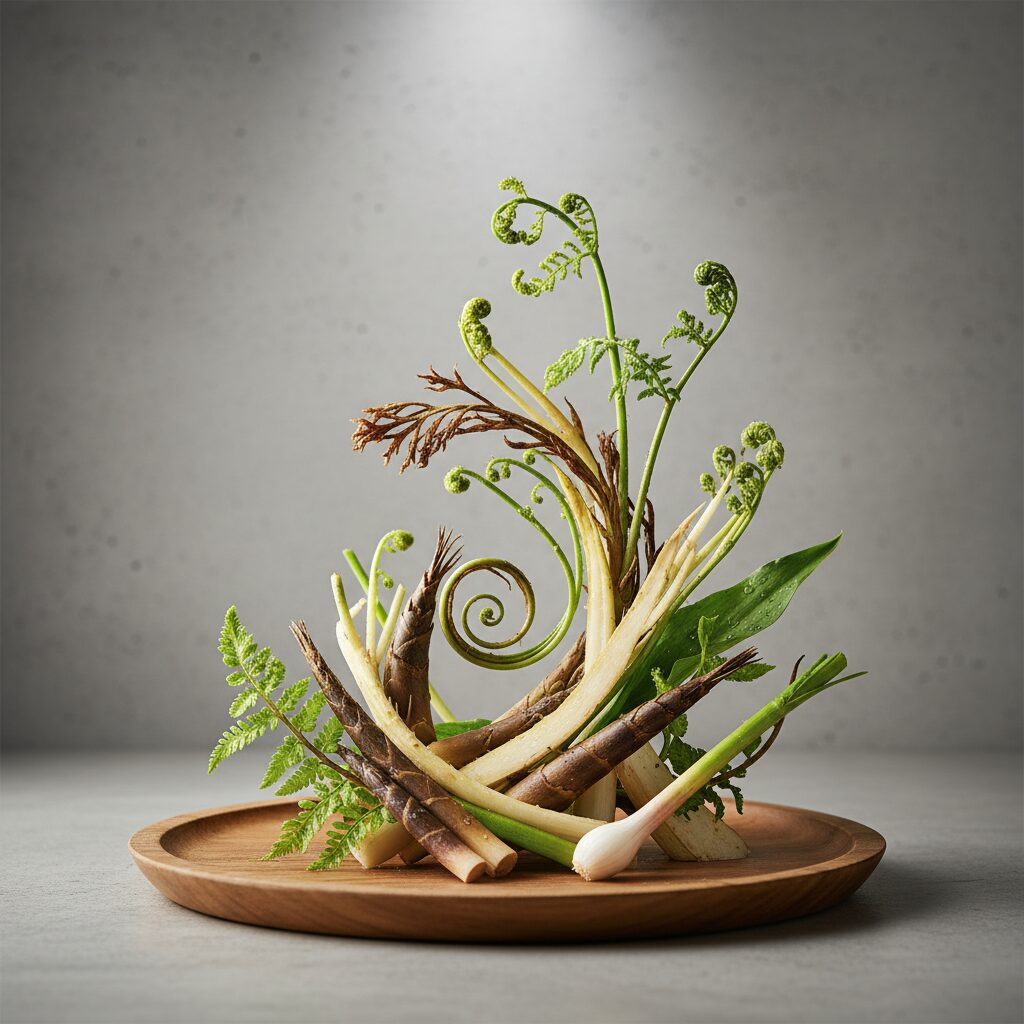
You asked me what defines the arrival of spring in Japan. It’s a good question, because the answer isn’t as simple as you might think. Sure, there are the cherry blossoms, and they’re impossible to ignore—a national obsession, a fleeting explosion of pink that floods social media feeds and parks alike. But that’s the public face of spring, the one on all the postcards. The real, internal signal—the one you feel in your body—is something different. It’s a flavor. Specifically, it’s a bitterness.
While Western palates are often trained to seek out sweetness and salt, and to view bitterness as a flaw to be masked or engineered out of existence, Japan leans into it. This is never more true than in early spring, when the snow begins its slow, grudging retreat from the mountainsides. As the frozen earth thaws, the first things to push their way toward the sun are not delicate flowers but a tough, resilient class of wild plants known collectively as sansai (山菜), or “mountain vegetables.”
These are not the placid, predictable greens of agriculture. They are foraged, not farmed. They are hardy, untamed, and carry the concentrated energy of a long winter’s sleep. And their defining characteristic is a distinct, often assertive bitterness. Eating sansai is a fundamental spring ritual here, a practice that connects the dinner table to the wild, untamed landscape. It’s a way of physically consuming the changing of the seasons, of cleansing the body from the stagnancy of winter and preparing it for the vibrancy of the year ahead. Forget the saccharine sweetness of a strawberry; the true taste of a Japanese spring is earthy, complex, and wonderfully, purposefully bitter.
This interplay of natural intensity and manufactured allure is echoed in the world of Japanese food sample models that challenge our perceptions of culinary authenticity.
The Flavor of the Thaw

To appreciate sansai, you first need to adjust your expectations of how a vegetable should taste. These plants are far removed from the mild crunch of lettuce or the sweet burst of a sugar pea. Their flavors stem from surviving in harsh mountain environments, and they reflect that reality. They carry an elegant bitterness called nigami (苦味) and an astringency known as shibumi (渋み), qualities that are not merely tolerated but highly valued.
This is not a single flavor but a range of wild, green notes. Eating a platter of assorted sansai is like taking a journey through the awakening mountain forest. You might begin with fukinoto (蕗の薹), the tightly curled bud of the butterbur plant. It often appears first, sometimes pushing through the last drifts of snow. Its taste is a jolt to the palate: intensely fragrant, with a sharp, medicinal bitterness that refreshes the mouth and unmistakably signals the end of winter. It’s commonly served as tempura, where the hot oil softens its wildness just enough, or minced and combined with miso to make a pungent, savory condiment called fuki-miso.
Next is tara no me (タラの芽), the bud of the Japanese angelica tree. Known as the “king of sansai,” it offers a richer, more layered flavor. There’s a hint of resin and pine, a pleasant nuttiness, and a milder bitterness that complements its buttery texture. Deep-fried in a light tempura batter, its leaves crisp while the core stays tender, creating a delightful contrast in texture.
Close in esteem is kogomi (こごみ), the tightly coiled fiddlehead of the ostrich fern. Its striking appearance matches its flavor. The spiral form is a perfect, primal symbol of new life. Unlike its more bitter relatives, kogomi is gentler, with a delicate, slightly slippery texture and a taste reminiscent of asparagus and okra. It’s excellent blanched and tossed in a sesame dressing (goma-ae) or simply steeped in dashi.
Others, like warabi (bracken fern), require more careful preparation. Raw warabi is toxic and must be treated through a process called aku-nuki (灰汁抜き), where it’s boiled with wood ash or baking soda to neutralize harmful compounds and eliminate its harsh astringency. This transformation—turning something potentially dangerous into a delicacy—is central to the spirit of sansai. It embodies the accumulated wisdom of generations who learned to coexist with nature, understanding both its dangers and blessings. The result is a tender, slightly gelatinous vegetable with a subtle, earthy flavor that soaks up sauces beautifully.
A Body in Tune with the Seasons
Why embrace bitterness? The reason lies in a traditional understanding of how the body synchronizes with the rhythm of the seasons. Japanese culinary philosophy is deeply grounded in the concept of seasonality, or shun (旬). Shun denotes the peak moment when a food is at its most flavorful and nutritious. While nearly every ingredient has a shun, the season for sansai is exceptionally brief, lasting only a few weeks. This brevity makes them all the more valuable.
According to traditional knowledge, the winter diet was historically heavy on preserved foods—pickles, salted fish, and stored root vegetables. By the time spring arrives, the body is thought to be sluggish, burdened with toxins and fats accumulated during the cold months. The bitter compounds in sansai, such as polyphenols and alkaloids, are believed to function as natural diuretics and stimulants. They are thought to awaken the digestive system, cleanse the liver, and gently purify the body, effectively shaking off the dormancy of winter.
Eating sansai is thus a form of seasonal medicine. It represents a deeply intuitive, pre-scientific type of detox that harmonizes the body’s internal clock with the external natural world. When you eat a dish of fukinoto, you are not just consuming a plant; you are engaging in an annual reset. You are ingesting the very essence of spring’s vibrant, upward energy. This idea remains relevant today, even in a world of year-round availability. The annual arrival of sansai in markets and on menus acts as a powerful reminder to slow down, pay attention, and eat in a way that respects time and place. It is a delicious act of rebellion against the season-less, globalized supermarket.
Foraging as a Living Tradition
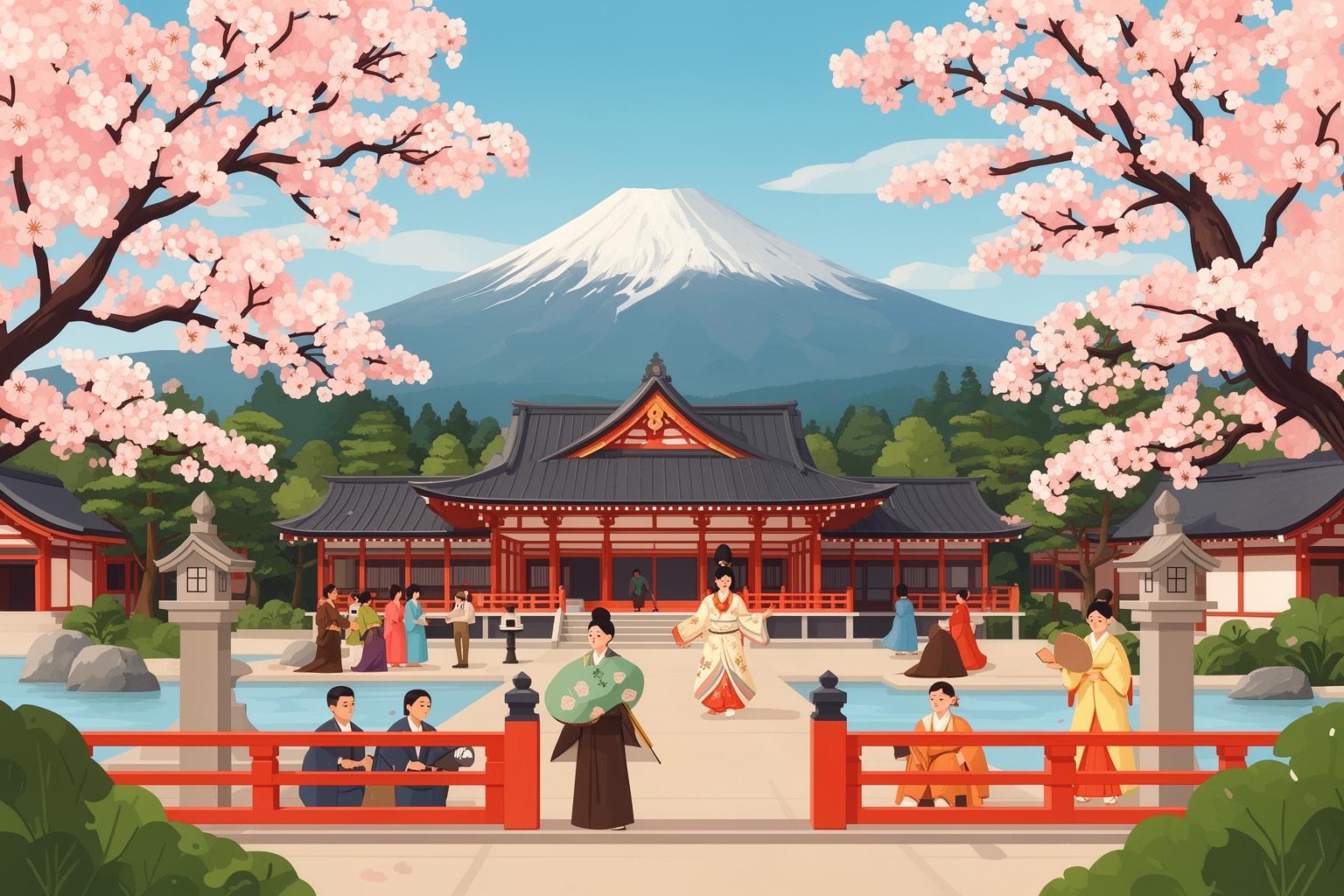
The story of sansai goes beyond what happens in the kitchen or on the plate; it starts in the mountains. Foraging for these wild vegetables, a practice called sansai-tori (山菜採り), is a treasured tradition and a form of active connection with nature. This is not a casual walk through the forest, but a highly skilled craft, often handed down through generations, that demands an extensive knowledge of the local environment.
An experienced forager knows the mountain intimately. They understand which slopes first catch the morning sun, where the snow melts earliest, and the specific microclimates preferred by each plant species. They can distinguish the subtle differences between the edible kogomi and other, less palatable ferns. Importantly, they follow the unspoken rules of the forest: take only what you need, never harvest an area completely, and always leave enough for the plants to regenerate and for others—both human and animal—to enjoy.
This practice of foraging reinforces a worldview in which humans are not separate from nature but are an essential part of it. The mountain (yama) is more than just a resource to be used; it is a living entity that sustains life. Harvesting from it carries the responsibility to preserve its health. There is a quiet respect evident in the way an expert forager carefully snaps the stem of a tara no me, leaving the smaller buds intact to grow. It is a sustainable relationship that has lasted for centuries.
This connection also involves an element of risk. The mountains harbor poisonous plants that closely resemble their edible counterparts, such as the toxic wolfsbane, which can be confused with yomogi (mugwort). Each year, reports surface of inexperienced foragers falling ill. This danger highlights the importance of genuine expertise and lends the act of foraging a seriousness and respect that a trip to the grocery store lacks. The person who returns with a basket of perfectly and safely identified sansai is not merely a cook; they are a guardian of crucial ancestral wisdom.
From Mountain Hut to Michelin Star
Despite their modest, wild origins, sansai are celebrated throughout the entire range of Japanese cuisine, from rustic mountain inns to the most refined temples of haute cuisine in Tokyo and Kyoto. The method of preparation is chosen to honor the distinctive character of each vegetable.
The most common and cherished preparation is tempura. A gossamer-thin batter combined with a quick fry in searingly hot oil creates a dish of striking contrasts. The intense heat flash-cooks the vegetables, preserving their vibrant color and texture while softening their sharp bitterness into something more rounded and pleasing. The crispy coating gives way to a tender, steaming interior. Served with nothing more than a small pile of sea salt, sansai tempura offers a pure, unadulterated taste of spring.
More delicate preparations include ohitashi, where the vegetables are blanched, plunged into ice water to fix their color, and then steeped in a gentle broth of dashi, soy sauce, and mirin. This method lets the natural flavor of the plant shine through, highlighted rather than overwhelmed by the seasoning. Aemono, or “dressed things,” is another popular technique. Blanched kogomi may be tossed in a rich, nutty sesame dressing, while the stronger udo (mountain asparagus) might be paired with a sharp, savory sumiso (vinegar miso) dressing.
Sansai are also essential to shōjin ryōri, Japanese Buddhist vegetarian cuisine. Developed in monasteries, shōjin ryōri emphasizes simplicity, balance, and deep respect for ingredients. Mountain vegetables, foraged from the temple’s surroundings, are a natural fit. They embody the Buddhist principle of living in harmony with nature and appreciating the unadorned flavors that the earth provides.
In recent years, innovative chefs have rediscovered sansai, using their unique flavor profiles to add a distinctly Japanese, seasonal touch to modern dishes. A sliver of pickled myoga (Japanese ginger) might cut through the richness of a fatty piece of fish, or a purée of bitter fuki might serve as a counterpoint to a sweet, seared scallop. This evolution shows that the appeal of sansai is not merely nostalgic; their complex, challenging flavors offer a vital palette for contemporary chefs, proving that this ancient tradition has a secure place in the future of Japanese cuisine.
A Taste of Gratitude

Ultimately, the lasting power of the sansai ritual lies in its ephemerality. In a world of instant gratification and endless options, these mountain vegetables teach us patience and timing. Their arrival is celebrated precisely because it is so fleeting. For a brief few weeks, they appear everywhere—on menus, in specialty stores, and in home kitchens. Then, just as swiftly, they vanish, retreating back into the mountainside until the following year.
This rarity nurtures a deep sense of gratitude, or kansha (感謝). Gratitude for the end of a long winter, for nature’s resilience, and for the simple, potent nourishment the mountains provide. To enjoy a meal of sansai is to engage in a cycle far older and greater than oneself. It is a deliberate act of realigning with the planet’s rhythm, a rejection of the timeless, placeless character of modern food.
While cherry blossoms may capture global attention with their spectacular, photogenic bloom, the true, intimate sign of spring’s arrival in Japan is subtler. It is found in the sharp, clean bitterness of a mountain bud, a flavor that evokes melted snow, dark earth, and the fierce, irrepressible energy of new life. This taste not only pleases the palate but also awakens the body, reminding you of your place in the grand, cyclical story of the seasons.