Walk up to the front door of any Japanese home, and you’ll find yourself at a cultural checkpoint. It’s not manned by guards or governed by a sign. It’s a simple architectural feature, usually no more than a few square feet of space. This is the genkan, the sunken entryway that serves as Japan’s domestic airlock. For the uninitiated, it’s just a place to take off your shoes. But for those who understand it, the genkan is a stage where one of Japan’s most fundamental social rituals plays out daily. It’s a physical border separating the outer world from the inner sanctuary, and crossing it correctly is the first lesson in Japanese spatial grammar.
Forget everything you know about mudrooms or foyers. The genkan is not a casual drop-zone for keys and mail. It is a transitional space with its own set of invisible rules and a choreography that has been practiced for centuries. It is the literal and symbolic line between soto (outside) and uchi (inside), two concepts that dictate much of Japanese social interaction. To step across this threshold is to do more than just enter a house; it’s to be accepted into a private, purified world. Understanding the genkan is understanding that in Japan, the distinction between public and private, clean and unclean, is not just a state of mind—it’s built into the very floorboards.
The genkan’s role as a transformative space finds a kindred spirit in the shotengai architecture that dynamically shapes Japan’s urban landscape.
The Architecture of Transition
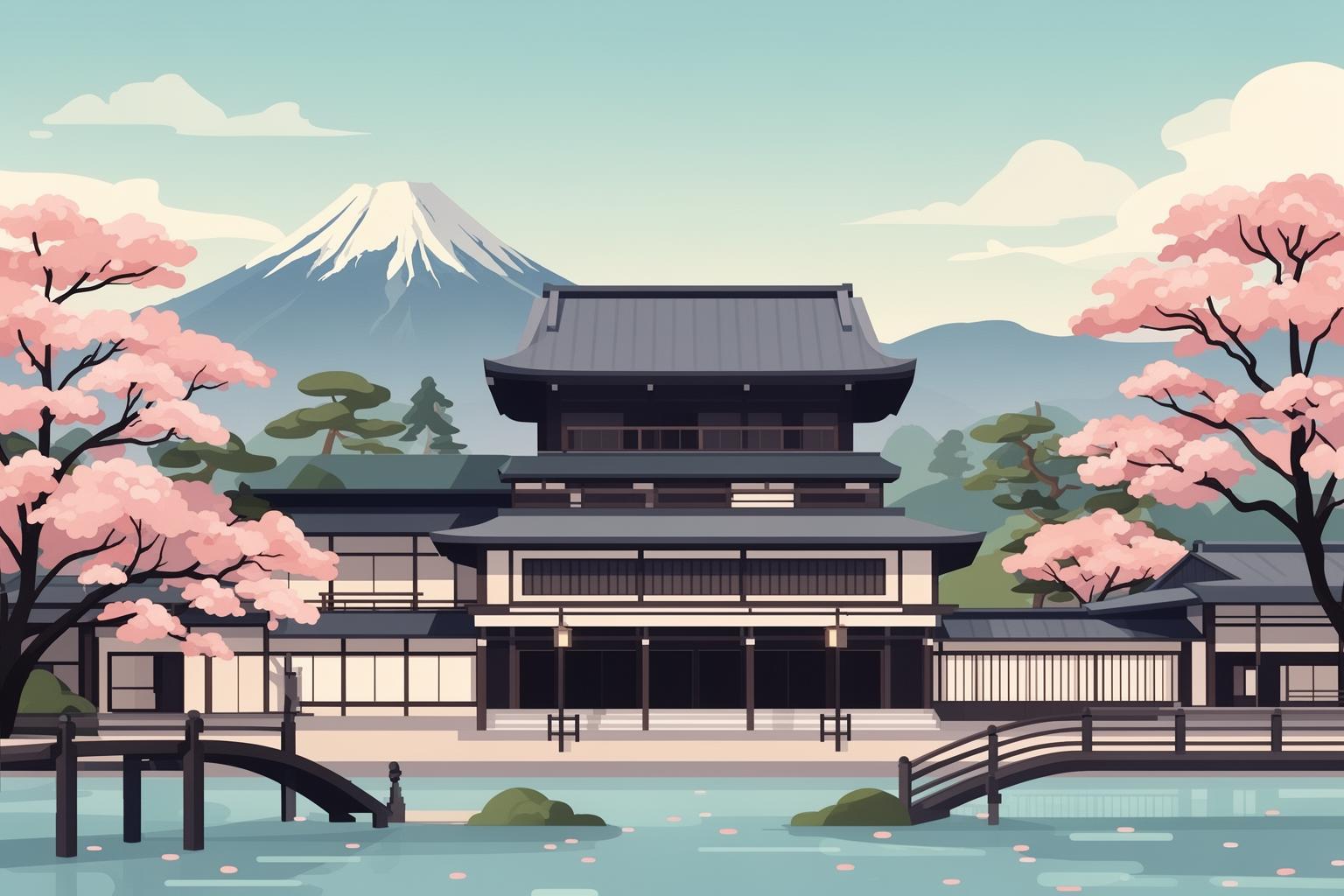
Before understanding its cultural significance, you must first recognize the genkan for what it truly is: a brilliantly crafted architectural feature. It isn’t merely a flat area inside the door. Its design determines its function, directing your behavior from the moment you step inside. Every detail serves a purpose, establishing a clear, physical hierarchy of space.
The Anatomy of a Threshold
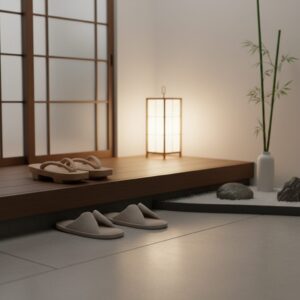
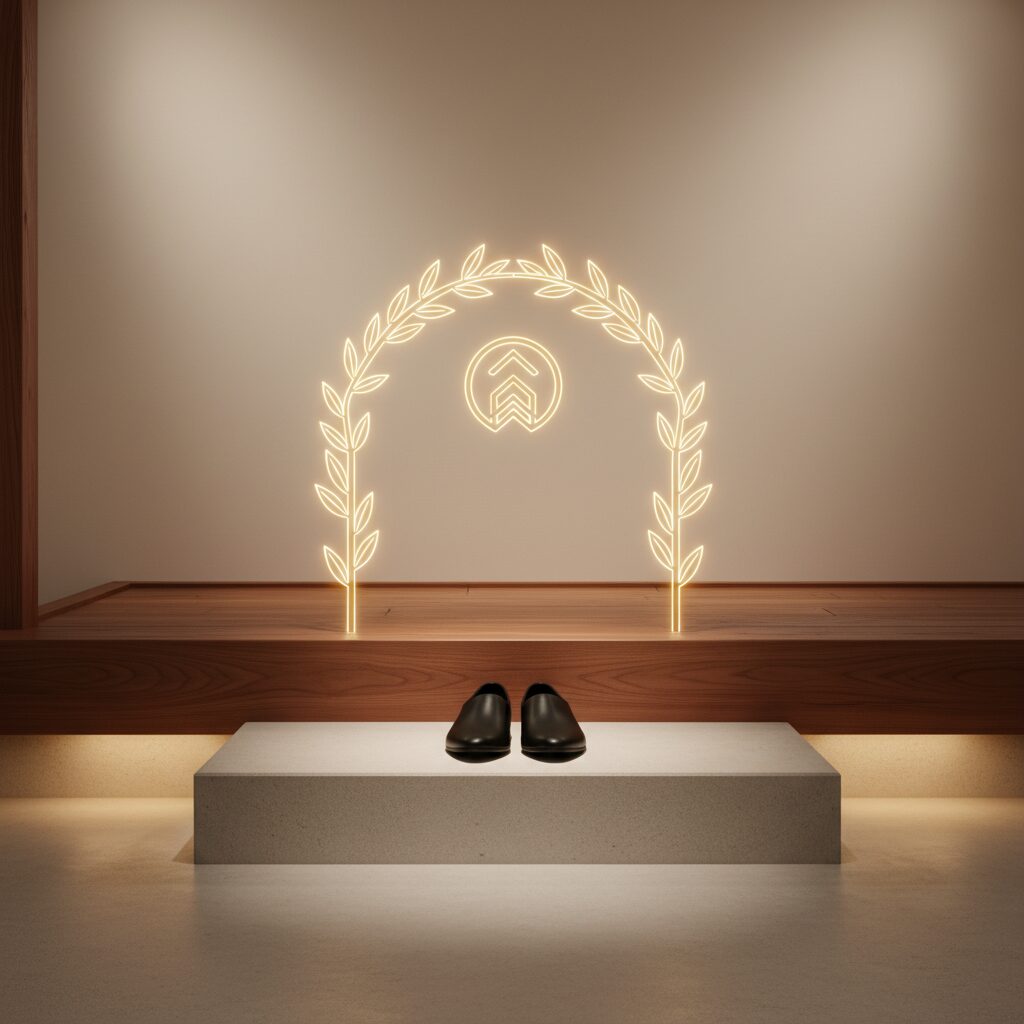
A typical genkan is divided into two distinct levels. The lower section, the area you first step onto from outside, is called the tataki. Traditionally, this was made of packed earth or concrete; today, it’s usually stone, tile, or durable linoleum. This is the soto zone, where the outside world is brought indoors. It is considered an extension of the street and, by nature, is dirty. This is where shoes are removed and left.
From the tataki, there is a single, definite step up to the raised ledge called the agarikamachi. Crossing this marks your official entry into the uchi space, the inner home. The floor beyond the agarikamachi is almost always composed of a different material—shiny polished wood, soft tatami mats, or carpeting. This change in level is vital. It’s not just decorative; it acts as a physical barrier designed to keep dirt, dust, and outdoor chaos confined to the lower tataki. Under no circumstances should the sole of your shoe touch the upper level. Doing so is a serious cultural faux pas, comparable to placing muddy boots on a spotless white sofa.
Adjacent to this space, you’ll almost always find a getabako, the shoe cupboard. Its presence emphasizes the permanence of this ritual. This isn’t a haphazard pile of shoes by the door; it’s an organized system. Each family member has their own designated spot, and guest shoes are treated with equal care. The getabako reinforces that shoes belong only here, at the very edge of the domestic world.
The Unspoken Rules: Uchi-Soto in Three Dimensions
The genkan embodies the uchi-soto (内 Soto 外) concept, a fundamental principle of Japanese social psychology. Uchi signifies your “inside” group—your family, workplace, or team. It represents a realm of intimacy, trust, and relaxed norms. Soto encompasses everyone and everything outside that circle: strangers, other companies, and formal relationships. Successfully navigating Japanese society requires constant awareness of whether you are in an uchi or soto context, adjusting your language and behavior accordingly.
The Choreography of Entry
The genkan translates this abstract social distinction into a specific sequence of actions. Entering a Japanese home is a deliberate and precise ritual. First, you open the door and step onto the tataki, but you do not step directly up. While standing on this lower level, you remove your shoes. The key step follows: you turn around, still on the tataki, and crouch to neatly arrange your shoes. They should be positioned together, pointing toward the door, ready for when you leave. This is more than just neatness; it’s a thoughtful gesture that facilitates slipping your shoes back on without trouble. Only after your shoes are properly arranged do you step up, in socks or barefoot, onto the raised floor of the home. Stepping from the tataki onto the raised floor and then turning to remove your shoes is avoided, as it would carry dirt from the soto world into the uchi sanctuary.
This ritual ensures that feet that have touched the outside ground never contact the inside floor, while the socks or slippers touching the inside floor do not touch the tataki. It serves as a form of purification, shedding the outside world both literally and symbolically before entering the private, protected space of the home.
A Social Buffer Zone
The genkan also acts as a social airlock. It’s a neutral zone where interactions with the soto world can take place without fully entering the home’s inner sanctum. For example, a delivery person will stand on the tataki to hand over a package and receive a signature. A neighbor might drop by for a brief conversation, but this is often limited to the genkan. Since they have not been formally invited inside, they remain in this transitional area. Being invited to step beyond the agarikamachi is a meaningful sign. It signals that you are welcomed not just as a visitor, but as a trusted guest, allowed to enter the family’s uchi space.
Historical and Practical Roots

This deeply rooted custom isn’t merely about abstract philosophy; it has arisen from centuries of practical concerns unique to Japan’s climate and traditional lifestyle. The ritual addresses tangible problems and, over time, has gained profound cultural significance.
A Legacy of Tatami and Humidity
For much of its history, Japan was a floor-based culture where people sat, ate, and slept on tatami mats. Tatami, crafted from woven rush grass, is delicate, challenging to clean, and highly absorbent. Bringing wet, muddy shoes onto tatami would cause damage, staining the mats and encouraging mold in Japan’s famously humid climate. The need to keep floors spotless was not about aesthetics alone but about hygiene and protecting the very surface on which daily life unfolded. The genkan served as the first line of defense in safeguarding the home’s most crucial and vulnerable element.
Even in modern homes with hardwood floors and Western-style furnishings, this practice continues with resolute persistence. Although the practical necessity may have diminished, the cultural ingraining remains strong. What began as a simple cleanliness requirement has evolved into a deeply embedded expression of respect for someone else’s home.
Beyond the Home: The Genkan Mentality
The custom of removing shoes extends beyond private residences. It distinctly marks the boundary between public and private, or formal and informal spaces. You remove your shoes upon entering a temple as a sign of reverence for the sacred space. Many traditional restaurants, particularly those with tatami rooms, require guests to leave their shoes in a getabako at the entrance. Numerous medical offices and clinics ask visitors to switch to indoor slippers to preserve hygiene.
Most notably, students from elementary to high school in Japan remove their outdoor shoes upon arriving at school. They store these shoes in a getabako and change into indoor shoes called uwabaki, worn only inside the school building. In this context, the school is regarded as a large, shared uchi space—a community that must be kept clean and separate from the outside world. This daily practice, instilled from an early age, firmly embeds the genkan mentality into the national consciousness.
The Slippers Tell the Whole Story
Once you’ve successfully passed through the genkan and stepped inside the home, you will often be offered a pair of slippers, or surippa. These slippers are the designated indoor footwear, ensuring that even your socks remain free from dust. Guest slippers are a customary gesture of hospitality. However, the concept extends much further.
If you use the restroom, you will likely find another pair of slippers waiting just inside the bathroom door. These are toilet slippers. You are expected to leave your house slippers outside the bathroom, wear the toilet slippers while inside, and then switch back upon exiting. Forgetting to switch back and walking into the main house still wearing the toilet slippers is a common, and embarrassing, mistake for foreigners. But this perfectly illustrates the Japanese mindset regarding purity and boundaries. Even within the clean uchi of the home, certain spaces are considered less clean. The toilet is one such area and requires its own footwear to contain its impurity, establishing another invisible boundary. While the genkan might be the primary border, the principle of separating spaces is applied on a smaller scale throughout the home.
Ultimately, the genkan is much more than just an entryway. It serves as a classroom where the core values of Japanese society—respect, purity, and the clear distinction between public and private spheres—are taught and reinforced with every entry and exit. It stands as a testament to a culture that finds meaning in small rituals and recognizes that how you cross a threshold reveals your awareness of the world you are about to enter. It is a simple, elegant solution to the universal desire for a sanctuary, a quiet reminder that a home is not merely a structure, but a sacred space.