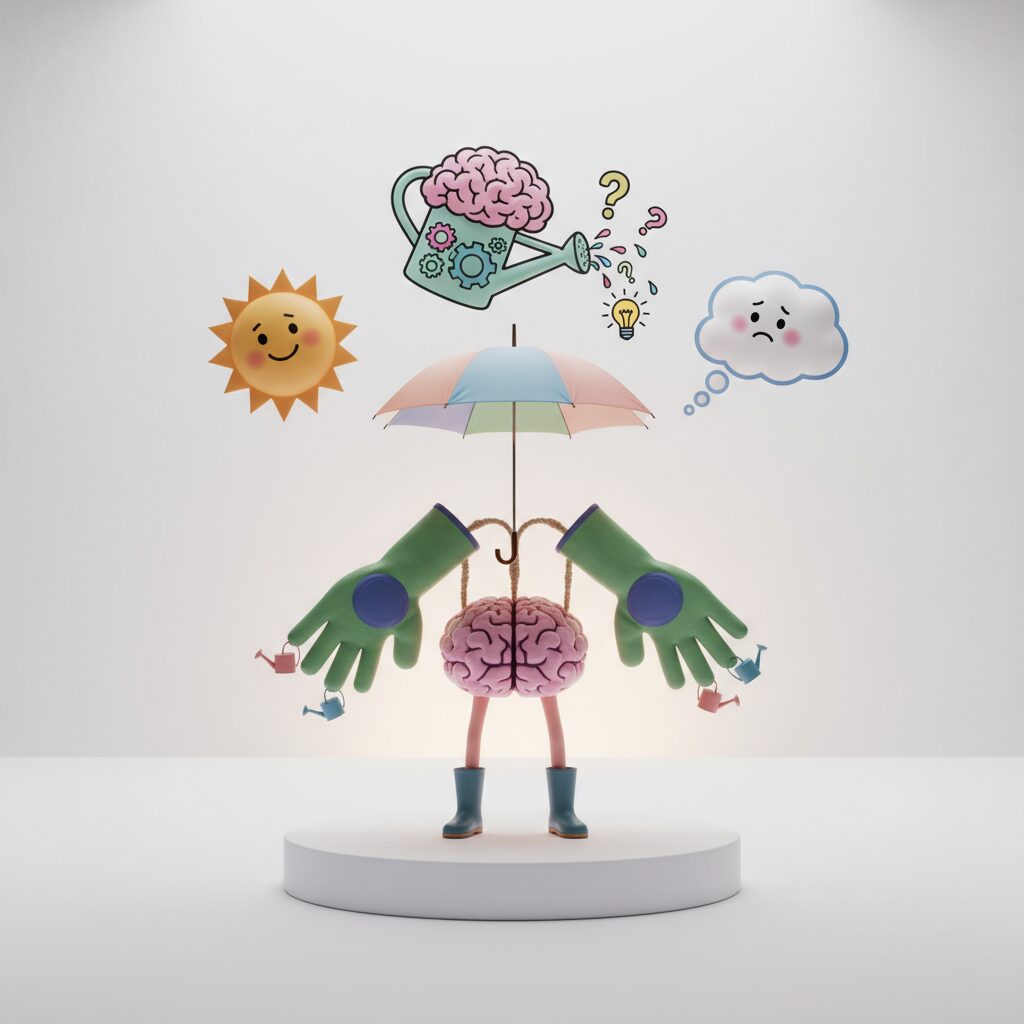
Imagine a man in a crisp suit, navigating a crowded Tokyo sidewalk on a rainy day. He holds a perfectly normal umbrella, but attached to its shaft, upside down, is another, smaller umbrella. This tiny canopy isn’t for him; it’s positioned to shield his expensive camera from the drizzle. The problem of how to be a street photographer in the rain is solved. But a new, larger problem is born: he now looks utterly, spectacularly absurd. He has achieved a state of perfect impracticality. This, in essence, is the soul of Chindogu.
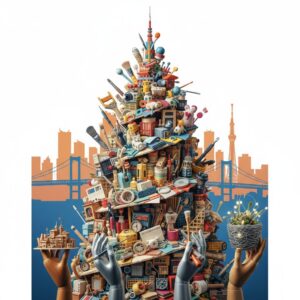
The term, coined by inventor and artist Kenji Kawakami, translates loosely to “unusual tool.” But that’s a sterile description for such a vibrant concept. Chindogu is the art of creating an invention that solves a very real, very specific, and often very minor problem, but does so in a way that is so clunky, so socially awkward, or so generally inconvenient that it’s ultimately unusable. It is the practice of creating something that is, to use Kawakami’s own paradoxical term, “unuseless.” These are not gag gifts or failed prototypes. They are thoughtful, fully-realized solutions that celebrate the beauty of the glorious dead end. To understand Chindogu is to look past the punchline and see a fascinating commentary on Japan’s relationship with innovation, consumerism, and the quiet absurdities of modern life.
The quirky ingenuity of Chindogu finds a kindred spirit in Visual Kei’s androgynous innovation, which similarly challenges Japan’s conventional aesthetic norms.
The Unbreakable Rules of (Almost) Uselessness

To someone unfamiliar with Chindogu, a collection might appear as a heap of junk from a fever dream. However, this is not mere random chaos. There is a strict philosophy behind this creative pursuit, a set of ten commandments that distinguish true Chindogu from simple novelty items or poorly designed products. These principles elevate the practice from a mere hobby to a subculture with its own unique worldview. They guarantee that every creation is a pure, untainted expression of impractical genius.
It Must Be (Almost) Real
A fundamental principle of Chindogu is that the invention, no matter how ridiculous, must actually be buildable and function as intended. This is not science fiction or fantasy. You should be able to construct it with materials from your local Tokyu Hands or home improvement store. The “Duster Slippers for Cats,” for example, are essentially small dusters strapped to a cat’s paws. The concept is that your feline companion will clean your floors as it moves around. The device is manufacturable, and in theory, it would dust the floor. The absurdity lies not in its physical impossibility but in its profound misunderstanding of feline behavior and the sheer indignity of the idea. This grounding in reality makes the final product so funny; it’s a solution that exists in our world, not a cartoon one, which highlights its social and practical failures even more.
The Spirit of Anarchy
Perhaps the most important rule, and the one that reflects Chindogu’s subcultural spirit most deeply, is that a Chindogu must never be sold. It cannot be patented or copyrighted. It is an idea freely given to the world. Kenji Kawakami has reportedly declined millions in licensing offers for his inventions. This firmly anti-capitalist stance is the core of Chindogu. In a society dominated by endless cycles of production, marketing, and consumption, Chindogu offers a breath of fresh, unmonetizable air. It’s pure creation, separated from commercial pressures to generate profit. Making something purely for the sake of existence, as a piece of conceptual art you can hold, is a subtle act of rebellion. It critiques a world where every good idea eventually becomes a marketable product.
A Tool for Everyday Life… Sort Of
Chindogu must be designed to solve a real everyday problem. The problem is often trivial, the kind of minor annoyance you rarely try to fix consciously. Think about how hard it is to spread butter on toast without ripping the bread, or the challenge of administering eye drops accurately. Chindogu confronts these issues directly. The “Butter Stick,” resembling a giant glue stick filled with butter, or the “Eye Drop Funnel Glasses,” which are spectacles fitted with tiny funnels over each eye, illustrate this perfectly. They identify genuine inconveniences. Their flaw lies in the execution. The butter stick is a unitasking hassle, and who wants to clean funnels every time they need eye drops? This focus on the everyday mundane is what makes these inventions so relatable, and their elaborate fixes so amusing.
A Gallery of Glorious Failures
Walking through the catalog of classic Chindogu feels like stepping into a museum of brilliant blunders. Each item narrates a tale of a very specific human challenge and the wildly exaggerated effort to overcome it. These are more than just objects; they are little performances, critiques of convenience culture enacted through plastic and metal.
The Noodle Eater’s Arsenal
Anyone who has eagerly slurped a bowl of ramen understands the risk of splashback. Broth on your shirt, your tie, your glasses—it’s an inherent hazard of the meal. The Chindogu answer? The “Noodle Splash Guard,” a plastic sheet that wraps around your face like a mane, shielding your clothes and dignity from flying soup. It solves the problem, but at what cost? You resemble a human lion in a fast-food joint. It trades all social grace for a spotless shirt. Likewise, for those bothered by a runny nose while eating hot noodles, there’s the “Hay-Fever Hat.” This is simply a hard hat with a roll of toilet paper mounted on top, offering immediate tissue access without ever putting down your chopsticks. Functional? Yes. Socially acceptable? Absolutely not. These inventions underscore the inherent tension between pure practicality and the unspoken codes of public conduct.
Mastering the Mundane
Chindogu shines at over-engineering answers to the smallest annoyances of life. Take the “Solar-Powered Lighter.” It’s a cigarette lighter that employs a powerful magnifying glass to concentrate sunlight on the cigarette tip. Eco-friendly and never running out of fuel, it’s also useless at night, on cloudy days, or anytime you’re in a rush. It transforms what should be a quick action into a patient, weather-dependent ritual. Then there’s the “Umbrella Tie,” a necktie that secretly houses a folded, telescoping umbrella. Caught in a sudden rainstorm? Simply unfurl your neckwear. In theory, it’s a clever mix of fashion and function. In practice, it means wearing a bulky, uncomfortable tie daily on the slim chance it might rain, and ending up with a soaking wet piece of fabric around your neck once indoors.
The Commuter’s Companion
Long, crowded train commutes are an iconic part of urban life in Japan, and the urge to nap during the trip is universal. Chindogu responds with the “Subway Sleeper’s Helmet.” It’s a plunger attached to a helmet, allowing the weary commuter to stick their head to the train window. A small sign on the back politely asks fellow passengers to wake them at their stop. This invention is a touching piece of social commentary. It tackles the real issue of exhaustion and the fear of missing your station, yet its solution depends on a level of public intimacy and disregard for personal appearance almost unthinkable in the very culture that inspired it. It’s a dream of public cooperation cloaked in profound social awkwardness.
The Soul of Chindogu: Beyond the Gag
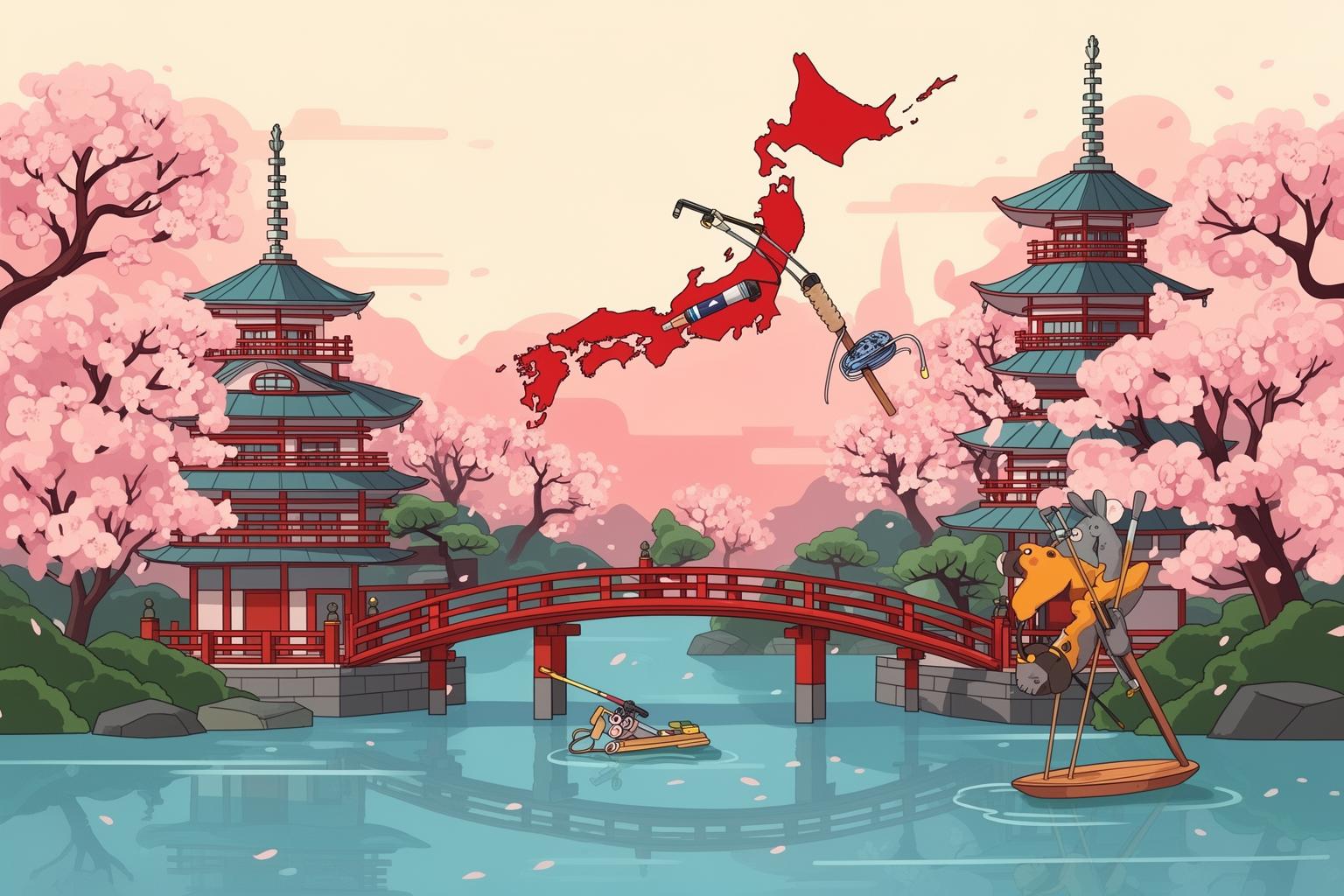
It’s easy to laugh at these inventions and label them as mere Japanese eccentricities. However, doing so completely misses the point. Chindogu is more than a collection of quirky gadgets; it serves as a philosophical playground. It represents a subculture of thought that employs humor and absurdity to explore important questions about our relationship with technology, convenience, and the very idea of “progress.”
A Counterpoint to Hyper-Consumerism
At its heart, Chindogu stands as a gentle yet firm protest against the relentless momentum of consumer capitalism. Every product on the market is created, tested, and marketed to be as desirable and efficient as possible—it must be sellable. Chindogu, bound by its own unbreakable rule, must be unsellable. This conscious rejection of commercial viability is a radical gesture. It celebrates invention for its own sake—for the joy of problem-solving, the humor in a flawed idea, and the sheer fun of creating something new, even if that something is fundamentally flawed. It reminds us that not all human creativity needs to be commodified. Some creations can simply exist.
The Perfectionist’s Parody
From a cultural perspective, Chindogu can be understood as a playful parody of the Japanese principle of kaizen, or continuous improvement. This philosophy has fueled much of Japan’s industrial and technological achievements—a relentless, detailed focus on refining processes and products toward near-perfection. Chindogu applies this mindset to life’s most trivial matters. It asks, “What if the same rigorous engineering used to build a bullet train were applied to scratching an itchy back?” The outcome is an absurdly intricate back-scratching shirt with a printed grid system, enabling a friend to follow precise coordinates. It’s a loving satire of a national trait, exaggerating the quest for precision and optimization to its most illogical and comical extreme.
Embracing Imperfection in a Perfect World
As someone who values broader East Asian aesthetic philosophies, I see in Chindogu a kind of inverted wabi-sabi. While wabi-sabi discovers deep beauty in imperfection, transience, and incompleteness, Chindogu begins with a search for a perfect solution and, through its own flawed logic, reaches a state of beautiful imperfection. The aim is practical utility, but the outcome is art. The creations are awkward, clumsy, and profoundly human. They acknowledge that in our haste to fix every minor issue, we often generate bigger, more humorous problems. It’s an admission that sometimes the most elegant solution is simply to accept a small annoyance and move on. Chindogu honors the messy, imperfect reality of being human in a world fixated on flawless design.
The Legacy of (Almost) Useless Ideas
Decades after Kenji Kawakami first started cataloging his creations, the spirit of Chindogu endures. While the original movement was a distinctly analog phenomenon celebrated through magazines and books, its influence is evident in the digital age. It serves as a spiritual predecessor to the quirky “life hack” videos that flood the internet and the communities devoted to crafting delightfully pointless robots. Yet, Chindogu remains unique because of its purity. It’s not about chasing clicks or going viral; it’s about the integrity of the (almost) useless idea itself.
The legacy of Chindogu isn’t found in the objects themselves, which were never intended for mass production. Instead, its legacy lies in the mindset it fosters: a way of viewing the world with a creative, critical, and humorous perspective. It allows us to be playful, to invent without a purpose, and to find joy in magnificent failure. In a world that constantly demands efficiency, productivity, and market value, Chindogu stands as a tribute to the useless. And in its complete and utter uselessness, it is, paradoxically, one of the most freeing and valuable ideas of all.