Sometime in the last few years, you’ve probably felt it. You’re deep into a late-night internet session, clicking from one video to the next, when the algorithm serves you something… different. A static image of a woman with a confident, knowing smile, her face framed by 80s hair. A song starts playing. It’s in Japanese, a language you may not understand, but the feeling is immediate and undeniable. A wave of smooth, impossibly chic nostalgia washes over you—a nostalgia for a time and place you’ve never known. The sound is sophisticated, a little melancholic, but overwhelmingly optimistic. It sounds like driving a convertible through a neon-lit metropolis at dusk. It sounds like the future, but a future imagined forty years ago.
This is City Pop, the ghost in the global machine. For those of us who didn’t live through Japan’s 1980s economic zenith, the genre’s explosive revival feels like a shared cultural hallucination. How did a category of music that was, for decades, little more than a dusty footnote in Japanese pop history become the unofficial soundtrack for a global generation? How did songs by artists like Mariya Takeuchi and Tatsuro Yamashita, once relegated to bargain bins in Tokyo, find new life as the background music for millions of people studying, working, or just trying to feel something?
The answer is more complex than a simple story about a clever algorithm. The resurrection of City Pop is about our collective relationship with the past, the present, and a particular kind of lost future. We aren’t just listening to catchy tunes; we’re plugging into a fantasy of frictionless cool, of analog sophistication, and of an unshakeable belief in a brighter tomorrow. It’s a beautiful, bittersweet dream of a future that never arrived, which makes it the perfect escape from the one that did.
The resurgence of City Pop invites us to explore how Japan’s chindogu ingenuity reflects a cultural legacy filled with unconventional creativity.
The Sound of the Bubble

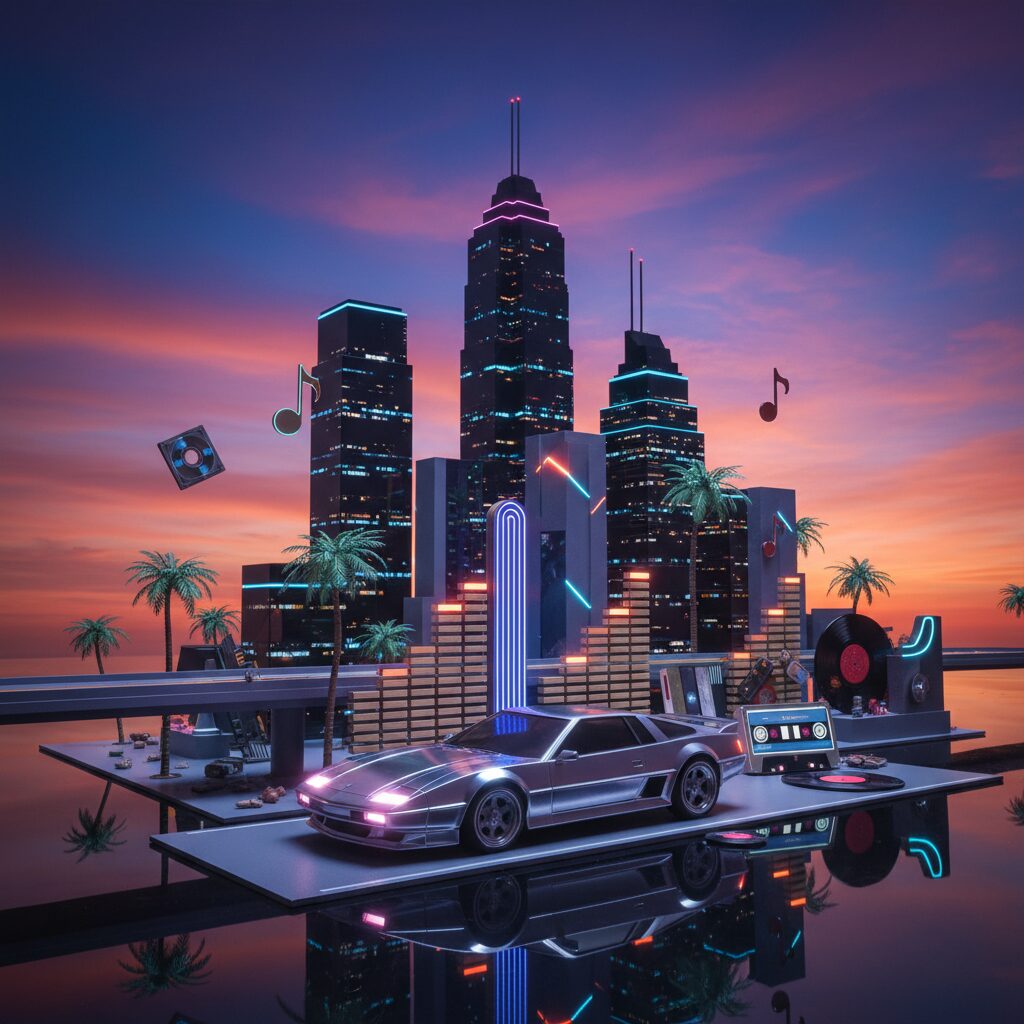
To truly grasp City Pop, you need to understand the world that brought it into being. This music didn’t emerge from struggle or rebellion; rather, it was the polished, flawless soundtrack of a nation at the height of its economic power. In the 1980s, Japan was immersed in a state of hyper-confident futurism. The economy was not just booming—it seemed unstoppable, with Japanese corporations purchasing American landmarks and Tokyo’s real estate valued at stratospheric levels. This was the era of the Sony Walkman, sleekly designed cars that appeared to glide straight out of science fiction, and a society overflowing with disposable income. City Pop captured the essence of this precise, intoxicating moment.
What Exactly Is City Pop?
Defining City Pop as a single genre is challenging because it was always more about a mood than rigid musical boundaries. At its heart, it was a sophisticated blend of Western styles, crafted for a newly cosmopolitan Japanese audience. Imagine it as a cocktail mixed with the smoothest ingredients: American soft rock and AOR (Adult-Oriented Rock), the driving rhythms of funk and soul, the rich strings of disco, and even the light, breezy tunes of Hawaiian and exotica music. It was urban, aspirational, and unapologetically commercial.
What truly distinguished City Pop was the production quality. This music was created with vast budgets. Record labels recruited the finest session musicians in Japan—and occasionally flew in legendary American artists—to record flawless tracks. Studios were outfitted with the latest technology, resulting in a sound that remains incredibly clean, layered, and dynamic even by today’s standards. Listening to a classic City Pop album by artists like Tatsuro Yamashita or Toshiki Kadomatsu is like admiring a piece of precision engineering. Every bass line sits perfectly in the groove, every horn hit is razor-sharp, and every harmony is arranged with architectural finesse.
The lyrics reflected this fantasy urban world. Songs rarely addressed social issues or personal struggles. Instead, they painted vivid scenes of carefree, romantic city life: late-night drives on the Shuto Expressway, cocktails on a skyscraper balcony overlooking twinkling city lights, summer romances by the sea, and the bittersweet sadness of a love ending at a coastal resort. It was pure escapism—a soundtrack for the main character of the movie playing in everyone’s mind.
Music for an Economic Miracle
This vibrant musical scene did not arise in isolation. It was the direct cultural outcome of Japan’s economic miracle. As the nation became a global leader in technology and manufacturing, a growing urban middle and upper class emerged with the means to spend on leisure, fashion, and culture. The lifestyle portrayed in City Pop songs was not just fantasy; it was a real possibility for many.
This music was designed to be enjoyed on the new technologies defining the era. It was ideal for listening on high-fidelity stereo systems at home, through the speakers of a brand-new car with a cassette deck, or most iconically, on a Walkman while navigating the bustling city streets. The slickness and optimism of the music reflected the country’s self-image: modern, sophisticated, and at the forefront of the future. It wasn’t underground; it was the bright, confident sound of the mainstream. It was the theme music of a nation that believed it had conquered the 20th century.
The Algorithm and the Archive
For almost thirty years, City Pop remained a relic—an encapsulated sound from a past era largely forgotten even within Japan. The economic bubble burst dramatically in the early 1990s, shifting the national mood. The unrestrained optimism of the ’80s vanished, replaced by economic stagnation and introspection during the “Lost Decade.” The music evolved alongside these changes. The breezy, luxurious sound of City Pop no longer matched the new reality.
So, how did it make a comeback? The revival wasn’t driven by record labels or nostalgic TV specials. Instead, it was an organic, almost accidental phenomenon sparked by the novel forces of the internet.
The Ghost in the YouTube Machine
The main catalyst can be pinpointed to a single powerful force: the YouTube recommendation algorithm. Around 2017, users worldwide began seeing a particular song appear in their feeds, regardless of their prior listening habits. That song was Mariya Takeuchi’s 1984 track, “Plastic Love.”
“Plastic Love” was not a massive hit upon its original release. It was a well-crafted album track but by no means a defining song of its era. Yet, a fan-uploaded, eight-minute version of the track, paired with a simple, captivating photo of Takeuchi, became a viral phenomenon. The algorithm, in its enigmatic way, recognized something in the song’s essence—its funky bassline, wistful vocals, and blend of melancholy with groove—and began recommending it to millions. For a generation of listeners, this song became their gateway, unlocking an entire universe of forgotten music.
The aesthetic of this discovery added to its charm. It didn’t feel like a commercial product; it felt like unearthing a hidden treasure, a message from a lost era. The slightly degraded audio from a vinyl rip and the grainy image lent it authenticity and mystery that a polished Spotify playlist could never replicate.
Vaporwave’s Eerie Precursor
The groundwork for City Pop’s revival had been planted years earlier by a niche internet subculture: Vaporwave. Emerging in the early 2010s, Vaporwave was a microgenre built on sampling and manipulating corporate muzak, smooth jazz, and commercial jingles from the ’80s and ’90s. The music was slowed down and soaked in reverb, producing a sound that was both nostalgic for and critical of the hyper-capitalist aesthetic of that period.
Vaporwave artists were already digging through Japanese fusion and pop from the ’80s, searching for the perfect, pristine sounds to sample. They were essentially crafting ghostly echoes of City Pop before most people even knew the original source. When Vaporwave fans eventually discovered the unaltered originals like “Plastic Love,” it was a revelation. Here was the pure, unfiltered root of the aesthetic they loved—undistorted, upbeat, and irresistibly sincere. The stage was set. The audience was ready for the real thing.
Nostalgia for a Future We Never Had
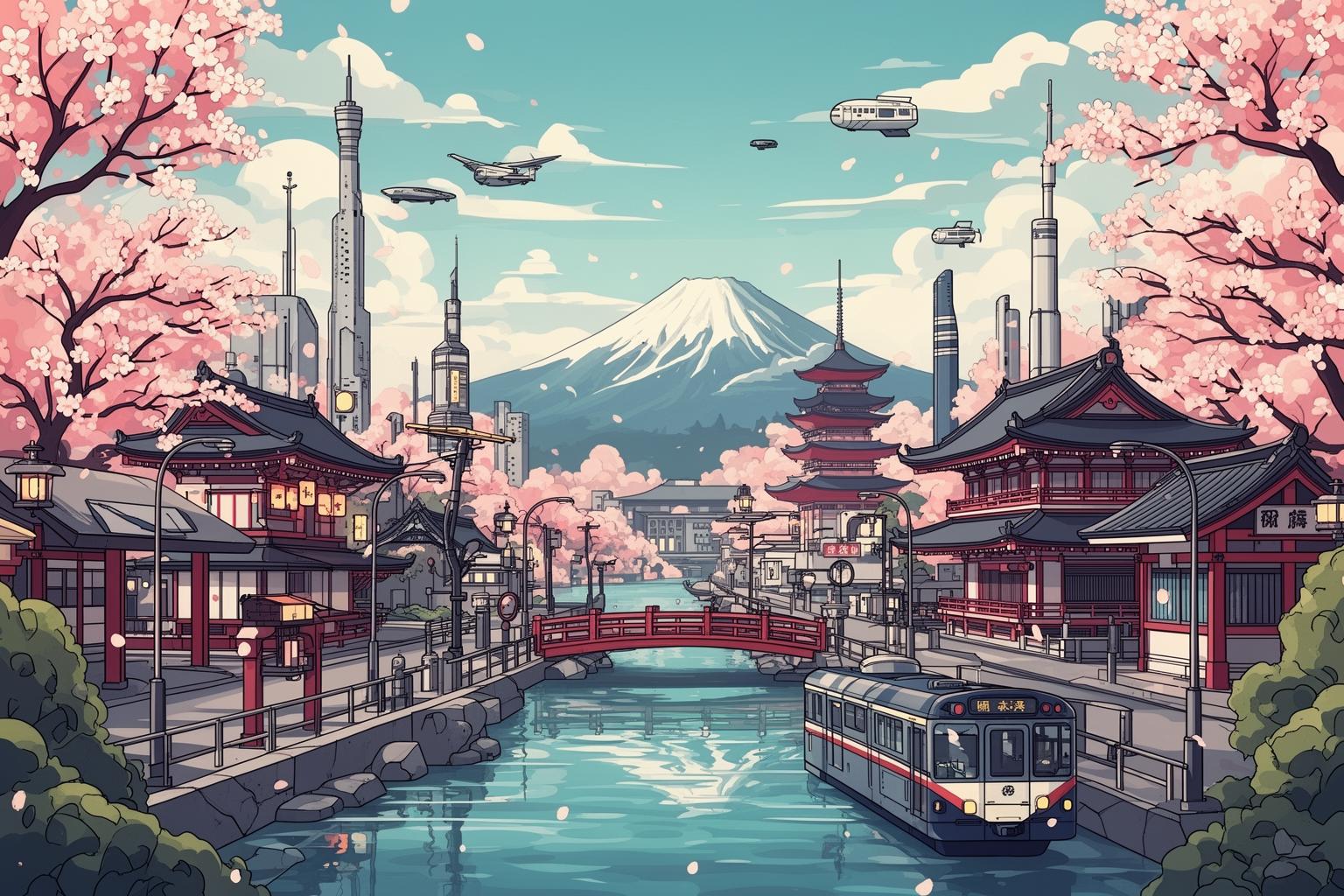
The technical explanations of YouTube algorithms and preceding microgenres only reveal part of the story. The deeper reason for City Pop’s worldwide resonance lies in what it represents emotionally. It taps into a profound, cross-cultural longing for a past that feels more hopeful than our present.
Anemoia: The Feeling of Missing a Past You Weren’t In
There is a word, anemoia, that describes nostalgia for a time you’ve never experienced. This is at the core of the City Pop phenomenon. For a listener in their twenties during the 2020s, the world of 1980s Tokyo is as fantastical as a science fiction novel. It’s a world without the crushing burdens of 24/7 internet, social media anxiety, student debt, and climate dread.
City Pop envisions a future that is sleek, stylish, and fundamentally optimistic. It’s a world of analog technology—cassette players, sleek cars, landline phones—that feels more tangible and romantic than our current reality of fleeting digital streams and algorithmic feeds. It portrays an adulthood that seems sophisticated and liberating, rather than precarious and exhausting. When we listen to City Pop, we are escaping into that alternate timeline. We are nostalgic for the future imagined by the past, a future that feels more appealing than the one we are actually living in.
The Lost Decade and the End of the Dream
The story of what happened next in Japan adds a layer of poignant melancholy to the music. The bursting of the economic bubble in 1991 ushered in the “Lost Decade,” a prolonged period of economic stagnation that shattered the nation’s confidence. The boundless optimism that defined the 80s disappeared, and Japanese culture turned inward. The shimmering, aspirational sound of City Pop no longer mirrored the national mood.
For international listeners today, knowing this history re-contextualizes the music. It makes the cheerful, carefree melodies feel more bittersweet. You are hearing the soundtrack to a magnificent party, yet you know it’s just moments before the lights come on and the harsh reality of the morning after sets in. This underlying sadness, the awareness that the world this music was created for was fleeting, gives City Pop a profound emotional depth. It’s the sound of a beautiful dream from which the dreamer has long since awoken.
The Global Afterlife of a Japanese Sound
Today, City Pop is much more than just an internet curiosity. It has established itself as a globally recognized and influential genre, experiencing a resurgence that is arguably broader than its original peak.
Who Is Listening Now?
The City Pop audience is remarkably diverse and international. It goes beyond the typical anime fans or Japanophiles. It has become a kind of universal mood music—ideal for working from home, late-night drives, or quiet evenings with a drink. Its sophisticated yet unobtrusive quality allows it to enhance a moment without demanding full attention.
The Japanese lyrics play a key role in its worldwide appeal. For those who don’t speak Japanese, the vocals serve as another melodic element rather than a vehicle for a specific story. This enables listeners to project their own emotions and experiences onto the songs. Whether the lyrics are about heartbreak or joy, without understanding them, what shines through is the pure feeling in the singer’s performance, set against a backdrop of flawless musicianship. It becomes a personal, customizable emotional journey.
More Than Just a Meme
City Pop has firmly transitioned from YouTube rabbit holes to the mainstream cultural dialogue. Vinyl reissues of classic City Pop albums, once rare to find, are now available in record stores from Los Angeles to London and often sell out immediately. Contemporary Western artists like The Weeknd and Tyler, the Creator have openly incorporated City Pop’s distinctive sound into their own chart-topping tracks. A new generation of musicians, both in Japan and worldwide, are directly inspired by the genre, embracing its fusion of funk, soul, and dreamy optimism.
City Pop has undergone a remarkable evolution. It has shifted from being the soundtrack of a specific national era to becoming a timeless and universal symbol of a certain kind of stylish, wistful cool. It demonstrates how a feeling captured in music can outlive its original context and find a new, more passionate audience decades later.
Ultimately, our fascination with City Pop is straightforward. In a world that often feels chaotic, cynical, and uncertain, it offers a gateway to something smooth, confident, and effortlessly graceful. It is the sound of a past that was busy dreaming of a better future. And as we navigate the complexities of our own time, we find unexpected comfort in listening to that beautiful, bygone dream.