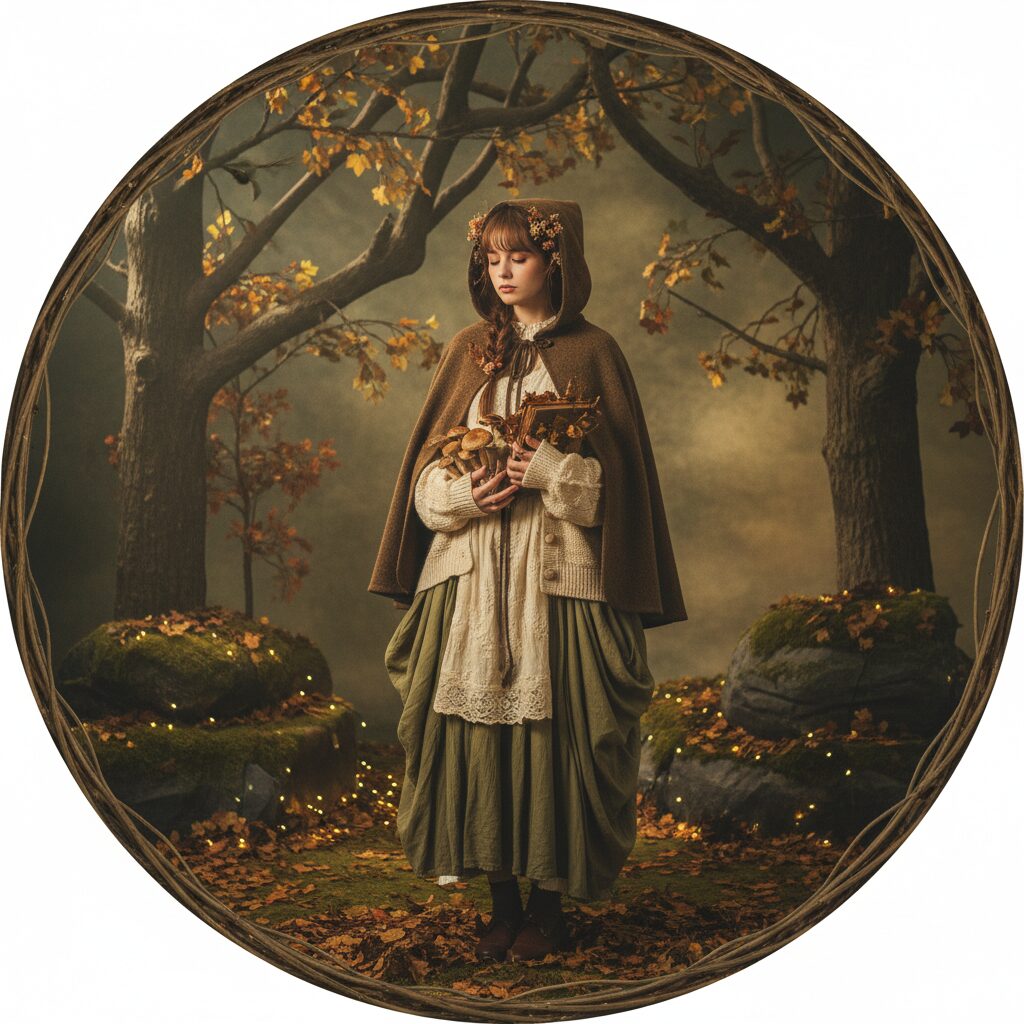
Picture this: a young woman wandering through a sun-dappled forest. She’s not in hiking gear, not dressed for a strenuous trek. Instead, she wears a loose, cream-colored linen dress layered over a long-sleeved floral blouse. A chunky, hand-knitted cardigan is draped over her shoulders, and a vintage leather satchel hangs at her side. Her hair is loosely braided, and her feet are clad in simple, round-toed leather flats. She stops to photograph a patch of mushrooms with an old film camera, her expression one of quiet contentment. This isn’t a scene from a European indie film or a Brothers Grimm fairy tale. This is the idealized image of a Mori Girl.
Translated literally as “forest girl,” Mori Girl (森ガール) was a Japanese subculture that blossomed in the late 2000s. It was far more than just a fashion choice; it was a complete aesthetic and lifestyle philosophy built around the romantic ideal of a simple, gentle life in harmony with nature. It was a quiet daydream, a sartorial escape plan worn on the streets of Tokyo, Osaka, and other bustling metropolises. While other Japanese youth styles of the era were loud, vibrant, and confrontational, Mori Girl was intentionally soft-spoken, introspective, and almost ethereal. It begged a fascinating question: In one of the most technologically advanced, fast-paced, and densely populated countries on Earth, why did a subculture emerge that fantasized about living in a cabin in the woods? Who was this for, and what was it a reaction to?
While the Mori Girl ethos celebrates a tender, nature-bound lifestyle, the vibrant, mysterious essence of Yokocho culture offers a compelling urban counterpoint.
The Birth of a Subculture: From Online Community to Street Style
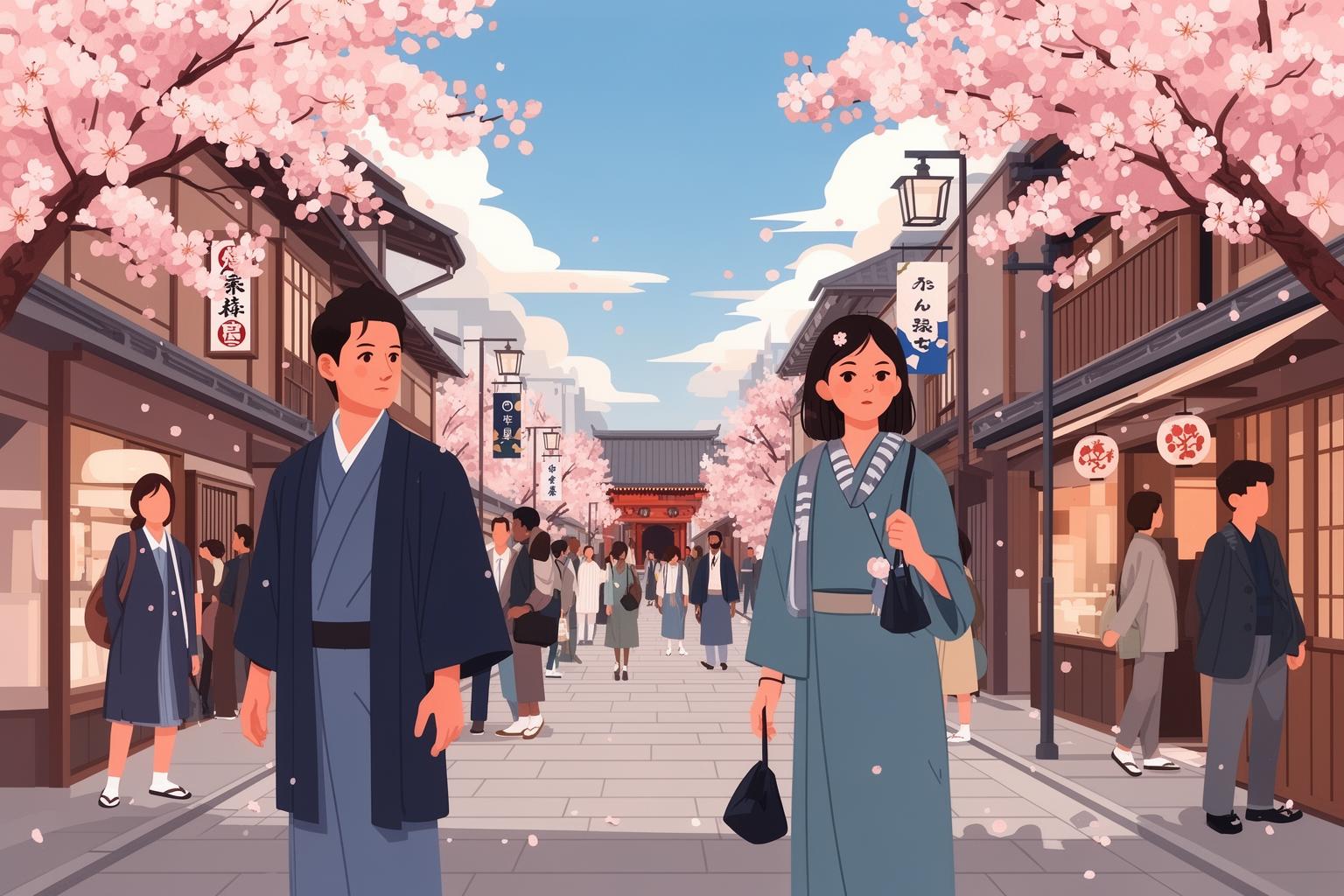
Unlike many Japanese fashion movements that emerged from magazine pages or the trendsetting streets of Harajuku, the Mori Girl phenomenon originated in the digital realm. It didn’t begin with a designer or brand but rather from a simple observation within an online community.
The Mixi Connection
The story starts in 2006 on Mixi, a then-popular Japanese social networking service resembling an early, more intimate version of Facebook. A user named “Choco” created a community for people who admired the style of a friend. When asked to describe this friend’s aesthetic, the response was, “You look like you live in a forest.” This single phrase planted the seed for an entire subculture. The Mixi community, simply called “Mori Girl,” quickly gained popularity. It offered a space for like-minded individuals to share outfit photos, discuss favorite brands, and express the philosophy behind their style choices. This online origin is vital; it illustrates that Mori Girl was a grassroots movement, a shared identity that people discovered and shaped together, rather than one imposed by the fashion industry.
Crossing into the Mainstream
Naturally, such a distinctive look couldn’t remain a niche secret indefinitely. By 2009, the Mori Girl aesthetic had moved from Mixi forums to the pages of leading fashion and culture magazines like Spoon., FUDGE, and CUTiE. These publications helped define the look with style guides, lists of “Mori Girl essentials,” and editorials that brought the forest fantasy to life. The movement also gained celebrity ambassadors. Actresses like Aoi Yu and Yu Miyazaki, noted for their quirky, natural charm and love of layered, bohemian styles, became unofficial icons of the subculture. Their appearances in films and magazines wearing Mori-inspired outfits solidified the look in the public eye, giving it a concrete, aspirational identity. This shift from a small online community to a nationally recognized style follows a classic pattern for Japanese subcultures, but the soft, gentle nature of Mori Girl made its broad appeal particularly noteworthy.
Deconstructing the Mori Girl Aesthetic: A Uniform for Daydreaming
The Mori Girl look is immediately identifiable, yet it exudes a soft, undefined quality, as if seen through a gentle, hazy lens. It’s a carefully selected blend of textures, layers, and details that combine to evoke a sense of gentle, whimsical nostalgia. Essentially, it serves as a uniform for a life centered on quiet reflection and creative endeavors.
Layers, Earth Tones, and Natural Fibers
At the core of the Mori Girl wardrobe are loose, comfortable shapes and plentiful layering. The aim is to soften and obscure the body’s contours, forming a relaxed, A-line silhouette that feels protective and unassuming. Key pieces include smock dresses, billowy blouses, long skirts, and wide-leg trousers often called “gaucho pants.” These are almost exclusively crafted from natural materials that feel pleasant against the skin and age gracefully: cotton, linen, gauze, wool, and chunky knits. The color scheme is inspired directly by the forest floor: creams, beiges, khaki greens, earthy browns, dusty rose, and muted mustard yellows. Bright, synthetic hues are avoided in favor of shades that appear softened by sunlight or tinted by tea. The overall impression is one of warmth, comfort, and an intrinsic connection to nature.
The Charm of the Handmade and Vintage
Mori Girl style is deeply rooted in valuing items with a history. Mass-produced, fast-fashion pieces run counter to this philosophy. Instead, emphasis is placed on vintage finds, secondhand garments, and handmade or artisanal details. Every element matters. You’ll find delicate embroidery featuring woodland animals like deer, squirrels, and rabbits, or botanical designs such as flowers and mushrooms. Intricate lace, crochet collars, and mother-of-pearl buttons contribute a sense of timeless charm. Accessories are selected with equal care—handcrafted leather bags, woven baskets, antique lockets, and scarves knitted from natural fibers. This preference reflects a broader ideology: a rejection of slick, disposable consumerism in favor of unique, meaningful objects meant to be cherished.
Beyond the Clothes: Hair, Makeup, and Demeanor
The Mori Girl aesthetic goes beyond clothing to encompass a complete persona. The beauty ideal is one of practiced naturalness. Makeup is kept minimal, often just a touch of blush on the cheeks to give a healthy, fresh-from-a-brisk-walk glow. Hair is generally worn long and natural, with soft waves or a simple braid, sometimes decorated with a flower or a plain ribbon. A blunt, heavy fringe is also a signature feature of the style. The overall atmosphere is one of effortless elegance. It’s not about perfection, but about appearing comfortable and at ease in one’s own skin—a clear contrast to the highly stylized and often dramatic looks of other Japanese subcultures.
The Philosophy Behind the Fashion: A Quiet Rebellion

To grasp why the Mori Girl subculture struck such a deep chord, one must look beyond the fashion and consider the cultural backdrop from which it arose. It represented a gentle, almost silent form of rebellion against the defining pressures of contemporary Japanese life.
Escaping the Concrete Jungle
For many young women in Japan, life revolves around the intense demands of school and work. It’s a realm of conformity, long hours, packed commutes, and the constant noise of the city. Mori Girl provided a powerful escape: a mental and spiritual journey to an idealized, peaceful countryside without physically leaving the urban environment. The clothing served as a cocoon, a portable piece of that imagined world. By dressing like a forest dweller, one could create a small, personal sanctuary amid the city’s chaos. It’s key to understand that this was a romanticized nature, not a realistic one. This was not about survival skills or rugged outdoor gear; it focused on the idea of the forest—a magical, safe, and beautiful place for reflection and daydreaming.
The Romanticism of a Slower Pace
The Mori Girl lifestyle is marked by intentional slowness and an appreciation for simple delights. The ideal Mori Girl is not interested in partying or climbing the corporate ladder. Instead, she devotes her time to quiet, solitary, and creative pursuits. She enjoys reading in cozy cafes, browsing antique shops, visiting art museums, and hunting for unique finds in zakka stores (shops selling miscellaneous charming and useful household items). She might engage in photography, journaling, baking, or picnicking in the park. This philosophy—finding happiness in small, everyday moments—stands in direct contrast to the Japanese ethos of ganbaru (to persevere and do one’s best, often under great pressure). It advocates a life that is deliberate and mindful, prioritizing personal well-being and creative fulfillment over external achievements.
A European Fairy Tale Lens
Interestingly, the nature idealized by the Mori Girl subculture is not typically the Japanese landscape of bamboo groves and Shinto shrines. Instead, the aesthetic draws heavily on a romanticized vision of Northern and Eastern Europe. It’s the world of Scandinavian folk tales, Grimm’s fairy tales, and the pastoral illustrations found in old children’s storybooks. The imagery features birch forests, quaint cottages with smoking chimneys, and meadows full of wildflowers. This European perspective is significant. It added a layer of pure fantasy, separating the aesthetic from the realities of rural life in Japan and allowing it to exist as a perfect, untouched daydream. It was less about reconnecting with one’s own roots and more about escaping into an entirely different, magical realm.
The Fading of the Forest: What Happened to Mori Girl?
Like most subcultures, the height of Mori Girl was relatively short-lived. By the early 2010s, its popularity started to decline. Although its influence persists, you’re much less likely to encounter the full, head-to-toe Mori look on the streets of Tokyo today. This decline wasn’t caused by a sudden shift in preference, but rather by a natural progression and the inevitable cycle of trends.
The Oversaturation Effect
The widespread popularity of Mori Girl played a role in its decline. As the style entered the mainstream, fast-fashion brands and large department stores began appropriating the aesthetic. They churned out mass-market versions of Mori-inspired clothing, stripping the look of its core values of uniqueness, vintage appeal, and handcrafted quality. When a subculture rooted in authenticity and individuality becomes a costume available to anyone off the rack, its original followers often feel its essence has been diluted. The subtle rebellion turns into a commercialized trend, encouraging the pioneers to seek new avenues of expression.
Evolving into New Forms
The essence of Mori Girl didn’t disappear; it simply evolved and branched into related styles. One of its closest successors is Yama Girl (mountain girl). While sharing an affinity for nature, the Yama Girl aesthetic is much more practical and functional. It incorporates genuine outdoor and hiking brands like Patagonia and The North Face, combining technical gear with fashionable touches like patterned leggings and wool skirts. It marks a transition from passively admiring nature to actively engaging with it. Moreover, the fundamental principles of Mori Girl—simplicity, naturalism, and a slower pace of life—have been absorbed into broader cultural trends. Its influence is evident in the global rise of movements such as “cottagecore,” “slow living,” and the renewed interest in crafting, baking, and other domestic arts. In many ways, Mori Girl was ahead of its time, an early manifestation of a yearning for authenticity that has now blossomed into a global phenomenon.
The Enduring Legacy of the Mori Girl

Although its era as a dominant subculture has ended, Mori Girl remains an important chapter in the narrative of modern Japanese culture. It was much more than just a collection of floaty dresses and vintage cardigans. It represented a philosophical statement—a wearable manifesto advocating for a quieter, more introspective way of living. It responded to the anxieties of its time, providing a generation of young women with a means to navigate the pressures of a hyper-modern society by enveloping themselves in a comforting, nostalgic fantasy.
The Mori Girl created a world for herself from linen, lace, and daydreams. She reminded us of the beauty found in imperfection, the happiness in simple pleasures, and the healing power of an imaginary walk through the woods. And while the forest may seem quieter today, the path she paved—leading away from the noise toward a gentler, more intentional life—remains a destination that many people, both in Japan and worldwide, continue to seek.