Walk through any reasonably hip neighborhood in Tokyo or Osaka around mid-morning, and you’re bound to see it: a line. It’s not for a concert, a new phone, or a limited-edition sneaker drop. The queue is quiet, orderly, and patient. The people in it are waiting for bread. Not just any bread, but a simple, unadorned, rectangular loaf of white bread called shokupan. And they’re often willing to pay ten, sometimes even fifteen, dollars for the privilege of taking one home in a beautifully designed paper bag that looks like it came from a luxury boutique.
To the uninitiated, it’s a baffling sight. This is, after all, just white bread. It’s the stuff of school lunches and mundane morning toast. In many parts of the world, it’s the cheapest, most industrialized food product on the shelf. But in Japan, this humble loaf has been elevated into an object of culinary desire, a status symbol, and the subject of an almost philosophical pursuit of perfection. This isn’t just about food; it’s about a cultural ritual, an expression of craftsmanship, and the quiet joy of elevating the everyday. Forget everything you think you know about sliced bread. We need to talk about the world of kōkyū shokupan, or luxury milk bread, and understand why a nation so rich in culinary traditions has fallen so completely in love with a simple loaf.
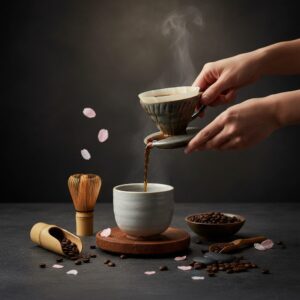
The meticulous care that goes into perfecting Japan’s much-loved shokupan is echoed in the country’s celebrated morning service ritual, where every sip of coffee is an invitation to savor the beauty of everyday tradition.
The Anatomy of a Cloud
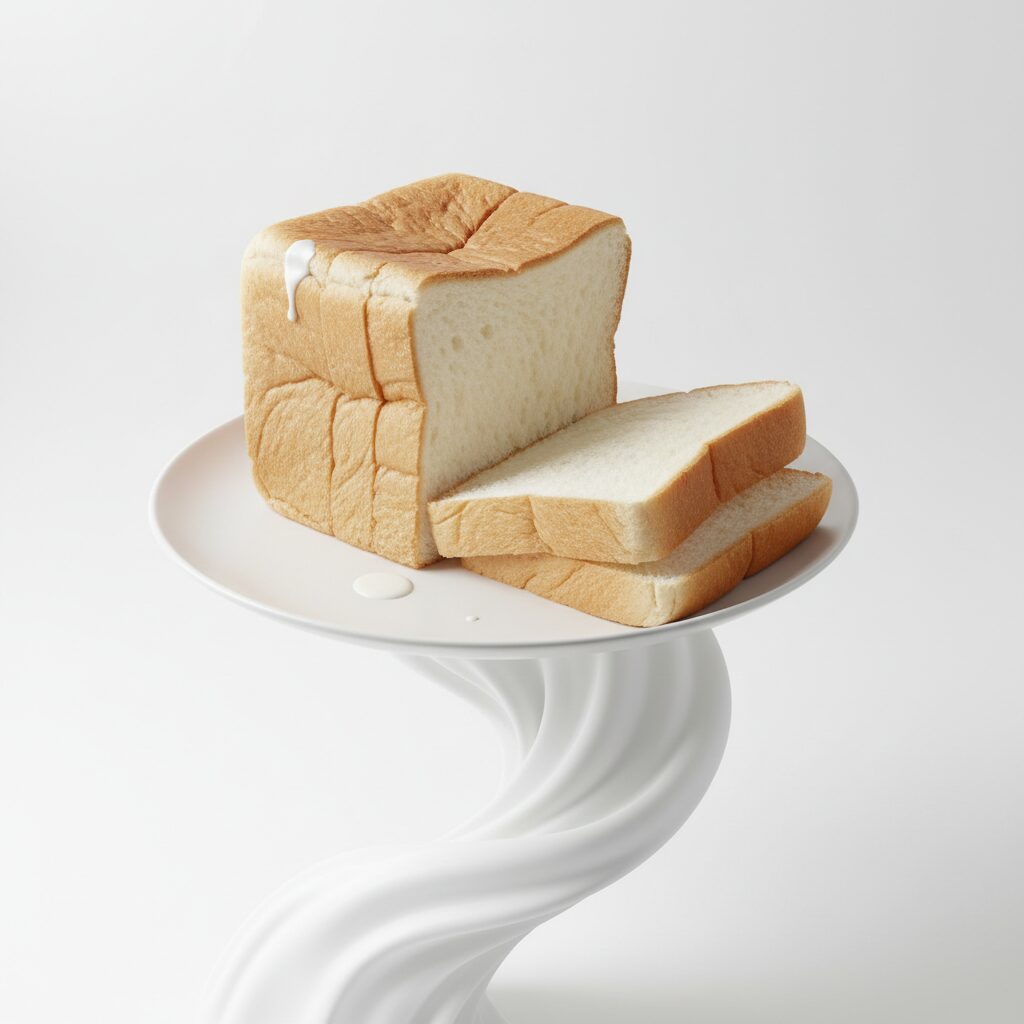
To truly grasp the obsession, you first need to understand the object itself. A high-end shokupan is fundamentally distinct from its Western counterparts. The primary difference lies in the texture. When you pick up a slice, it feels incredibly soft, plush, and heavy with moisture. This isn’t the dry, crumbly texture typical of a standard sandwich loaf. Instead, it has a unique chewiness—a satisfying, gentle resistance described by the Japanese with one of their most cherished texture words: mochi-mochi. This term is also used for pounded rice cakes, evoking a springy, bouncy quality that feels both substantial and light.
This extraordinary texture is no coincidence. It results from a specific baking technique called the yudane (or tangzhong) method. Part of the flour is cooked with water or milk into a thick paste before being incorporated into the main dough. This process gelatinizes the starches, allowing the flour to absorb and retain significantly more moisture. The outcome is a loaf that’s incredibly soft, stays fresh for days without preservatives, and has that signature mochi-mochi crumb. Though simple in concept, perfecting it marks the work of a skilled shokupan artisan.
Next, the ingredients come into play. The luxury shokupan movement rests on a foundation of uncompromising quality. We’re not dealing with generic, all-purpose flour but specialty flour milled in Japan, often a custom blend crafted specifically for shokupan to achieve the ideal balance of sweetness and wheat flavor. The fat isn’t shortening or vegetable oil; it’s premium domestic butter and fresh, heavy cream from Hokkaido. Sugar is frequently replaced with honey or condensed milk to provide a more complex, natural sweetness that lingers on the palate. Even the salt is thoughtfully chosen. There are no preservatives, no artificial softeners, no shortcuts. The ingredient list is often surprisingly short, embodying the philosophy that true quality needs no embellishment.
The final element is the crust, known as the mimi, or “ears.” In an ideal loaf, the mimi is whisper-thin, delicate, and barely colored. It’s not intended to be a crunchy, rustic barrier but a soft skin that yields effortlessly, merging seamlessly with the pillowy interior. This loaf is crafted for pure, unadulterated enjoyment. It serves less as a base for other ingredients and more as the star—a slice of bread honored with the reverence reserved for high-grade sashimi.
From School Lunch Staple to Status Symbol
Bread is not originally part of the Japanese diet. It was introduced by the Portuguese in the 16th century but only became widespread after World War II, when American aid included wheat flour and powdered milk. Shokupan became closely associated with school lunches (kyūshoku) and came to symbolize a modernizing, Westernizing Japan. For many years, it remained a practical, everyday food—served as quick breakfast toast with butter or used for simple sandwiches with egg salad or ham.
So, what triggered the change? The transformation began in the 2010s, when a few innovative bakeries chose to apply a distinctly Japanese concept to this Western product: kodawari. This means an unwavering, meticulous pursuit of perfection in a particular craft. It embodies the spirit of a sushi master devoted to perfecting rice and fish or a calligrapher practicing a single stroke countless times. Bakeries such as Nogami in Osaka and Centre The Bakery in Ginza started asking a straightforward question: what if we treated shokupan with the same respect as any other Japanese culinary art?
They dismantled the loaf and rebuilt it from scratch, using only the finest local ingredients. They perfected the yudane method, experimenting with fermentation durations and hydration levels. Importantly, they completely reimagined the shopping experience. These new bakeries didn’t resemble traditional bakeries. Instead, they were minimalist, brightly lit spaces that felt more like art galleries or upscale jewelry shops. The loaves were displayed with great care, often showcased individually. Packaging was exquisite—thick, beautifully printed paper bags tied with elegant string. The entire process of purchasing bread was elevated from a routine task to a special event.
This was marketing brilliance. By restricting production, fostering a sense of exclusivity, and focusing on a single, perfected product, they created buzz. Lines began to form, and the media took notice. Suddenly, a loaf of shokupan was no longer just breakfast; it became an affordable luxury and a status symbol that could be carried home in a stylish bag. It turned into an ideal gift and a refined alternative to bringing a box of cakes or a bottle of wine when visiting someone’s home.
The Ritual of the Perfect Loaf

To truly understand the shokupan phenomenon, you need to view it as a ritual that starts long before your first bite. The process of buying is the initial step. It might include checking the bakery’s schedule online, since many only offer their loaves at certain times of the day. It could involve standing in line, sharing a quiet moment of anticipation with other enthusiasts. There’s a small thrill in securing your loaf, knowing they may sell out. This intentional scarcity transforms a simple purchase into an achievement.
The next step is the presentation. When given as a gift (temiyage), the loaf arrives in its elegant bag, a gesture conveying, “I thought of you and went out of my way to find something special.” It reflects a modern interpretation of the traditional Japanese gift-giving culture that values thoughtfulness and quality over extravagance.
But the most crucial ritual is the initial tasting. The universal advice from any premium shokupan bakery is to eat the first slice fresh on the first day—untoasted and plain. This is the ultimate test of the bread’s quality. You’re meant to tear it by hand, not slice with a knife, to feel the soft, elastic gluten strands. Bringing it to your nose, you inhale the delicate, sweet aroma of milk and wheat. The first bite should be a revelation: the subtle sweetness, the creamy mouthfeel, the mochi-mochi texture. It’s a moment of focused, sensory appreciation. Toasting is reserved for the second day, once the bread has lost some of its initial moisture. Toasting on day one is seen by purists as almost sacrilegious—like searing a piece of high-grade ōtoro tuna.
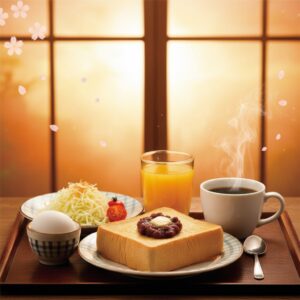
Even the manner of eating is a quiet ceremony. The bread isn’t thrown together in a sandwich. It’s served as a thick slice, perhaps with a small pat of exquisite butter or a touch of artisanal jam. But the accompaniment is secondary. The bread remains the star. This act of savoring a single, perfect ingredient is deeply ingrained in Japanese food philosophy, which often emphasizes purity of flavor over complex combinations.
More Than Bread: A Reflection of Culture
The ten-dollar loaf is more than a fleeting food trend. Its popularity reveals something essential about contemporary Japanese culture. It perfectly embodies kodawari, the deep-rooted cultural pursuit of perfection. In a world full of endless options and mass production, there is profound respect for the artisan who dedicates themselves to mastering one thing flawlessly. The shokupan master who spends years refining his dough is regarded as a true craftsman, a shokunin, deserving the same esteem as a swordsmith or potter.
It also reflects a love for everyday luxury. While Japan is known for extravagant fine dining, the culture equally excels at elevating the ordinary. It’s the belief that even the simplest parts of your day can, and should, be filled with small moments of beauty and pleasure. For the cost of a couple of fancy coffees, you can take home a product crafted with immense care that will make your next several breakfasts feel special. It’s an accessible indulgence, a small ritual that brings unexpectedly large joy.
Finally, the perfect white loaf connects to a fundamental Japanese aesthetic of refined simplicity. Shokupan isn’t rustic or elaborate. It’s not studded with nuts or seeds. It is a pure, minimalist form. Its excellence is found not in addition, but in subtraction. It is the perfection of a simple concept, polished until it gleams. In this regard, it shares a spirit with a Zen rock garden, an ikebana flower arrangement, or a flawlessly unadorned ceramic piece. Its beauty lies in its purity and the invisible skill required to achieve it.
So, why would anyone pay ten dollars for a loaf of white bread? Because it’s never just about the bread. It’s about the story, the craftsmanship, the ritual, and the culture baked into every soft, chewy, miraculous slice. It’s a reminder that even the most common foods can become works of art, and that a moment of simple, perfect pleasure is something worth queuing for.