Walk into any Japanese supermarket and you’ll be greeted by a vision of curated perfection. Vegetables are washed, polished, and uniformly sized, sealed in crisp plastic under the unwavering glow of fluorescent lights. It’s a world of clean, predictable, and convenient nourishment. But just beyond the city limits, where the concrete gives way to cedar forests and tangled mountain slopes, a completely different culinary universe awakens each spring. This is the world of sansai, or wild mountain vegetables, and the age-old practice of foraging for them is one of the most profound expressions of Japan’s connection to its natural landscape.
This isn’t just a rustic hobby for countryside grandmothers. It’s a deeply ingrained seasonal ritual, a form of active meditation that tunes the forager into the subtle rhythms of the earth. It’s a treasure hunt where the prize is not just food, but a direct, edible link to a specific place at a specific moment in time. To participate in the annual sansai harvest is to engage with nature on its own terms—to understand its cycles, respect its power, and literally consume its wild, untamed energy. So why, in a country obsessed with convenience, do people still scramble up muddy hillsides to seek out these often-bitter, notoriously difficult-to-prepare plants? Because foraging for sansai isn’t just about what ends up on your plate. It’s about rediscovering a fundamental relationship with the land, a relationship built on knowledge, patience, and the bracing, beautiful taste of spring itself.
This intimate reconnection with nature echoes the profound meaning behind itadakimasu traditions, where every bite transforms a simple meal into a mindful celebration of life.
What Exactly is Sansai?
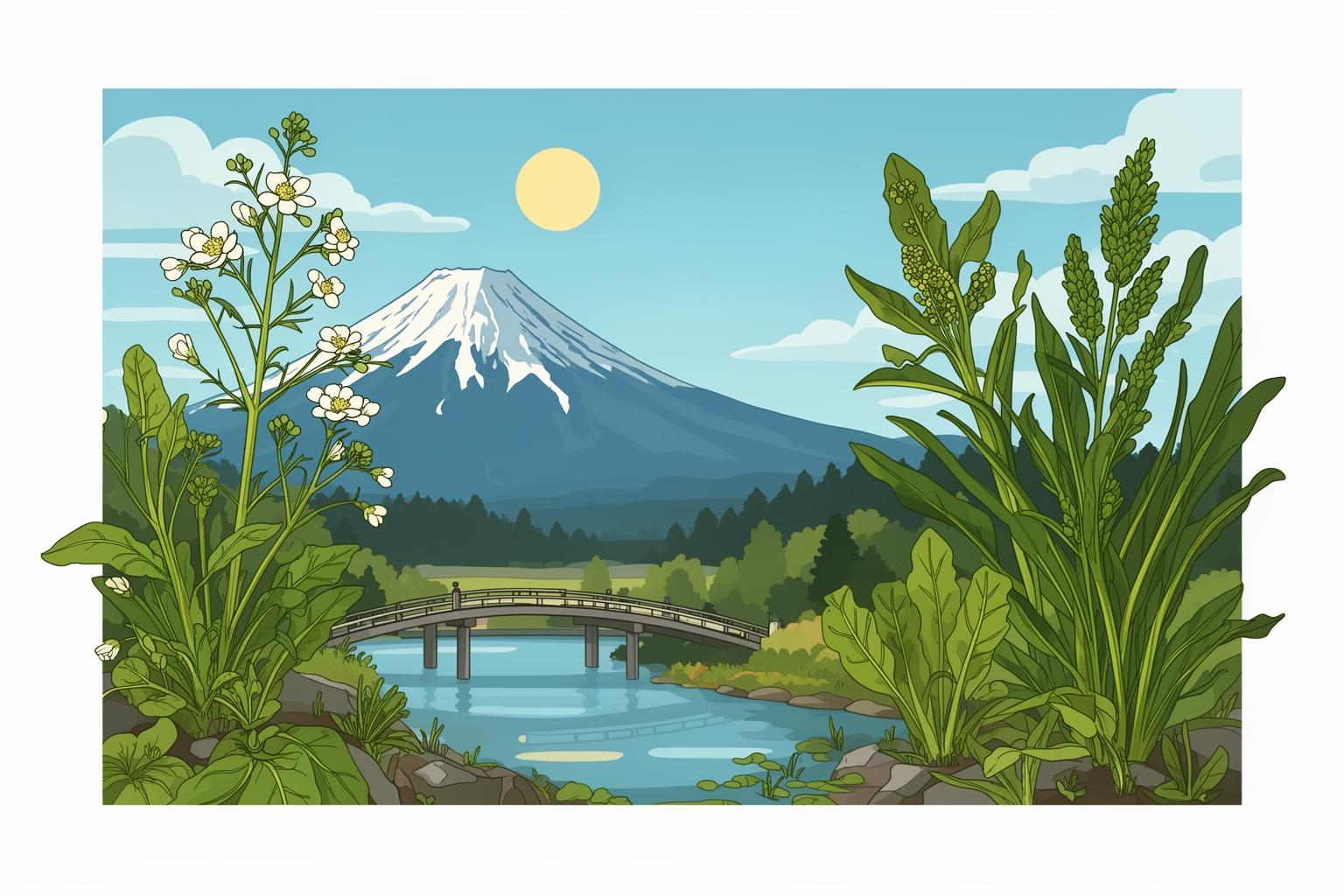
To grasp the importance of this tradition, you first need to know what sansai (山菜) are—and what they are not. The characters mean “mountain” (山) and “vegetable” (菜), but this simple translation doesn’t fully convey their true nature. These are not cultivated crops. You won’t find them growing in neat rows on a farm. Sansai are wild, edible shoots, buds, and stems that spring up from the forest floor as winter snows melt away. They are the earliest green signs of life, pushing through damp soil and leaf litter, bursting with the concentrated energy stored during the dormant season.
The Heralds of Spring
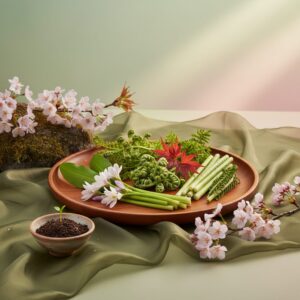
Though there are hundreds of varieties, a few key species are widely celebrated as the true harbingers of the season. Their arrival is awaited with the same enthusiasm reserved for the first cherry blossoms. One of the earliest to emerge, often while snow patches remain, is fukinoto (butterbur scape). This tightly coiled, pale green bud boasts an intensely aromatic and sharply bitter flavor. It delivers a bold taste, a jolt to the palate after a long winter of mild root vegetables.
Then come the iconic fiddlehead ferns. Kogomi (ostrich fern) has a gentler profile, with a mild, asparagus-like flavor and a pleasingly crisp texture. Its more well-known relative, warabi (bracken fern), is notoriously challenging. It contains a natural toxin that requires careful neutralization through boiling and soaking—often with wood ash—before it’s safe to eat. The effort pays off in a unique, slightly slippery texture and subtle earthy flavor.
Perhaps the most coveted of all is tara no me (angelica tree sprouts), often dubbed the “king of sansai.” These small, thorny buds are harvested from the tips of the angelica tree, offering a rich, nutty flavor with a hint of pleasant bitterness. They are almost always served as tempura, creating a perfect balance between crispy batter and tender, creamy interior.
The Acquired Taste of Wildness
What most sansai share is a distinct flavor profile that contrasts sharply with commercially grown vegetables: bitterness. In Japanese cuisine, this bitterness, or nigami, is not viewed as a flaw to be disguised but as a valued, essential characteristic. It embodies the authentic taste of the wild—a flavor evoking rugged soil, cold mountain water, and a plant’s natural defense mechanisms. This is not the one-dimensional bitterness of bad coffee; rather, it’s a complex, layered sensation often followed by subtle sweetness or a refreshing aftertaste. Eating sansai recalibrates your senses to appreciate these more challenging, more natural flavors—a taste that cannot be artificially created or replicated in a greenhouse.
The Ritual of the Hunt
The act of foraging, known as sansai-tori (mountain vegetable picking), is as integral to the tradition as the consumption itself. It is a skill and an art form passed down through generations that requires a profound and intimate understanding of the local ecosystem. This is not a casual walk in the woods; it’s a deliberate journey demanding focus and a keen, trained eye.
Reading the Landscape
An experienced forager doesn’t see just an ordinary forest; they perceive a complex map of opportunities. They know that fukinoto thrives on damp, shaded slopes near mountain streams, and which sunny hillsides are likely to harbor colonies of warabi. They can identify the distinctive thorny branches of the angelica tree from afar. This knowledge is highly localized and time-sensitive. The precise harvesting window for a specific plant may last only a week or two, and a difference of several hundred meters in elevation can translate to a difference of days in the plant’s maturation. The forager must be attuned to subtle environmental signals—the angle of the sun, soil moisture, tree species nearby. It is a form of literacy: the ability to decipher the silent language of the mountains.
A Connection to Place
This profound engagement with the land cultivates a strong sense of place. Foragers often return year after year to the same ancestral grounds, areas their parents and grandparents once harvested. The mountain becomes a familiar companion, its shapes and secrets memorized. This yearly pilgrimage strengthens a bond not only with nature but also with family history and local identity. Gathering food directly from the surrounding environment offers a tangible reminder of one’s place in the world, serving as a counterbalance to the impersonal, globalized food system that characterizes modern life. There is a quiet pride in preparing a meal sourced not from a store, but from a particular patch of forest nearby, harvested by one’s own hands.
A Mindset of Respect
The practice of sansai-tori is guided by an unspoken code of ethics rooted in sustainability and respect. A genuine forager never takes everything. They harvest thoughtfully, using a small knife to cut shoots in a way that allows the plant to continue growing. They gather only enough for a few meals, leaving ample resources for wildlife and other foragers. It is understood that the mountain is a shared resource—a gift that must be managed responsibly to ensure its bounty for generations ahead. This mindset stands in opposition to mass consumption; it is a lesson in moderation, gratitude, and ecological balance, practiced for centuries long before “sustainability” became a global catchphrase.
From Mountain to Plate: The Art of Preparation

Bringing the wild harvest from the mountain into the kitchen marks the beginning of the next stage of the ritual. The preparation of sansai is a vital step that transforms these raw, sometimes harsh ingredients into delicious and nourishing dishes. This process involves taming the wildness of the vegetables without completely losing their essential character.
Taming the Bitterness
Much of the distinctive bitterness and astringency of sansai comes from compounds called aku (灰汁). In many cases, aku can be harsh on the stomach or even mildly toxic if eaten in large amounts, as with warabi. The skill of preparation, therefore, lies in the process of aku-nuki, or removing the harshness. This is slow food at its best and cannot be rushed. The most traditional approach involves boiling the vegetables with wood ash, whose alkaline properties help neutralize the harsh compounds. Other techniques include soaking the plants in cold water for hours or even days, changing the water regularly until the bitterness softens to a pleasant level. This patient, intentional process is a form of respect for the ingredient, recognizing that something wild and potent requires care before it can be safely enjoyed at the table.
Cooking to Celebrate, Not Conceal
Once aku-nuki is complete, the cooking methods for sansai are generally simple, aimed at highlighting their unique flavors and textures rather than hiding them. Tempura remains a perennial favorite, especially for delicate buds like tara no me and fukinoto. The quick, high-heat frying cooks the vegetable perfectly, while the light batter provides a satisfying crunch that reveals the tender, aromatic core of the plant.
Another traditional preparation is ohitashi, where blanched vegetables are steeped in a simple, elegant broth of dashi, soy sauce, and mirin. This technique lets the pure, earthy flavor of the sansai shine, complemented but not overwhelmed by the savory umami of the dashi. For a richer dish, aemono involves dressing the vegetables in a paste often made from ground sesame seeds, miso, or mashed tofu. This adds creaminess and a nutty flavor that beautifully balances the lingering bitterness of the greens. Finally, finely chopping the sansai and cooking it with rice creates sansai gohan, a simple yet deeply aromatic dish where the entire bowl is infused with the subtle fragrance of the spring mountains.
Philosophically, eating sansai is seen as a way to cleanse both body and spirit after the stagnation of winter. Traditional wisdom holds that the bitter compounds in these first spring shoots gently detoxify the system and awaken the palate. It is both a symbolic and physical reset—a means of absorbing the potent life force—the ki—of the reawakening earth.
Why It Still Matters
In a world driven by relentless modernization, the practice of foraging for sansai may seem like a relic of the past. Yet, its endurance reveals a profound, resonant need embedded within the Japanese cultural psyche. It serves as a powerful countermeasure to the alienation and convenience of contemporary life. In an era where food seemingly appears effortlessly in sterile packaging, the act of searching for, gathering, and thoughtfully preparing your own food from the wild becomes a radical gesture of connection. It reestablishes a bond with the seasons, the local environment, and the generations of wisdom that preceded us.
Foraging for sansai is more than just a culinary custom; it embodies a living philosophy. It cultivates patience, keen observation, and reverence for nature. It reminds us that the most precious things in life often demand effort, and that some flavors cannot be grown or controlled—they must be sought. To eat sansai is to experience the bitterness, vibrancy, and untamed spirit of spring itself. It is the flavor of a mountain awakening from its long winter slumber, a taste no supermarket could ever hope to replicate.