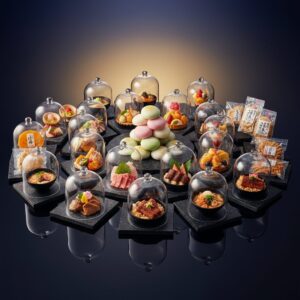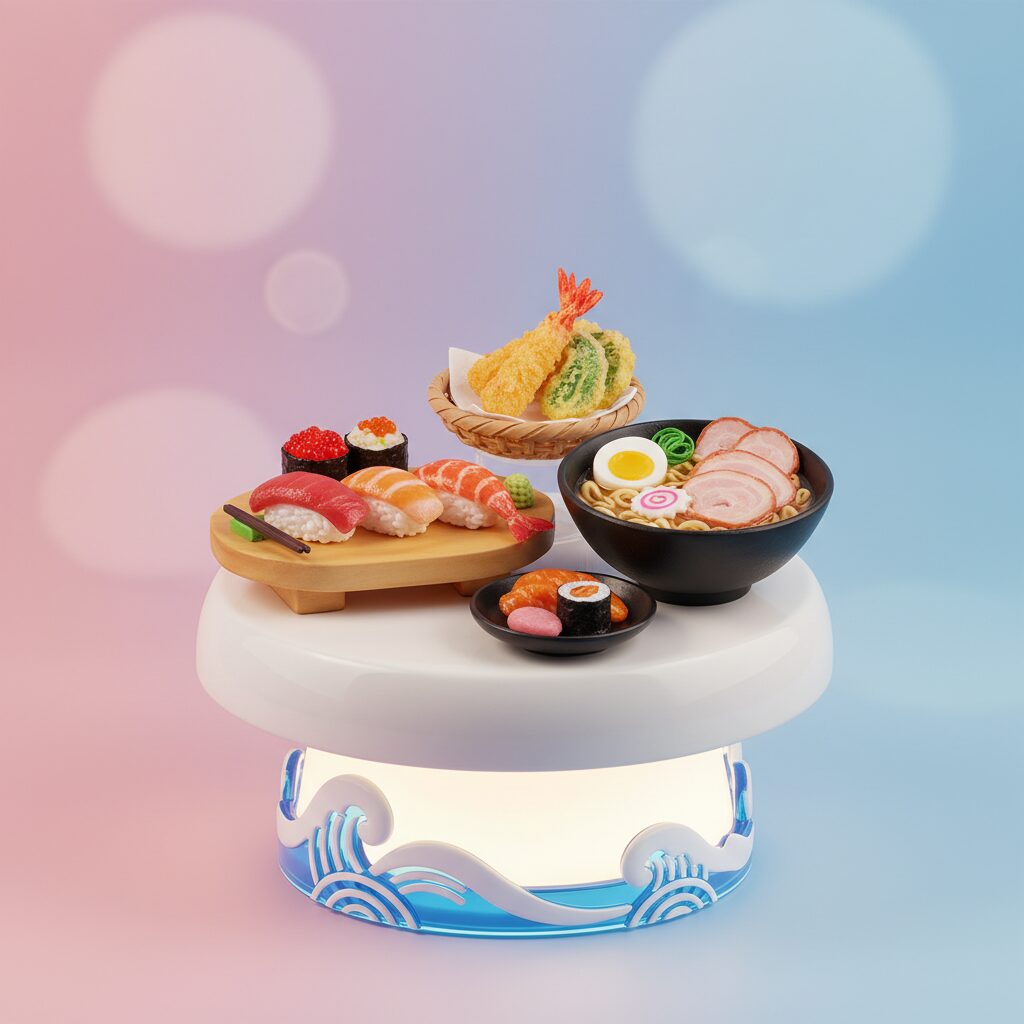
Walk down almost any commercial street in Japan, from a gleaming Tokyo shopping arcade to a sleepy provincial town’s covered shotengai, and you’ll eventually find yourself staring into a glass box of impossible food. A bowl of ramen, its broth frozen in a perfect, glistening swirl. A plate of spaghetti, its noodles captured mid-air, forever twirling around a floating fork. A slice of strawberry shortcake so flawlessly dewy it seems to defy the very laws of physics and time. This is the world of shokuhin sampuru, Japan’s hyper-realistic fake food models.
For most visitors, the first encounter is a moment of genuine wonder, quickly followed by a chuckle. It seems like a quirky, almost comical expression of pop art. You pull out your phone, take a picture of the gravity-defying pasta, and maybe remark on Japan’s charming eccentricity. It’s easy to file these plastic plates away as just another fun, surface-level novelty. But that’s a mistake. To see sampuru as mere decoration is to miss the point entirely.
These models are not a whimsical hobby; they are a serious, multi-million-dollar industry and a deeply ingrained part of the Japanese dining experience. They are silent salespeople, cultural ambassadors, and visual contracts. They are a solution to a uniquely Japanese set of social and commercial needs, rooted in a desire for clarity, reassurance, and the seamless execution of the ritual of eating out. This isn’t just about showing you what a meal looks like; it’s about managing expectations and eliminating uncertainty before you even step through the door. It’s a promise, rendered in polyvinyl chloride.
This meticulous attention to detail in fake food models echoes the same innovative drive found in Japan’s transformative konbini culinary culture, where everyday snacks are reimagined into works of art.
A Solution Born from Confusion
To understand why a restaurant might spend hundreds or even thousands of dollars on a single plastic replica of a dish, you need to look back to a period of significant change in Japan. The early 20th century, especially during the Taisho and early Showa eras, experienced a huge influx of Western culture. Along with it came new foods: items like katsu-retu (cutlets), omuraisu (omelet over rice), and rich beef stews. For the average Japanese person, these dishes were completely unfamiliar.
The Birth of a Visual Language
Picture stepping into a modern department store restaurant in the 1920s. The menu is written in katakana, the script used for foreign words, listing dishes you’ve never heard of before. There are no images. How do you decide? What are you about to spend your hard-earned money on? This uncertainty posed a significant challenge for restaurateurs aiming to popularize these new meals. People were reluctant to order something they couldn’t visualize.
The breakthrough is often attributed to a man named Takizo Iwasaki. In 1932, after witnessing how candlemakers used wax, a flash of inspiration hit him. According to industry lore, his wife had made him an omuraisu. He experimented with wax and succeeded in crafting a stunningly realistic replica. He immediately recognized the commercial potential. This was a way to show, rather than just tell. He established his company, Iwasaki Mokei, in Gujo Hachiman, a small town in Gifu Prefecture that remains the undisputed capital of the sampuru industry to this day.
The earliest models were made from delicate paraffin wax, which could melt in the summer heat or fade under strong lighting. However, the concept was revolutionary. These wax replicas became a universal language, overcoming literacy barriers and unfamiliarity, speaking directly to customers’ eyes and appetites. They democratized the dining experience, making it more accessible and easing the anxiety of trying something new. The visual menu was created not from a desire for art, but out of the necessity for clear, straightforward communication.
The Promise in the Plastic
The function of sampuru extends far beyond mere advertising. It embodies a fundamental Japanese cultural concept: anshin-kan. This term has no exact English equivalent but conveys a sense of reassurance, security, and peace of mind. It reflects the comfort that comes from knowing everything is as it should be, with no unpleasant surprises ahead. Anshin-kan is a deeply valued state, and Japanese society features numerous systems designed to foster it.
Certainty on a Plate
Within a restaurant setting, the sampuru serves as a strong source of anshin-kan. It physically represents a promise from the chef to the customer. The model displayed in the window is not an artist’s conceptual drawing; it is an exact, one-to-one replica of the dish you will receive. The number of shrimp, the vegetable arrangement, the size of the pork cutlet—everything will match perfectly. This contrasts sharply with seeing a glossy, professionally styled photo of a burger on a fast-food menu, only to be served a disappointing, squashed version in a cardboard box. In Japan, such a mismatch would be considered a breach of trust.
The sampuru assures that what you see is precisely what you will get. This removes the risk of ordering a portion that’s too large or too small, or a dish containing an ingredient you dislike. It eliminates guesswork from the dining experience, making it smooth, predictable, and, therefore, relaxing. In a culture that highly values avoiding conflict and ensuring smooth social interactions, this clarity is invaluable.
The Pre-Dining Ritual
Observe a group outside a Japanese restaurant, and you’ll often find them gathered around the display case, pointing, discussing, and deciding before stepping inside. This is a vital part of the dining process. Choosing a meal becomes a calm, communal, and external activity, preventing the awkward silence when everyone is quietly staring at menus, feeling pressured by the waiting staff.
For families with children, this is a lifesaver. Kids can simply point to the colorful dish they want. For tourists who cannot read a single Japanese character, it’s a godsend. The sampuru display acts as an equalizer, making Japan’s entire culinary landscape accessible and approachable, regardless of language ability. The ritual of selecting from the window display is a quietly efficient system that sets expectations and ensures a frictionless experience once seated.
The Craft Behind the Illusion

What started with simple wax has developed into a refined craft that borders on high art. The artisans who create shokuhin sampuru are experts in observation and replication, dedicating years to perfecting their skills. The transition from wax to modern plastics like polyvinyl chloride in the 1970s and 80s was transformative, enabling much greater realism, durability, and detail.
An Artisan’s Touch
The creation process is meticulous and almost entirely handmade. It begins with the restaurant sending the actual food to the sampuru factory. The artisans then produce silicone molds of every single element—a slice of fish, a piece of bell pepper, a single grain of rice. Liquids such as soups and sauces are recreated using colored resins, layered and blended to achieve the ideal opacity and sheen. The true artistry shines in the finishing.
Airbrushes are employed to create the subtle char marks on a piece of grilled eel or the golden-brown crisp of a tonkatsu. Tiny, precise brushstrokes add marbling to a slice of fatty tuna or the seeds on a strawberry. The glistening effect, known in Japanese as shizuru-kan, which conveys freshness and deliciousness, is a particular source of pride. This may involve adding tiny beads of clear resin to mimic condensation on a cold beer mug or applying a final gloss finish on a dollop of curry. The aim is not merely to copy the food but to capture it at its absolute peak—the moment it looks most appetizing. This level of craftsmanship means a single, intricate dish can take weeks to make and cost the restaurant a considerable amount of money, underscoring their essential role in business.
Beyond the Menu: Modern Functions
While their main function is to act as a 3D menu, sampuru serve several other vital purposes. They act as a restaurant’s calling card and its most powerful marketing tool, conveying a wealth of information at a single glance.
The 24/7 Sales Pitch
An elaborate, multi-course display outside a restaurant immediately indicates that it is a high-end venue. A simple, single bowl of ramen in the window suggests it’s a spot for a quick, affordable meal. The sampuru sets the mood and price range before the customer even reads the restaurant’s name. It’s a form of visual branding that works around the clock, attracting foot traffic long after the kitchen has closed.
They also enable creative upselling. Restaurants often highlight their most profitable or visually appealing dishes most prominently. A “set meal” replica, featuring a main dish alongside soup, rice, and pickles, is far more enticing than just text on a menu. It visually communicates the value you’re getting, making the upgrade an easy choice.
This system is exceptionally effective for foreign visitors. It eliminates the intimidation of entering a place where communication may be difficult. The pointing system is universal; you can simply take the waiter outside, point to the plastic tempura set, and know you’ve successfully placed your order. The sampuru serves as an ambassador of Japanese culinary hospitality.
The Sampuru in the 21st Century
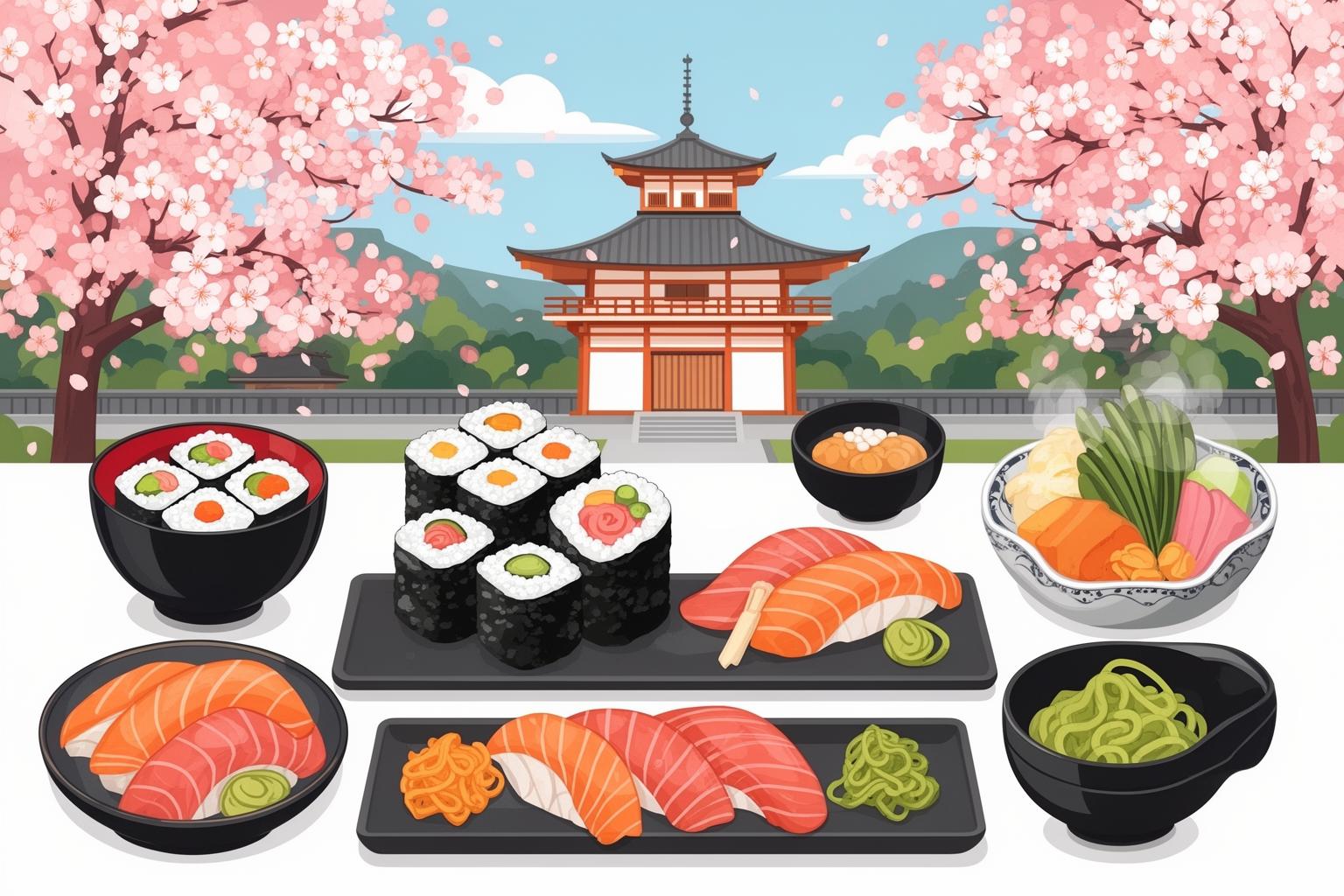
In an era of QR-code menus, Instagram, and TripAdvisor, one might think the physical food model is an outdated relic headed for extinction. After all, why spend on an expensive plastic model when a high-resolution photo on a tablet can serve the same purpose? Yet, the sampuru persists and has even discovered new vitality.
Tangible vs. Digital
There is a tangible impact to a physical object that a digital image cannot match. You can walk around a sampuru, view it from every angle, and appreciate its scale in a way a flat screen can’t duplicate. It occupies real space, maintaining a constant, unchanging presence. It cannot be scrolled past or dismissed with a swipe. Its very physicality gives it a sense of honesty and authority that a carefully curated digital photo often lacks.
Rather than vanishing, the craft has ingeniously evolved. The sampuru style has been embraced as a distinctive form of Japanese pop culture. Now, you can purchase sampuru keychains, phone cases, USB drives, and various novelty souvenirs. Workshops in places like Gujo Hachiman and Tokyo’s Kappabashi Kitchen Town attract tourists eager to try making their own wax lettuce or tempura shrimp. The sampuru has successfully shifted from a merely functional item to a cultural icon on its own.
In the end, fake food displays are much more than a charming oddity. They offer a glimpse into a culture that values clarity, preparedness, and mutual understanding. They signify a profound respect for the customer, promising that what is shown is exactly what will be served. This system arises from a desire to make everyone comfortable, eliminate anxiety, and commence the ritual of sharing a meal on a foundation of perfect, delicious certainty. The impossible meal in the window is not just an advertisement; it’s the opening move in a carefully choreographed dance of Japanese hospitality.